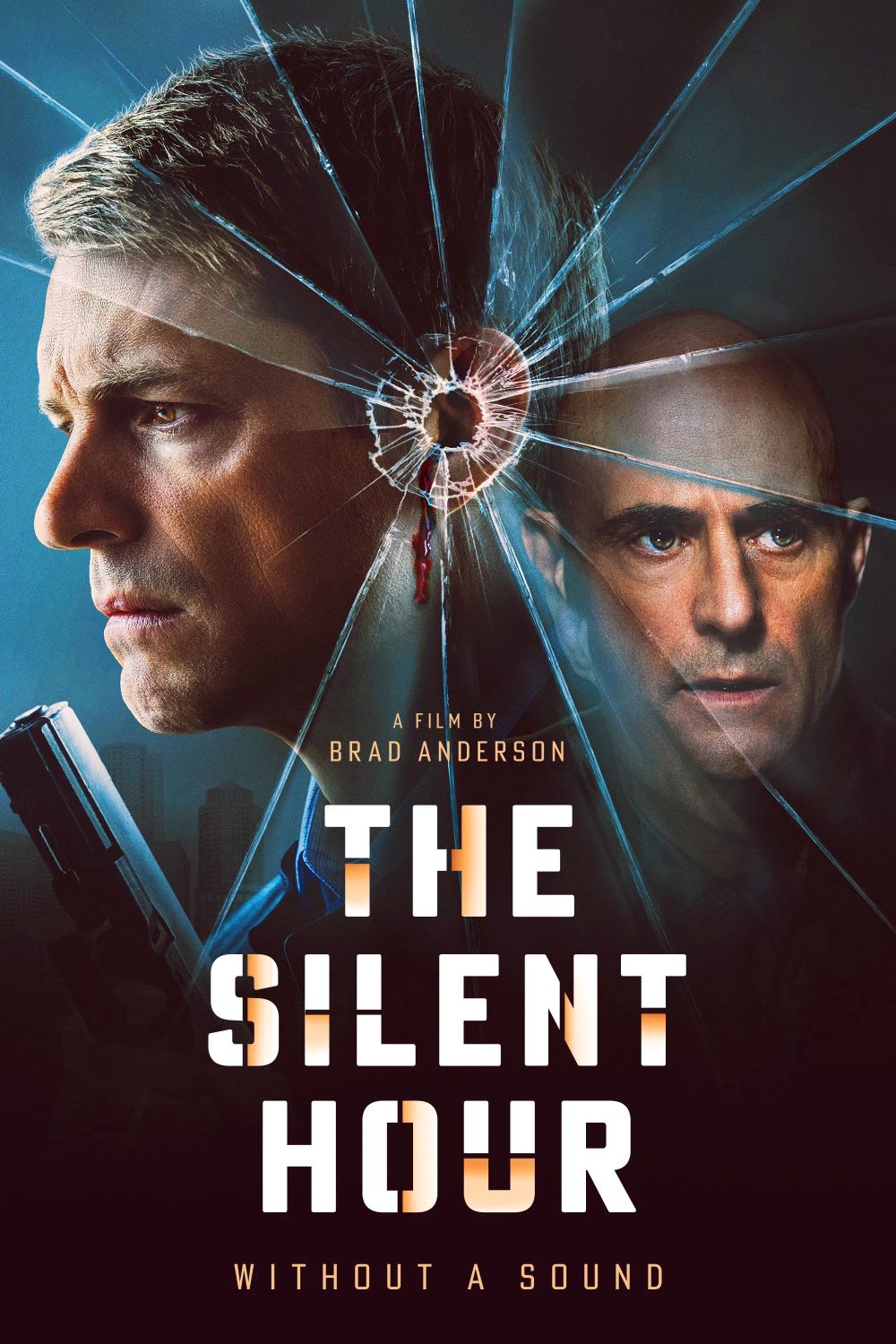
Review: The Silent Hour (dir. by Brad Anderson)


“One missing piece doesn’t make you any less whole.” — Ava Fremont

The Silent Hour is the kind of mid-budget thriller that used to quietly fill up Friday night multiplex lineups, and there’s something refreshing about that. It is not reinventing the genre, but it does just enough with its premise of hearing loss, a deaf witness, and a sealed-off apartment block to feel engaging instead of disposable. When it leans into that sensory angle and the physical geography of the building, it clicks; when it falls back on stock corrupt-cop beats, you can feel the air go out of the room a little.

The setup is straightforward: Boston detective Frank Shaw (Joel Kinnaman) is struggling with permanent hearing loss after an on-the-job accident, trying to find a way back onto the force and into his own life. He is brought in because he knows some sign language and is asked to help take the statement of Ava Fremont (Sandra Mae Frank), a deaf photographer who has video evidence of a brutal gang murder. Once Frank leaves her run-down apartment building, he realizes he forgot his phone, heads back, and walks straight into a hit team sent to silence Ava; the rest of the film traps them inside the almost-condemned complex with a crew of killers who, crucially, they often cannot hear coming.

Director Brad Anderson has always had a knack for tense, contained spaces, and you can feel the same instincts here that powered films like Session 9 and Transsiberian, even if The Silent Hour is more conventional. The apartment block is shot as a grim, half-abandoned maze: flickering lights, long hallways, and just enough remaining tenants to complicate any hope of a clean escape. Anderson stages several sequences as slow, creeping cat-and-mouse instead of wall-to-wall gunfire, which fits the “you can’t hear the danger” concept nicely and gives the movie a more claustrophobic vibe than the plot synopsis might suggest.

Where the film genuinely distinguishes itself is in how it uses sound—or sometimes refuses to use it. Scenes that shift into Frank’s perspective often dampen or distort the audio, letting the score fall away so small vibrations, visual cues, and body language carry the tension, while Ava’s point of view goes further, dropping into near-total silence and forcing the audience to scan frames the way she would. It is not as radical as something like A Quiet Place, but it is effective, and the sound department clearly understands that “absence” can be as expressive as any bombastic action mix.

Kinnaman slides comfortably into this kind of bruised, low-key action role, and here he plays Frank as a guy permanently half a step behind the world around him, frustrated but not wallowing. The script gives him some predictable beats—guilt, self-destructive drinking, a shot at redemption—but Kinnaman sells the physical awkwardness of someone relearning how to move and work while not fully trusting his own body. Sandra Mae Frank is the movie’s secret weapon, though; as Ava, she never reads as a passive victim, and there is a practical, almost sardonic edge to the way she navigates the situation that helps keep the film from turning mawkish about disability.

The dynamic between Frank and Ava is also where the film finds its heart, even if it is pretty lightly sketched. Their communication is messy at first—his sign language is rusty and limited, hers is fast and precise—but that awkwardness becomes part of the tension, because a misread sign or delayed understanding can get people killed in this environment. As they settle into a rough rhythm, the movie quietly nudges Frank toward accepting that his hearing loss is not just a temporary obstacle but a permanent part of who he is now, and Ava is allowed to be more than a symbolic “guide” through that, with her own fears and bad decisions hanging over her.

On the flip side, the actual crime plot is about as standard as they come. The villains are corrupt cops cleaning up a messy murder, and if you have seen more than a couple of thrillers, you will probably guess who is dirty long before the script “reveals” it. There are a few half-hearted attempts at moral compromise and temptation—a hefty bribe, old loyalties—especially around Frank’s former partner Doug Slater (Mark Strong), but the story never digs into systemic rot or moral ambiguity in any meaningful way; it just uses corruption as a convenient engine to keep the bullets and double-crosses coming.

Structurally, the film works best as a series of mini-scenarios inside the building rather than as a twisty conspiracy. You get sequences where Frank and Ava navigate dark stairwells while trying to stay ahead of men they can feel but not hear, tense face-offs in cramped apartments with panicked tenants, and a few well-staged bursts of violence that remind you this is still a pretty nasty situation. The climax leans into fire, chaos, and one last push for survival, and while the resolution lands exactly where you’d expect, the final quieter beats give the characters a bit of closure that feels earned rather than tacked on.

Performance-wise, the supporting cast does its job without stealing the movie. Mekhi Phifer and Mark Strong bring some veteran presence as fellow cops circling around Frank, and even when the writing nudges them toward archetype, they at least feel like people who have known each other for years rather than walking plot devices. The henchmen are more one-note, essentially “the guys with guns” hunting through the building, but the film leans on their physicality and menace instead of trying to give everyone a tragic backstory, which is probably the right call for a lean thriller like this.

If there is a frustration here, it is mostly about missed potential. The core hook—two people with hearing loss trying to survive in a sound-dependent cat-and-mouse game—is strong enough that you can imagine a slightly sharper script pushing much harder on point of view, communication breakdown, and the way the police institution treats disability. Instead, The Silent Hour uses those elements as flavoring around a very familiar skeleton, resulting in a movie that is solid and sometimes gripping but rarely surprising.

Taken on its own terms, though, The Silent Hour is a tight, competently staged thriller that understands how to milk a confined space and an offbeat sensory angle for suspense. The running time is under two hours, the pacing stays brisk, and there are enough well-executed set pieces and committed performances to make it an easy recommendation if you are in the mood for a darker, low-key action night. It will not stick with you the way the very best of Brad Anderson’s work does, but as a late-night watch with the lights down and the volume doing most of the heavy lifting, it gets the job done.
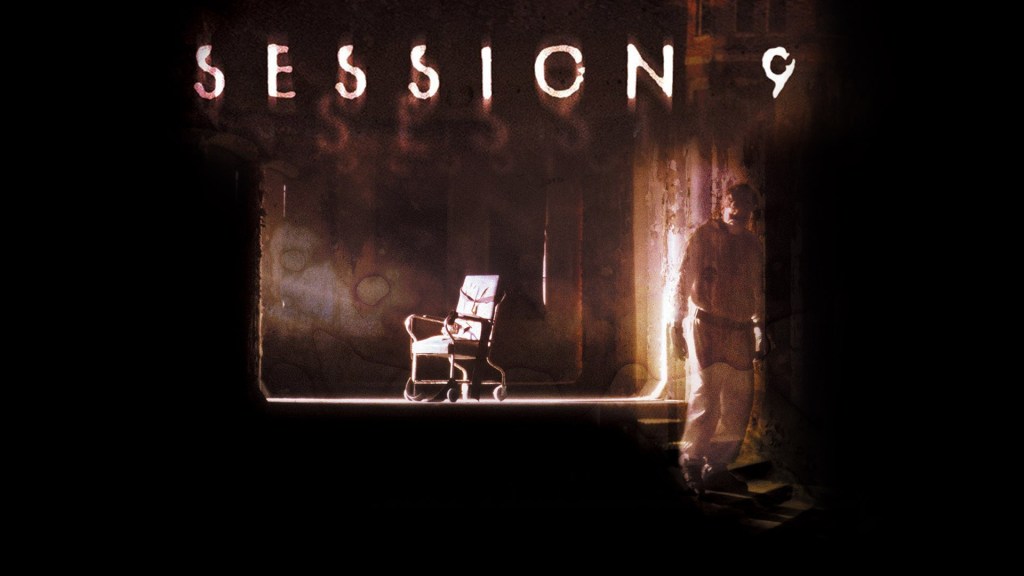
Brad reviews SESSION 9 (2001), starring David Caruso and Peter Mullan!


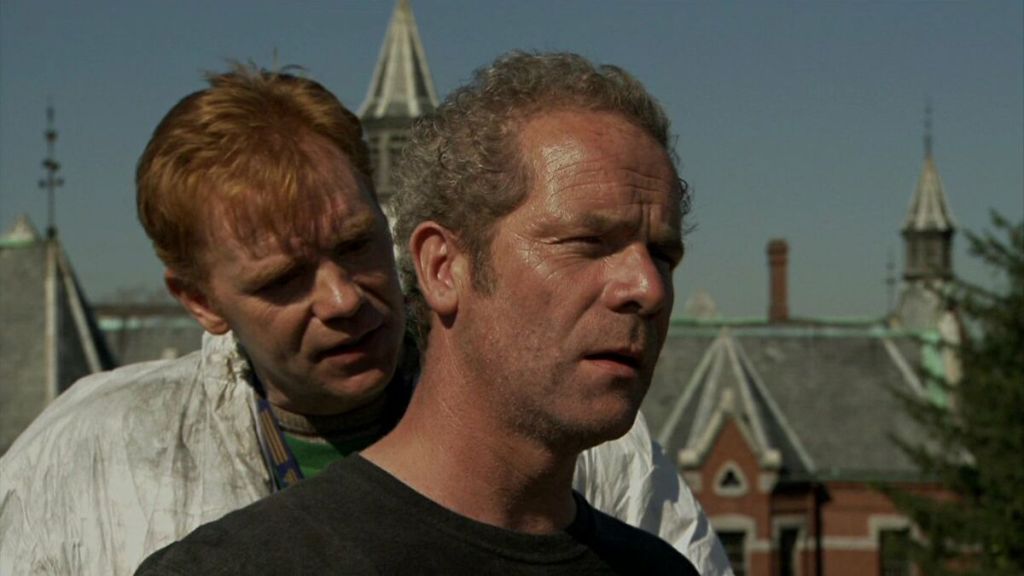
Gordon Fleming (Peter Mullan) the owner of a company that removes asbestos from old buildings, makes a bid for the work at the Danvers State Hospital in Massachusetts. In a desperate need for cash in his personal life, Gordon promises that his crew can complete the job in only one week, even though a job like this should normally take at least three weeks. His crew… Phil (David Caruso) is Gordon’s right hand man who tries to keep everyone else in line. This isn’t very easy these days considering that another member of the team is Hank (Josh Lucas), who’s currently “dating” (not the word Hank uses) Phil’s ex-girlfriend. The crew is rounded out by Mike (co-writer Stephen Gevedon), a law school dropout who seems to be way too smart to be doing this kind of work, and Jeff (Brendan Sexton III), Gordon’s nephew. As you might expect, once they begin the job, strange things start happening as the crew members find various items in the gigantic mental institution that once housed up to 2,400 people. Mike finds a box of tapes of nine therapy sessions detailing the case of Mary Hobbes, a patient with many personalities who may have murdered someone decades before. Meanwhile, Hank finds a stash of coins and other valuable items in one of the walls. A gambling addict, Hank goes back late that night when no one is around to collect his discovery. Things don’t go well and Hank doesn’t show up for work the next day. We’re led to believe that Hank has headed off to Florida for “casino school,” and this is where things start really getting weird as the pressure of the job and the strange events seem to be getting to the entire crew. When Jeff spots a very oddly acting Hank in the building a couple of days later, the sinister events at the Danvers State Hospital begin to completely unravel! 

Director Brad Anderson’s SESSION 9 is a creepy, slow burn that’s best described as a psychological horror film. It’s one of those movies where you can’t trust what you’re seeing on screen because the story is about the disturbed and damaged human mind. In my opinion, this is the most haunting kind of horror film because there are so many examples in the real world of mentally disturbed people committing horrific acts of violence. My wife has spent the last decade of her nursing career in the area of forensic psychology where she takes care of mentally ill individuals who have committed these types of horrible atrocities, often against the very people in their lives who take care of them. This is real world stuff. And the film’s setting, the actual Danvers State Hospital, also known as the Danvers Lunatic Asylum, in Danvers, Massachusetts, which operated from 1878 to 1992, adds a lot to the atmospheric feel of dread in the film. The Neo Gothic architecture of the facility, and the labyrinth of tunnels connecting the various buildings are a perfect setting for the creepy elements of Anderson’s story, and he takes full advantage of the location. The story and the setting set the stage for what feels like true terror, and I have to admit that SESSION 9 has stayed with me after my initial viewing. 

The cast of SESSION 9 is very effective. Though David Caruso receives top billing, the story really revolves around Gordon Fleming, portrayed by Peter Mullan. I primarily recognized Mullan from his interesting role as Jacob Snell in the excellent Netflix series OZARK, but he’s had quite a career as both an actor (TRAINSPOTTING, THE VANISHING) and director (THE MAGDALENE SISTERS). His quiet, internal performance is a solid anchor for the strange things going on around his crew. Caruso’s character is experiencing his own share of problems in his personal life, and the actor’s edgy intensity is a nice counterbalance to Mullan’s stillness. His life seems to be getting a little out of control and that dynamic works well for the moody paranoia of the film. Of the remaining performances, Josh Lucas seems to fair the best. His character isn’t really all that likable, but he does bring some humor to the role, and it’s ultimately the revelation of his character’s fate that begins to bring the story’s horrifying events to light. 

As I mentioned earlier, SESSION 9 is a slow burn of a film. Brad Anderson takes his sweet time setting the story up by introducing us to the dynamic of the main characters and placing them in the spectacular environment of the institution’s decaying buildings. It takes a bit for the doom and gloom to really start kicking in, so it’s possible that impatient or distracted viewers could lose interest as not much seems to be happening. I also wasn’t very surprised when the revelations of the story finally came to light. If you’re paying attention, the end moments of the movie aren’t as big of a “gotcha” as they could have been. But that’s all okay, because the brilliance of SESSION 9 is ultimately the mood it creates and the impending sense of dread we feel for the final discovery of what some of our characters may be capable of. In those aspects, SESSION 9 is a resounding success. 

Titans, S1 E1, Review By Case Wright (Dir. Brad Anderson)


titans

Titans isn’t your Dad’s superhero show, unless your Dad was awesome and loved Watchmen and if that’s the case he EARNED the World’s Best Dad mug!!! This is also different because it’s on the DC Universe subscription site and you’re like ….

But Case, I already already have Netflix and Hulu and Comcast and a burgeoning Methylphenidate habit because I’ve got this Calculus exam and I’m afraid of losing my funding….I mean …..smoking. 

My response is:

DROP HULU and get this subscription!!!! You get digital access to EVERY SINGLE DC Comics, Movie, show, anime, tv series, and this AWESOME SHOW!!!!

Back to the show!!!

The show takes place in Gotham? NOPE.  Metropolis? Nope! Vaguely Vancouver? Well….

It takes place in Detroit! The story revolves around an Angry PTSD Robin.  Honestly, it’s pretty accurate!  I have friends that have looked for trouble and found it.  They see a guy beating up his girlfriend or harassing a lady and they mete out the justice right there.  That’s who Robin is.  He’s angry and worked for Batman: a rich guy who liked to beat the snot out of troublemakers.  I am not saying it’s right and I never indulged in that kind of wrath, but I understand.  The law can be supine when it comes to justice, it’s good at order, but justice…not so much.  This is the world where Robin and the other Capes live.  A world where the justice is instantaneous and the world shrugs.  It comes from a real place.  Afghanistan and much of the World operates the same way: the criminal justice system is corrupt, incompetent, feckless or all three, leading people to embrace extra-judicial solutions, but their vigilantes wear surplus fatigues instead of costumes.  By far, that’s why we failed in Afghanistan, the Taliban could offer something we could not: instant brutal justice.

The show is brilliantly written by Geoff Johns and Greg Berlanti. If you don’t know who they are: Wonder Woman, Arrow, Smallville, Flash, and everything with the DC on it- they did.  If you notice the fast pace and lived-in dreariness, that’s all Brad Anderson. He directed the pilot as well as the Hawk and Dove episode.  Brad is a veteran of the show The Killing- a gritty dark murder mystery that takes place in the greatest city on Earth- SEATTLE. He is a David Fincher 2.0 with his brutal dystopian realism.  Every shot is almost always near winter as if the seasons themselves have given up.  The cities are as decaying and broken as their inhabitants.

The story starts rolling with Rachel Roth who is confused, angry, and on the run.  She watches her mother get killed by an unknown assassin and she goes scary as shit and whoops ass!  Then, she flees for Detroit and is nearly human trafficked, but her alter ego warns her in a reflection because it has to be done in the most creepy way possible.  I am not sure if keeping this girl alive is really in humanity’s best interest.

This forces her path to cross Dick Grayson (Robin) who has left Batman to become a Detroit Police Detective.  He tries to be on the right side of the law for awhile, but he sees child abusers go free and dons the cape again to mete out justice. By mete out justice, he beats people within an inch of their lives: see below! After Robin gets his 30 lbs of flesh, he gets pulled into a mystery surrounding a girl named Rachel Roth who just might be the harbinger of the apocalypse.   Side note: I have known A LOT of cops over the years; the Army’s lousy with them.  Brenton’s portrayal is very accurate for a long-term detective: he self-deprecates, but he’s really hard to know.  I would have him make some more practical jokes or kid around more a bit.  Most guys like that hide their feelings in humor a lot, but other than that, it’s flawless.

There is one scene, which is in a gif below: Robin is cleaning up his weapons after beating people nearly to death and that reminded me of my Soldier days.  You finish your training exercise or patrol.  Maybe you fought. In any case, it’s over.  Everyone gets quiet, some shirtless, all the cleaning implements are placed neatly, and you methodically clean your weapons in a very zen activity. This was a great and accurate detail.

weapons.gif

Our next hero is Koriand’r – she has no idea who she is, but she knows how to dress.  She’s a mix of badass, sexy, and neck breaking! She does all three.  There’s Russian dudes out of nowhere and she goes full-on Firestarter and burns them to DEATH! You feel almost kind of bad for them. Almost.  She has a 70s soundtrack wherever she goes.  I’m starting to blush.  Anyway. She ascertains that she needs to go to Detroit and find Rachel Roth.  In this show, who doesn’t realize that?!

The show cuts back to Rachel who meets Dick, but she’s kidnapped by a very unlucky man.  Rachel wakes to see her mother’s killer.  Wow, did he pick the wrong lady to mess with! Dick goes to rescue her, but Rachel’s dark nature takes over, she enters and explodes her would-be killer!!!! It’s AWESOME AND GROSS!!! Dick becomes her protector.  Kordiand’r is on her way to Motown. We even meet Beast Boy who likes to commit petty theft as a green tiger.

This series is the best show on television. PERIOD.

If you like my work, read the rest of it, retweet it, re-blog it, tell my editor @lisamariebowman that you like my work.  Of course, if you hate my work, I suppose there’s got to be a pill for that.

6 Obscure Films Of 2013: The Call, Copperhead, It’s A Disaster, See Girl Run, UnHung Hero, Would You Rather


Well, it’s that time of year when I look at the list of the films that I’ve seen over the past 12 months and I realize that there’s quite a few that I haven’t gotten around to reviewing yet.  Here are my thoughts on six of them.

The Call (dir by Brad Anderson)

Abigail Breslin is kidnapped by a serial killer.  While trapped in the trunk of the killer’s car, Breslin manages to call 911.  Breslin’s call is answered by Halle Berry, a veteran operator who is recovering from a trauma that — by an amazing and totally implausible coincidence — was caused by the same guy who has just kidnapped Breslin.

Before it became a feature film, The Call was originally developed as a weekly TV series and, as I watched, it was easy to imagine weekly episodes that would all feature a different guest star calling 911 and needing help.  For the first hour or so, The Call is well-made and acted but undistinguished.  However, during the final 30 minutes, the entire film suddenly goes crazy with Breslin running around in her bra, Berry turning into a blood thirsty vigilante, and the killer suddenly getting very verbose.  However, those 30 minutes of pure insanity were just what The Call needed to be memorable.  There are some films that definitely benefit from going over-the-top and The Call is one of them.

Copperhead (dir by Ronald Maxwell)

Copperhead is a historical drama that takes place during the Civil War.  In upstate New York, farmer Abner Breech (Billy Campbell) is ardently opposed to both the Civil War and the union cause.  In most movies, this would make Abner the villain but, in Copperhead, he’s portrayed as being a man of principle who, by refusing to compromise on his views, is ostracized and ultimately persecuted by the rest of his village.  Abner’s views also bring him into conflict with his own son, who is pro-Union.

Copperhead is a slow-moving film that features some rather good performances along with some fairly bad ones.  However, I’m a history nerd so I enjoyed it.  It certainly tells a different story from what we’ve come to expect from American films about the Civil War.

It’s A Disaster (dir by Todd Berger)

Of the six films reviewed in this post, It’s A Disaster is the one to see.  In this darker than dark comedy, Julia Stiles brings her new boyfriend (David Cross) to Sunday brunch with 6 of her closest friends.  During the brunch, terrorists explode a dirty bomb in the city.  With everyone trapped inside the house and waiting for the world to either end or somehow revert back to normal, long-simmering resentments come to the forefront.

To say anything else about It’s a Disaster would be unfair so I’ll just say that it’s a very funny film, featuring excellent work from both Stiles and Cross.  If Jean-Paul Sartre was alive and writing today, he would probably end up writing something very similar to It’s a Disaster.

See Girl Run (dir by Nate Meyer)

Bleh!  That’s probably the best description I can give you of this film.  It’s just a whole lot of bleh.

Emmie (Robin Tunney) is unhappy with her boring marriage so she runs back to her Maine hometown, stops wearing makeup and washing her hair, and pines for her high school boyfriend, Jason (Adam Scott), who works at a sea food restaurant.  Jason also happens to be friends with Emmie’s depressed brother, Brandon (Jeremy Strong).  It’s the same basic plot as Young Adult, just with no humor and a lot more talking.  In Young Adult, it was hard not to admire Charlize Theron’s wonderfully misguided character.  In See Girl Run, you just want to tell Robin Tunny to take a shower, put on some clothes that don’t look like they were stolen from a hospital storage closet, and stop whining all the time.

It’s difficult to put into words just how much I hated this movie.  This is one of those films that critics tend to describe as being “a film for adults.”  I have to agree — this is a movie for really boring, depressing adults who like to talk and talk about how their lives haven’t worked out.  If See Girl Run is what being an adult is like, I’ll just continue to be an immature brat, thank you very much.

UnHung Hero (dir by Brian Spitz)

So, this is not only the worst documentary of 2013 but it’s also quite probably one of the worst documentaries ever made.  The film opens with footage of Patrick Moote (who claims to be a comedian) asking his girlfriend to marry him.  As Moote goes on (and on) to tell us, she turns down his proposal and then dumps him because, according to her, his penis is too small.  Moote spends the rest of the film talking to various people and asking them whether size really matters.

Well, he could have just asked me and saved a lot of time.  I’m sorry if this endangers any fragile male egos but yes, size does matter.  If Moote’s penis really is as tiny as he claims it is, I probably would have turned down his proposal as well.  Then again, Moote could be hung like Jamie Foxx and I’d probably still refuse to marry him because, quite frankly, he’s the whiniest and most annoying person that I’ve ever seen.  He’s like an even less charming version of Morgan Spurlock.  What Patrick Moote never seems to understand is that size matters but personality matters even more.

Would You Rather (dir by David Guy Levy)

Would you rather have a root canal or sit through this piece of crap?  Having seen Would You Rather, I can tell you that it’s not an easy question to answer.

Jeffrey Combs plays a sadistic millionaire who invited a bunch of strangers (including Brittany Snow, John Heard, June Squibb, and Sasha Grey) to his mansion and forces them to play an elaborate and deadly game of Would You Rather.  Unfortunately, none of the characters are interesting, the film’s sadism is more boring than shocking, and talented actor Combs is totally wasted as the one-note villain.

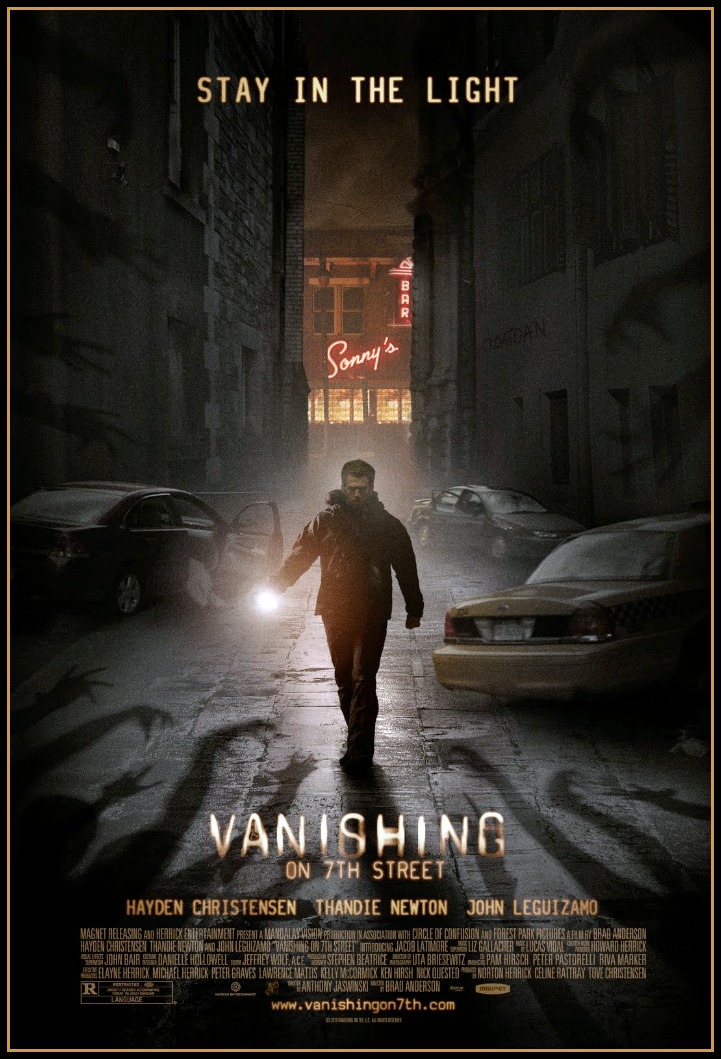
Review: Vanishing On 7th Street (dir. by Brad Anderson)


In the genre world of horror and thrillers there’s been one name who always seem to be on the verge of breaking out. He has done some exceptionally well-crafted horror and thrillers which never could get a mainstream audience to commit to but always gathering a cult-following upon their release. He has done some wonderful work as a TV director for such acclaimed shows as Fringe, Treme, Boardwalk Empire and The Wire. His best known work was a thriller collaboration with Christian Bale in The Machinist. While it’s a film more well-known for the extremes an actor was willing to go for to make their performance as authentic as possible it was also a film which showed style and talent in it’s filmmaker. The person I speak of is Canadian filmmaker Brad Anderson whose latest film was another low-budget horror-thriller which looks to be gaining a cult-following once again despite not being well-received by the mainstream critics. Vanishing On 7th Street was a film using the screenplay of Anthony Jaswinski which puts an interesting, claustrophobic and, at times, entertaining twist on the oft-used and well-ridden post-apocalyptic genre.

The film begins with film projectionist Paul in his projection booth reading up on the lost colony of Roanoke and the mysterious word left behind: CROATOAN. It’s through his point of view that we first see the beginning of what could be the end of the world as lights begin to flicker then go out throughout the theater and the mall it’s located in. Paul investigates this event only to discover sets of clothing and accessories where theater patrons and employees used to be in. With each passing moment the darkness — punctuated by just the flashlights of Paul and a lone mall security guard — becomes to take on an ominous tone before the film sudden moves ahead three days into what would become the major setting for the film: a lit bar on a deserted and darkened stretch of 7th Street in Detroit, Michigan.

We meet the rest of the main cast in this bar. There’s Luke who used to be a TV anchorman who discovers to his horror just what might have been the cause of the disappearance of most everyone in the world as he tries to find his girlfriend at the TV station they both worked at. It’s in these flashbacks to Luke’s early experience with the dark apocalypse that we see some of the most perfectly shot scenes of a major city devoid of life. An urban setting where the sudden disappearance of people during the power outage the night before has caused an eerie detritus of crashed vehicles, empty clothing and, in a sudden and violent sequence, a lone airline crashing in the background. It’s through Luke and the lone survivor in the bar, a 12-year old boy named James (Jacob Latimore), that we begin to try and piece together just what might have caused the event which continues to plague those left behind for the last three days.

The film posits the basic concept that darkness itself was the culprit for the disappearance of everyone and what continues to stalk those still left behind, alive and desperate for answers. While the film never really give definite answers as to the cause the two other characters in the back outside of Luke and James bring their own theories. There’s Rosemary (Thandie Newton), the distraught mother searching for her infant son, who thinks what’s going on around them is the the prophecized Rapture and those left behind were those who have sinned and were now being tormented for whatever sins they might have committed. On the other side is Paul from the beginning of the film who Luke rescues from an illuminated bus stop shelter who believes the very thing which caused the disappearance of the Roanoke colony during the 16th-century has now returned on a global-scale. His reasonings run the gamut of scientific causes from wormholes, black holes, gamma ray burst, nanotech gone amok and even an accident from a particle collider.

The audience are left to decide amongst themselves which explanation holds merit since neither one has enough backing to be the true answer. Vanishing On 7th Street leaves much of the questions raised by the dark apocalypse around these surviving characters to be left ambiguous and unanswered which at times becomes a detriment to the narrative as a whole. It’s a testament to Brad Anderson’s direction that the film was able to move past the apparent weaknesses in Anthony Jaswinski’s script and deliver a taut thriller (the film never truly gets to the level of horror) that just builds and builds with tension from beginning to an end that seemed almost too rushed.

With a low-budget and minimal cast the film tries to create some of the tension in the film be a construction of the differences between the four main characters. The actors were pretty game to try and make their characters more complex than what the script have provided, but in the end they still seem too basic for anyone of them to become sympathetic for the audience to truly care for their well-being. The film has to finally rely on just them as the last people on the planet as the main crux for the audience to latch onto. All the actors involved never become too cartoonish or stereotypical in their performance, but some of their decision-making in the middle and latter section of the film were too horror-typical, but they do add to the film’s many scenes of mounting terror as characters drop flashlights, lose light sources and other such problems with the living shadows in the darkness creeping up to try and take those still left. These scenes do look to be too stereotypical of other horror films but under Anderson’s direction there’s a palpable sense of claustrophobia and menace in these shadows.

What truly sells the film despite these flaws outside of Anderson’s direction would be the minimalist score by first-time film composer Lucas Vidal. His composition for the film were at once ominous and haunting. At times his score shows off hints of influences from the more doom-laden scores of Philip Glass. The other component of the film which definitely added to the atmosphere of inevitable doom to the film was Uta Briesewitz cinematography which made great use of darkness and solitary light sources to create islands of safety in a sea of encroaching terror we never truly comprehend. It’s the trifecta of Anderson’s directing, Vidal’s minimalist doom orchestration of a score and Briesewitz’s cinematography which gives Vanishing On 7th Street enough reasons to be a film which stands out as a fine piece of genre filmmaking despite weaknesses in the script.

Brad Anderson truly seem to be a filmmaker destined to remain in the fringes of mainstream cinema. His Vanishing On 7th Street continues to be another example of his great work in the horror-thriller genre. Despite same flaws which could turn off some of those who see this film it doesn’t diminish the fact that even at it’s worst this film was still an entertaining piece of post-apocalyptic work which brings some new ideas into the genre. Maybe a stronger treatment of the script would’ve made for a near-perfect thriller and one which could’ve had more horror to it, but Anderson was able to make a good enough film with an average script that I think deserves for this film to be seen by more people. For every horror remakes we get from Michael Bay’s Platinum Dunes to the latest in the Saw-like torture porn horror it’s good to see that such films as Vanishing On 7th Street exist to be the solitary beacon of light in a sea of cookie-cutter, by-the-numbers horror films that seem to dominate each film year after the other.