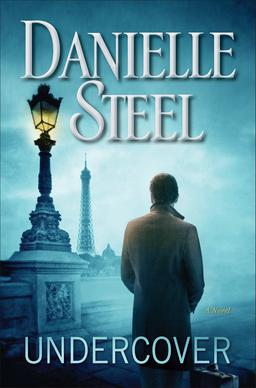
Book Review: Undercover by Danielle Steel


Marshall Everett was an undercover DEA agent who spent years infiltrating the drug cartels of South America.  When he got too close to the people that he was supposed to be investigating, he was yanked from the assignment and sent to work for the Secret Service.  After he took a bullet protecting the President’s wife, he retired to Paris, a city that is known for being welcoming to former members of American law enforcement.

Ariana Gregory was the daughter of the U.S. Ambassador to Argentina.  When she was kidnapped by communist revolutionaries, she tried to resist the charms of their charismatic leader.  But, before you could say Patty Hearst, she was pregnant and brainwashed.  Fortunately, she was eventually rescued by the American forces.  Unfortunately, her lover died, her father died, and she eventually had a miscarriage.  A year has passed and she’s still dealing with the trauma.  And where better to deal with trauma than in Paris?

When Marshall and Ariana meet …. THEY SOLVE CRIMES!

Well, actually, they bond over the fact that neither one of them feels as if they belong in their home country anymore.  Both of them lost their identities in South America and now, in Europe, they can build brand new identities.  They can also fall in love!  Yay!  Unfortunately, they’re also going to have watch their step because the brother of Ariana’s revolutionary lover is looking to kill both of them.

This a typical Danielle Steel novel, one that I found in my aunt’s collection of paperbacks and which I read two weeks ago.  Though I do enjoy a good romance, I’ve never been a huge fan of Danielle Steel’s.  Her prose rarely sings.  The dialogue rarely crackles.  The characters never really feel all that developed.  That said, it’s kind of hard not to appreciate the shamelessness of Steel’s plotting.  Any romance writer could come up with a story of two lost souls meeting in Paris and finding personal and spiritual redemption through their love.  However, it takes a Danielle Steel to make them two lost souls who are recovering from being brainwashed in South America.  It takes a Danielle Steel to ask, “What if Donnie Brasco and Patty Hearst met and fell in love?”  It takes a Danielle Steel to write about  the inner workings of both an international drug cartel and a left-wing revolutionary cell, despite apparently not knowing much about either.  There’s an almost random, “just toss it in” feeling to the plot of Undercover that is definitely entertaining.

I guess my point is that, while I was reading Undercover, there were a lot of moments where I dramatically rolled my eyes.  (Anyone who has ever watched me read a book can tell you about how much I enjoy rolling my eyes.)  But the story held my interest and I certainly didn’t put the book down until I finished it.  Whatever else you may want to say about the book and Steel’s style of writing, it definitely got the job done and, it should be noted, I didn’t get brainwashed while reading it.  That’s the important thing.

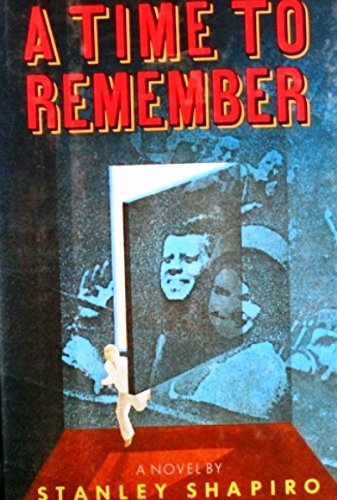
Book Review: A Time To Remember by Stanley Shapiro


My aunt has always been a prodigious reader and, when I was growing up, I always enjoyed looking through the stacks of books that she had sitting in the closets of her room. A few years ago, for medical reasons, my aunt had to move out of her house. Because she wouldn’t have room for all of her books in her new place, she gave the majority of them to me. So far, I’ve only read a few but, over the course of this year, I plan to read all of them and review the ones that I like or, at the very least, find interesting. That was one of the resolutions that I made on January 1st and I have to admit that I haven’t really been doing a great job keeping up with it.  Hopefully, I’ll do better during the second half of the year.

This week, from my aunt’s book collection, I read Stanley Shapiro’s A Time To Remember.

A Time To Remember was originally published in 1986 and it tells a story that might sound a little bit familiar.  David Russell is a school teacher in Dallas.  He is haunted by the death of his brother, who was killed in Vietnam.  David has convinced himself that, if John F. Kennedy had lived, America would have withdrawn from Vietnam and his brother would still be alive.  In fact, as far as David is concerned, America itself would be a better place if Kennedy had lived.  Not only would the Vietnam War have been prevented but the Watergate break-in would never have occurred.  Nixon would never have been president.  Martin Luther King would never have been assassinated.  Robert F. Kennedy would still be alive.  Americans would never have become disillusioned with their country or their government.  America would have kept its innocence.

Too bad that David can’t do anything to change history.

Or can he?  It turns out that David’s girlfriend is a reporter and she knows a scientist named Dr. Hendrik Koopman.  Koopman has created a time machine!  David uses the machine to go to the past, intent on preventing Lee Harvey Oswald from assassinating Kennedy.  (Sorry, conspiracy folks.  Like me, A Time To Remember is firmly in the Oswald Acted Alone camp.)  Unfortunately, David doesn’t succeed and he ends up getting arrested in Oswald’s place!  Now, David has to not only escape but he also still has to find a way to save Kennedy!

Obviously, the plot is a bit similar to Stephen King’s 11/23/63.  That’s not to say that King deliberately plagiarized or even knew of the existence of Shaprio’s earlier novel.  Not only do the two books take vastly different approaches to the material but the idea of saving America by saving JFK has long been a popular one amongst the boomers.  That said, it’s interesting that it was King, who plays the epitome of a committed 60s liberal on Twitter, who wrote the book that was more skeptical about whether or not saving Kennedy would truly save the world.  Shapiro takes a much simpler approach to the material, one that’s almost charmingly naïve.  I’m fairly agnostic on whether or not JFK would have been a transformative or even a well-remembered President if he had lived but one doesn’t necessarily have to buy into the mythology that’s sprung up around JFK to appreciate the sincerity of Shapiro’s idealization of the man and the era that he represented.  Just as 11/23/63 was redeemed by King’s cynicism, A Time To Remember is redeemed by Shapiro’s nostalgia.

Shapiro, it should be noted, also tells his story far more quickly and far more economically than King did.  11/23/63 runs for close to 900 pages.  A Time To Remember doesn’t even make it to 200.  It’s a book that you can read in one sitting and Shapiro keeps the story moving at a quick pace.  Though the characters aren’t particularly deep and one can certainly debate the book’s conclusion, Shapiro tells the story well.  Those who like to play “What If?” with history will appreciate the book.

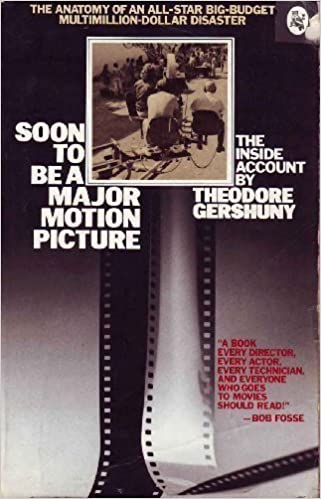
Book Review: Soon To Be A Major Motion Picture by Theodore Gershuny


In 1975, United Artists released a political thriller called Rosebud.

Rosebud was based on a best-selling novel.

Rosebud dealt with terrorism, an important topic both in 1975 and today.

Rosebud was directed by Otto Preminger, an acclaimed, award-winning filmmaker who was known for making controversial movies and who had a showman’s flair for publicity.

Rosebud had an international cast of screen veterans and up-and-coming stars.  Peter O’Toole, Richard Attenborough, Cliff Gorman, Peter Lawford, Raf Vallone, Adrienne Corri, Lalla Ward, Claude Dauphin, Isabelle Huppert, and Kim Cattrall all had key roles.  Former New York City Mayor and presidential candidate John V. Lindsay made his acting debut as a U.S. senator.

Rosebud was released with a good deal of publicity.

And, finally, Rosebud is almost totally forgotten today.  Not only did Rosebud receive less-than-stellar reviews, it’s box office failure pretty much spelled the end of Preminger’s directorial career.  (He directed one more film after Rosebud.)  Rosebud sunk into such obscurity that, for years, it wasn’t even available on anything other than VHS tape.  It was finally given a Blu-ray release in 2021 but, unlike some of Preminger’s other films, Rosebud isn’t going to end up getting a Criterion release anytime soon.  (That said, it can currently be streamed for free on a few sites.  So, go watch it after you finish this review.)

Having seen Rosebud, I can tell you that the film wasn’t forgotten because it was a disaster or anything like that.  Instead, Rosebud was forgotten because it was thoroughly mediocre.  There’s nothing particularly terrible about it but there’s nothing particularly good about it.  Instead, it’s a slowly-paced and flatly directed film.  There are a few interesting scenes, the majority of which involve Richard Attenborough’s terrorist.  But otherwise, it’s just a mediocre film from a director who was past his prime.

Interestingly enough, Rosebud’s mediocrity is what makes the 1980 book, Soon To Be A Major Motion Picture, such an interesting read.  While directing Rosebud, Otto Preminger allowed journalist and filmmaker Ted Gershuny to observe every detail of the production.  From Erik Lee Preminger’s attempt to write a workable script to the casting sessions to the film’s eventual release, Gershuny was there.  Soon To Be A Major Motion Picture tells the story of how a group of talented people ended up making a thoroughly forgettable film.  There have been plenty of books written about the production of terrible movies.  There’s been even more books written about the making of classic films.  But Soon To Be A Major Motion Picture is one of the few books to take a serious and detailed look at what it’s like to make a thoroughly mediocre film.  And let’s be honest, most films are mediocre.  Most films are more likely to be Rosebud than they are to be The Godfather, Goodfellas or Battlefield Earth.

The book, not surprisingly revolves around Otto Preminger.  The Preminger described in the book is a complex figure, a proud man and an occasionally sensitive artist who is also frequently a bully.  As the book makes clear, Preminger can be kind but he also came of age at a time when it was common place for directors to yell and be autocratic.  Preminger’s habit of shouting rubs more than a few crew and cast members the wrong way.  When he’s not yelling, Preminger comes across as thoughtful and witty but there’s also an undercurrent of sadness to him as Preminger realizes that the film industry is changing and that he’s getting left behind.  The fact that he directed films like Anatomy of a Murder, Laura, Exodus, and The Cardinal didn’t matter in the new Hollywood.  The same things that had once led to Preminger being branded a rebel and an innovator now led to him being branded as being out-of-touch.  Rosebud was Preminger’s attempt to remain relevant, both artistically and politically.  Unfortunately, the 70s were a brutal decade for the directors who previously defined Hollywood’s Golden Age.  Some, like John Huston, were eventually able to adjust and make a few more good films before their careers were ended by either retirement or death.  Most, however, were like Preminger, too engaged to quit but too old-fashioned to keep up with the younger filmmakers.  Still, even when it becomes obvious that Rosebud is not going to work as a film, Preminger refuses to give up or surrender.  He’s going to make his movie.

Also making a huge impression is Robert Mitchum.  Mitchum was originally cast in the film’s leading role and, having seen Rosebud, it’s easy to understand why Mitchum would seem like the ideal choice to be play Larry Martin, a cynical and hard-boiled journalist and CIA asset.  When Mitchum first appears in the book, he’s a breath of fresh air.  Even on the printed page, it’s easy to see that Mitchum’s no-nonsense style invigorated the disorganized production.  However, Mitchum quickly becomes disillusioned, walks off the film, and is hastily replaced by Peter O’Toole.  Not even Gershuny seems to be sure what specifically caused Mitchum quit the film, though it’s suggested that Mitchum felt that he had been personally slighted by Preminger.  (At one point, Mitchum claims that Preminger accused him of being drunk when he was sober.  At another point, it’s suggested that Mitchum walked because he realized that film wasn’t going to be any good and he felt he was wasting his time.)  O’Toole does his best to take Mitchum’s place, though his poor health proves to be almost as much of a challenge as Mitchum’s bad attitude.

(That said, O’Toole’s apparent frailty disappeared after the production received a bomb threat that is later revealed to have been a hoax.  The book suggests that O’Toole and his entourage tracked down the hoaxer and essentially beat the Hell out of him.)

It’s a highly interesting and well-written book, one that will make you appreciate the effort that goes into making even a forgettable film.  Used paperback copies can ordered off of Amazon for $22.00.  I found my copy at Recycled Books in Denton, Texas and paid $3.00 for it.  Support you local independent book stores, people.
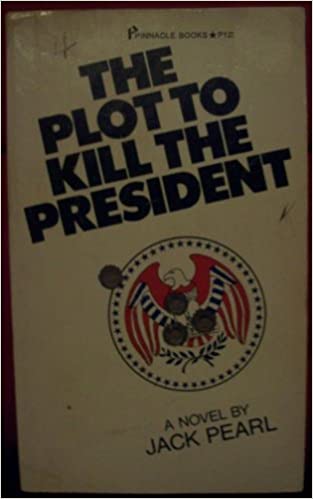
Novel Review: The Plot To Kill The President by Jack Pearl


President Harmon Stevens is a liberal who is looking to reign in the influence of the Military-Industrial complex and the CIA.  So, of course, it’s decided that the President must be taken care of.

Fortunately for the conspirators, back when Stevens was in the army, he took part in the court martial of a soldier named Paul.  Paul was given a dishonorable discharge on account of killing enemy POWs.  The reader is told that Stevens shouted, “You have the Mark of Cain on you!,” which …. okay.  I guess it’s possible that someone outside of 17th century Massachusetts spoke like that.  Now, Paul spends all of his time feeling bitter and watching cartoons.  He’s a Bugs Bunny fan because he believes that Bugs is a sociopath, just like him.  (Personally, I think Bugs is just a force of chaos.  Sociopath is a bit extreme.)  One day, Paul’s cartoon watching is interrupted by the opportunity to take part in a plan to take out Stevens.  However, Paul soon discovers that he’s being set up to be a patsy, much like Lee Harvey Oswald.  Will Paul risk his life to reveal the truth?

The Plot To Kill The President is one of the many paperbacks that I found in my aunt’s collection of old books.  It was originally published in 1972 and it’s very much a book that was inspired by the Kennedy assassination and the conspiracy theories surrounding it.  Paul is a disillusioned American.  It’s not just that he has a personal grudge against the President.  It’s that he no longer believes in the promise of America and, as a result, he has no problem with the idea of betraying it.  It’s not until an awkwardly written date with a recently naturalized citizen that Paul starts to realize that America can be saved.  (How awkward is the encounter?  At one point, Paul’s date recites the pledge of allegiance in the middle of a restaurant.)

Anyway, it’s a fairly silly and overheated book.  It’s written in the first person, so we’re not only subjected to Paul as a character but we’re also forced to spend way too much time in his head.  Paul is one of those people who has a lot of ideas but none of them are particularly interesting.  Before I started writing this review, I looked up the book online and I came across someone speculating that Jack Pearl was a pen name for Jack Ruby!  Actually, Jack Pearl was a journalist who wrote several paperback thrillers.  He also wrote a non-fiction book about the JFK assassination, in which he supported the idea that Oswald was a part of a larger conspiracy.  That’s not surprising.  The Plot To Kill The President was clearly written by a true believer, even if it’s never as convincing as it tries to be.

Probably the most interesting thing about the novel is that the copy that I read had a cigarette advertisement inserted into the middle of it.  It was for Kent cigarettes and featured attractive people laughing while holding cigarettes.  They all had perfectly white teeth, without a hint of nicotine staining.  I’ve noticed that quite a few 70s paperbacks came with cigarette ads.  I always wonder how effective they were.  In 1972, was anyone reading The Plot To Kill The President and thinking to themselves, “Damn, I need a cigarette?”

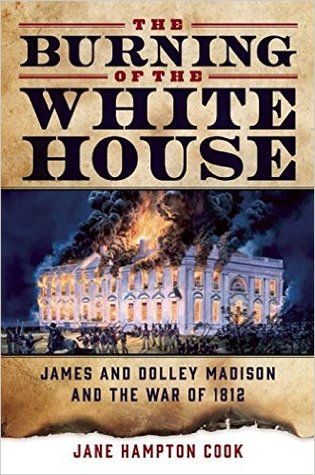
Book Review: The Burning of the White House: James and Dolley Madison And The War of 1812 by Jane Hampton Cook


Despite being a huge history nerd, I did not watch a single episode of Showtime’s recent miniseries, The First Lady.  That’s largely because I think Showtime made a mistake with the three first ladies that they chose to profile.

Eleanor Roosevelt?  Everyone knows that Alice was far more interesting.

Betty Ford?  Look, I think Gerald Ford was a great and underrated President and I think the country would have been better off if he had defeated Jimmy Carter in 1976.  But we all know that Alice Roosevelt is the Republican First Lady who deserves a miniseries.

Michelle Obama?  It’s going to be another few years or so before we can even begin to seriously discuss whether or not the Obamas were successful in the White House.  Meanwhile, the legacy of Alice Roosevelt is right there.

Personally, assuming that there wasn’t a show about Alice Roosevelt airing at the time, I would rather watch a miniseries about Dolley Madison, who served as America’s First Lady from 1809 to 1817.  Madison was the fourth First Lady but she was the first to play an important role in her husband’s success.  Indeed, James Madison was said to be such an introvert that it’s doubtful he would have ever been nominated for or elected President if not for Dolley’s outgoing personality.  Along with furnishing The White House and making it into a proper residence for the head of the executive branch, Dolley also started the tradition of White House receptions and by inviting not only Madison’s allies but also his rivals, it can truly be said that Dolley Madison was the first person to promote bipartisanship in Washington.  Dolley was even the first American to ever receive a telegraph message and then send a response.  Apparently, before Dolley showed up, people would just read their messages and then toss them to the side.

James Madison was also President during the War of 1812.  Now technically, The War of 1812 was not America’s finest moment.  While the British were hardly innocent when it came to the diplomatic tensions between the two countries, the war largely escalated due to the fact that certain Americans had convinced themselves that Canada was eager to both be liberated from British rule and to become a part of the United States.  Indeed, the long tradition of the U.S. invading other countries for their own good began with the 1813 invasion of Canada.  In 1814, the British responded by sacking Washington D.C. and burning down the White House.  It was Dolley who made sure that the famous portrait of George Washington was removed from the White House wall before the building was set on fire.

That Dolley survived the burning of the White House served as a rallyingcry for the U.S. forces and what should have been a blow to morale instead only inspired the Americans to fight harder.  And while one can argue that the war was largely America’s fault, one can also acknowledge that the world was ultimately better off as a result of America’s victory in the War of the 1812.  The British gave up any hopes of reclaiming America and America was finally forced to accept that Canada didn’t necessarily want to be a part of the United States.

In fact, if anyone deserves to have a film made about her, it’s Dolley Madison.  Kate Winslet would be brilliant as Dolley Madison.  Get Sofia Coppola to direct it.  It’ll be great!

And I would suggest basing the film on a book called The Burning of the White House: James and Dolley Madison and the War of 1812.  Well-researched, well-written, and well-paced, this book was written by Jane Hampton Cook and it works as not just a history of the War of 1812 but also as a tribute to the legacy of Dolley Madison.  If you’re into history like I am, this is definitely a book that you should be reading.  It’s so informative and engaging that you really don’t need a movie to appreciate Dolley and James.

Still, someone really should make that movie….

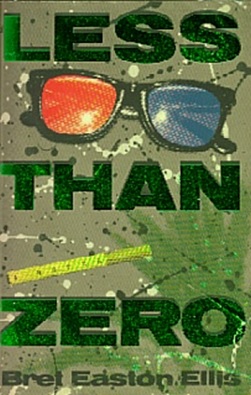
Book Review: Less Than Zero by Bret Easton Ellis


After having watched the film version a few hundred times, I figured that it was time for me to sit down and actually read Bret Easton Ellis’s Less Than Zero. 

First published in 1985 (and written when Ellis was only 19 years old and still a college student), Less Than Zero tells the story Clay.  Clay is a rich college student who returns home to Los Angeles for winter break.  It’s his first time to be back home since starting college and he quickly discovers that all of his old friends are, for the most part, hooked on drugs and self-destruction.  Clay’s friend Rip deals drugs and buys underage sex slaves.  Clay’s former best friend, Julian, is now a heroin addict who has sex for money.  Clay’s other best friend, Trent, is a model who watches snuff films.  Meanwhile, Clay’s girlfriend, Blair, isn’t even sure that she likes Clay.  Clay goes to therapy and the therapist tries to sell his screenplay.  Clay struggles to tell apart his two sisters and he rarely speaks to his mother or his father.  He’s haunted by memories of his grandmother slowly dying of cancer.  As winter break progresses, Clay finds himself growing more and more alienated from everyone and everything around him.  He feels less and less.

I had often heard that the film version was dramatically different from the book but nothing could prepare me for just how different.  In the film, Clay is an anti-drug crusader who reacts to everything that he sees in Los Angeles with self-righteous revulsion.  In the book, Clay simply doesn’t care.  Clay’s narration is written in a flat, minimalist style, one that makes Clay into a dispassionate observer.  Over the course of the narrative, there are times that Clay obviously know that he should probably feel something but he just can’t bring himself to do it.  Even when he objects to Rip buying a 12 year-old sex slave, Clay doesn’t do anything to stop Rip or to help his victim.  Clay is the epitome of someone who has everything but feels nothing.  Most of the memorable things that happen in the movie — Julian begging his father for forgiveness and money, Clay and Blair being chased by Rip’s goons, Julian dying in the desert — do not happen in the book.  They couldn’t happen in the book because all of those scenes require the characters to have identifiably human reactions to the things that they’re seeing around them.

It’s not necessarily a happy book but, fortunately, it’s also a frequently (if darkly) funny book.  Bret Easton Ellis has a good ear for the absurdities of everyday conversation and some of the book’s best moments are the ones that contrast Clay’s lack of a reaction to the frequently weird things being discussed around him.  Even more importantly, it’s a short book.  Just when you think you can’t take another page of Clay failing to care that everyone around him will probably be dead before they hit 30, the story ends.  Ellis writes just enough to let the reader understand Clay’s world and then, mercifully, the reader is allowed to escape.

Just as the movie is definitely a product of its time, the same can be said of the original novel.  Reading Less than Zero is a bit like stepping into a time machine.  It’s a way to experience the coke-fueled 80s without actually traveling to them.

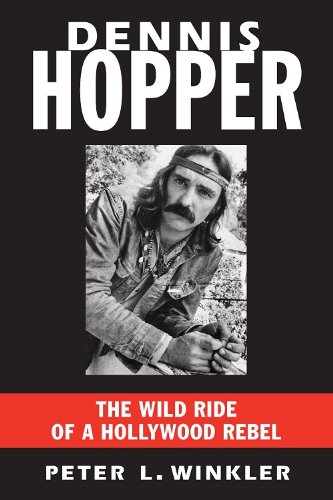
Book Review: Dennis Hopper: The Wild Ride of a Hollywood Rebel by Peter L. Winkler


Sometimes, I have to remind myself that Dennis Hopper is no longer with us.

Seriously, he’s one of those iconic screen figures who remains as much of a pop cultural presence in death as he was in life.  For an actor who spent a good deal of his career under an unofficial blacklist, Hopper appeared in a number of classic films.  Rebel Without A Cause, Giant, Night Tide, Easy Rider, Apocalypse Now, Blue Velvet, Speed, True Romance, The Trip, The Other Side of the Wind, Queen of Blood, Land of the Dead, Hoosiers, Out of The Blue …. one of the things that they all share in common is the eccentric presence of Dennis Hopper.  Even Hopper’s bad films, like Waterworld, are more popular than the bad films of other actors.  And while Hopper will probably always be best-known as an actor, he’s received some posthumous recognition for his work as a director.  It’s been 12 years since Dennis Hopper passed but he’s still very much a part of the American cultural landscape.

How did this happen?  How did Dennis Hopper go from being a kid from Kansas to being a disciple of James Dean?  How did Hopper go from appearing in big budget films like Giant to working as a member of Roger Corman’s stock company?  How did Hopper come to revolutionize American film with Easy Rider, just to lose the next few years of his life to his legendary addictions?  Remarkably, Dennis Hopper not only inspired the “New Hollywood” with Easy Rider but he nearly destroyed it with The Last Movie.  In the 70s and the first half of the 80s, he was still capable of giving a good performance but the key was to find him when he wasn’t dealing with a fit of drug-induced paranoia.  And yet, even with his addictions and demons, he still directed one of the most important films of the 80s, Out of the Blue.

Remarkably, Hopper did eventually conquer his addictions.  Starting with David Lynch’s Blue Velvet, Hopper remade himself as one of Hollywood’s busiest character actors and, to many, he became an almost lovable relic of the 60s.  The former self-described communist became a Republican.  And, even if he never could quite restart his directing career, Hopper stayed busy for the rest of his life.  It was a remarkable transformation.  The rebel who once ran a cult-like commune in New Mexico became a beloved member of the establishment that he once swore he would destroy.

Peter L. Winkler’s 2011 biography, Dennis Hopper: The Wild Ride of a Hollywood Rebel, takes a look at how this happened.  The Dennis Hopper that emerges from this detailed biography is a natural born rebel who was also canny enough to keep one foot in the system that he was trying to destroy.  As such, Hopper could shares James Dean’s dismissive attitude towards Hollywood while also remaining a favorite of John Wayne’s.  Hopper could make the ultimate hippie film without actually becoming a hippie himself.  Hopper had the talent necessary to keep getting roles even when he had a reputation for not being quite sane.  Indeed, the book argues that Hopper’s best performances were given when he had something to prove and that Hopper’s work and his films became significantly less interesting once he was fully welcome back into the establishment.

And while I do think that Winkler is a bit too dismissive of some of Hopper’s later work, he does have a point.  Dennis Hopper thrived on being a rebel, which is one reason why he came to define the late 60s and the early 70s.  One reason why Hopper’s performance as Frank Booth in Blue Velvet remains so powerful is because he’s rage is so palpable.  Booth is trying to destroy the world, just as surely as Hopper once tried to destroy Hollywood.  But, eventually, Hopper’s style of rebellion fell out of fashion and then resurfaced as the subject of nostalgia.  The rebels always eventually become the establishment.

Winkler’s biography not only takes a look at some of Hopper’s best films but it also puts him and his work in a proper historical and cultural context.  The book is as much about what Hopper represented to a generation as how Hopper lived his life.  And while Hopper himself is not always a sympathetic figure (like many actors, he could be more than a little self-absorbed), he does come across as being a fascinating talent.  Hopper often referred to himself as being the epitome of the “American Dreamer” and this biography leaves no doubt that he was correct.

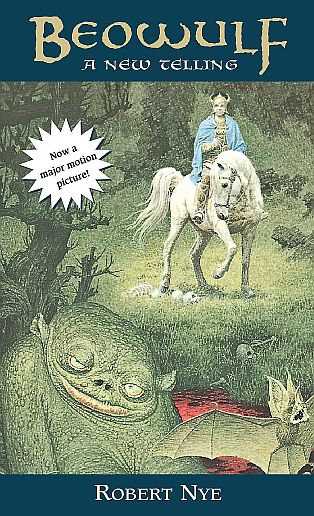
Book Review: Beowulf by Anonymous


Wow, what an annoying book!

First published in 975, Beowulf tells the story of a Danish king named Hrothgar who can’t be bothered to be a good neighbor.  The loud parties at his mead hall ends up annoying both Grendel and his mother so Grendel takes it open himself to start killing Hrothgar’s men.  Hrothgar and his men are forced to abandon their mead hall …. which, well, that would be the solution right there, wouldn’t it?  I mean, they could just go somewhere where there isn’t a monster living nearby and build a new mead hall.  And maybe they could establish some new mead hall rules, like “Keep it down after 10 pm” and “You Don’t Have To Go Home But You Can’t Stay Here.”  But instead, Hrothgar decides to cry about it.  Seriously, dude, it’s just a mead hall!

Anyway, this jerk named Beowulf sails over to help out Hrothgar.  But before Beowulf can help out Hrothgar, he has to spend a lot of time bragging on himself and telling everyone that he’s the greatest warrior that has ever lived.  I mean, he goes on for so long that I was wondering if maybe he was just planning on boring everyone to death.  Beowulf goes on to kill Grendel with his bare hands and then, when Grendel’s mother complains, Beowulf kills her too.  Uhmmm …. yay, I guess.

Many years later, Beowulf is the king and one of his slaves steals a gold cup from a dragon.  Needless to say, the dragon is not happy about this and really, who can blame it?  I imagine that dragons spend a lot of time collecting their gold and it’s always struck me as odd that humans seem to think that they have the right to just steal from the dragons whenever they feel like it.  With the dragon threatening his kingdom, Beowulf has to come out of retirement to fight one final beast….

The main problem with Beowulf is that the main character is kind of a jerk and he has a really bad habit of bragging on himself.  If I was one of his subjects, I would dread having to ask him for help because Beowulf is apparently incapable of just doing something without using it as an excuse to puff himself up.  Instead, he has to brag about how he’s the only person in the world who could possibly do it and, to top it all off, he has to make everyone else feel bad about the fact that they’re having to ask Beowulf for a favor.  Beowulf is such a long-winded jerk that he makes Grendel and the Dragon seem sympathetic by comparison.

I’m not surprised that the author of Beowulf is anonymous.  Who would want to take credit for this?  For a far better look at life in the 8th Century, check out John Gardner’s Grendel.  Or go watch the Robert Zemeckis-directed 2007 film adaptation, which has its flaws but also features Angelina Jolie, Crispin Glover, Anthony Hopkins, and John Malkovich!  How can you wrong with a cast like that?

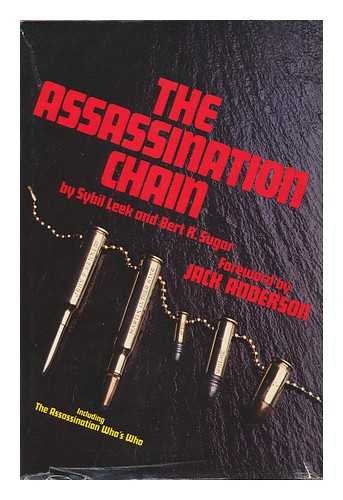
Book Review: The Assassination Chain by Sybil Leek and Bert R. Sugar


Here’s a few things you should know about me.

I don’t believe in ghosts.

I don’t believe in aliens.

I don’t believe in reincarnation.

I don’t believe in manifesting events and I sure as heck don’t believe in the power of Twitter prayer circles.

I do believe that Lee Harvey Oswald acted alone.

That makes me a bit of a rarity in our conspiracy-crazed culture but, to me, the idea of one loser killing the most powerful man in the world makes more sense than the idea of some gigantic, complex conspiracy coming together and developing a needlessly complicated plot to kill someone who they could have just as easily blackmailed or circumvented through other methods.

That said, just because I don’t believe in conspiracy theories doesn’t mean that I don’t find them to be oddly fascinating.  Take, for instance, the 1977 conspiracy tome, The Assassination Chain.

Written by Sybil Leek and Bert R. Sugar, The Assassination Chain takes a look at the theories surrounding the assassination of John F. Kennedy.  Each major theory — from Oswald acting alone to accusations against the CIA, the FBI, the Mafia, Castro, the anti-Castroites, the military-industrial complex, and various right-wing oilmen — is given its own separate chapter.  With the exception of the official story, each theory is given respectful consideration.  After detailing the JFK theories, The Assassination Chain features chapters about the assassinations of Martin Luther King, Jr, and Robert F. Kennedy.  It even takes a look at the attempted assassination of George Wallace and suggests that both Sirhan Sirhan and Arthur Bremer were brainwashed by people who were concerned that either RFK or Wallace could keep Nixon out of the White house.

And, in conclusion, the book suggest that the guilty party was …. EVERYONE!  Everyone from the CIA to the FBI to the Mafia to the Pentagon to the richest men in Texas came together in a gigantic plot to not only kill JFK but to also to kill Rev. King, RFK, and Wallace.  (I think this might be the only book to suggest that MLK and George Wallace had the same enemies.)  Who could stand at the controls of such a plot?  Almost as an afterthought, the book accuses Howard Hughes, the famously eccentric billionaire who was later played by Leonardo DiCaprio in The Aviator.

The book’s conclusions aren’t particularly convincing but they do provide an interesting insight into the conspiracy mindset, which states that the only evidence that matters is the evidence that supports the conclusion that you’ve already reached.  There’s actually far more evidence to suggest that Oswald acted alone than there is to suggest that the CIA would risk its existence by assassinating the President as opposed to just threatening to leak the details of the President’s extramarital affairs to the press.  But it’s comforting to assume that the world’s events are the result of a conspiracy as opposed to just the act of one loser who was upset because his wife left him.  Conspiracies provide a way to understand the whims of fate.  There’s a comfort in believing that everything happens as a part of a deliberate chain as opposed to just being random events.

The thing is, though, The Assassination Chain makes for an interesting read.  Regardless of whether you buy the conspiracy angle or not, it’s always interesting to explore the darker corners of the 60s and early 70s.  One reason why the JFK assassination conspiracy theories are so fascinating is because they all involve shady and downright weird characters, like alcoholic ex-FBI agent Guy Bannister and his partner, a hairless pilot and amateur cancer researcher named David Ferrie.  The Assassination Chain provides a tour through the fringes of the 60s and introduces to many of the characters who were made their home in those fringes.  The book’s final chapter is a detailed Who’s Who of everyone who, up to that point, had been caught up in the assassinations and the theories that followed and it’s an interesting collection of eccentrics, wannabe spies, and mentally unstable blowhards.

The worn and beat-up copy of this book that I read was obviously an old library book.  It reeked of cigarette smoke and, as I leafed through the book last week, I found myself imagining the previous owner, chainsmoking while trying to understand the chaotic and random nature of the world.  Whomever that person was, I hope they found some sort of answer.

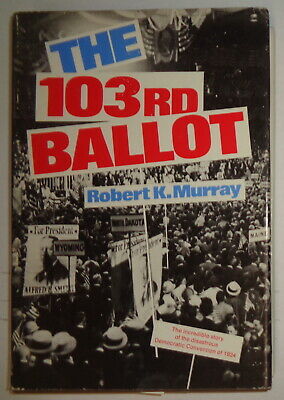
Book Review: The 103rd Ballot by Robert K. Murray


Cinematically, the 1968 Democrat Convention has been done to death.

There have been a lot of movies made about the 1968 Democrat Convention and certainly, I can understand why.  Not only did you have an epic battle taking place in the Convention Hall between the Democrat establishment and the reformers but there were also riots in the streets.  The police were beating up protestors and slogans were being chanted and Haskell Wexler was filming footage for Medium Cool.  Yes, it was all very cinematic but again, it’s just been done to death.  We don’t need another movie about what happened in 1968.

Instead, what is needed is a movie about the 1924 Democrat Convention, which was held in Madison Square Garden and which lasted for two and a half weeks because none of the men running for President could get enough votes.  The two major candidates were Al Smith of New York and William McAdoo of California.  Smith was an anti-prohibitionist and was seeking to become the first Catholic to be nominated by a major political party.  McAdoo was the son-in-law of America’s greatest monster, Woodrow Wilson.  Smith’s campaign was managed by a young Franklin D. Roosevelt, who was making a political comeback after being previously struck down by polio.  Though he was not himself a member and had no use for the organization, McAdoo found himslef being supported by the Ku Klux Klan, who was then at the height of its political influence and which opposed Smith because of his Catholicism.

With neither Smith nor McAdoo able to command a majority of the delegates, other “favorite son” candidates emerged.  U.S. Sen. Oscar Underwood of Alabama, a longtime opponent of Klan, was not only nominated but also fought a heroic but losing battle to insert a plank condemning the Klan into the Democrat platform.  West Virginia’s John W. Davis was nominated, as was Kansas’s Jonathan M. Davis.  Meanwhile, in the wings, William Jennings Bryan managed the presidential campaign of his brother, Charles, and waited to see if the Convention would perhaps turn to him and put him on the national ticket for a record fourth time.  (Little did Bryan know, of course, that the Scopes Monkey Trial was waiting for him, right around the corner….)

In the end, 58 men received votes for the presidential nomination at the 1924 Democrat Convention.  It took a record 103 ballots for the party to finally nominate a candidate who, after all of that, would still have to run against the enormously popular incumbent, Calvin Coolidge.  Along the way, there were fist fights, political chicanery,  and many accusations of lies, bad faith, and prejudice.  FDR re-launcher his career with his pro-Smith speech but, in doing so, he also inspired the jealousy that would lead to Al Smith becoming one of the leading opponents of the New Deal.  Meanwhile, the aging William Jennings Bryan struggled to control a party that no longer had much use for him.

It’s a fascinating story, and one that I know about because I read a book called The 103rd Ballot, which tells the story of not only the convention but also the election that followed it.  The book was written by Robert K. Murray and it was originally published in 1976.  It’s been around for a while but the issues that it deals with and the politicians that are profiled all feel very familiar.  Today, control of the major political parties is still being fought over by the activist who do the work and the politicians who reap the rewards.  Extremism is still a threat.  Just as the Democrats did in 1924, Americans are still trying to figure out what the country’s role in the world should be.  As described by Robert K. Murray, historic figures like FDR, Al Smith, McAdoo, Calving Coolidge, and John W. Davis all come to life.  Their motivations are often petty but their actions change the course of history.

The next presidential election is going to be the 100-year anniversary of the 1924 debacle and the issues that made that convention so chaotic are the same issues that political types are still dealing with today.  In 1924, America was recovering for a war and a pandemic.  In 2024 …. well, you get the idea.  The main difference, of course, is that we now have air conditioning.  At the 1924 convention, air conditioning was still a relatively new concept and the delegates spent two and a half-weeks jammed into Madison Square Garden in the summer.  Agck!

So, seriously, some aspiring Aaron Sorkin (though not Sorkin himself, that’s the last thing we need) needs to buy the rights to this book and get to work on a movie or a miniseries about what happened in 1924.  I can’t wait to see who plays Al Smith!