Miniseries Review: Death by Lightning (dir by Matt Ross)


Death by Lightning, a four-episode miniseries that recently dropped on Netflix, tells the story of two “forgotten men,” as the show itself puts it.

Michael Shannon plays James A. Garfield, the Ohio farmer and former Congressman who, despite attending the 1880 Republican convention solely to give the nominating speech for Secretary of Treasury John Sherman (Alistair Petrie), found himself nominated for President after the convention found itself deadlocked between supporters of Former President Grant (Wayne Brett) and Senator James Blaine (Bradley Whitford).  Garfield did not want to run for President and he certainly did not want to run with Chester A. Arthur (Nick Offerman), an associate of New York political boss, Roscoe Conkling (Shea Whigham).  However, in November of 1880, James Garfield was narrowly elected the 20th President of the United States.

Matthew MacFayden plays Charles J. Guiteau, a failed lawyer and self-proclaimed newspaper publisher who felt that a stump speech he had given at a small rally was responsible for Garfield’s victory.  Guiteau expected to be appointed to a position in the Garfield administration, perhaps as Consul to France.  In those days of no Secret Service protection and an open White House, Guiteau was one of the many random office seekers who managed to get a face-to-face meeting with Garfield.  What Guiteau did not get was a job.  While Guiteau may have deluded himself into thinking that he was an inside player, everyone else viewed him as being a pesky and disreputable character.  On July 2nd, 1881, Guiteau shot Garfield in the back.  After Garfield died in September, Guiteau was convinced that he would be pardoned by the newly sworn-in President Arthur.  Instead, Guiteau was hanged on June 30th, 1882.

(It’s now generally agreed that Guiteau was such a bad shot that Garfield would have survived his wounds if not for the incompetence of his doctors, who probed his wounds with their bare hands in an effort to extract the bullet.  Garfield died as a result of multiple infections caused by his medical treatment.)

Again, Death by Lightning describes Garfield and Guiteau as both being forgotten men.  That’s not quite true.  I knew who both of them were before I watched the miniseries but then again, I’m also a history nerd.  As much as I don’t want to admit it, it is true that the majority of today’s Americans don’t know either Garfield or Guiteau.  And yet, in 1881, America revolved around them and their fate.  Everyone checked every day for news on Garfield’s health and Guiteau’s trial was heavily covered by the press.  That’s something to remember whenever you hear people talking about how “history will remember” whatever may be happening in the news today.  History may remember but people are quick to forget.

As for Death by Lightning, it does a good job of telling not only the stories of Garfield and Guiteau but also Chester Arthur as well.  The miniseries takes place at a time when political machines dominated American politics and also at a time when the Spoils system and the widespread corruption that it engendered were both accepted as immutable political realities.  Guiteau, having spent his life seeing other people receive jobs for supporting the right candidate, felt that he was naturally entitled to whatever position he requested.  Guiteau’s actions actually did lead to reformation of the Spoils system, with President Arthur emerging an unlikely reformer.  Never again would a random office seeker by allowed through the front doors of the White House and never again would a President casually walk around Washington D.C. without some sort of guard.  With a smart script, good performances, and even a few moments of unexpected cringe humor, Death by Lighting recreates that moment in American history and it pays tribute to James A. Garfield, who was universally described by his contemporaries as being a decent man who was struck down before he could reach his full potential.

How historically accurate is Death by Lightning?  That’s a fair question.  Death by Lightning sticks to the established facts about Garfield and Guiteau but a scene in which Garfield’s daughter argues with him about immigration is undoubtedly meant to be more of a commentary on 2025 than 1880.  I think it can be argued that no film or series can be 100% historically accurate because those who actually witnessed the events in question are no longer with us.  Inevitably, the past is always viewed and recreated through the filter of the present.  And indeed, it is tempting to compares Garfield and Guiteau to our modern-day politicians and activists.  Guiteau, with his constant excuses for his own dumb decisions and his ranting and raving about how he speaks for the people, was a particularly familiar character.  As for the modest and honest Garfield, it’s sadly difficult to think of any modern-day politicians from the same mold.

As a final note, my favorite part of this miniseries occurred during the first episode.  The recreation of the 1880 Republican Convention is wonderfully entertaining.  It’s amazing to think that, in the days before television coverage required political conventions to become carefully choreographed and tightly controlled, there actually was legitimate suspense about who would end up being nominated.  Sadly, those days seem to be over.
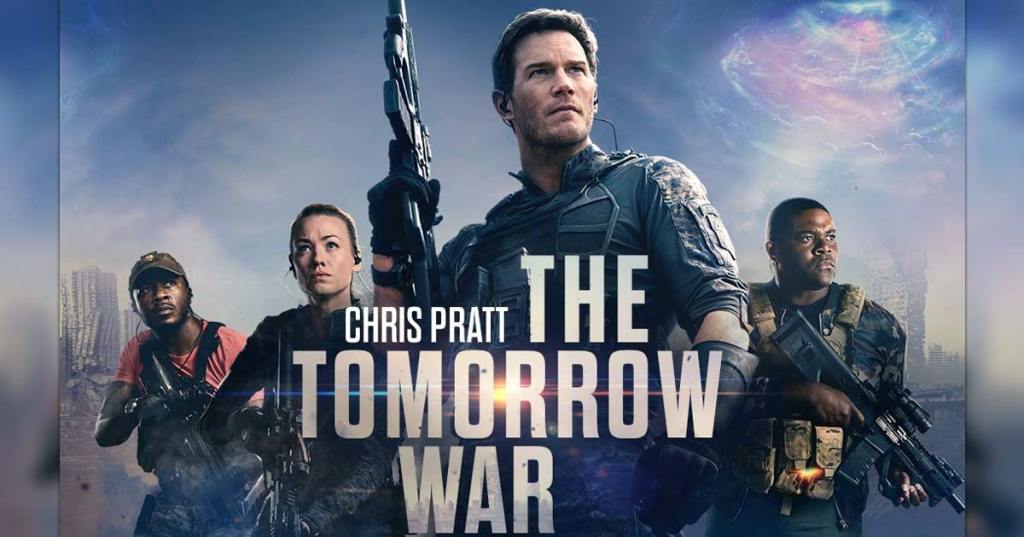
The Tomorrow War, Review by Case Wright


I loved this movie and really loved live tweeting it with Lisa Bowman. There are some critics (killjoys) who want to pick on the movie because it doesn’t “make sense.” No one said this was being made for the Science Channel; so, just cool it and enjoy! Do I think that time travel is a bunch of nonsense? Yes, but so what?! I don’t believe in “Letters of Transit,” Facehuggers, or the Force.

I can relate to the hero A LOT; he’s a Veteran with Daddy issues who is trying to get a career going in STEM and he has a young daughter. The film opens with us learning he is teaching high school science and can’t get a private sector job. He feels like he’s meant for more, but can’t get there. He and his wife are hosting a Christmas party and watching soccer. Dan, I know that times are tough, but why bring soccer into it? I don’t think that people watch soccer on purpose. How could they? Why make your life harder? Our future-selves appear and ask for help in fighting aliens who are turning us into snacks. We agree to help and mobilize a global draft.

This is where most critics get worked up. Why help fight a battle that is already lost? I’ll tell you! The movie makes more sense than people think. Why send Dan Forester (Chris Pratt) and millions of other people from our time to fight aliens from the future? They needed cannon fodder while they protected researchers who created a toxin to kill the male and female aliens. Without that toxin, Dan would not have been able to defeat the alien queen. Take that! The whole plan is to get the toxin finished and have Dan go back and kill all the aliens with it. Without it, she would’ve eaten him. Yes, we needed the cannon fodder. If Dan succeeds, wouldn’t that bring all the draftees back to life? Yeah, maybe? Einstein didn’t really didn’t have to deal with too many aliens and wormholes. I would put that in the column of …. relax.

Back to the movie, Dan gets drafted and his wife wants him to get his estranged father to help him remove his draft tracking device. Dan’s father abandoned him and his mother; so, Dan gets angry at his father and decides to honor his draft commitment and fight aliens. He goes to the future with no training, fights aliens, and retrieves the toxin. Way to go, Dan.

These monsters are gross and good adversaries. They’re fast, they shoot spikes, the eat you, they have natural armor, and can coordinate attacks. We are doomed. After he gets the toxin, he meets his grown daughter Muri who is the head of the resistance. We learn Dan fell into a depression because he couldn’t live a bigger life and he abandons his family just like his father did. This is why Muri drafted Dan: She wanted him to be his best self and to be the special person that he needed to be after his military life was over. She gives her father a chance to be a hero again. When Muri finishes the toxin, he goes back to save the future or the past …it’s kinda confusing.

I have given quite a bit of the film away, but it’s still amazing. I appreciate the critique that Charlie (Sam Richardson) brought too much humor to the film. I actually liked it, but I could’ve lived without it as well. Instead of the endless jokes, I would’ve liked more development of Dorian (Edwin Hodge). His lines popped more and brought more seriousness to the film. Were Charlie’s jokes funny? Yes, but while the jokes went on, I thought- I really wish I could hear more from Dorian interacting with Dan.

The direction was very well done. I love a well choreographed action movie without a lot of cutaways. This delivered. I was surprised to learn that Chris McKay’s filmography was heavily in animation. I hope he gets more opportunities for live action. The final battle scene was a lot of fun. I liked that the female characters had depth, kicked ass, and had real arcs. Because of that, my daughters love watching the movie with me. I can only write that we haven’t seen the movie six times.

Horror Film Review: The Grudge (dir by Nicolas Pesce)


Eh, who cares?

Released way back in January (and, in fact, I think it may have been the first horror movie released in 2020), The Grudge is the latest film to tell the story of a house where ghosts compel inhabitant after inhabitant to kill themselves and their families.  Look, we all know how it works.  We’ve all seen Ju-on.  We all know that it begins with someone dying while extremely angry or extremely sad and then a curse being passed on from person to person.  The original Japanese films are frightening while the American versions tend to get bogged down in all of the usual horror clichés.  We all know how these things work.

Anyway, this version of The Grudge takes place, for the most part, at 44 Reyburn Drive, where a number of people die over the course of the film.  The Grudge is told in a nonlinear fashion, so we hope back and forth in time.  We meet a lot of different people and sit through a lot of different stories but none of them are particularly interesting.  Two real estate agents discover that their unborn child is going to have a rare genetic disorder.  An elderly couple prepare for an assisted suicide.  A nurse is haunted by the things that she saw while she was working in Japan.  A detective obsesses on all of the murders.  In the present day, another detective (Andrea Riseborough) tries to figure out why so many murders are connected to the house.  It’s difficult to really get caught up in her investigation because we already know the answer.

It’s all pretty dull.  Maybe if I had never seen any of the other Grudge films, I would have found this movie more interesting but The Grudge doesn’t really bring anything new to the table.  All it really does is remind you of how formulaic the American version of franchise has always been.  Of course, everyone’s going to die and, of course, there’s going to be a shock ending.  (Interestingly enough, the international version has a different ending.)  It’s all rather boring and it’s hard not to get annoyed that the film assembled a truly amazing cast and then basically didn’t anything with them.  Consider some of the people in this film: Andrea Riseborough, Demian Bichir, John Cho, Betty Gilpin, Lin Shaye, Jacki Weaver, William Sadler, Frankie Faison.  Wasting a cast with that much talent really does amount to cinematic malpractice.  It seems like it should be an impossible mistake to make but The Grudge somehow manages to do it.

The film’s nonlinear format doesn’t add much to the story.  I mean, you know everyone’s going to die eventually so having the story told in random chunks and pieces doesn’t really add any sort of suspense.  One could argue that the film does deserve some credit for being as dark as it is.  I mean, it does kill the type of sympathetic characters who, normally, would survive other horror films.  But, even with that in mind, it’s all just kind of boring.  I don’t hold a grudge against anyone for trying to reboot the franchise but this film just doesn’t bring anything new to the table.


Film Review: True Story (dir by Rupert Goold)


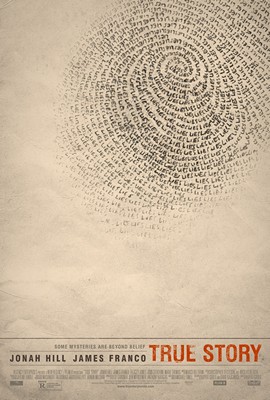
True_Story_poster

In 2002, a man named Christian Longo was arrested in Mexico.  Longo, who was on the FBI’s 10 Most Wanted List, was charged with murdering his wife and his three children.  When he was arrested, he was using the name of Michael Finkel, a real-life travel writer for the New York Times.  When asked why he had been using Finkel’s name, Longo explained that he admired Finkel as a writer.

At the same time that Christian Longo was getting arrested, Michael Finkel was in the process of watching his career fall apart, the result of his having fabricated part of a story.  Fired from the New York Times, Finkel found himself unemployable.  When he discovered that Longo had been using his name, Finkel arranged to meet with him.  Not only was he curious as to why Longo wanted to be him but he also saw Longo as potentially being the story that could relaunch his career.

During their initial meeting, Longo told Finkel that he was a long-time admirer.  Longo agreed to tell Finkel his side of the story in exchange for writing lessons and Finkel’s promise to keep the details of their conversations a secret until after the trial.  Finkel agreed and soon, the two men became unlikely friends.

At first, Finkel believed that Longo was innocent.  But then, on the first day of the trial, Longo was asked how he pled to four charges of murder.   Longo entered two pleas of not guilty and two pleas of guilty and Finkel found himself forced to reexamine everything that he had previously believed about his new friend…

Amazingly enough, that’s a true story.  It’s also the subject matter of a recently released film called True Story.

In True Story, Michael Finkel is played by Jonah Hill and Christian Longo is played by James Franco.  Both Franco and Hill (who, despite having 3 Oscar nominations between them, remain oddly underrated actors) give the type of excellent performances that can elevate an entire film.  Interestingly enough, they’re both playing dramatic versions of their own typically comedic personas.  Hill plays up his trademark nerdy aggressiveness while Franco brings his own deliberately ambiguous persona to Christian Longo.  Just as James Franco enjoys leaving people guessing about who he really is, Longo seems to get a perverse pleasure out of keeping Finkel guessing about whether or not he really killed his family.  When Longo takes the stand in his own defense and gives his version of what happened on the night of the murders, he does it with a perverse gleam in his eye.  Longo may be facing the death penalty but mostly, he’s just enjoying being in the spotlight.

Hill and Franco are famous for being off-screen friends and they bring a lot of their own real-life chemistry to their shared scenes.  As played by Hill and Franco, Finkel and Longo develop a relationship that is nearly co-dependent.  Longo wishes that he could be a writer like Finkel.  Finkel wishes that he could be as personable and outwardly confident as Longo.  When Longo writes Finkel an 80-page letter that’s full of crude drawings, Finkel responds by taping each page to the wall of his office until he’s literally encircled by Longo’s words, much as how someone like me may have once been tempted to tape pictures of James Franco to the wall of her college dorm room.

With Franco and Hill both giving great performances, it’s a bit disappointing that the rest of the film isn’t always as strong.  Director Rupert Goold makes his feature film debut here and, at times, it feels as if he’s struggling to keep up with his actors.  There’s a lot of slow motion scenes of people walking down hallways and getting out of cars.  As well, too much of Finkel and Longo’s relationship is portrayed via montage.  We see countless rapidly-edited montages of Longo and Finkel speaking but, instead of actually hearing what the two of them are talking about, we instead listen to Marco Beltrami’s score.  Goold gets a lot of perfectly lit visuals but True Story is a film that could have used a rougher edge.

Even more unfortunate is that the film totally wastes Felicity Jones.  Playing Finkel’s wife, she doesn’t get to do much beyond looking pensive and concerned.  It’s a role that anyone could have played and it’s frustrating to watch because Felicity Jones is capable of doing so much more than just playing a worried wife.  Towards the end of the film, there’s a great scene where Longo and Jill talk on the phone and, at that moment, Felicity Jones finally gets to show some strength and personality.  James Franco, as well, seems to be relishing the chance to play up Longo’s manipulative side.  (It’s interesting to listen to the perversely flirtatious tone that he takes with her as opposed to the passive aggressive flattery that he uses on Finkel.)  The scene works wonders but then, the film makes the mistake of having Jill face Longo face-to-face and it falls flat precisely because Jill isn’t deep enough a character for us to feel any real satisfaction in watching her tell him off.

In the end, True Story is worth watching.  James Franco and Jonah Hill both give great performances.  If you’re a true crime fan like I am, you’ll find a lot of True Story to be intriguing.  Ultimately, if True Story is frustrating, it’s because it’s a good film that should have been great.