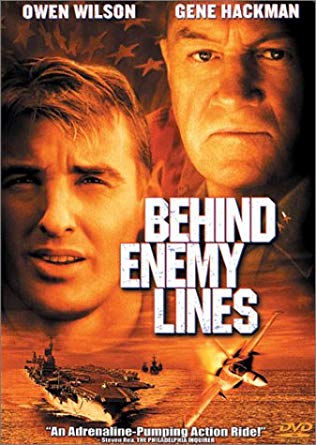
 When hotshot Navy flight officer Chis Burnett (Owen Wilson) is shot down while doing a reconnaissance mission over Bosnia, he finds himself stranded behind enemy lines. While Burnett tries to avoid being captured by a Serbian general and find evidence of illegal military operations in yje demilitarized zone, Admiral Leslie Reigart (Gene Hackman) tries to mount a rescue operation. Standing in his way are the NATO bureaucrats who would rather just leave Burnett to his fate than run the risk of disrupting the peace process.
Behind Enemy Lines was released early in Owen Wilson’s acting career and, after years of watching him in buddy comedies and eccentric character roles, it can be strange to see him playing a traditional leading man, much less an action hero. Burnett has his goofball moment but, for the most part, this is probably as dramatic a role as you’re ever going to see Owen Wilson perform. Once you get over the fact that he’s Owen Wilson and still speaking in the same stoner cadences that he’s used in everything from Bottle Rocket to Inherent Vice, Wilson actually gives a decent performance as Burnett. The fact that he’s not a traditional leading man actually makes the film’s action scenes more exciting. If Burnett had been played by someone like Brad Pitt or Tom Cruise, you would never have any doubt about his survival. With Owen Wilson in the role, you’re no longer quite as sure that he’s going to be able to make his way to safety.
Gene Hackman also gave a good performance, even if he didn’t really do anything with the role that he hadn’t already done with all of the other authority figures that he played from Unforgiven on. Hackman’s intimidating as Reigart. When Burnett says that he wants to retire from the Air Force, Reigart looks like he’s about to reach over and rip off his face. But Hackman has so much natural authority that you understand why his men automatically respect Reigart and follow his every order. Burnett is lucky to have him on his side because there’s no way Reigart’s going to let someone from NATO push him around.
When Behind Enemy Lines first came out, it was not loved by the critics. They complained that the movie was heavy-handed and predictable. They were right but it really didn’t matter. Behind Enemy Lines made a lot of money because it was a legitimate crowd pleaser. I remember seeing it when it first came out. This was less than month after 9-11 and the theater was packed with people who, like me, were still dealing with the greatest national trauma of our lifetime. When Owen Wilson killed the men who were trying to kill him, the audience cheered. When Reigart said that there was no way he going to abandon an American behind enemy lines, the audience applauded. By the time the film ended, everyone was on their feet and chanting “USA! USA!” (At least, that’s the way I remembered it.) Critics be damned, at that time, Behind Enemy Lines was the movie that we needed.
Behind Enemy Lines was a huge box office success so, of course, it got a sequel that wasn’t as good. I’ll review Behind Enemy Lines: Axis of Evil tomorrow.
 P.O.W. films were all the rage in the 1980s. For a country just starting to get back its confidence, refighting the Vietnam War onscreen was a way to deal with the lingering trauma of that conflict. In Rambo: First Blood Part II, Sylvester Stallone asked, “Do we get to win this time?” and for a while, the answer was yes. By sending action stars like Stallone and Chuck Norris to rescue American soldiers still being held captive in Asia, we would win this time (if only in our dreams).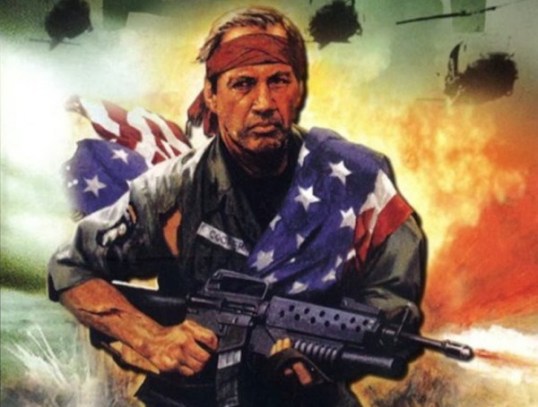
 Through the Shattered Lens