I Watched Hero


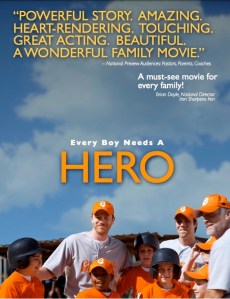
Joe Finn (Burgess Jenkins) used to the best Little League coach in the state.  That was until he decided to leave his family to seek fame and fortune in the Big Leagues.  After his wife dies of cancer, Joe returns home to discover that his teenage son, David (Justin Miles), wants nothing to do with him.  Determined to stick around and repair his relationship with David, Joe tries to return to coaching Little League but he discovers that things have changed since he left.  Runners aren’t allowed to take a lead off base.  Pitchers can only pitch for one inning at a time.  Practice can only last an hour a day.

That’s not real baseball!

Joe decides to start his own league, one where pitchers can pitch multiple innings, bases can be stolen, there’s no such thing as a tied game, and everyone practices daily for three hours.  To be a part of the league, the players not only have to get their fathers to agree to come to every game but also to practice with them at home.  It’s not going to be easy.  One player’s father is always busy with his job as the warden of the local prison.  Another player’s father is an inmate in that same prison.  But Joe is determined to teach his players and their fathers about both baseball and life.

Hero‘s a sweet movie and it made a good point about the importance of not only allowing kids to truly compete but also about teaching them the importance of both winning and losing with dignity and sportmanship.  It shows why baseball is important but why it’s also just as important to play a real game instead of a toned down version.  Burgess Jenkins, who used to play Billy Abbott on The Young and The Restless, is convincing as a coach and Justin Miles does a good job as his son.  My only problem with the film is that it spent so much time emphasizing that the fathers needed to come to their son’s games that I felt like it shortchanged all of the moms who have been there for their children whenever a father couldn’t or wouldn’t be.  Anyone who has ever been to a real little league game (or just a soccer match) knows that a mom can get just as into the game as a father.

People who complain about “participation trophies” will probably respond best to this film’s message but there’s also enough action of the field that people who just like baseball movies might enjoy it as well.

I Watched The Phenom


The Phenom is a movie that really took me by surprise.

It’s about a pitcher named Hopper Gibson (Johnny Simmons), a kid just out of high school who has a 100 mile fastball and a big future in major league baseball.  However, after a promising start, Hopper is struggling.  He has control issues.  He’s throwing wild pitches.  He’s losing games.  The team finally sends Hopper to see Dr. Mobley (Paul Giamatti), a sports psychologist who say that he can help Hopper regain his focus.

Hopper has a lot to deal with.  He’s still just a teenager but he feels like he has the weight of the world on his shoulders.  He promised his mom that he’d buy her a new house and, at the same time, the press is constantly hounding him and demanding that he give them a good quote every time that he loses a game.  Meanwhile, Hopper’s father (Ethan Hawke), who has always put tremendous pressure on his son, is failed ball player himself and a drug dealer.  Hopper finds himself torn between two philosophies, his father’s belief that winning is the only thing that matter and Dr. Mobley’s more gentle approach to the game.  The problem is that, with everyone wanting someone from him, Hopper doesn’t know who he can trust.

The Phenom is a baseball movie and the main character is a pitcher but hardly any of the action takes place on the mound.  Instead, most of the movie takes place in either Dr. Mobley’s office or in Hopper’s head.  The Phenom does a good job of showing the type of daily pressure that Hopper is living under.  All of his life, everyone has told Hopper that he has a special gift and now, he’s so scared of not living up to his potential that he can’t get the ball across the plate.  At the same time, the film is also critical about the the emphasis that society puts on celebrities and professional athletes.  While Hopper goes into the major leagues straight out of high school, his valedictorian girlfriend struggles to pay for college.  Because Hopper can throw a fastball, no one has ever cared about whether or not he actually got an education.  But what’s going to become of Hopper and all the professional athletes like him when they can no longer play the game?  Hopper is a kid who was always told that he would never have to grow up and now, he’s expected to make adult decisions about the rest of his life.

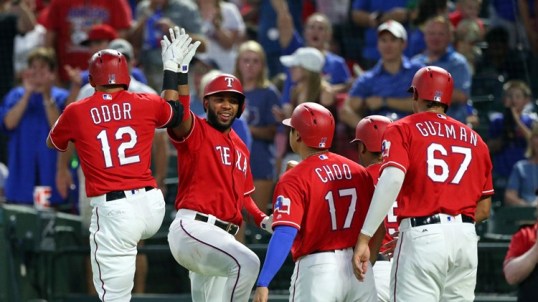
Johnny Simmons does a really good job playing Hopper and the film really makes you think about the pressure that society puts on professional athletes to constantly win.  Most people can get away with having a bad day but, if a pitcher or a quarterback does it, the whole world wants their head.  The next time I want to yell at whoever’s pitching for the Rangers, I’m going to remember Hopper and this movie.

The Phenom was directed and written by Noah Buschel and it is currently streaming on Netflix.

The Great American Pastime: IT HAPPENED IN FLATBUSH (20th Century-Fox 1942)


gary loggins's avatarcracked rear viewer

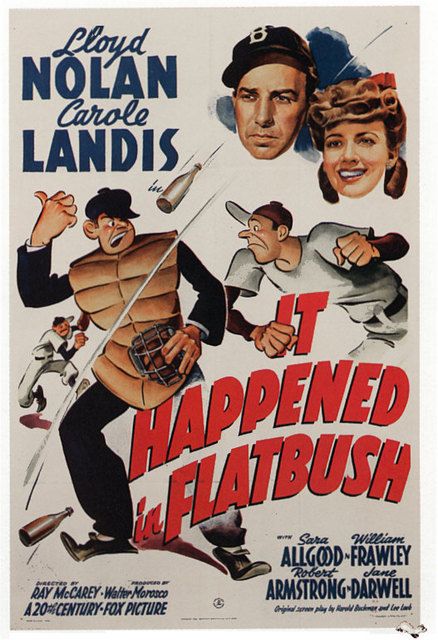
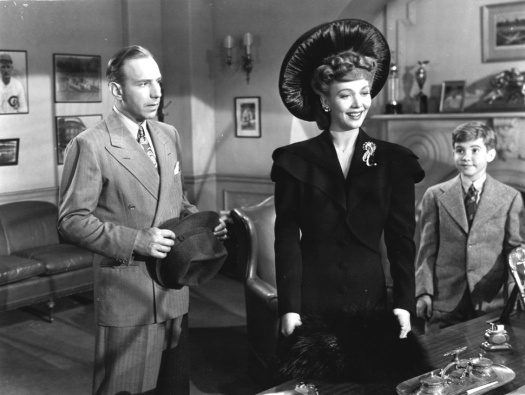
Major League Baseball’s Opening Day has finally arrived! It’s a tradition as American as Apple Pie, and so is IT HAPPENED IN FLATBUSH, a baseball movie about a lousy team in Brooklyn whose new manager takes them to the top of the heap. The team’s not explicitly called the Dodgers and the manager’s not named Leo Durocher, but their improbable 1941 pennant winning season is exactly what inspired this charmingly nostalgic little movie.

When Brooklyn’s manager quits the team, dowager team owner Mrs. McAvoy seeks out ex-player Frank Maguire, who seven years earlier was run out of town when an unfortunate error cost the team the pennant. She finds him running a club out in the sticks, and convinces him to come back to the Big Leagues. He does, bringing along his faithful bat boy/sidekick ‘Squint’, and just before the season’s about to begin, Mrs. McAvoy abruptly dies. Her family…

View original post 501 more words

Scenes That I Love: The Ending of Eight Men Out


In just a few more hours, the 2019 MLB regular season will begin when the Mariners’s Ichiro Suzuki tosses out the first pitch of the season.  The Mariners and the A’s will be playing a pair of games in Japan, at the Tokyo Dome.  In America, it will be around four in the morning when that first pitch is thrown so I’ll probably miss it.

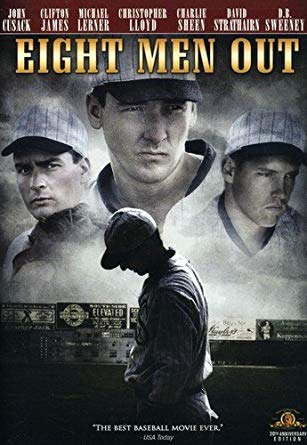
Even if I might not be able to watch the opening pitch, I can still watch my favorite baseball movie, Eight Men OutEight Men Out is about the 1919 World Series and how eight members of the Chicago White Sox were accused of conspiring with gamblers to throw the championship.  While everyone agrees that most of the players were guilty, Eight Men Out suggests that both Shoeless Joe Jackson and Buck Weaver were wrongly accused and, unlike the other players, should not have been banned from playing in the major leagues.

The final scene of Eight Men Out takes place several years after the scandal.  A group of baseball fans think that they’ve spotted Shoeless Joe playing for a semi-professional team.  While they debate whether or not that’s really Shoeless Joe, Jackson’s old teammate, Buck Weaver, tells them that there will never be another player as great as Joe Jackson.  John Cusack plays Weaver while D.B. Sweeney plays Jackson.

Finally, it’s time for baseball!

GO RANGERS!


Spring Fever: Joe E. Brown in ELMER THE GREAT (Warner Brothers 1933)


gary loggins's avatarcracked rear viewer

It may be cold and snowy here in New England, but down in sunny Florida, Spring Training has already begun – which means baseball season is on it’s way! The Red Sox are looking good, although they got pounded by the Orioles in the game I watched this afternoon (I’m writing this on a Saturday), but just hearing the crack of the bats has whetted my appetite for the return of America’s National Pastime. So while we wait for Opening Day to arrive, let’s take a look at the 1933 baseball comedy ELMER THE GREAT.

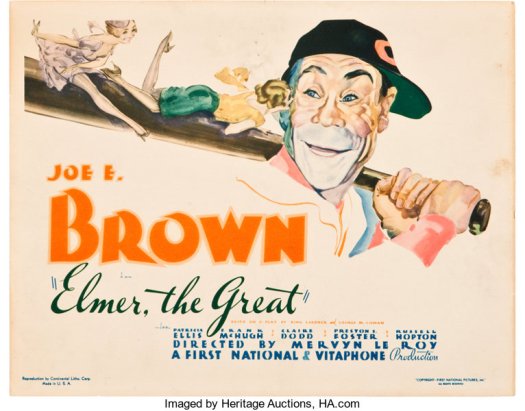
Comedian Joe E. Brown plays yet another amiable country bumpkin, this time Elmer Kane of small town Gentryville, Indiana. Elmer’s  laid back to the point of inertia, except when he’s eating… or on a baseball field! He’s better than Babe Ruth and he knows it, and so do the Chicago Cubs, who’ve bought his contract…

View original post 400 more words

I Watched The Jackie Robinson Story


Since I was pretty much indifferent to who won the World Series this year (Congratulations, Boston), I’ve been watching baseball movies instead.  I just finished watching The Jackie Robinson Story.

The Jackie Robinson Story was made in 1950, back when Robinson was still playing second base for the Brooklyn Dodgers.  The movie not only tells the story of how Jackie Robinson became the first black man to play in the major leagues but it also stars Jackie Robinson as himself!

Starting with Jackie’s childhood in Pasadena, the movie follows Jackie as he attends UCLA, serves a brief stint in the Army, and then plays baseball on an all African-American team (Jackie played for the Kansas City Monarchs but, in the movie, the team is renamed the Black Panthers!) before eventually getting signed to join the Dodgers and integrate major league baseball.  While the movie skips over a lot of Jackie’s early life, it doesn’t gloss over the prejudice that he encountered at every step of the way.  When he wins a scholarship to UCLA, people complain that the college has already recruited too many black athletes.  Even when he’s a star player in the Negro Leagues, he still has to ask permission to enter and use the washroom in a diner.  And when he joins the Dodgers, riots are threatened if he plays anywhere in the South.  During one game, his wife (Ruby Dee) overhears the whites in the stands talking about how “the Lodge” is going to visit Jackie.  Through it all, Jackie Robinson keeps his cool and refuses to give the racists the satisfaction of getting to him.  Jackie answers every bigoted comment with the crack of his bat, leaving no doubt that he belongs in the major leagues.

Jackie Robinson was a great baseball player and a great man.  He wasn’t a great actor and, in this movie, he comes across as being stiff and nervous whenever he has to play any dialogue scenes.  But then he swings a bat or catches a ball and it doesn’t matter that he can’t act.  Jackie Robinson was an amazing player and it’s still exciting to watch footage of him today.

The Jackie Robinson Story is a rousing, feel-good baseball movie and a condemnation of racism and bigotry, in all of its insidious forms.

Jackie Robinson

I Watched Eight Men Out


This year, watching the World Series has felt strange to me.

I love baseball so, of course, I’m going to watch.  But with neither the Rangers nor the Astros playing this year, I don’t really have anything invested in who wins.  The last time the Red Sox were in the series, I wanted them to win because the city was still recovering from the Boston Marathon bombing but this year, the Red Sox are the team that defeated Houston for the American League Championship.  I guess I want the Dodgers to win but it feels weird to cheer for a National League team.  The Red Sox are currently up 2 to 0.  That doesn’t mean that the Dodgers are out of it but they’ve got some ground to make up.  Luckily, they’ll be playing at home tonight.

Since there wasn’t a game last night, I watched Eight Men Out, a 1988 movie about the 1919 World Series.  I love this movie.

In the 1919 World Series, the Cincinnati Reds faced off against the Chicago White Sox.  The 1919 White Sox team was considered to be one of the best in the history of baseball and they entered the series of heavy favorites.  When they lost 5 games to 3 (the 1919 World Series was a best of nine series), a lot of gamblers lost a ton of money but there were a few that made a fortune.  Even before the series was over, there were rumors that several members of the White Sox were paid off to intentionally lose the game.  The scandal grew so large that the franchise owners agreed to appoint a judge named Kennesaw Mountain Landis as the first commissioner of baseball.  Eight White Sox players were accused of taking money to throw the game.  Even though they were acquitted of all the criminal charges, Landis still banned all eight of them from ever again playing major league baseball.  Among the players who were banned, 6 were definitely in on the fix.  However, both Buck Weaver and Shoeless Joe Jackson would go to their graves insisting that they hadn’t thrown a single game.

Eight Men Out tells the story of that World Series and how the White Sox came to be known as the Black Sox.  The film begins with various gamblers all approaching different players and offering them money to throw the World Series.  Fed up with being taken for granted and mistreated by management, some of the players agree immediately while others, like pitcher Eddie Cicotte, are more reluctant.  When the owners of the White Sox cheats Cicotte out of a bonus, Cicotte finally decides to accept the gamblers’s offer.

The best part of Eight Men Out are the scenes that contrast how the White Sox play when they’re throwing a game to how they play when they’re trying to win.  Even though they’re getting paid to lose, the players are depressed and angry after a loss.  When they play to win, they’re happy because they’re doing what they’re good at and they’re amazing to watch.  Those scenes are what baseball are all about.

Eight Men Out is a movie that loves baseball almost as much as I do and I recommend it to anyone else who loves the game.  It’s got a big cast and they’re all very good, even Charlie Sheen who plays one of the players.  My favorite performances were John Mahoney’s as the disappointed White Sox manager and John Cusack’s as Buck Weaver, who does nothing wrong but suffers the worst of any of the accused players.

If you’re just not feeling the World Series this year, check out Eight Men Out.

The Real 1919 Chicago White Sox

Base-Brawl: William Bendix in KILL THE UMPIRE (Columbia 1950)


gary loggins's avatarcracked rear viewer

Ahh, spring is in the air, that magical time of year, when a young man’s fancy turns to thoughts of… baseball!! That’s right, Dear Readers, Opening Day is upon us once again, and what better way to celebrate the return of America’s National Pastime than taking a look back at KILL THE UMPIRE, a 1950 comedy conceived in the warped mind of former animator Frank Tashlin and directed by ex-Warners vet Lloyd Bacon.

Big lug William Bendix stars as Bill Johnson, an ex-major leaguer whose passion for the game keeps him from holding a regular job because he keeps playing hooky to go to the ballpark. Bill hates only one thing more than missing a game – umpires! But when his exasperated wife threatens to leave him, his ex-ump father-in-law suggests he go to umpire school to save his marriage. Bill balks at first, but then reluctantly agrees, not wishing…

View original post 451 more words

It’s Opening Day!


Today is the day that I look forward to every year.  It’s the opening day of the 2018 MLB season!  For nearly 150 years, baseball has been America’s pastime.  Long before Andre Beltre and Mike Trout thrilled baseball fans with every swing of the bat, there were players like Hardy Richardson.

From 1875 until he retired in 1892, Hardy Richardson was one of the best players in major league baseball.  He played for 14 seasons and for 6 different teams.  When he was playing for Detroit, he led the team to victory in the 1887 World Series.  He played every single position and his stats would make any player proud.  Richardson appeared in 1,331 major league games, compiled a .299 batting average and .435 slugging percentage, and totaled 1,120 runs scored, 1,688 hits, 303 doubles, 126 triples, 70 home runs, 822 RBIs, and 377 bases on balls.

Richardson was also one of the first players known to have appeared on a baseball card.  In 1887, if you bought a pack of Old Judge cigarettes, you could also get a baseball card celebrating the career of Hardy Richardson.

Courtesy of the Library of Congress

It’s been over a hundred years since Hardy Richardson last swung a bat or stole a base but both his legacy and the legacy of everyone else who has ever played the game will continue today as the teams hit the field for the first time.  Good luck to all the players on Opening Day!

GO RANGERS!