
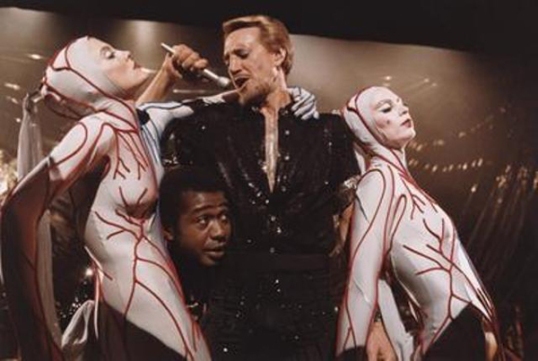
Today’s scene that I love comes from Bob Fosse’s 1979 masterpiece, All That Jazz. This scene features the legendary Ann Reinking at her best. Roy Scheider said that he cried after shooting this scene.
Today’s scene that I love comes from Bob Fosse’s 1979 masterpiece, All That Jazz. This scene features the legendary Ann Reinking at her best. Roy Scheider said that he cried after shooting this scene.
4 Or More Shots From 4 Or More Films is just what it says it is, 4 shots from 4 of our favorite films. As opposed to the reviews and recaps that we usually post, 4 Shots From 4 Films lets the visuals do the talking!
Today, we celebrate the birth and legacy of Bob Fosse. It’s time for….
4 Shots From 4 Bob Fosse Films
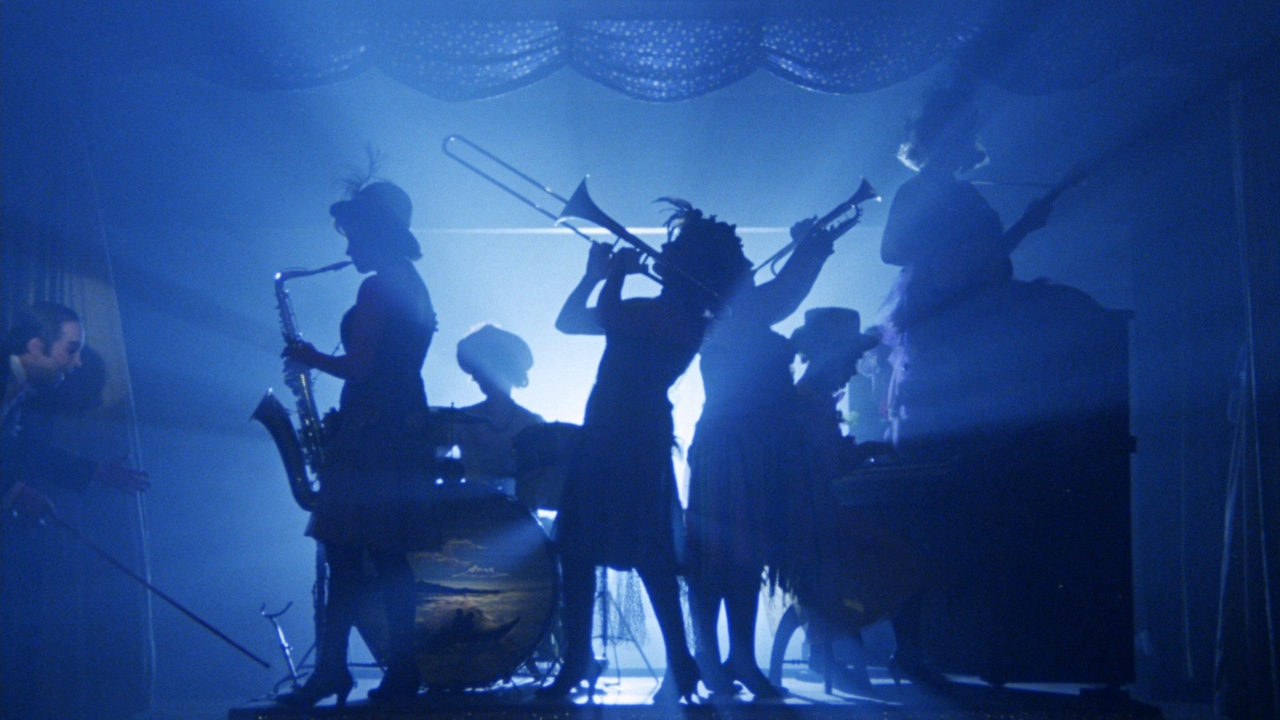
Cabaret (1972, dir by Bob Fosse, DP: Geoffrey Unsworth)
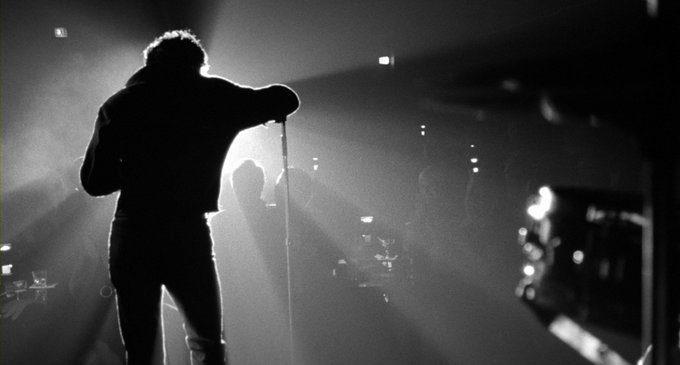
Lenny (1974, dir by Bob Fosse, DP: Bruce Surtees)
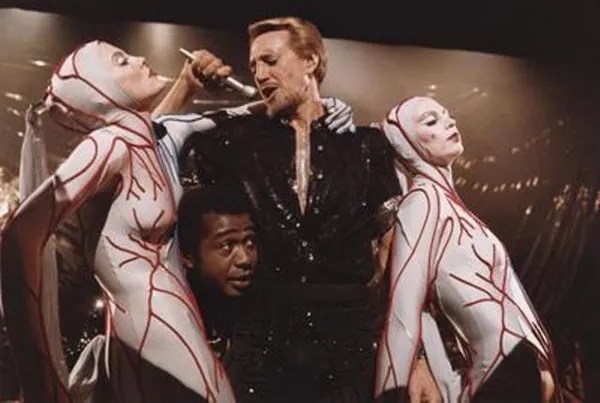
All That Jazz (1979, dir by Bob Fosse, DP: Giuseppe Rotunno)
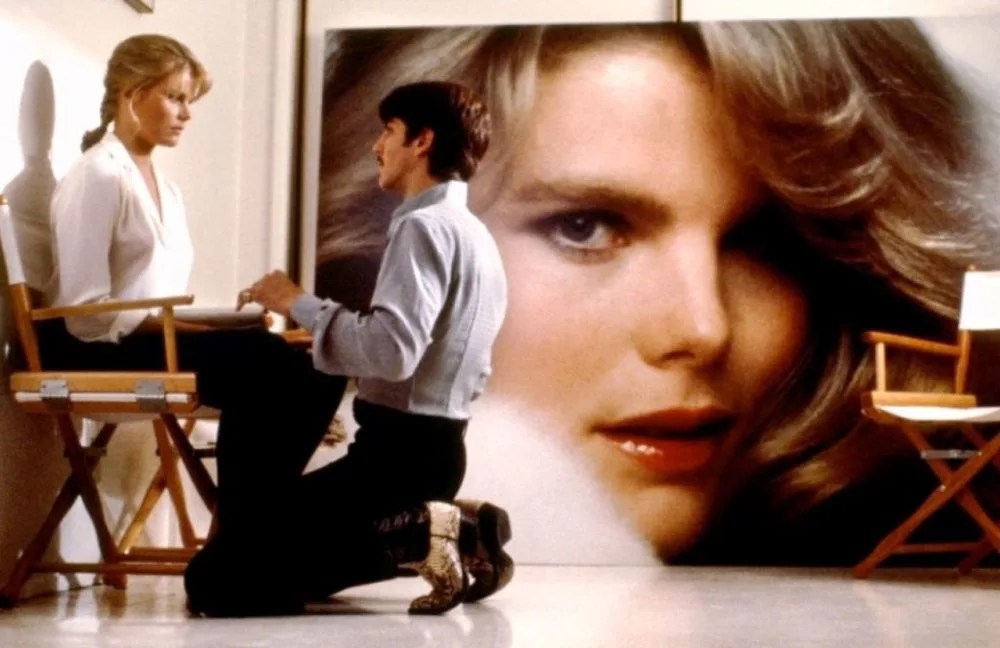
Star 80 (1983, dir by Bob Fosse, DP: Sven Nyvkist)
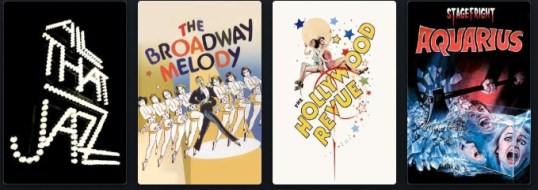
On Sunday, the Tonys will be handed out on and, if you want to watch the ceremony, it’ll be televised on CBS. However, if you’d just rather watch some movies about backstage life, I’ve got a few suggestions.
The Broadway Melody (1929) is a historically important film, in that it was the first sound film and the first musical to win the Oscar for Best Picture. The story is nothing special. Two sisters (Anita Page and Bessie Love) attempt to make the transition for Vaudeville to Broadway. One sister becomes a success and almost loses herself in the process. The other sister remains determined to become a star. Watching the film today, it’s obvious that the cast and the crew were still figuring out how to work with sound. That said, it’s a historical oddity and an interesting look at the film industry making the transition into the sound era. If you’re into that sort of thing — and I certainly am! — the film is now available on Tubi.
Far more entertaining is the same year’s Hollywood Revue of 1929 (1929). Produced by MGM, Hollywood Revue features all of the MGM featured players showing off what they could do. It’s a plotless parade of variety acts, hosted by the suave Conrad Nagel and featuring everyone from Joan Crawford to Marion Davies to Buster Keaton, Laurel & Hardy, Lionel Barrymore, John Gilbert, and Jack Benny! The goal here was to not only show off MGM’s roster of stars but also to show audiences that MGM knew how make sound pictures. It’s actually a really fun little movie. The cast appears to be having fun and there’s something really enjoyable about seeing so many talented people all in one movie. It also features a song called Singin’ In The Rain. The film can be viewed on YouTube.
Bob Fosse’s All That Jazz (1979) is a masterpiece, following choreographer Joe Gideon (Roy Scheider) as he directs both a film and a musical at the same time while popping pills, having heart attacks, and flirting with the Angel of Death (Jessica Lange). The scene where Gideon watches as his daughter and his girlfriend perform a dance routine that they’ve prepared for him is one of the most heartfelt moments that I’ve ever seen in a movie. The film’s surreal ending manages to be satirical, heart-breaking, oddly funny, and sad. Fosse based Gideon on himself and sadly, they both shared the same fate. It can be viewed on Tubi.
Finally, Michele Soavi’s Stage Fright (1987) is one of the best horror films to ever be set in a theater. Have you ever wondered why the victims in slasher films don’t just leave the house or the theater? Have you ever said, “Don’t split up, you idiots!” Well, in this one, everyone sticks together and everyone tries to leave and it doesn’t do a bit of good. (Unfortunately, their director has a cocaine problem.) This film has an absolutely brilliant opening sequence. I always laugh when the Marilyn Monroe look-alike starts playing the saxophone. The much-missed Giovanni Lombardo Radice has a small role. Director Soavi appears as a cop who asks, “Do you think I look like James Dean?” The film is on Tubi.
(Check out last week’s Weekend Films here!)

“Bye bye life….
Bye bye happiness….
Hello loneliness….
I think I’m going to die….”
So sings Joe Gideon (Roy Scheider) at the end of the 1979 film, All That Jazz. And he’s right! It’s hardly a spoiler to tell you that All That Jazz ends with Joe Gideon in a body bag. It’s not just that Gideon spends a good deal of the film flirting with the Angel of the Death (Jessica Lange). It’s also that, by the time the film ends, we’ve spent a little over two hours watching Joe engage in non-stop self-destruction. Joe is a director and a choreographer who is so in love with both death and show business that his greatest triumph comes from choreographing his own death.
Joe wakes up every morning, pops a handful of pills, stares at himself in the mirror and says, “It’s showtime!” He spends his day choreographing a Broadway play. He spends his nights editing his latest film, a biopic about Lenny Bruce called The Stand-Up. He’s particularly obsessed with a long monologue that Lenny (played by Cliff Gorman) delivers about the inevitability of death. When he’s not choreographing or editing, he’s smoking, drinking, and cheating on his girlfriend (Ann Reinking). It’s obvious that he’s still in love with his ex-wife (Leland Palmer) and that she loves him too but she’s also too smart to allow herself to get fully sucked back into his self-destructive orbit. He loves his daughter (Erzsébet Földi) and yet still ignores her when she begs him not to die.
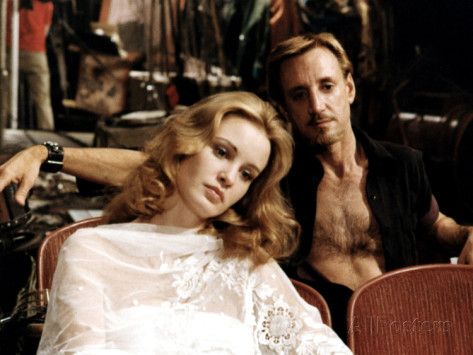
Joe and the Angel of Death
When Joe has a heart attack and ends up in the hospital, he doesn’t change his behavior. Instead, he and the Angel of Death take a look back at his youth, which was spent hanging out in strip clubs and desperately trying to become a star. Joe Gideon, we see, has always know that he’s going to die early so he’s pushed himself to accomplish everything that he can in what little time he has.
As a result of his drive and his refusal to love anyone but himself, Gideon is widely recognized as being an artistic genius. However, as O’Connor Flood (Ben Vereen, essentially playing Sammy Davis, Jr.) puts it, “This cat allowed himself to be adored, but not loved. And his success in show business was matched by failure in his personal relationship bag, now – that’s where he really bombed. And he came to believe that show business, work, love, his whole life, even himself and all that jazz, was bullshit. He became numero uno game player – uh, to the point where he didn’t know where the games ended, and the reality began. Like, for this cat, the only reality – is death, man. Ladies and gentlemen, let me lay on you a so-so entertainer, not much of a humanitarian, and this cat was never nobody’s friend. In his final appearance on the great stage of life – uh, you can applaud if you want to – Mr. Joe Gideon!”
Now, of course, Connor doesn’t really say all that. Gideon just imagines Connor saying that before the two of them launch into the film’s final musical number, Bye Bye Life. It should be a totally depressing moment but actually, it’s exhilarating to watch. It’s totally over-the-top, self-indulgent, and equally parts sincere and cynical. It’s a Bob Fosse production all the way and, as a result, All that Jazz is probably about as fun as a movie about the death of a pathological narcissist can be. This is a film that will not only leave you thinking about mortality but it will also make you dance.
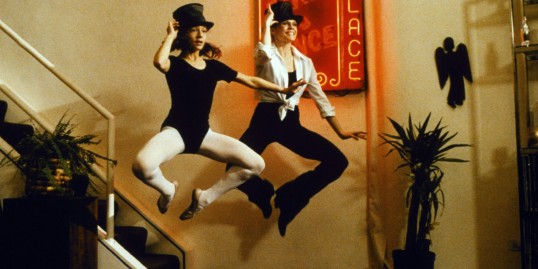
All That Jazz was Bob Fosse’s next-to-last film (he followed it up with the even darker Star 80) and it’s also his most openly autobiography. Roy Scheider may be playing Joe Gideon but he’s made-up to look exactly like Bob Fosse. Like Joe Gideon, Bob Fosse had a heart attack while trying to direct a Broadway show and a film at the same time. Gideon’s girlfriend is played by Fosse’s real-life girlfriend. The character of Gideon’s ex-wife is clearly meant to be a stand-in for Gwen Verdon, Fosse’s real-life ex-wife. When the film’s venal Broadway producers make plans to replace the incapacitated Gideon, Fosse is obviously getting back at some of the producers that he had to deal with while putting together Chicago. It’s a confessional film, one in which Fosse admits to his faults while also reminding you of his talent. Thank God for that talent, too. All that Jazz is self-indulgent but you simply can’t look away.
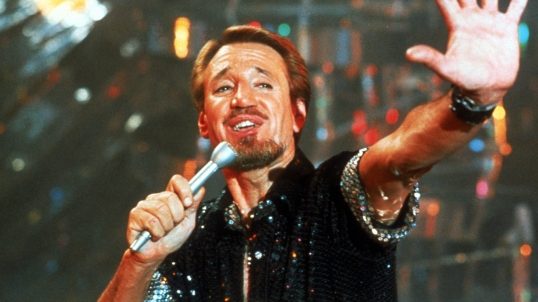
It helps that Gideon is played by Roy Scheider. Originally, Scheider’s Jaws co-star Richard Dreyfuss was cast in the role but he left during rehearsals. Dreyfuss, talented actor that he was, would have been all-wrong for the role of Gideon. One can imagine a hyperactive Dreyfuss playing Gideon but one can’t imagine actually feeling much sympathy for him. Scheider, on the other hand, brings a world-weary self-awareness to the role. He plays Gideon as a man who loves his talent but who hates himself. Scheider’s Joe Gideon is under no illusions about who he is or how people feel about him. When Fosse’s own instincts threatens to make the film unbearably pretentious, Scheider’s down-to-Earth screen presence keeps things grounded.
I love All That Jazz. (Admittedly, a good deal of that love is probably connected to my own dance background. I’ve known my share of aspiring Joe Gideons, even if none of them had his — or Bob Fosse’s — talent or drive.) It’s not for everyone, of course. Any musical that features actual footage of open heart surgery is going to have its detractors. For the record, Stanley Kubrick called All That Jazz “the best film I think I’ve ever seen.” It won the Palme d’Or at Cannes and it was nominated for Best Picture, though it ultimately lost to the far more conventional Kramer vs. Kramer.
All that Jazz would be the last of Fosse’s film to receive a best picture nomination. (Fosse directed five features. 3 of them were nominated for Best Picture, with the other two being Cabaret and Lenny.) 8 years after filming his cinematic doppelganger dying during heart surgery, Fosse would die of a heart attack. Gwen Verdon was at his side.
 Through the Shattered Lens