I review TIGHTROPE (1984) – starring Clint Eastwood! 


In TIGHTROPE, a psychiatrist makes the following comment to New Orleans police detective Wes Block (Clint Eastwood) while he’s trying to catch a serial killer who’s targeting sex workers:

“There’s a darkness inside all of us, Wes; you, me, and the man down the street. Some have it under control. Others act it out. The rest of us try to walk a tightrope between the two.”

This statement definitely hits home to Wes, whose personal life has gotten rather dark. His wife has recently left him and their two daughters (Alison Eastwood and Jenny Beck), and the detective seems to be drowning himself in his work, at times in a bottle, and at other times in the arms of some of the local ladies of the night. Whenever he does try to plan something with his girls, his job always seems to get in his way. As he investigates the murders in a variety of the seediest locations in New Orleans, we learn that Wes is very much into the kinds of women who inhabit these places, and he gives into his secret desires on multiple occasions. This becomes personal when the killer, who knows that Wes is the detective in charge of the case, begins targeting and killing some of the very same women who helped ease Wes’ emotional pain, and then taunts him about it. It becomes even more personal when the killer goes after his daughters and his new “legitimate” lady friend Beryl Thibodeaux (Geneviève Bujold), a rape counselor Block has gotten to know as part of the broader investigation. As the bodies continue to pile up, will Wes be able to stop the killer in time to save the most precious people in his life?!!

TIGHTROPE is a special movie to me. I’ve mentioned this before in other reviews, but FOX-16 out of Little Rock played a lot of good movies in the mid to late 80’s when I was a teenager. Some of those movies hold a strong nostalgic value in my life because I first discovered them and my true love of movies during those years. The channel advertised and showed TIGHTROPE, and many other Eastwood films, quite often. Of course, the movie broadcast on FOX-16 was heavily edited, and I didn’t realize the true sexual complexity of detective Wes Block until I was quite a bit older. In the original DIRTY HARRY, there’s a running gag where different people ask Eastwood’s iconic character, “Why do they call you Dirty Harry?” From what we see in TIGHTROPE, if someone asked, “Why do they call you Dirty Wes,” the answer would be more than obvious as he engages in various kinky forms of sexual relations with at least three of the sex workers he hits up for information. The killer knows of his sexual activities with these women, even watching on occasion. The movie leans hard into this connection between Wes’ kinky sex that often involves handcuffs, and the kinship that the killer feels with Wes when he’s perpetrating violence on these same women. It adds an uneasy and unsettling quality to the proceedings when the killer publicly taunts his rival, who understandably doesn’t want his peers to know of his more private nocturnal activities. He can’t fool his new lady friend, the tough as nails Beryl Thibodeaux, who senses his hidden desires and accepts him for who he is, especially after spending some quality time with him and his daughters. I like Genevieve Bujold in the role and the French-Canadian actress is able to even nail the local accent on a couple of occasions. I also wanted to mention the excellent chemistry between Clint Eastwood and his real-life daughter Alison, who play father and daughter in the movie as well. Alison was only 12 years old when TIGHTROPE was released, but she gives a strong performance as the older daughter who’s still trying to come to terms with her parents’ divorce. The killer really messes up when he targets her. 

I’ll tell anyone who’s willing to listen that I love the city of New Orleans as a movie location. I personally love to visit the city and partake in its fun atmosphere and wide variety of excellent cuisine. TIGHTROPE hits many of the highlights of New Orleans in 1984… Bourbon Street, Jackson Square, the Super Dome, the Creole Queen, a warehouse full of Mardi Gras floats, the famous cemeteries, Randi Brooks in a hot tub, etc. etc. One thing about New Orleans is that its famous streets like Bourbon Street have not been cleaned up or become “family friendly” in the same way as a place like Times Square in New York City. To this day, it retains that same feeling of sexual decadence that is portrayed here in 1984. 

I personally consider TIGHTROPE to be a must-see film for fans of Clint Eastwood, as Wes Block is a wholly unique addition to his cavalcade of tough cop characters, and he makes us justifiably uncomfortable at times. Eastwood’s conflicted performance, the serial killer storyline and the fun New Orleans locations add up to a very good movie that’s aimed squarely at adults. 
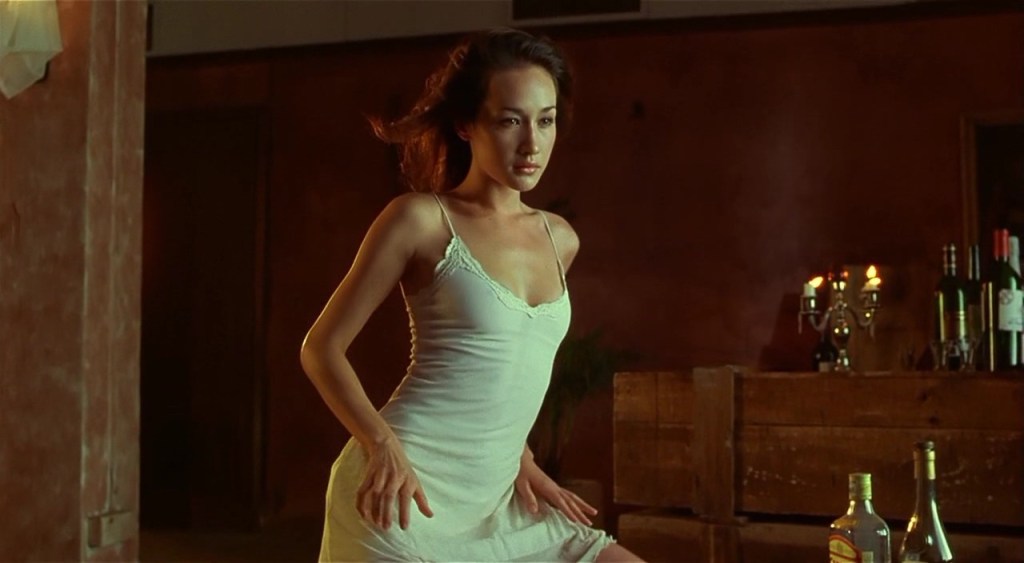
4 Shots From 4 Films: “May 22nd Birthday” Edition!


4 Shots From 4 Films is just what it says it is, 4 shots from 4 of our favorite films. As opposed to the reviews and recaps that we usually post, 4 Shots From 4 Films lets the visuals do the talking!

Today’s “4 Shots From 4 Films” celebrate four people who were born on this day!! Enjoy!

Maggie Q in NAKED WEAPON (2002)

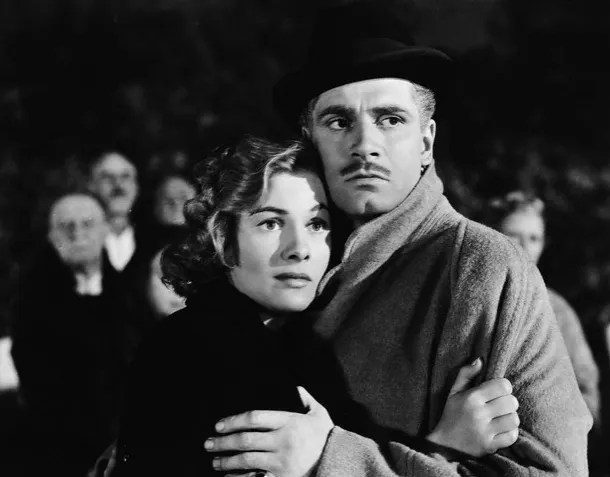
Laurence Olivier in REBECCA (1940)

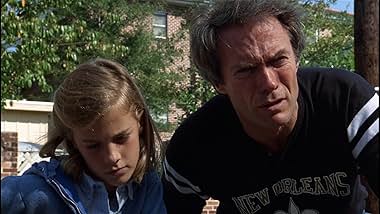
Alison Eastwood in TIGHTROPE (1984)

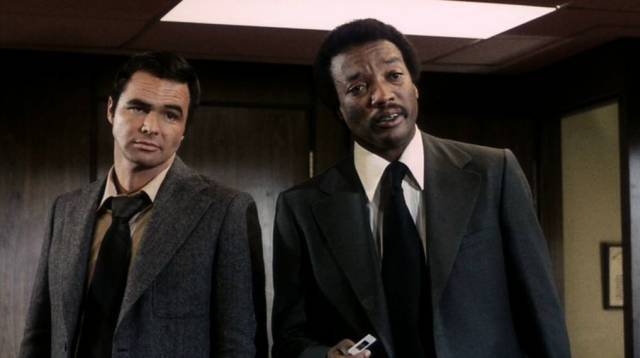
Paul Winfield in HUSTLE (1975)

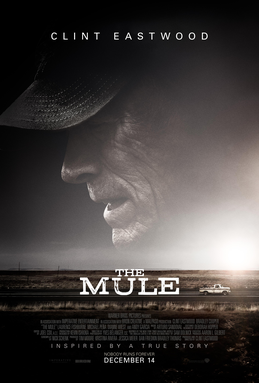
Film Review: The Mule (dir by Clint Eastwood)


In The Mule, Clint Eastwood plays Earl Stone.

In some ways, Earl is typical of the characters that Eastwood has played during the latter part of his career.  He’s grouchy.  He’s alienated almost everyone who was previously close to him.  He drives an old pickup truck and he has no idea how to text and he seems to literally snarls whenever he sees anyone under the age of 60.  He served in the Korean War and he’s not scared of guns.

In other ways, Earl is not a typical Eastwood character at all.  First off, he’s on the verge of financial ruin.  Earl may not be the first Eastwood character to not know how to responsibly handle money but he is perhaps the first one to be on the verge of homelessness as a result.  (He’s perhaps the first of Eastwood’s modern character to face real-world consequences for his flaws.)  Secondly, Earl often seems to be lost in the 21st century world.  In Gran Torino and Trouble With The Curve, Eastwood played grumpy old men who could still hold their own when it came to dealing with younger people.  But, in The Mule, Earl seems to be defeated by life.  The only thing that he really has going for him is his reputation as a horticulturist and, as the film makes clear, that’s not a skill that’s going to bring in much money.

That all changes when Earl has a chance meeting with Rico (Victor Rasuk), a friend of his granddaughter’s.  Knowing that Earl is desperate for money, Rico tells him that he could make a quick payday by transporting a package for some friends.  After giving it some thought, Earl agrees.  When Earl meets Rico’s friends, everyone is shocked at how old he is.  They’re even more shocked when Earl says that he doesn’t know how to text.  Earl is given a phone and told to answer it whenever it rings but to never use it to call anyone.  A package is put in the back of Earl’s pickup truck.  It’s suggested that Earl not look in the package.

Does Earl know that he’s transporting drugs?  At first, it’s hard to say.  While it seems obvious to us, Earl is from a different time.  Still, once Earl does eventually learn that he’s being used as a drug mule, it doesn’t seem to bother him.  If nothing else, Earl actually seems to get a kick out of being a real-life outlaw.  He continues to make his runs and he continues to make money and, perhaps most importantly, he now has a purpose in life.  In a strange way, the drug runners even become his new family.  (They call him Tata, which is Spanish for grandfather.)  Of course, they’re a family that makes it cleat that they’ll kill Earl if he’s ever late delivering the package but that doesn’t seem to matter to Earl.

Meanwhile, the DEA (represented by Laurence Fishburne, Bradley Cooper, and — somewhat inevitably — Michael Pena) are hearing reports about a new drug mule who has been nicknamed Tata.  What they don’t suspect, of course, is that Tata is a 90 year-old man who has no criminal record and who is always very careful to obey all the traffic laws.  Even when Earl is pulled over by the police, he’s such a nice old man that they let him go without bothering to really search his vehicle.  It seems like Earl’s got a perfect thing going but, unfortunately, things are never as good as they seem and eventually, the reality of Earl’s situation intrudes on his fantasy….

It’s been said that The Mule is going to be Eastwood’s final film as an actor and he gives an excellent performance as Earl.  The Mule, which feels, in many ways, like a good-natured companion piece to Gran Torino, features Eastwood at both his most vulnerable and, probably not coincidentally, his most likable and sympathetic.  In this film, Eastwood makes clear that he’s no longer the righteous Dirty Harry or the mythological Man With No Name.  Now, he’s just a man nearing the end of his life and trying to come to terms with the mistakes and the decisions of the past.  Eastwood plays Earl like a man who knows that his time is limited.  Smuggling drugs gives him a chance to feel like he’s alive again but, throughout it all, there’s still a deep sadness.  Earl can use his money to pay his bills and to fix up the local VFW hall but he still can’t buy his family’s forgiveness.  Watching the film, it’s impossible not to feel for Earl.  You’re happy that he found at least a little satisfaction with his criminal career, even though you immediately suspect that things probably aren’t going to turn out well for him.

Admittedly, there is one cringe-worthy scene in which it’s suggested that the 90 year-old Earl has had a threesome with two twenty year-olds (and one gets the feeling that the scene would not have been included if not for the fact that the film’s star was also the director).  For the most part, though, this is a thoughtful film that features a poignant performance from Eastwood and which is directed in a restrained, but empathetic manner.  If this is Eastwood’s swan song as an actor, it’s a good note to go out on.