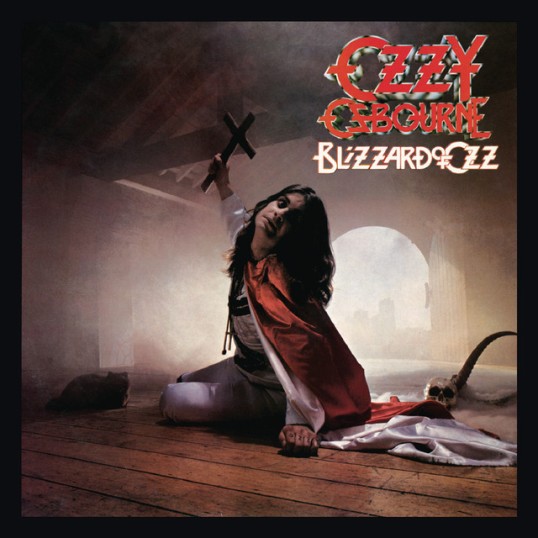
Song of the Day: Mr. Crowley (by Ozzy Osbourne)


a5d81617797db1062e96ace555453d94bab995fb

Why is it that those with creative talents that border on genius tend to die young and much too soon. This has become almost synonymous with the premature passing of some of the greatest musician of the last 50 years. Most seem to be from the rock and metal corner of the musical landscape. Some has been due to the very lifestyle led by these musicians. A lifestyle of libertine excess that catches up to their talent way too soon.

One such individual who went before his time yet made such an impact on the music scene that he’s considered one of the greatest metal guitarist of all-time (I say one of the best guitarist in or out of metal). His name was Randy Rhoads.

Only 25 when he passed away not due to a life of excess (he was actually quite responsible a rock star in his era where sex, booze and drugs were commonplace) but to a tragic accident that didn’t need to happen.

While some always point to his guitar work on the Ozzy Osbourne song “Crazy Train” from his solo debut album, I always thought one of his best guitar work was on another song from that debut album. The song I speak about is “Mr. Crowley”.

The song itself is one of those songs that drove parents crazy when they first heard their young teenage sons listening to it. I mean it’s a song about self-proclaimed Anti-Christ, libertine and sex magick user Aleister Crowley. Yet, it’s not Ozzy’s vocals that make the song memorable. It’s Rhoad’s lead guitar performance with special focus on the two guitar solos which rise up in the middle of the track and closes it out.

Mr. Crowley

Mister Crowley
What went down in your head?
Oh, Mister Crowley
Did you talk to the dead?

Your lifestyle to me seems so tragic
With the thrill of it all
You fooled all the faithful with magic
Yeah, you waited on Satan’s call

Mister Charming
Did you think you were pure?
Mister Alarming
In nocturnal rapport

Uncovering things that were sacred
Manifest on this earth
Oh, conceived in the eye of a secret
Yeah, they scattered the afterbirth

(guitar solo)

Mister Crowley
Won’t you ride my white horse?
Mister Crowley
It’s symbolic, of course

Approaching a time that is classic
I hear that maiden’s call
Approaching a time that is drastic
Standing with their backs to the wall

Was it polemically sent?
I wanna know what you meant
I wanna know
I wanna know what you meant, yeah!

(guitar solo/outro)

Great Guitar Solos Series

Do Critics Matter?


Do critics (specifically, professional film critics) matter?  In a word, no.

This is something I’ve been thinking about for a while now, ever since I came across an article by “professional” critic Sasha Stone in which she asked the exact same question and came to the exact opposite conclusion.  Her argument boiled down to one quote: “You see things differently when you’re 20 than when you’re 30.”

And she’s right.  I see things differently at 25 than I did when I was 13.  And I imagine that when 30 comes around, I’ll have a whole new set of opinions.  For that matter, I’m sure that as a Texan I probably see some things differently than how a native of California would see them.  As I mentioned in my previous review of Black Swan, a lot of my reaction to that film was due to my own history and experiences.  Would someone who has never had those same experiences have the same reaction?  Probably not.

So, yes, Sasha is right.  People see things differently.

And I’m even more right when I say that a 30 year-old critic matters about as much as a 20 year-old critic.

At the heart of professional film criticism is this elitist notion that somehow, Roger Ebert’s opinion is more worthy of consideration than some guy who actually had to spend money to get a ticket so he could watch the movie in theater surrounded by strangers while he eats rancid move theater nachos.

Ultimately, criticism is just an opinion and the only opinion that matters is yours.  Just because I hated Avatar doesn’t mean that Avatar is a terrible movie.  It just means that from my point of view, it sucks.  And, as much fun as I have explaining why I felt it sucked, that’s ultimately just my opinion.  Whether or not Avatar is a good film or if Black Swan is a great film , the only person that can answer that question is you. 

When it comes to film (and really, all art) I think we would do best to remember the words of Aleister Crowley: “Nothing is true.  All is permitted.”

This has been on my mind a lot recently as we went Oscar season and so many critics are now taking it upon themselves to announce which films are the best and we’re all expected to follow along with their opinions like lemmings going over a cliff.  Around this time, the old school film critics start to get paranoid about all of us bloggers who have the nerve to offer up our opinions on film as if our opinion matters.  That’s because most of these critics are a part of that generation that was raised to believe that only certain people were allowed to speak and that they only had the right as long as what they said was safe and predictable.  Independent bloggers scare them because it proves what we all know: that anyone can provide an opinion.

Perhaps that’s why they’ve been so enthusiastic about embracing The Social Network, a film that suggests that blogging was the invention of sociopaths.

But ultimately, a critic is just another person providing their opinion.  And maybe you respect that opinion enough that you’ll allow it to influence what you chose to see or not to see.  And there’s nothing wrong with that.  To me, the best thing that a critic can do — and what I hope I can do on occasion — is make the viewer aware of a film that he or she might otherwise not be aware of.  If you see a film because I recommended it, I thank you and I hope you enjoyed the film as much (or as little) as I did.  And if you didn’t, that’s cool too.  I’m just a viewer with an opinion.

But when it comes to the movie itself, critics do not matter.  The only thing that matters is the individual viewer.  Art is the eye of the beholder.

At this time of year, we’re reminded that so much of so-called “professional” film criticism is simply about building a bandwagon and hopping on.  Here’s hoping that in the future, we set that bandwagon on fire and let it burn.