4 Shots From 4 Films: Special Michele Soavi Edition


4 Shots From 4 Films is just what it says it is, 4 shots from 4 of our favorite films. As opposed to the reviews and recaps that we usually post, 4 Shots From 4 Films lets the visuals do the talking!

Today, we wish a joyous 63rd birthday to Italian filmmaker Michele Soavi!

Soavi, of course, started his career as an actor.  You can find him in Lucio Fulci’s City of the Living Dead and Lamberto Bava’s A Blade In The Dark and Demons.  Reportedly, he came close to playing the role that was eventually played by Giovanni Lombardo Radice in The House On The Edge of the Park.  Soavi, however, eventually moved behind the camera.  He was an assistant director on both Dario Argento’s Tenebrae and Terry Gilliam’s The Adventures of Baron Munchausen and The Brothers Grimm.

He also, of course, directed four of the greatest Italian horror films of all time, Stage Fright, The Church, The Sect, and Dellamorte Dellamore.  Though a family tragedy temporarily put his career as a director on hold, Soavi has since returned to directing.

In honor of Michele Soavi and his birthday, here are….

4 Shots From 4 Films

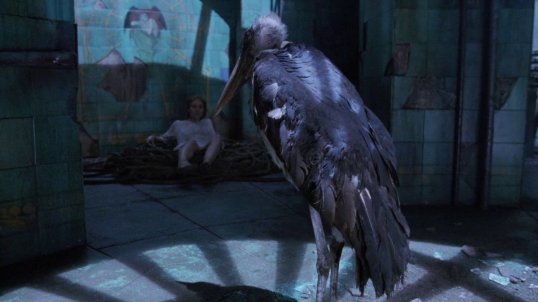
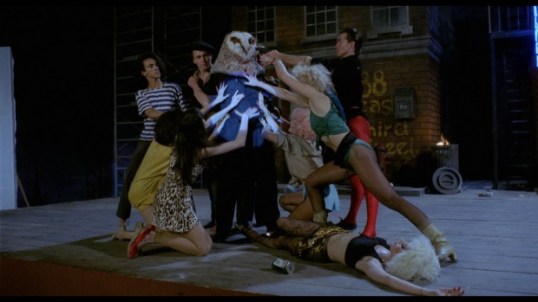
Stage Fright (1987, dir by Michele Soavi)

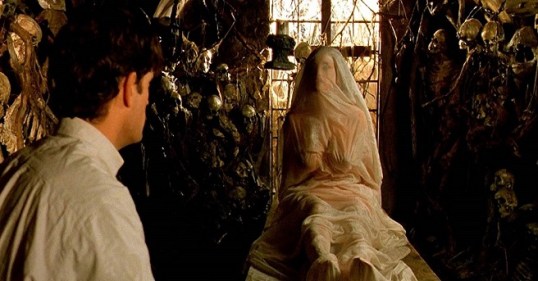
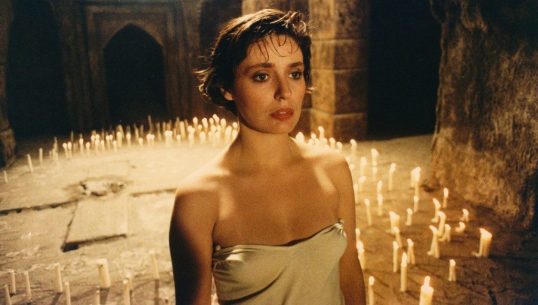
The Church (1989, dir by Michele Soavi)

The Sect (1991, dir by Michele Soavi)

Dellamorte Dellamore (1994, dir by Michele Soavi)

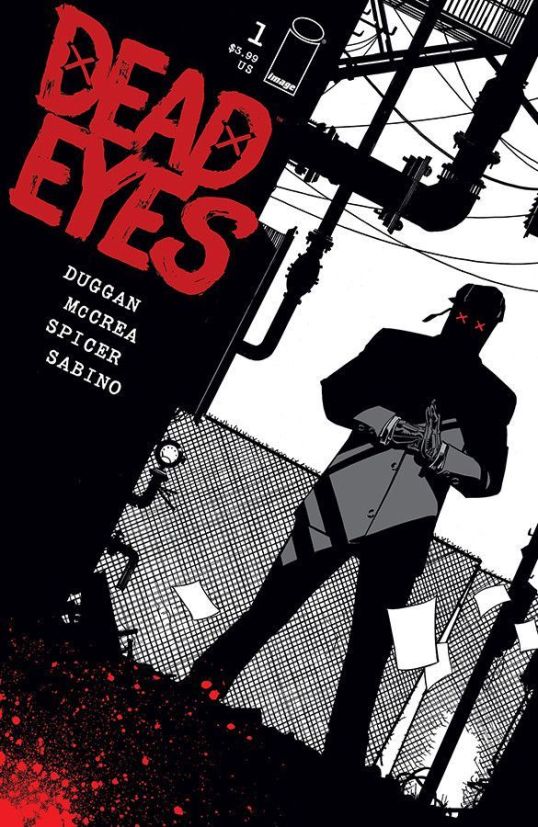
Mainstream Comics Worth Paying Attention To : “Dead Eyes”


Ryan C. (fourcolorapocalypse)'s avatarRyan C.'s Four Color Apocalypse

Decisively proving that you can’t keep a good bad guy down, writer Gerry Duggan and artist John McCrea’s socially-conscious crime series (yes, that’s a thing) from Image Comics,  Dead Rabbit, returned from a cease-and-desist order filed by a bar of the same name (no, I swear I’m not kidding) under the shiny new moniker of Dead Eyes — and not only did the creators not miss a beat, their book has only gotten better.

It also re-introduced itself in a manner entirely accessible to new readers, laying out the premise quick and easy, just as I will here : infamous Boston-area masked stick-up man from the 1990s is now retired and living the quiet life, but he needs to come out of retirement when his disabled wife gets hit with a mountain of medical bills that her insurance won’t cover. Our guy is still pretty good at what…

View original post 602 more words

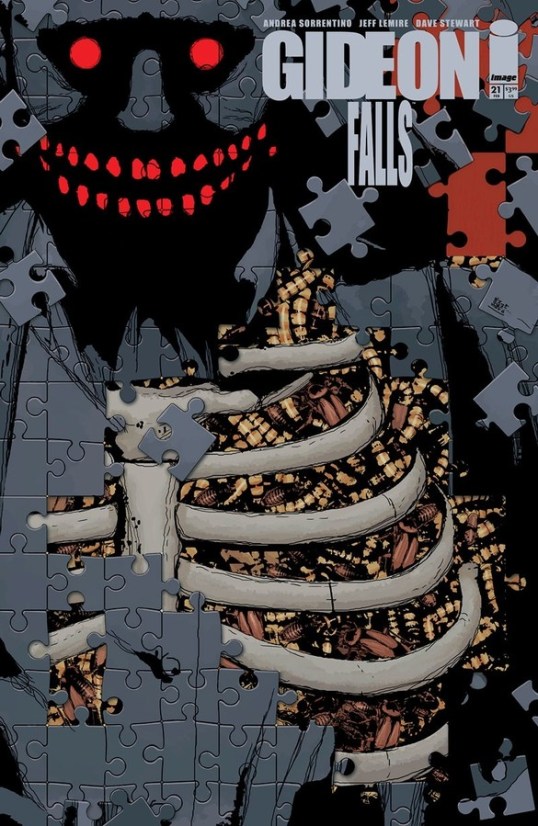
Mainstream Comics Worth Paying Attention To : “Gideon Falls”


Ryan C. (fourcolorapocalypse)'s avatarRyan C.'s Four Color Apocalypse

It takes a lot to maintain a compelling mystery over the course of 22 issues, but writer Jeff Lemire, artist Andrea Sorrentino, and colorist Dave Stewart have managed (with some admitted bumps along the way) to do just that in the pages of their Image Comics series Gideon Falls, a mind-bender set in the small town of its name — that isn’t a small town anymore, but that’s another matter.

And there are, in fact, several “other matters” on offer here, with no end to them in sight, although I imagine we must be at least to the halfway point of this thing by now — but I could be wrong about that. It’s been known to happen. And I’ve been wrong about any number of twists and turns in this saga, which is why it’s so damn much fun, in addition to being reasonably creepy and a tour…

View original post 620 more words

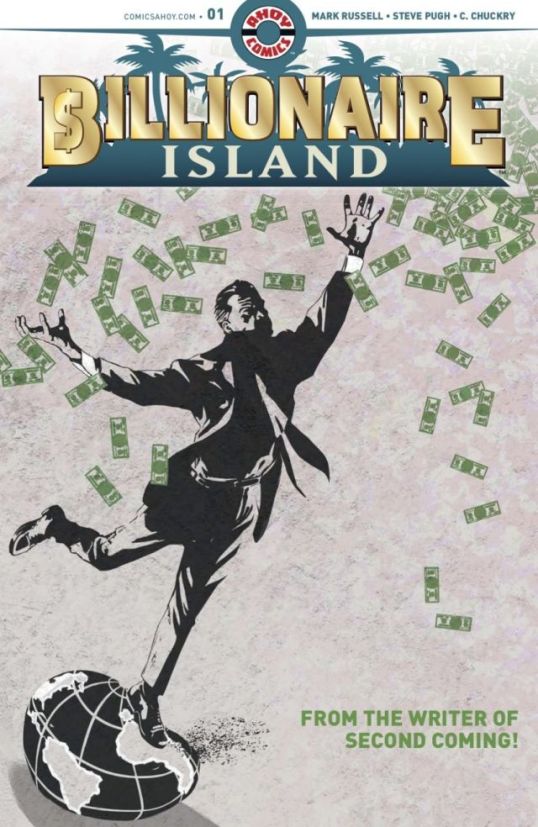
Mainstream Comics Worth Paying Attention To : “Billionaire Island”


Ryan C. (fourcolorapocalypse)'s avatarRyan C.'s Four Color Apocalypse

Count me among those who were more than a bit unimpressed with Second Coming, the highly-touted series from writer Mark Russell and artists Richard Pace and Leonard Kirk that was scuttled at Vertigo due to its purported “sacrilegious” content before finding a new home at Ahoy Comics. Far from taking any sort of pot-shots at organized religion, the “Jesus-meets-Superman-analogue” premise actually reinforced tired Christian dogma at the end of the day and Russell’s usually-sharp satirical wit was uncharacteristically blunted by a chickenshit desire to play it safe and offend as few people as possible. Hell, by the time all was said and done, this was such a milquetoast offering that even the most fervent evangelical nutcase wouldn’t find much worth objecting to in it apart from some vaguely liberal “be kind to one another” politics. And let’s remember — evangelicals claim to believe in that sort of thing themselves…

View original post 566 more words

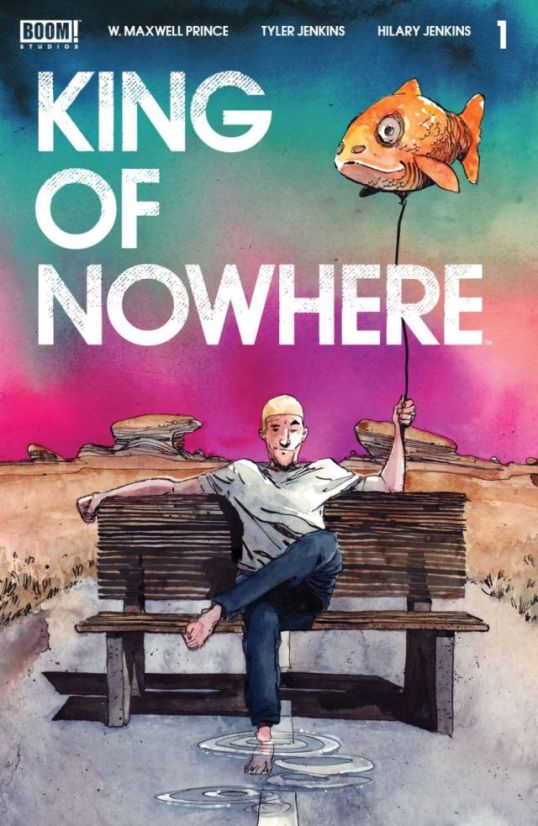
Mainstream Comics Worth Paying Attention To : “King Of Nowhere”


Ryan C. (fourcolorapocalypse)'s avatarRyan C.'s Four Color Apocalypse

As is generally known, I’m not one of those “too cool for school” types who dismisses out of hand everything produced by the major comics publishers. In fact, until the industry shutdown engendered by COVID-19 took hold, I ran a “Weekly Reading Round-Up” column on this very site that mainly concerned itself with examining whatever mainstream titles this nominal “Wednesday warrior” had picked up during the previous seven-day span — and I imagine I’ll get back to it before too long here. That being said —

Shipping schedules are still pretty light, even though most comic shops are, in fact, open again, and this means that most weeks since “the return” haven’t seen enough interesting stuff hit shelves to warrant me devoting an entire column to reviewing them. It’s just a fact : most recent weeks have seen me leaving the shop with two, maybe three comics, and while…

View original post 769 more words

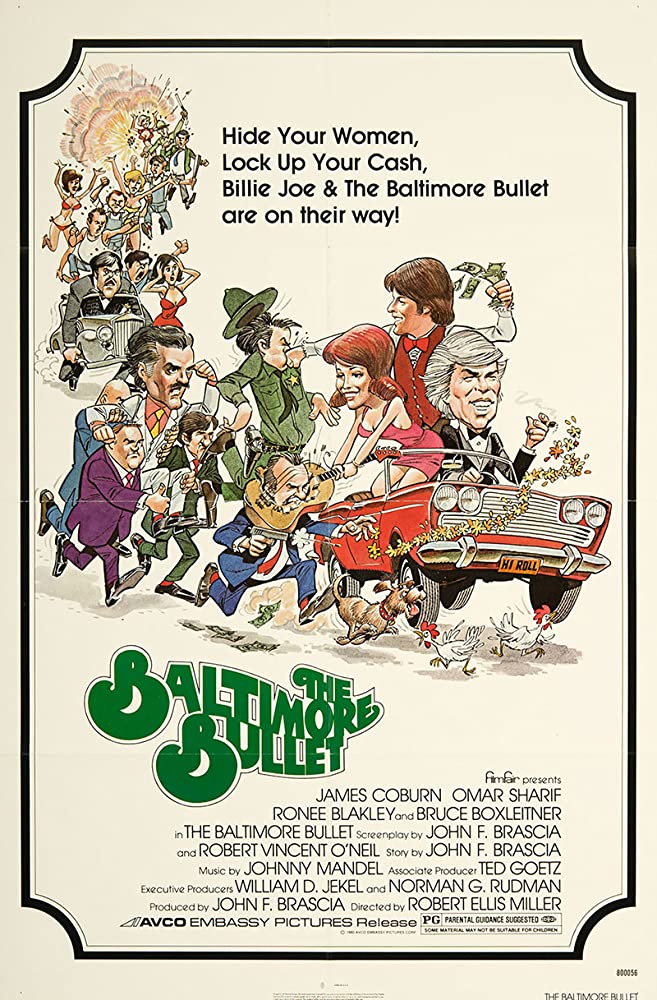
The Baltimore Bullet (1980, directed by Robert Ellis Miller)


James Coburn was one of those actors who improved any film in which he appeared in.  Take The Baltimore Bullet, for example.  Without Coburn, The Baltimore Bullet is basically The Hustler without any of that film’s grit or edginess.  With Coburn, it’s still a bad remake of The Hustler but at least it’s got James Coburn.

Coburn plays Nick Casey, who was once known as The Baltimore Bullet.  He was the top pool player in the country but now, he makes a meager but enjoyable living traveling the country with his protegee, Billie Joe Robbins (Bruce Boxleitner), and hustling people out of their money.  Nick’s plan is to raise enough money so that he and Billie Joe can go down to New Orleans, enter the national pool championship, and defeat the reigning champion, a man known only as the Deacon (Omar Sharif).  The episodic film follows Nick and Billie Joe as they travel across the country, having comedic adventures and trying to stay one step ahead of all of the people that they’ve cheated.   Along the way, they pick up an aspiring country singer named Carolina Red (Ronee Blakley, who somehow went from her Oscar-nominated debut in Nashville to this).

The Baltimore Bullet doesn’t work for any number of reasons.  A big problem is that Nick and Billie Joe’s friendship never really makes sense.  There’s no real reason for Nick to need a protegee and Billie Joe often seems to be more interested in playing poker than playing pool.  We never understand why Nick would take someone as erratic as Billie Joe under his wing.  Another problem is that The Deacon never seems like a formidable opponent.  He’s just Omar Sharif, looking bored and carrying a pool cue.  Because we don’t like Billie Joe and don’t care about the Deacon, we don’t really care who wins the tournament.  Probably the most interesting thing about The Baltimore Bullet is that, while it was obviously meant to be a rip-off of The Hustler, its plot, with a veteran hustler teaming up with a callow protegee, actually has more in common with The Hustler‘s sequel, The Color of Money (which would be released 6 years after The Baltimore Bullet).

All of that almost doesn’t matter, though, just because James Coburn’s in the movie.  James Coburn always came across like the coolest human being on the planet, even in something like The Baltimore Bullet.  There’s not much depth to Nick as a character but Coburn plays the role with a gleam in his eyes and a leer that looks like it belongs on the face of a cartoon wolf and it’s impossible not to like him.  While everyone else is struggling with the bad dialogue and their inconsistent characters, Coburn looks like he’s having the time of his life.  Coburn was an actor who was incapable of giving a bad performance and he’s the main reason to see The Baltimore Bullet.
Mini Kus! Catch-Up : “Banal Complications” By Marc Bell (Mini Kus! #90)


Ryan C. (fourcolorapocalypse)'s avatarRyan C.'s Four Color Apocalypse

For the final entry (that being #90) in their latest foursome of Mini Kus! releases, Latvian publisher Kus! turns to the always-reliably-inventive Canadian cartoonist Marc Bell, whose work I’ll go out on a limb and assume most readers of this site are already well-familiar with. Or, at the very least, really should be. And in the pages of Banal Complications, he does what he does best, which is — his own kind of thing altogether.

This is a “meta” narrative, with Bell’s protagonist Chop Salad (always with these names, I tell ya!) pretty clearly standing in for the artist himself, so if that kind of thing annoys you, just check out now — but if you’re down for a fun and inventive take on a premise that really isn’t either one most of the time anymore? Then you’ve come to the right place. Maybe even the only place. Or…

View original post 576 more words

Mini Kus! Catch-Up : “Egle And The Snake” By Joana Estrela (Mini Kus! #89)


Ryan C. (fourcolorapocalypse)'s avatarRyan C.'s Four Color Apocalypse

Casting far and wide for both talent and subject matter, Mini Kus! #89 from Latvia’s eclectic “art comics” publishing house Kus! features a Portuguese cartoonist, Joana Estrela, telling a decidedly contemporary version of an ancient Lithuanian fable in Egle And The Snake, which sees the serpent cast in its traditional role as schemer but our woman protagonist, while perhaps a little too polite for her own good (up to a point, at any rate), assuming a great deal more agency and self-determination than, say, the biblical Eve. It’s about time, sure — but there’s also something quite timeless about what this comic has to say about relationships and gender roles and power dynamics.

Egle is young — high-school age, according to the narrative — but wise enough to smell a rat (errr, snake) and to know when to say when. But damn if this story isn’t…

View original post 508 more words

Mini Kus! Catch-Up : “Crime At Babel” By Martins Zutis (Mini Kus! #88)


Ryan C. (fourcolorapocalypse)'s avatarRyan C.'s Four Color Apocalypse

Billed by publisher Kus! as either a “visual riddle or rather a sudoku in a comic form,” there’s really nothing that precludes Latvian cartoonist Martins Zutis’ Crime At Babel (released last month as #88 in the long-running Mini Kus! line) from being both, of course — after all, last I checked, a sudoku is, in fact, a type of riddle, and one that’s usually well beyond my meager problem-solving abilities, at that. I know a lot of people have fun with the damn things, but I’m not one of them, and therefore I went into this comic with, at the very least, some nominal misgivings.

Maybe the whole thing will just blow right past me, I thought to myself. Maybe my brain just doesn’t work in a way that will allow me to come to grips with it. Maybe it’ll just be too damn smart for me. These things…

View original post 468 more words