For the past several years, cartoonists such as Harry Nordlinger, Josh Simmons, Corinne Halbert, and Julia Gfrorer (to name just a handful) have been doing some incredibly provocative and effective horror work in the small press and self-publishing world, and you can add the name of Huntsville, Alabama’s David G. Caldwell to that list — in fact, you could have added it long time ago, as he’s been at it for a good few years now, as well. And maybe you did, if you’re wiser and generally more “up” on things than I am, but I’m just getting around to it now because, well, I just became aware of his work quite recently.
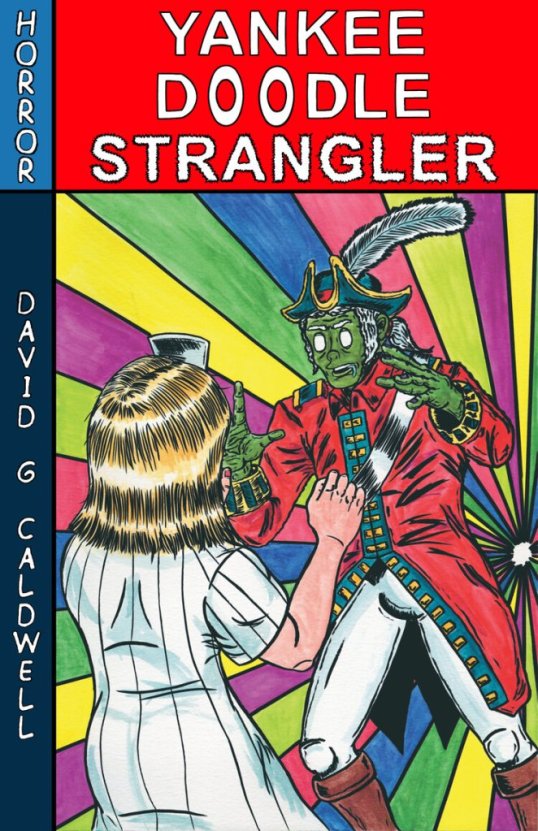
Still, now’s as good a time as any to check this guy’s stuff out, given that he’s just collected his long-running strip Yankee Doodle Strangler (originally serialized both digitally and in mini-comics form) in two different packages…
As is no secret to regular readers of this blog, I’m not all about “high-brow” comics here, even if the majority of books I review fall loosely into that already-loose category. Nor am I necessarily all about comics that are executed with a high degree of so-called “professionalism.” If I were forced to pin down what I am about, in a nutshell, I’d say that my tastes run toward comics that are produced with intent, and that succeed in realizing their intentions, whatever they may be.
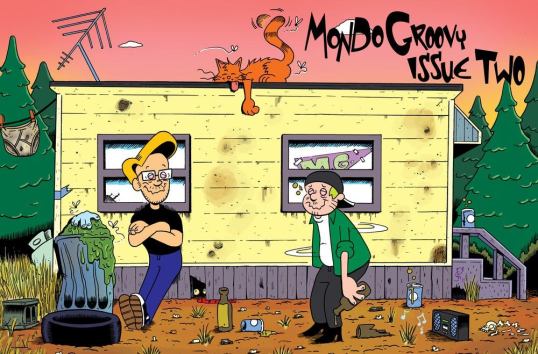
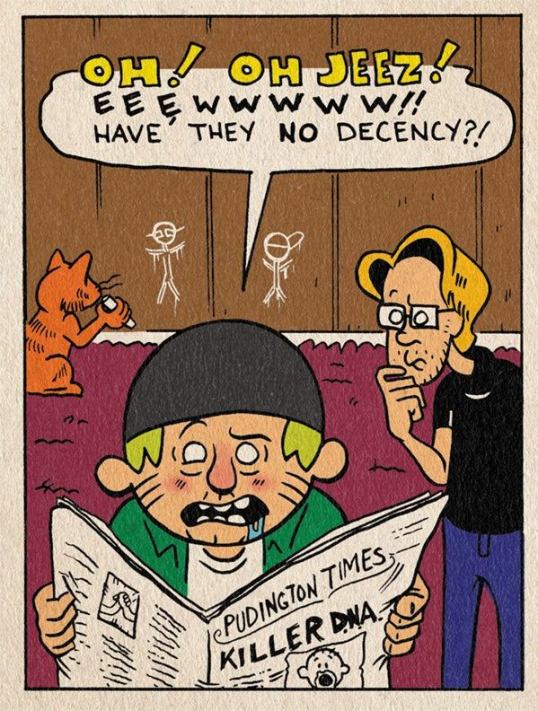
Which brings us to issue two of cartoonist C.J. Patterson’s self-published series Mondo Groovy, a book with obviously-discernible intent that’s executed in precisely the fashion necessary in order to realize said intention — it just so happens that what Patterson and writing partner Jeremy Rogers intend to do is to regale audiences with a steady stream of dick and fart jokes.
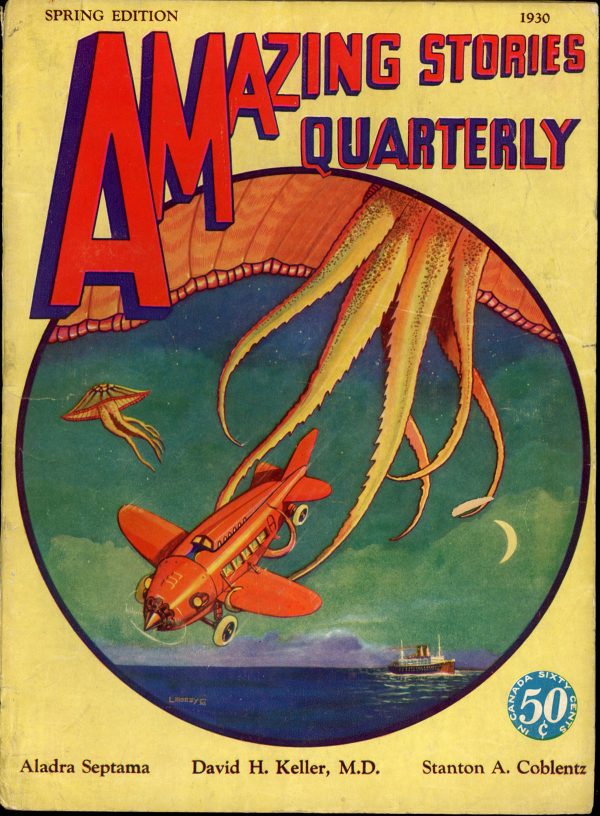
This is from 1930 and, as you can tell from the signature at the bottom of the picture, this cover was done by Leo Morey! I like this cover and the way it mixes the plane, the ocean liner, and the tentacled-creatures. Three ways to travel, two human and one alien. Are the aliens abducting the plane or are they saving the pilot and maybe the ship? We may never know.
Here on the Shattered Lens, the love for Batman is very strong. There are too many Batman related articles to fully list, but for a good start, go with Ryan’s Which Way Forward for the Batman Franchise.
This isn’t so much a review for Batman as it’s just me looking back on the film.
I spent the Saturday Morning of June 24th, 1989 standing on a line that snaked around the white walls of the Sunrise Multiplex Cinema in Valley Stream. Thankfully, by the time I arrived, there were only a few people there. Most of them were my friends, so we were close to the door. The following year, the Sunrise would go down in history as being the only movie theatre I’ve ever known with metal detectors after a shooting around the release of The Godfather Part III prompted tighter security. Before then, anyone going into the theatre had a free run of the place. From that incident to the theatre’s shutdown in 2015, you always had to pass the metal detectors.
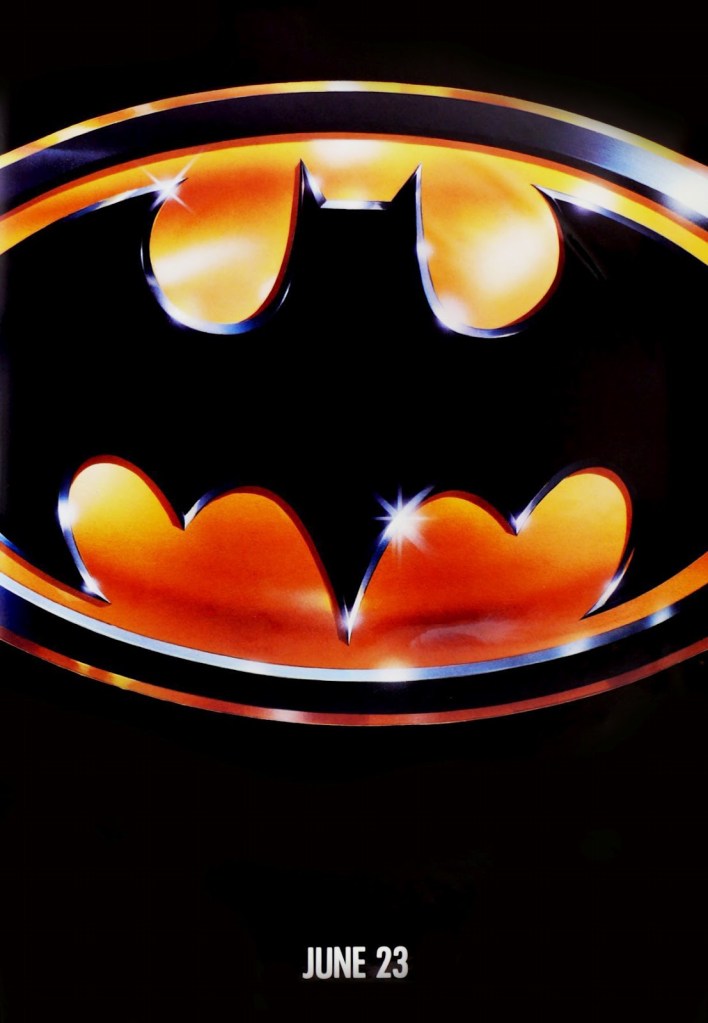
You knew Tim Burton’s Batman was going to be something grand when they first put up the posters in bus stations. The character was so well known that the poster was simply a black and gold Batsymbol with a date – June 23. In my neighborhood, the poster lasted a week before the bus stop’s glass was broken and it was stolen. This was how mad people were for the film. Although merchandise was already available, it moved at an incredible pace. For a film made before pre-Internet, the buzz was just amazing.
“Okay, Everyone, we know you’re looking forward to seeing the movie.”, came the announcement over the theatre’s loudspeaker, which caused a few murmurs from everyone. It was a smooth, business like voice, probably from someone who had never even heard of The Caped Crusader. “We’re going to open up the doors and we want everyone to proceed to the ticket booths in a nice, orderly fashion.”
I was 14 at the time. Batman was the first movie I ever saw without my family. My parents, a cop and a bartender, saw so much of the worst of NYC that they figured the best place for me was home. Still, since I was among friends they knew, I gave me a pass. It was a big deal. My friend Pierre and I had a plan, along with the 4 others that came with us. We’d head in, make for the ticket booth and go right in for our seats near the back right side.. No refreshments were necessary, since we could all go eat at the mall later on after the move was done. To make sure I didn’t miss anything, I had already read the novel for the story beforehand.
Anyone close to the door could see the theatre workers as they approached, keys in hand. The layout of the Sunrise was such that after stepping through the front door, you could cut to your immediate left or right down a open path to separate ticket booth. As the door unlocked, was pushed open and secured, someone from near the middle of the line decided it was time, declaring in a loud scream.
“Batman!!!!!”
It was madness. Utter madness. Bodies piled into the theatre in a mad scramble for the ticket booth. On the way there, I was shoulder blocked and fell to the floor. I instantly curled into a ball to keep from getting trampled, wondering if my parents were right about not letting me out. ‘Here lies Lenny…”, my epitaph would read. “…he died at the movies after being let outside on his own just once.”
Thankfully, I was scooped up to my feet a few seconds later by one of my friends.
“Go on! We’ve got your tickets! Head for the ticket guy, we’ll meet you there!” he yelled over the crowd passing us on sides.
“Okay!!” I’d been to the Sunrise tons of times, so I knew it well. I moved through the crowd, bypassing the concession stand, which was already developing a line of its own. I thought they were going to go in without me and leave me there. I don’t know they did it, but within a few minutes of reaching the ticket taker. most of my group caught up, tickets in hand for all of us.
The actual experience of Batman was a packed crowd with almost non-stop talking throughout. After all, the audience was made up of teens and DC fans that that were ravenous for anything Batman related. Superman had about four films by the time Batman premiered. I think the only real time the entire audience hushed was near the beginning when we first see Batman grab the one robber and they ask him what he is. After that, the crowd pretty much erupted in applause.
Of course, that line would become famous and reused over the years, such as it was with the WB’s Supernatural.
Even before the film was released, the buzz for Batman was immense.
Batman focuses on Gotham City, a grand town with a great deal of crime. Reports are coming in of a mysterious vigilante figure resembling a giant bat that’s taking down random criminals. Crime in Gotham is run by Boss Carl Grissom (Jack Palance, City Slickers), with his right hand man, Jack Napier (Jack Nicholson, The Departed). After discovering that Napier’s spent some quality time with his girl, Alicia (Jerry Hall, Urban Cowboy), Grissom sets him up so that he’ll be caught by the cops. Things don’t go as planned, and after falling into a vat of chemicals, Napier is reborn as The Joker. Can the Dark Knight defeat this new menace?
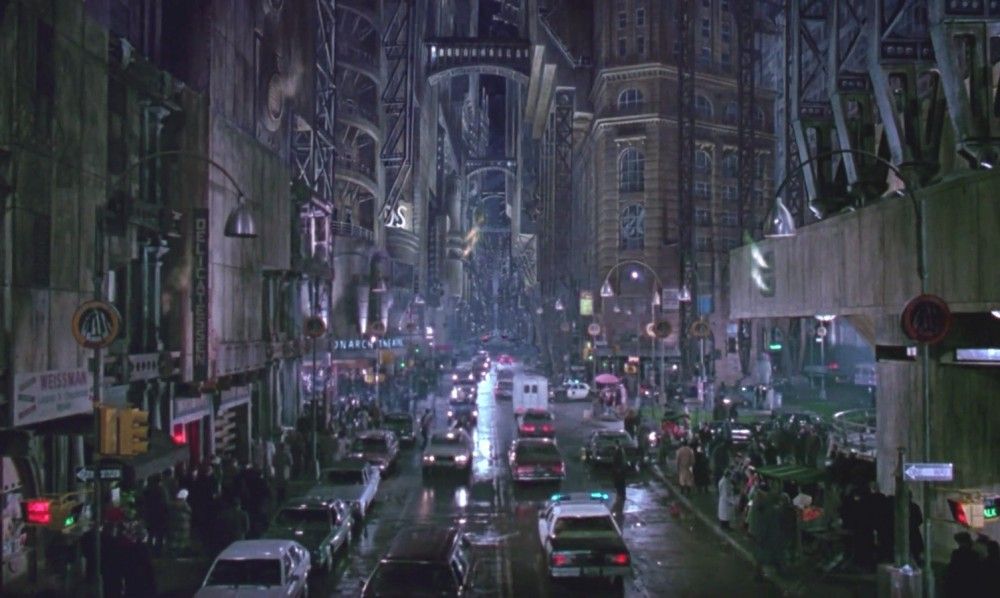
One of Anton Furst’s designs for Batman.
For me, one of the most interesting elements of Tim Burton’s Batman is how Jack Nicholson was the main draw for the film. Nicholson stands front and center in this film. If any real eyebrows were raised, it was over casting Michael Keaton as the Dark Knight. Keaton and Burton worked together on Beetlejuice, so there was some chemistry. However, when the announcement for Keaton being cast in Batman, most people were pretty skeptical. Keaton was known for playing more comedic roles, and playing the Batman required a more serious attitude. However, I’ve always felt that comedians are the most shocking when they take on a serious role. Some examples of this are Patton Oswalt in Big Fan, Robin Williams’ Academy Award winning performance in Good Will Hunting and most recently, Adam Sandler in Uncut Gems. I feel that worked for Keaton, and most viewers underestimated what he could bring to both Bruce Wayne and Batman. As Wayne, Keaton seems a bit subdued. As Batman, he’s a little scary simply because he doesn’t quite look like the kind of individual who would roam the streets at night dressed as a bat. My parents would later argue over Batman’s drop of Jack Napier at Axis Chemicals. I thought it was a situation where he just couldn’t hold on to him. My parents’ viewpoint was that Batman deliberately did it. We never really know for sure, but it did seem a little convenient that Batman couldn’t hold on to Napier. Overall, Keaton’s Batman plays second fiddle to Nicholson’s Joker, who also had a some sway in the design of the nemesis for the film.
Batman’s cast also includes Kim Basinger (L.A. Confidential) as Vicki Vale, Robert Wuhl (Bull Durham), Billy Dee Williams (Nighthawks) and Pat Hingle (Sudden Impact) as Commissioner Gordon, The cast is pretty perfect here, without anyone really falling out of step. Batman stories would grow more serious by the time Nolan would step in, but for the 1980s, it was just fine.
Anton Furst would win an Oscar for Best Art Direction for his design of Gotham City, which was for its time, quite dazzling. On par with some of the designs from Blade Runner and The Crow, Furst’s rendition of Gotham was dark and brooding, compared to the more modern backdrop of Batman Begins. In addition to Gotham’s look, Furst also helped design the Batmobile, which was based off the Chevy Impala (another Supernatural connection). When the film was released on home video, my family caught sight of the Batmobile up close on the street as it delivered VHS Copies to a video store in Manhattan. Although he died some years later, Furst’s work on Batman remains an influence on both the comics and future installments of the movies.
1989 was also a big year for Danny Elfman. His score for Batman would earn him a Grammy, and the main theme would become a definitive one for the Caped Crusader throughout the early 1990. Shirley Walker would build on the theme with her music from Batman: The Animated Series. It was also something of a surprise for Prince. With songs like Trust, Electric Chair and Vicki’s Waiting, Prince’s Batman Soundtrack is full of great hits that you really wouldn’t think would fit in a story like Batman. Still, they manage to do just fine, and even elevate scenes like the Joker’s entry in the Gotham Museum and the Balloon Parade.
Batman is not without a few problems. It gets a little long in the tooth in the film’s second half, particularly in the scenes leading up to the Monarch and Bruce losing his parents. It’s not a terrible slowdown, since it has to set the tone for some of the more spectacular fights later on. It could have been edited just a little tighter. Additionally, when compared to some of the modern versions, 1989’s Batman can feel a little bit dated (to me, anyway). That’s more of a nitpick, or where you stand on the Batman universe as a whole. Everyone has their favorite adaptation on the Caped Crusader.
Burton and Keaton would later reunite in 1992’s Batman Returns, and the franchise on a whole would take a different turn with Joel Schumacher’s takes in 1995’s Batman Forever and 1997 Batman & Robin.
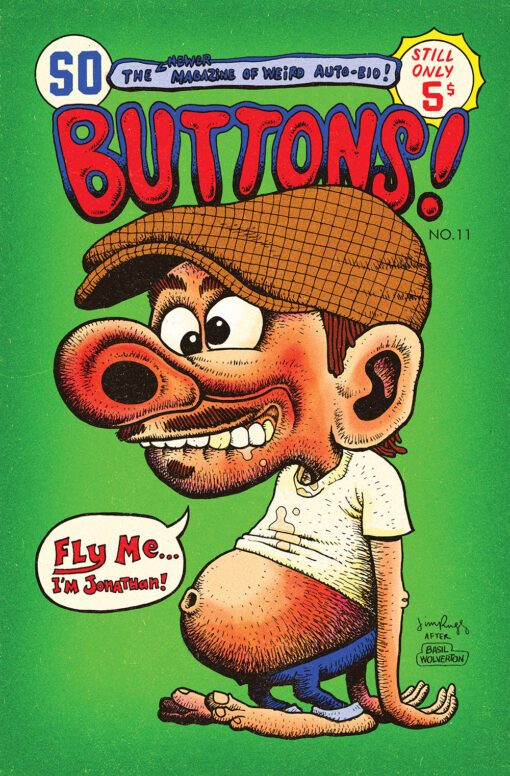
In art, as in life, timing is everything, and in that respect the release of issue #11 of Jonathan Baylis’ long-running autiobio anthology series, So Buttons (the first to be published in conjunction with Tinto Press), couldn’t be more — errr — timely, given that reminders that there really is a “normal” to return to (even if we’re not sure what that is yet) are very welcome indeed as so many of slowly emerge from our COVID-engendered bunkers. Granted, most of the contents of this ish were written and drawn smack-dab during some of the most dangerous and harrowing days of the pandemic, but it’s not strictly a “pandemic comic” per se. It’s referenced here and there — how could it not be? — but by and large this latest collection of stories is what we’ve come to expect from Baylis and his artistic cohorts, namely : fun, charming, occasionally…
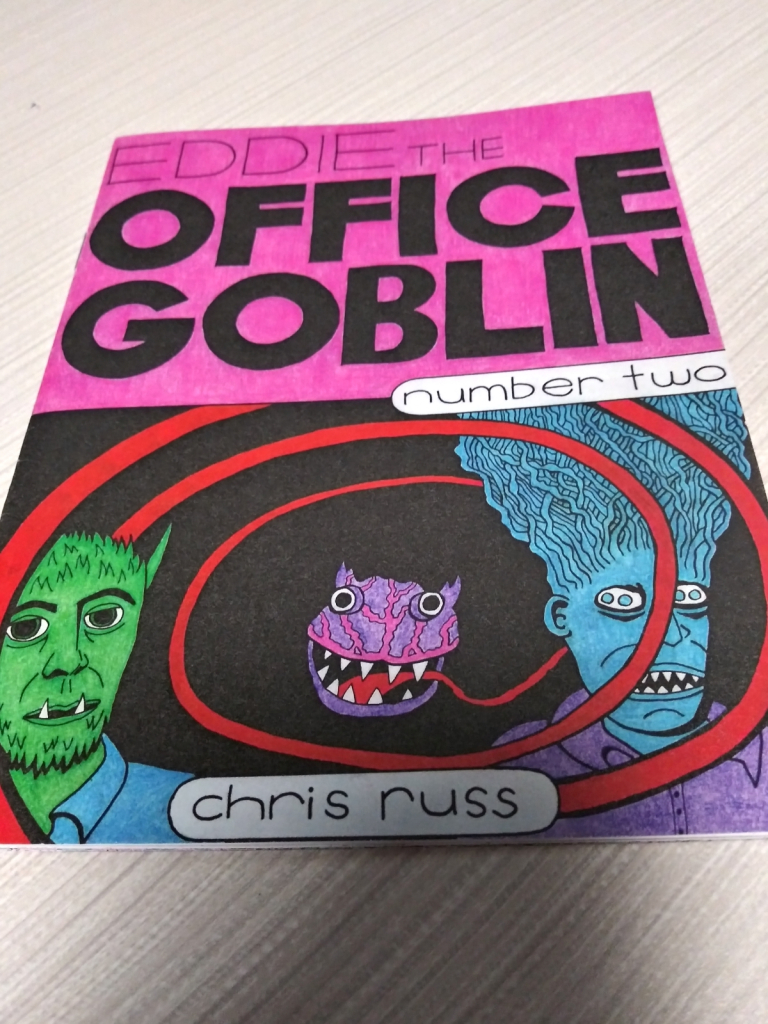
With the release of issue #2 of his self-published series Eddie The Office Goblin, Michigan-based cartoonist Chris Russ faces the challenge all artists do with their “sophomore outings,” namely : prove that their concept has staying power now that the premise has been established and the unfamiliar is, of necessity, decidedly less so. Whether or not he pulls it off is rather dependent on one’s views of #1 (for the record, I gave it a mostly positive review on this very blog), but even a generous reading of this mini — which I’m inclined toward — would result in a grade of “incomplete,” because even more important than what’s come before, or what’s happening now, is what will happen next.
Which, let me be clear, is no “bad” thing any more than it’s a “good” thing. Russ is playing the proverbial “long game” here, and depending on how all…
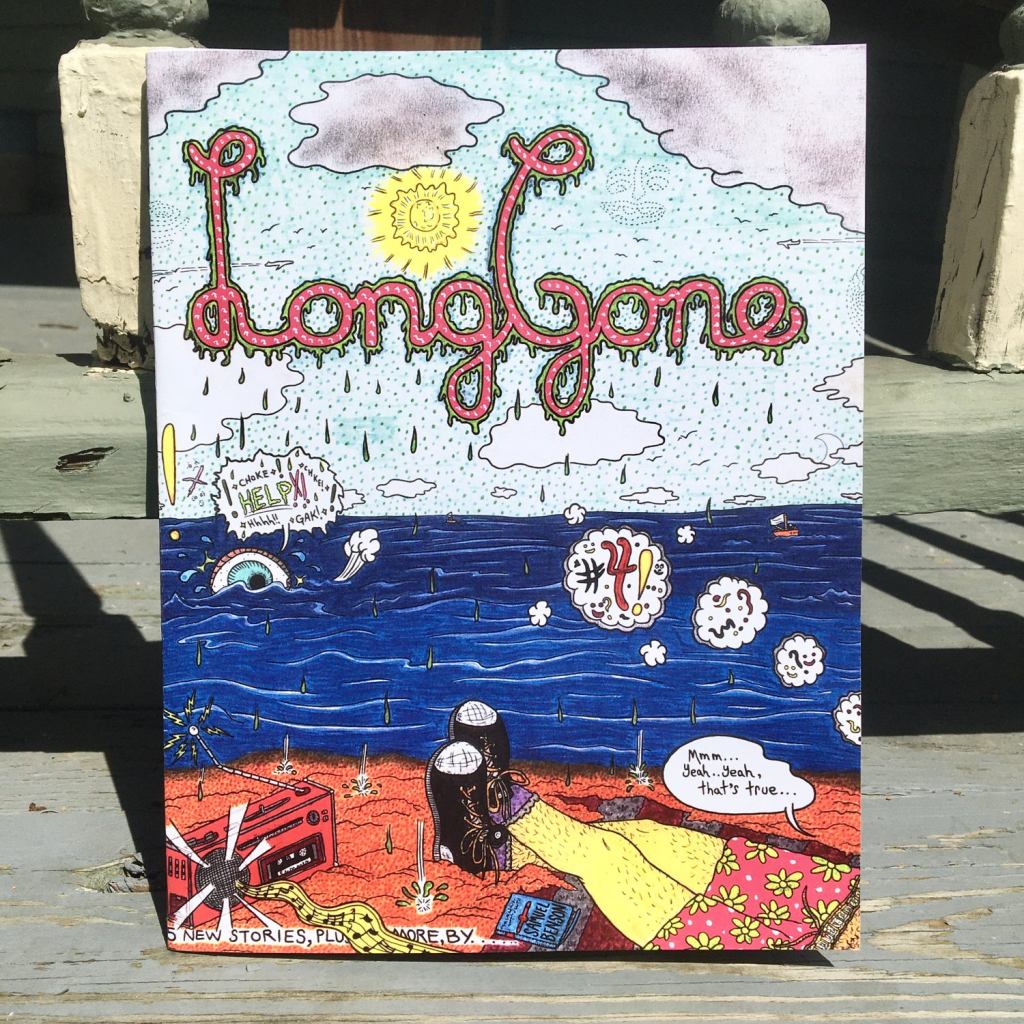
The comics of Iowa City’s Samuel Benson have always hovered near the edges of some fairly dark places, but in issue #4 of Long Gone, his venerable self-published series, there’s a shift that’s definitely both noticeable and consistent : the death of the self— be it the ego, the corporeal form, or both — is waiting for all of the protagonists in the four longer strips and two single-pages that make up the contents of this (as always with Benson) high-production-value ‘zine, with the rub being that it’s not always the worst outcome. Or even, for that matter, necessarily a bad one. We’re about to get a little philosophical here, so buckle up —
It’s a fallen world, and the evidence is all around us, so maybe escaping it isn’t such a crazy idea, amirite? None of us has any real idea what’s waiting for us on the so-called…
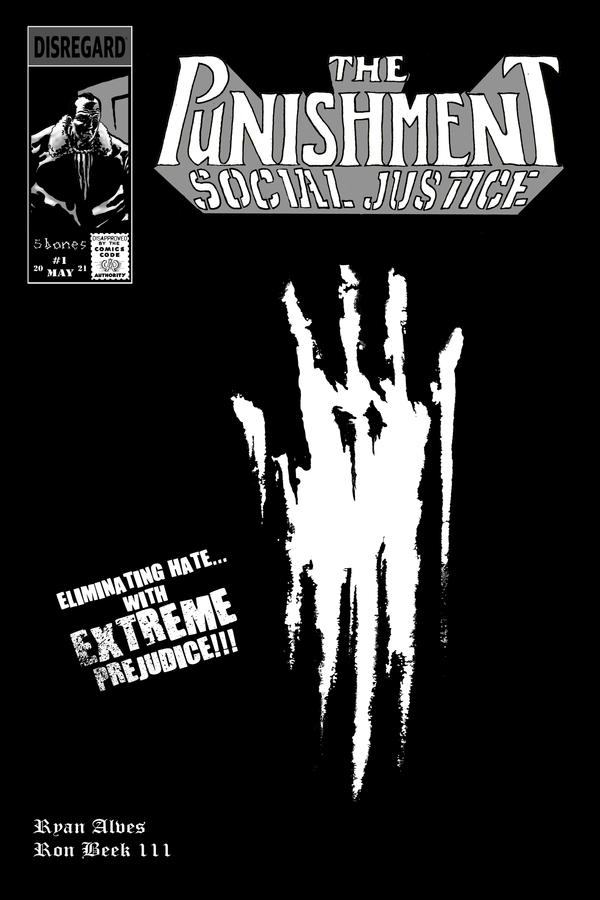
The super-hero spoof/send-up is, at this point, quite likely as tired as the notion of the super-hero itself, so trust me when I say that someone needs to have something unique, provocative, or both to say within the confines of this shop-worn genre in order for this critic to pay attention to it himself on the one hand, and to draw your attention to it on the other. Ryan Alves’ intelligently revisionist take on Ba*man, Moustache, was one such all-too-rare diamond in the overcrowded rough (in fact, if memory serves me correctly I reviewed it on this very blog), though, and so when he told me he was going to be offering up his own slant on a certain bloodthirsty skull-bedecked Marvel vigilante, I immediately found myself something I’m usually not with regards to this sort of thing — interested.
Admittedly, his collaborator and co-publisher on the just-released The…
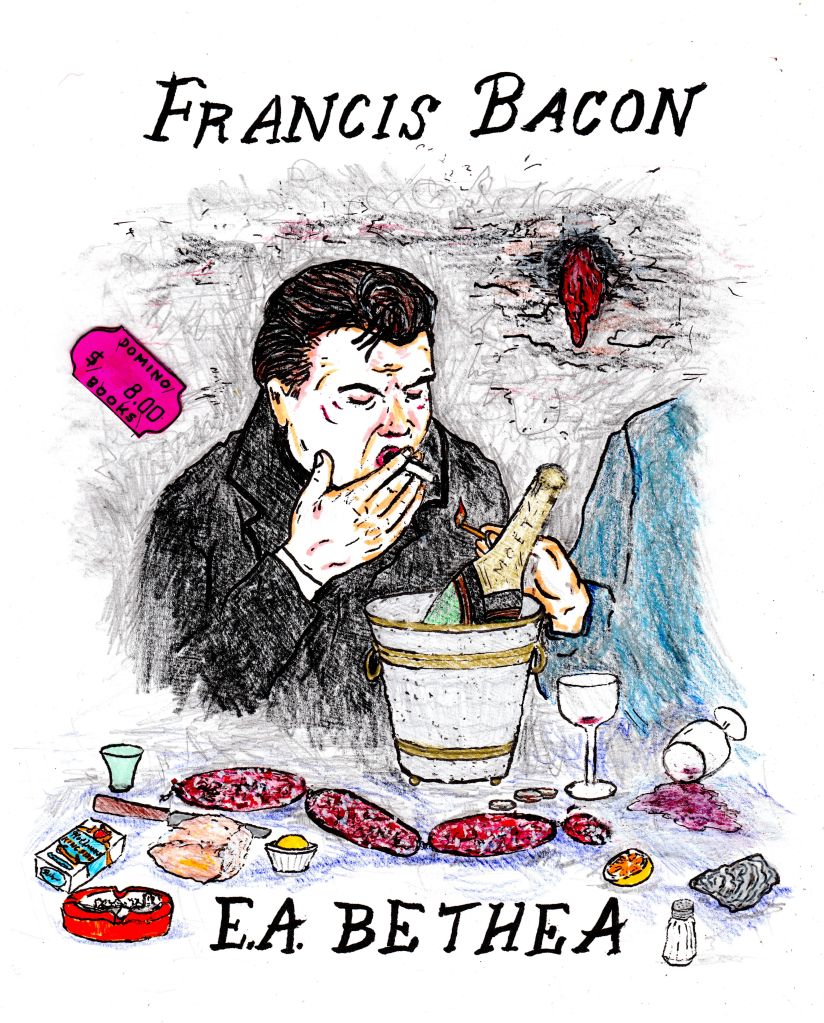
Okay, so, to get it out of the way first, if you’re wondering which of the two notable Francis Bacons that E.A. Bethea’s newest comic (her second with Domino Books), Francis Bacon, is purportedly “about,” it’s the 20th century British painter, but if you know Bethea’s work you’ll know that oftentimes where or who or what she starts with is simply a springboard, an “entry point” into a long, multi-faceted rumination on subjects various and sundry that always and ultimately bear some sort of tangential connection to the one that she was focused on at the outset, but those connections are uniformly of a highly personal, at times even intuitive, nature, so really — when you open this up, expect to be taken on a trip to places, physical and otherwise, that are far afield from what the title would lead you to believe you were in for.
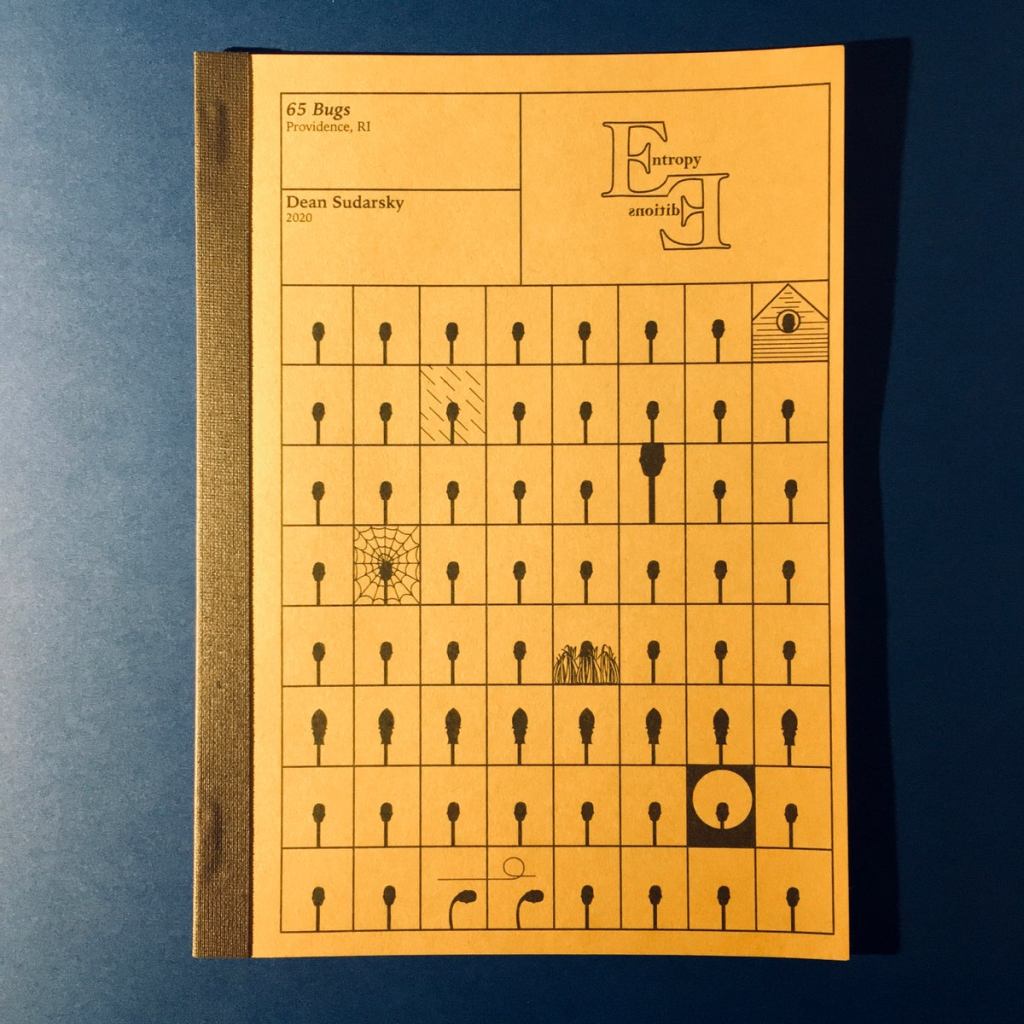
Concluding our look at titles currently available from publisher Justin Skarhus’ Entropy Editions we come to catalogue number EE04, 65 Bugs, a formally conservative but conceptually innovative work from Providence’s Dean Sudarsky, who takes the format of the short-form newspaper strip and turns it on its ear by pairing visual simplicity with dense existential complexity to fashion an eight-page mini that exerts a strange hold on readers — or at least it did on this reader — long after the covers are closed. Sex, death, ennui, and the endless search to break free from life’s routines are all touched upon here — among other weighty concerns — but at the end of the day we’re still talking about a mini that is, perhaps against all odds, inherently fun, and if all of that sounds more than a bit contradictory on its face to you, well, that’s as I’m…

 Through the Shattered Lens
