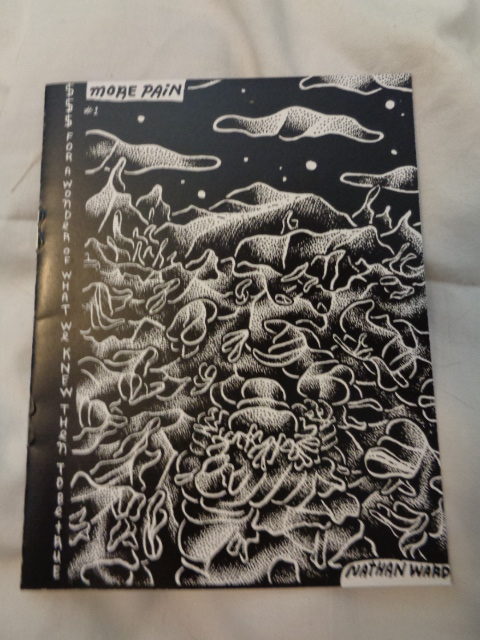
I’m not sure if Nathan Ward has been touched by some greater, cosmic force beyond our comprehension or has simply discovered an ability to tap into it, but whatever the case may be his triptych of 2019 self-published minis entitled More Pain offers further proof that this guy is operating on an entirely different dimensional wavelength than the rest of us. There are any number of cartoonists out there whose work can be described as “unlike anything else,” but Ward ups the ante : his work is unlike anything else that anyone could ever conceive of.
Which, as far as compliments go, is admittedly about as high as they come, and while looking at these may have reminded me of times in my youth when I was about “as high as they come” myself, in truth even the most intense acid trip imaginable has some ground to make up if…
Some may call the events in the second (and final) issue of writer Thomas Stemrich and artist Patrick Keck’s Crusher Loves Bleeder Bleeder Loves Crusher a kind of “waking nightmare,” but trust me when I say underneath it all there’s a morality play on nature vs. nurture, learning vs. instinct, and maybe even friendship vs. tribal loyalty. You’ve just gotta wade though a whole lot of the red stuff to get there.
As with the first installment of this story, that red stuff is depicted in black and white, but honestly — Keck’s solid, thick-lined, “crunchy” art is best experienced with the full impact of his rich detail unobstructed by color. This is visceral work, to be sure, but cartoonishly so, which is to say that it hits home precisely due to the force of its aesthetic outlandishness. I could spend all day looking at this art if I didn’t…
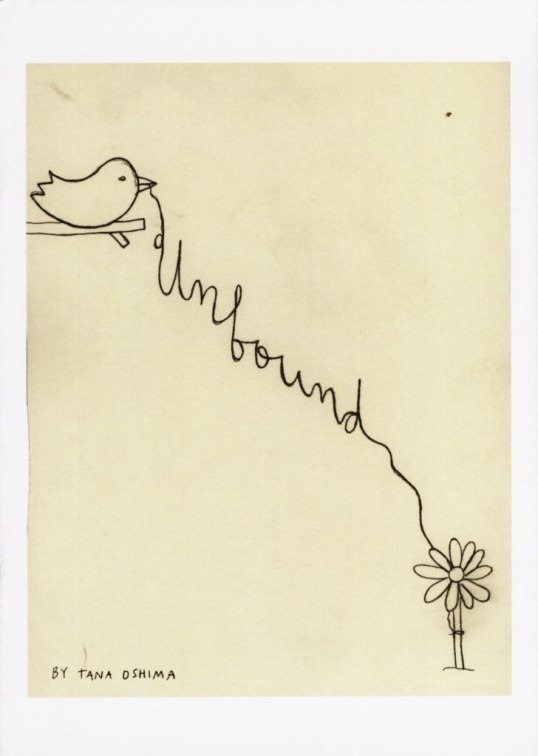
Set in the creatively-fertile netherworld where dreams, myths, and reality converge — and proving beyond a shadow of a doubt that whatever “barriers” exist between them are fragile and transitory at best — Tana Oshima’s new “all-ages” comic, Unbound, takes readers on a journey unlike any other and solidifies her reputation as one of the most unique cartooning auteurs of our time. Here’s the thing, though : it’s not like she’s setting out to necessarily do any of that — and that’s part of what makes this work so special.
On the surface, the narrative that unfolds in this gorgeous self-published squarebound book is deceptively simple : two people strike up a friendship and decide to transform into a bird and a flower in order to spend their lives together seeing all that there is to see. But there are layers upon layers of meaning and import to unpack…
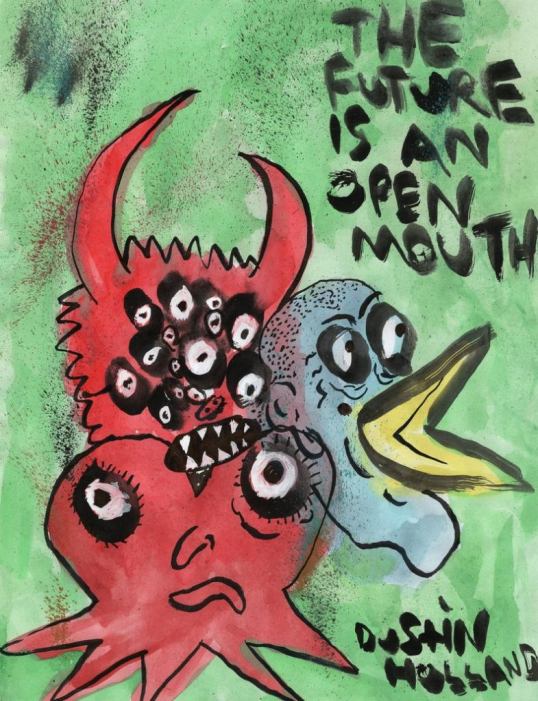
The best thing about this gig is that I get exposed to a lot of really personal, unusual, idiosyncratic work — comics and ‘zines that play by no rules other than those laid down by their creators, and even those can be arbitrarily broken if said creators feel like it. I’m talking about stuff that eschews codification, classification, sometimes even rationalization. But absolutely nothing I’ve encountered before could have prepared me for what was waiting in an oversized envelope that arrived in the mail from Denver-based cartoonist Dustin Holland the other day.
To call his self-published, magazine format comic The Future Is An Open Mouth “one of a kind” is to sell it short, because in truth it’s several things at once, none of them exactly new, but all of them coalescing into a singular visual and literary experience that propels the reader into frames of mind previously unknown and…
Coming headfirst and headstrong at readers in full, blazing, at times even explosive color, WIlliam Cardini’s latest self-published foray into the extra-dimensional ideascape that is his Hyperverse, Reluctant Oracle #1, not only appears to be the opening salvo in what could very well be a “proper” series, it may also portend the next developmental stage of the concept itself — one where, for lack of a better term, the ‘verse and its denizens might just be on the verge of growing up.
Which is a weird thing to say when we’re talking about a realm populated by ancient wizards, immortal monsters, and giant robots — the latter of which is our protagonist in this latest adventure — but nevertheless, it’s true. When a person thinks of Cardini’s work, phrases like “mind-blowing,” “highly imaginative,” and “far fucking out” come to mind, of course, but “emotionally resonant” and “thematically complex,” maybe…
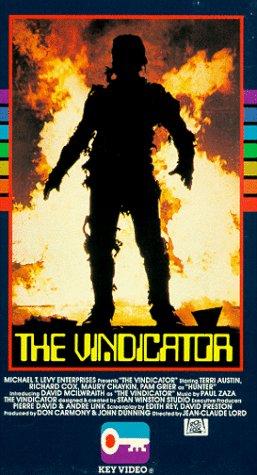
The 1986 film, The Vindicator, is one of those Canadian exploitation films that doesn’t make much sense but is still memorable just because of how dedicated it is to being utterly incoherent.
Basically, an evil corporate guy named Alex Whyte (played by Richard Cox) wants to design a space suit that will turn people into rage-filled assassins. Or something like that. To be honest, I had a hard time following just what exactly Alex was trying to do. When one of his scientists, Carl Lehman (David Mcllwraith), figures out that Alex is up to something sinister, Alex blows him up. Alex then puts Carl’s charred body into the suit and Carl is transformed into a cyborg who flies into a murderous rage whenever anyone gets too close to him. That’s not exactly what Carl was hoping to spend the rest of his life doing so Carl breaks free from the lab and seeks revenge while also trying to protect his wife (Terri Austin) and his daughter (Catherine Disher). Unfortunately, because of the whole rage thing, Carl can’t allow himself to get close to them but somehow, he figures out how to speak to them through the synthesizer that’s sitting in the living room.
Now that Carl is wandering around Canada and killing all of his former co-workers, Alex decides that he needs to do something to take Carl out of commission so he hires an assassin known as Hunter. Hunter is played by Pam Grier. Yes, that’s right — the Pam Grier! Soon, Hunter and her team are pursuing Carl across Canada and, in the process, they end up killing almost as many people as Carl. And those people who aren’t killed by Carl or Hunter fall victim to the types of accidents that could only happy in a Canadian exploitation film. For instance, in one scene, a truck drives over a guard rail and immediately explodes.
Meanwhile, Carl’s friend, Bert (played by Maury Chaykin because this is a Canadian film), is falling in love with Carl’s wife and plotting to try to take her away from her cyborg husband. At first, Bert appears to be a sympathetic character and then, about an hour into the movie, Bert is suddenly not sympathetic at all. The same can actually be said for just about everyone in the film, which will lead most viewers to wonder just why exactly we should care about whether or not Carl is ever stopped.
It’s a messy film. For a relatively short and presumably low-budget film, there’s a lot of characters in The Vindicator and it’s not always clear how everyone is related. Since Carl kills most of them, I can only assume that they’re all bad but still, you can’t help but wonder if maybe Carl is being a bit too quick to assume that everyone was okay with him getting blown up. Carl is one judgmental cyborg.
Supposedly, special effects maestro Stan Winston was involved with the production of The Vindicator and, to give credit where credit is due, Carl does look like what I guess most people would expect a cyborg to look like. In fact, when I watched the movie, I originally assumed that it was a Robocop rip-off but then I discovered that The Vindicator actually came out a year before Robocop. That’s not to say, of course, that The Vindicator was, in any way, an influence on Robocop. Beyond the cyborg-theme, the two films really have nothing in common. Robocop is a satirical commentary on fascism. The Vindicator is …. well, I’m not really sure what it’s supposed to be.
The Vindicator is a mess. It’s one of those films where no one’s motivations make any sense and it is often next to impossible to actually keep track of who is who. (The actors playing Alex and Carl looked so much alike that it took me a few minutes to figure out that Carl was the one who got blown up.) And yet, like many Canadian exploitation films from the 80s, The Vindicator is also compulsively watchable. The actions move quickly. The entire plot has a make-it-up-as-you-go-along feel to it that’s kind of entertaining. Plus, Pam Grier’s in the film, openly rolling her eyes at just how silly it all is. The Vindicator isn’t exactly good but it did hold my interest. All things considered, maybe that’s vindication enough.
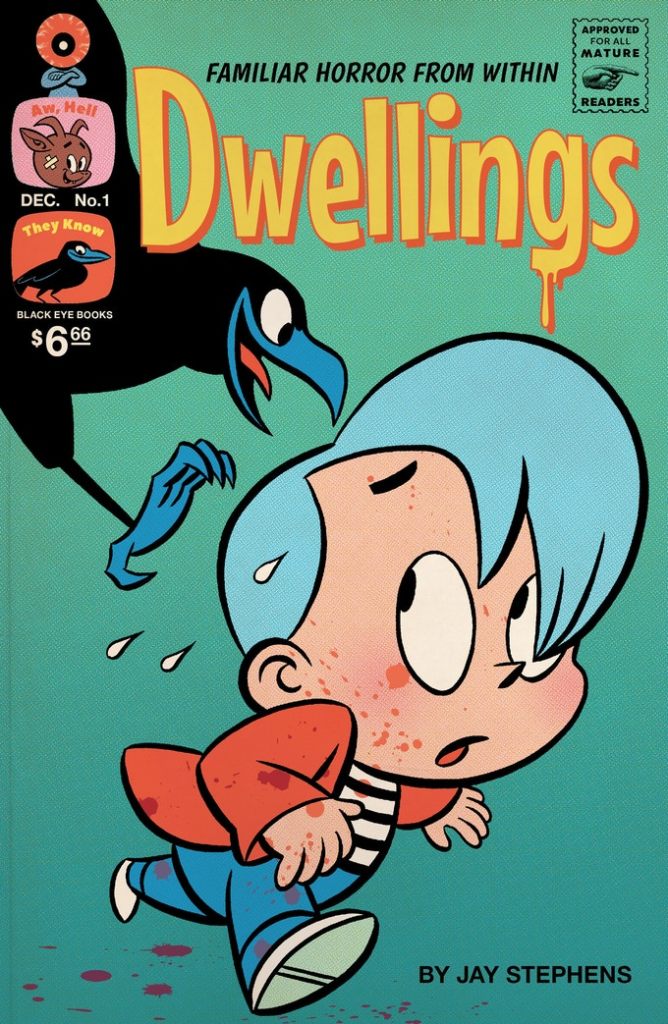
At first glance, there’s something inherently “been there, done that” about Jay Stephens’ new ongoing series Dwellings — after all, we’re talking about what would appear to be a send-up/pastiche of old-school Harvey Comics printed on pre-yellowed newsprint complete with fake ads and the like — but no one in their right mind would argue that something having been done before necessarily precludes it from being done well and Stephens, to my knowledge, has never half-assed a project. I go back to the early ’90s with both this cartoonist and his publisher, Black Eye Books, so it’s certainly no stretch to say that there’s a bit of “rooting for the home team” happening here on my part, but even still — two issues into this entirely unexpected return for both, all I can say is that, initial impressions aside, this comic is so far surpassing not just my expectations for…
For the record, from what I understand, Arthur Miller did not treat Marilyn Monroe very well when they were married. And, while The Crucible and Deathofa Salesman are both very good plays, a lot of his work was too didactic and heavy-handed to survive the test of time. (Even Death of a Salesman occasionally feels like it’s on the verge of turning into a parody of Clifford Odets.) Marilyn always felt like she had to struggle to live up to Miller’s intellectual reputation. Joe DiMaggio loves Marilyn though, in the end, he may have been too conventional in his outlook and lifestyle for her.
I don’t think Marilyn Monroe was murdered, though there are definitely some unanswered questions surrounding her death. I think she did kill herself and I think that the the way she was treated by the Kennedys was a contributing factor. I imagine that was can all agree that Marilyn deserved to live a happier life than she did.
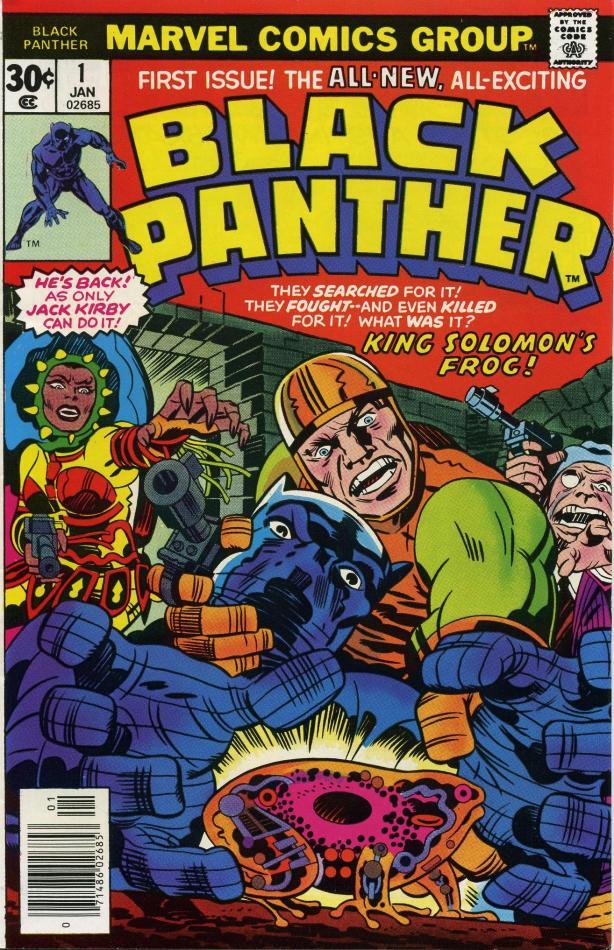
I have to admit that when I first started to haphazardly plan my week-long tribute to The King Of Comics, reviewing Black Panther #1 (cover-dated January, 1977) wasn’t on my radar screen. It’s not that it’s a bad book, mind you — anything but — just that the schedule was already looking a little full, and while I left a few makeshift “slots” open to be filled by whatever struck my fancy, I was thinking those would most likely be a good fit for more obscure entries in the Jack Kirby canon like Dingbats Of Danger Street or Manhunter.
And yet, it has to be said — while not too many people look back at Jack’s brief run chronicling T’Challa’s exploits in the late ’70s as one of the highlights of his career, in retrospect this was exactly the right direction for Marvel to take the character in at…
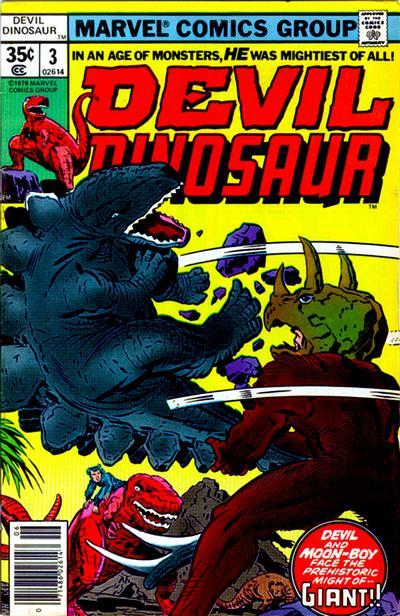
Sometimes, nothing beats a short, sweet, simple, self-contained comic book adventure story — and the next time you find yourself in the mood for exactly that, you could do a hell of a lot worse than issue number three of Jack Kirby’s last original Marvel Comics series, Devil Dinosaur.
Cover-dated June, 1978 and bearing the story title of “Giant,” about all you need to know about the basic premise going in is that Devil is an unusually large, unusually strong, and unusuallysmartprehistoric beast who took on a sort of bight, “fire-engine red” color due to — well, we won’t go there, since I’m not sure that particular part of his origin story necessarily stands up to even casual, much less anything approaching rigorous, logical scrutiny. It was painful as all hell for the poor creature, though, no doubt about that. His constant friend and companion is one…



 Through the Shattered Lens