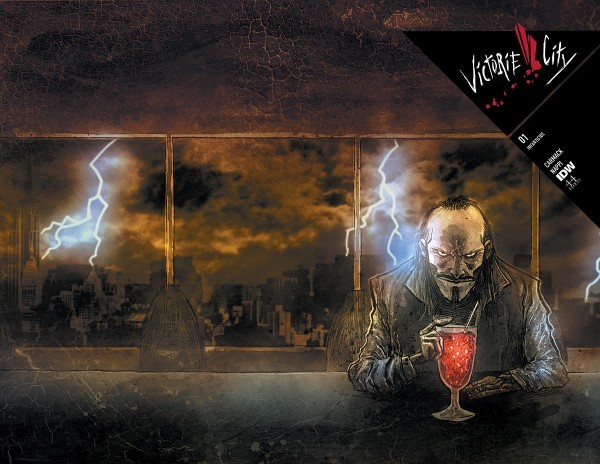
Is “Victorie City” A Winner?


Ryan C. (fourcolorapocalypse)'s avatarTrash Film Guru

4157092-victorie-city-1

It’s been awhile since the artistic collective known as 44Flood put out a new comic via their publishing deal with IDW, and while I admit that the last effort to go out under their label, Ben Templesmith’s dystopian sci-fi nightmare TheSquidder is certainly a tough act to follow, if the first issue of the new four-parter Victorie City is anything to go by, it should be more than up to the task — even though I’ll be the first to admit that, perhaps more than any other comic out there on the stands right now, this one’s going to divide people on a purely aesthetic level almost instantly.

First, though, a few words about the story — writer Keith Carmack appears to be constructing a deceptively standard-issue hard-boiled noir here, with our ostensible “hero,” police detective Hektor Ness, playing the role of one good cop in a…

View original post 689 more words

Quick Review: Kung Fu Panda 3 (dir. by Jennifer Yuh & Alessandro Carloni)


imagesHaving become the Dragon Warrior and the Champion of the Valley of Peace on many occasions, Po (Jack Black) has reached a point where its time for him to train others. All of this becomes complicated when Kai (J.K. Simmons), a former enemy of Master Oogway (Randall Duk Kim) returns to the Valley to capture the Chi of the new Dragon Warrior and anyone else that stands in his way.

The Legend of Korra geek in me hears the character of Tenzin whenever Simmons speaks in this film, only it’s Evil Tenzin vs. The Dragon Warrior. That alone was awesome.

Picking right up from Kung Fu Panda 2, Po is reunited with his birth father (Bryan Cranston), and discovers there are also other Pandas in the world. This, of course, causes a bit of tension for Po’s Goose Dad (James Hong) who raised him up until now. Can Po find a way to stop Kai? The theme of this film seems to be dealing with self discovery (as did the other films), but this focuses more on what we consider our Identity. Are we the role we take on from day to day at work or the role we have at home, or even a little of both? There’s also a nice family element to it as Po discovers what Panda life is like and deals with his Dads. Really young audiences may not exactly catch on to the theme, but there’s enough action and playful moments to keep them occupied.

On a visual level, the animation is beautiful. If you get a chance to see it in 3D, the Spirit Realm is a treat, with rocks and buildings floating around. The action scenes also move in a comic strip format, with the screen split in different ways to catch different elements. If you’re quick enough, you can catch it all. It can be jarring to anyone not used to it, I’d imagine. The Furious Five don’t have too much screen time in this one, save for Angelina Jolie’s Tigress, though it’s cute when you realize that some of the panda children in the village are played by the Jolie-Pitt kids. That was a nice discovery in the credits.

Musically, just like The Dark Knight Rises, Hans Zimmer takes what was a dual scoring effort (at least in the 2nd film) and makes it his. Though he’s assisted by Lorne Balfe (13 Hours: The Secret Soldiers of Benghazi), and drummer Sheila E. (Who worked with him on the Man of Steel score), it’s all Zimmer, really. Kai is given a nice theme to work with, one I can only describe as “Jazz Badass with Kung-Fu Swagger” and I enjoyed the music for the Panda village.

The only problem I had with Kung Fu Panda 3 was that it didn’t feel particularly epic in scope for me. In the first film, Tai Lung wanted to harness the power of the Dragon Scroll. In the second, the Peacock Shen brought cannons to decimate the Valley. This one was more personal and I enjoyed that, but it also felt like it could have been one of the Legends of Awesomeness episodes on Nickelodeon. It moved that quickly. Though it clocks in at an hour and 35 minutes — the same as the other films — it really whizzed by. It’s not a terrible thing at all, really, but I think I wanted something a little more.

Overall, Kung Fu Panda is a fun treat for the kids. While I didn’t go blind out of exposure to sheer awesomeness this time around, it gave me some inner peace and smiles.

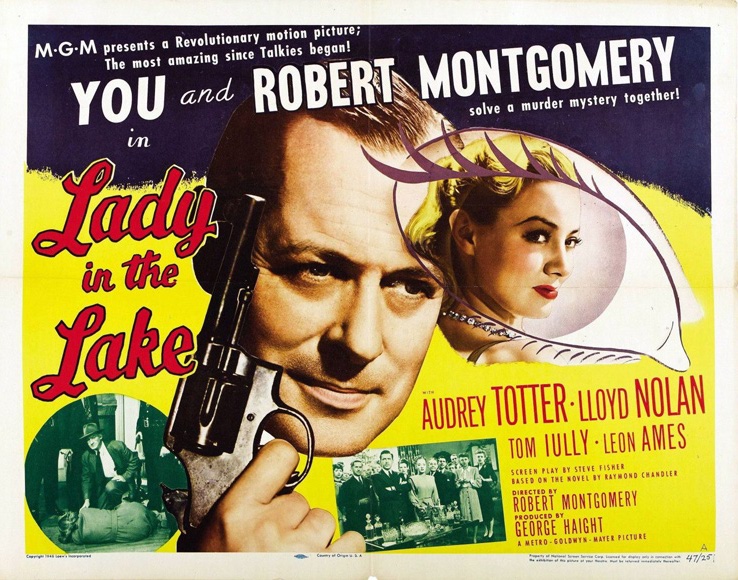
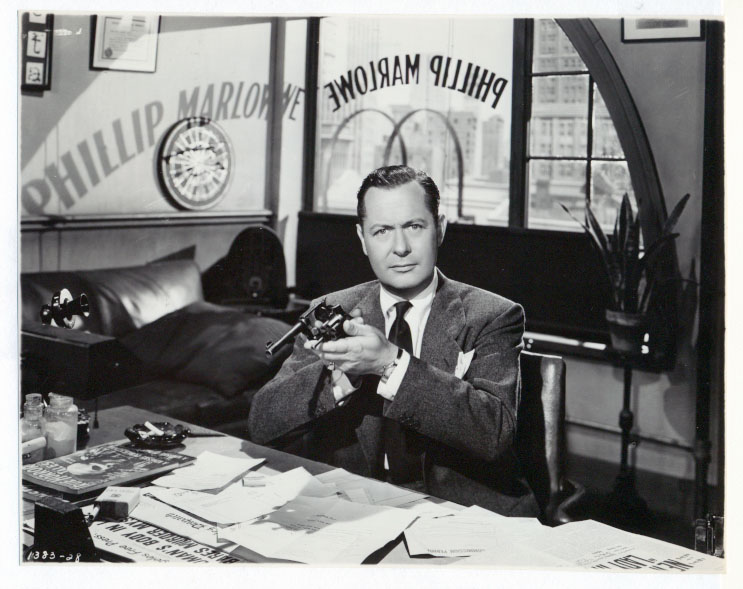
Marlowe at the Movies Pt 2: LADY IN THE LAKE (MGM 1947)


gary loggins's avatarcracked rear viewer

lake1

Raymond Chandler’s Philip Marlowe stories are all done in first-person narrative, so it must have seemed logical to director/star Robert Montgomery to shoot THE LADY IN THE LAKE in the subjective point-of-view. Aside from a few brief narration scenes, we see everything through the eyes of Marlowe. The actors play straight to the camera, doubling for the private eye. Does it work? Well….I guess that all depends on YOUR point of view!

lake3

“My name is Marlowe”, the film begins, as we see him sitting at his office desk. He relates the tale of how he submitted a short story to a pulp magazine, and received a reply from an editor named “A. Fromsett”. The movie is told in flashback, and now the POV changes to that of Marlowe’s for the bulk of the story. We meet A. Fromsett, who’s a gorgeous woman named Adrienne. She likes his story, but has an…

View original post 475 more words

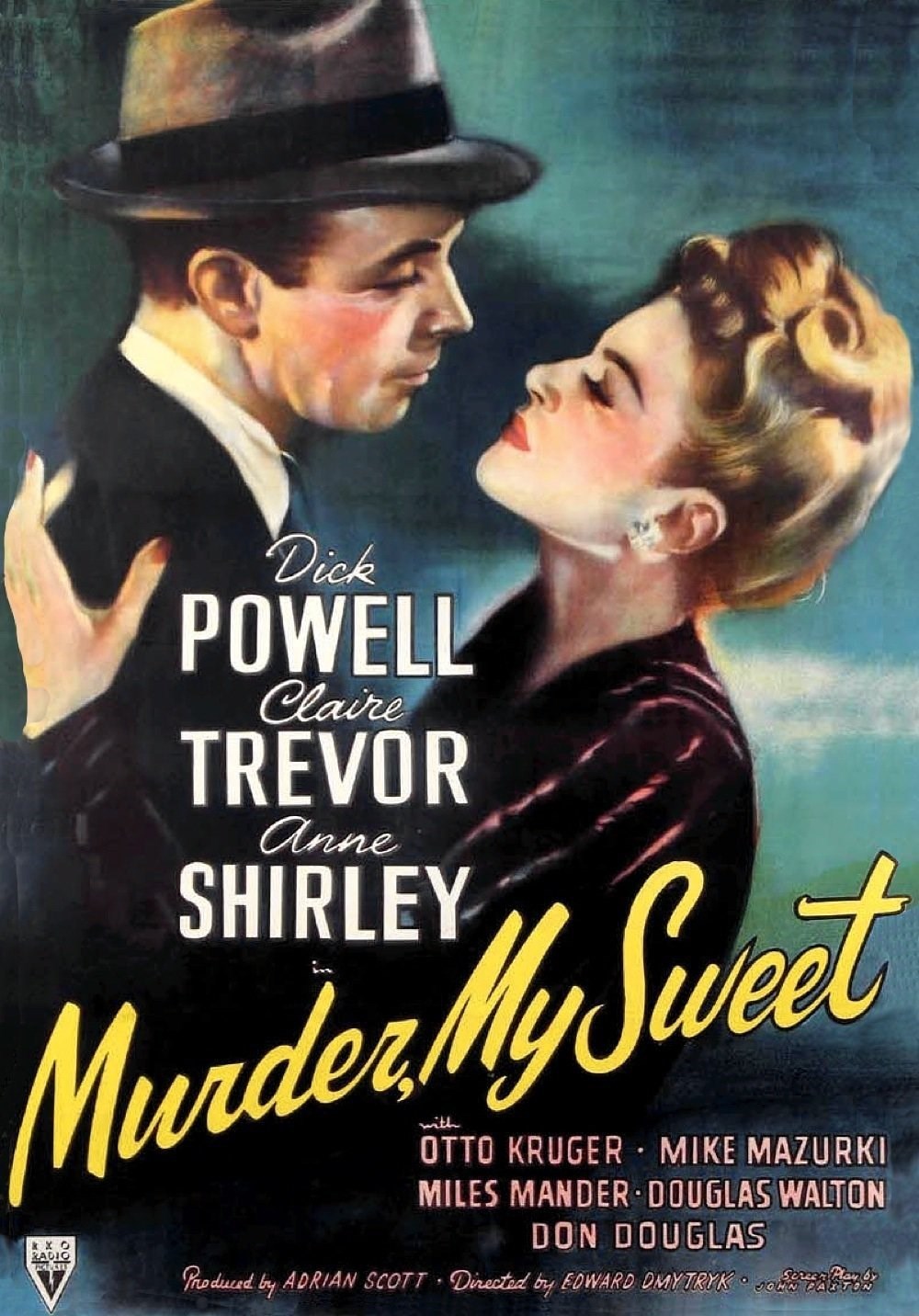
Marlowe at the Movies Pt 1: MURDER, MY SWEET (RKO 1944)


gary loggins's avatarcracked rear viewer

murder1

The first film to depict Raymond Chandler’s iconic private eye Phillip Marlowe was 1944’s MURDER, MY SWEET. Forty year old Dick Powell had spent the past decade playing romantic leads in musicals, and felt the time was right to change his screen image. Powell did just that as the cynical, wisecracking Marlowe, under the direction of a young up-and-comer named Edward Dmytryk.  Together they made one of the best Chandler adaptations ever, closely adhering to the complicated plot of the novel “Farewell, My Lovely”.

murder2

When we first meet Marlowe, he’s wearing a blindfold and being grilled by the cops for a murder rap. The sleuth states he’s gonna give the lowdown on what really occurred, and the LA bulls are all ears as Marlowe relates the tale through flashback. The gumshoe was sitting in his office, minding his own business, when big Moose Malloy walks in and asks Marlowe…

View original post 913 more words

You Too Can Be A Cinema Snob: Seven Beauties (1975), Storm Over Asia (1928), Meshes of the Afternoon (1943), Max Havelaar (1976)


If you’ve read enough of my reviews then you probably know that while I tend to write about B-movies, Hallmark, Disney, and late night cable movies, I do reference a lot of other films. Recently Gary did a post on The Great Train Robbery that not only revolutionized cinema by simply cutting back to a previously used set, but also firmly established that we preferred narrative films over actualites/documentaries and the cinema of spectacle. Since people seemed to respond well to his post, I thought I would occasionally do a post like this where I take advantage of YouTube to share some great films that happen to be available at the time of posting. If they are not available anymore, then simply take them as recommendations. Maybe one day I will actually review these, or perhaps they may have already been reviewed here. I hope you enjoy these kinds of posts. If not, feel free to tell me.

Seven Beauties (1975, dir. Lina Wertmüller) – This is a classic of Italian cinema from the 1970s by director Lina Wertmüller. It’s about a man who fancies himself quite a ladies man and a stereotypical suave Italian gangster type. Things turn bad for him and it takes him as far as a concentration camp during WWII. This is an example of Italian Comedy which was a special genre of comedies made between roughly 1960-1980 in Italy. The defining characteristic would be their choice of material that would often be dark, non-PC, and almost feel out of place in a comedy. It’s one of my favorites of the genre with a great performance by Wertmüller’s De Niro, Giancarlo Giannini who people might know from Casino Royale (2006) and Quantum of Solace (2008) among other films. This particular version is dubbed into English.

Storm Over Asia (1928, dir. Vsevolod Pudovkin) – Not all propaganda is bad filmmaking. Early Soviet Cinema was often loaded with propagandistic messages, but they were also very well made movies. Storm Over Asia is by director Vsevolod Pudovkin who also made such classics as Mother (1926) and The End of St. Petersburg (1927). This one uses a tale of a Mongolian who turns out to be a descendant of Genghis Khan to send its message. I love the end as he and his people cause such a storm with their horses that they are literally blowing over soldiers with the wind.

Meshes of the Afternoon (1943, dir. Maya Deren) – When you move beyond mainstream films and start looking into more underground/experimental cinema, then certain names will pop up. Names like Stan Brakhage, Kenneth Anger, and Michael Snow. Maya Deren is one of these people. Meshes of the Afternoon is usually the first Maya Deren film introduced to people. You will find numerous versions of this film available. Not because the visuals are any different, but because the film was made with zero sound or musical accompaniment. This is one that is popular for people to add their own soundtrack to.

Max Havelaar (1976, dir. Fons Rademakers) – It’s sad, but to my knowledge most people only really know about one Dutch director. That being Paul Verhoeven. However, there are certainly many more out there. Fons Rademakers is probably not nearly as well known outside of Holland as Verhoeven even though his 1986 film The Assault won Best Foreign Language Film at the Oscars. Max Havelaar is his adaptation of the very important Dutch novel of the same name. After it’s publication it changed the nature of Dutch colonialism and has ramifications for the country beyond that as well. Keep your eyes peeled for Rutger Hauer before he became a star in the United States. Also, I suggest checking out more of Rademakers’ films. Especially one of my personal favorites called Als Twee Druppels Water (1963) AKA The Dark Room of Damocles.

There’s More Than One “American Monster”


Ryan C. (fourcolorapocalypse)'s avatarTrash Film Guru

5008127-01

Question : what do you get when you combine a violent home invasion, an ex-mercenary (I think) with a burned-off face, a bunch of good ole’ boys who hang out in a convenience store and like to make fun of the retard who mops the floors there, a grotesquely overweight lecherous creep who lurks in playgrounds paying teenage girls to flash their tits, and a sadistic neo-Nazi meth-gang leader whose idea of fun is to strap a husband and wife to chairs facing each other, give them both guns, tell them that one has to shoot the other in the face in order to survive, and then kills the “winner” anyway?

If your answer is “probably the most depraved and amoral comic book of the year,” congratulations! You’re exactly right. But, as much misanthropic fun as that is in and of itself, my best guess is that writer Brian Azzarello…

View original post 961 more words

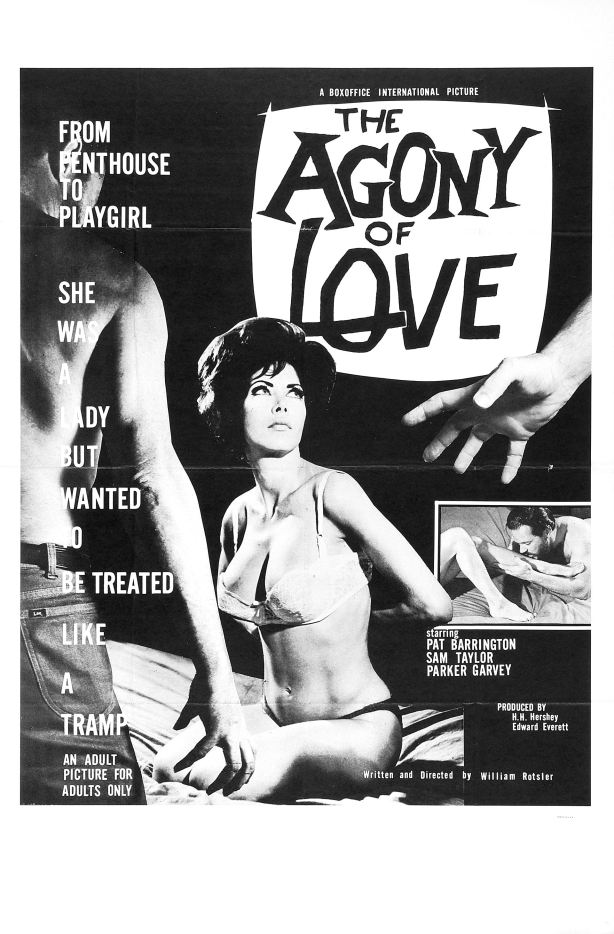
Grindhouse Classics : “The Agony Of Love”


Ryan C. (fourcolorapocalypse)'s avatarTrash Film Guru

agony_of_love_poster

What the hell, I’m in the mood to crank out one more review of a Harry Novak-produced softcore sexploitationer, so let’s close this little week-long series out with probably my favorite of the bunch — 1966’s black-and-white smutfest The Agony Of Love. What sets this one apart from the rest of its well-populated — and sadly extinct — genre? Two words : Pat Barrington.

For those who may not be familiar with the name, Ms. Barrington, who passed away in 2014, was a true standout of sultry sensuality at a time when, let’s face it, just about any woman who was willing to take off all her clothes in front of the camera could find work on these sorts of productions. This was her first crack at a “leading” role, and while she certainly displays no real acting range to speak of, that actually suits the material perfectly, given…

View original post 659 more words

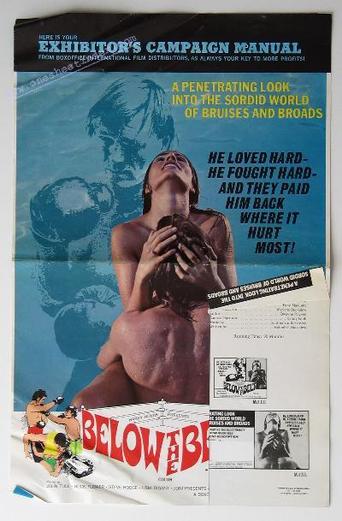
Almost Everything In This Movie Happens “Below The Belt”


Ryan C. (fourcolorapocalypse)'s avatarTrash Film Guru

stkeaqfSbD0wOkqvtGGy7anyo2O

Let’s get the obvious out of the way first here — that’s a pretty crappy scan for the poster of 1971’s Below The Belt, isn’t it? Unfortunately, it’s also the one and only image I could find of it anywhere online, so we’re sort of stuck with it — and that’s kind of a shame given that, as far as Harry Novak softcore productions go, this one actually isn’t too bad.

Novak and writer/director Bethel Buckalew have traded in the barnyards and swamps of hick country for the mean. gritty streets of the (unnamed) big city in this one, and venturing out of their usual “comfort zone” injects the proceedings here with a frisson of realism that most of their collaborations fail to achieve (not that they’re really trying). Sure, it would still be a heck of a reach to claim that this is anything like a good movie…

View original post 578 more words

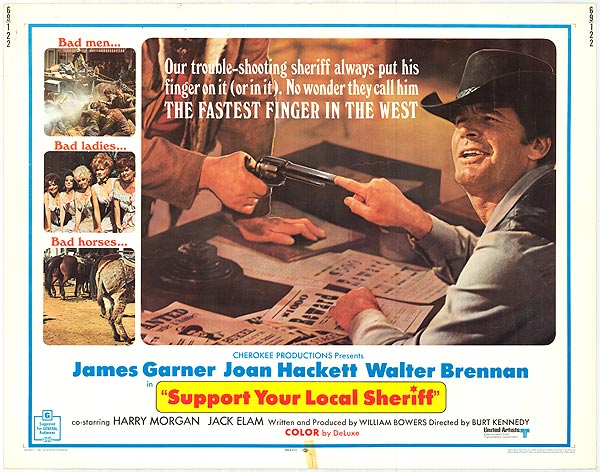
How The West Was Fun: SUPPORT YOUR LOCAL SHERIFF! (United Artists 1969)


gary loggins's avatarcracked rear viewer

sup1

SUPPORT YOUR LOCAL SHERIFF! is played strictly for laughs. It’s broad performances and slapstick situations won’t strain your brain, but will give you an hour and a half’s worth of escapist fun. Easy going James Garner has the lead, with solid comic support from Joan Hackett, Walter Brennan, Harry Morgan, and Jack Elam. Director Burt Kennedy made quite a few of these, and this is probably the best of the bunch.

sup2

While burying an itinerant drifter, the townsfolk of Calendar, Colorado discover a mother lode of gold. The subsequent boom turns Calendar into a lawless, rowdy town that can’t keep a sheriff alive long enough to tame it. The town elders also can’t get their gold through without paying a 20% tribute to the mean Danby clan. Enter our hero Jason McCullough (Garner), who applies for the sheriff’s position “on a temporary basis…I’m on my way to Australia”.  Jason is a crack shot and fast…

View original post 576 more words

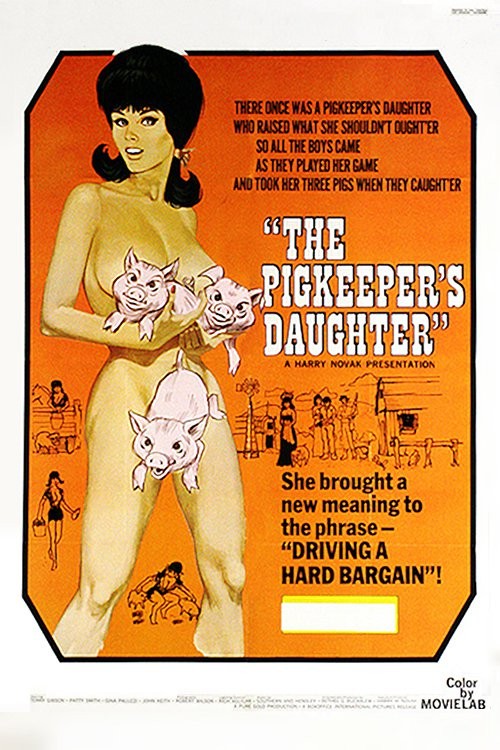
Rolling In The Mud With “The Pigkeeper’s Daughter”


Ryan C. (fourcolorapocalypse)'s avatarTrash Film Guru

FIt0U8xXtUK4xt_99_a

Voluptuous farmer’s daughter Moonbeam (played by Terry Gibson) has what passes for a “problem” in backwoods country in 1972 — she’s all of 19 years old and still unmarried. Needless to say her parents, Mr. and Mrs. Swyner  (Bruce Kimball, working under the pseudonym of “Buck Wayne,” and Gina Paluzzi, respectively) are worried about this situation to no end, but what they don’t know is that their darling not-so-little girl is getting it on with every single swinging dick the countryside has to offer, including those between the legs of local yokel stud Jasper (John Keith — who makes time with every chick in the movie), another dimwit named Wyngate (Paul Stanley —  don’t get excited Kiss fans, not that one), and even, when she drifts off to dreamland, an imaginary handsome prince (Nick Armmans) who used to be not a frog, but her prize porker, Lord Hamilton.

Running concurrently…

View original post 533 more words