Miniseries Review: Ford: The Man and The Machine (dir by Allan Eastman)


Henry Ford changed the world, for both the better and the worst.

Starting from his own small workshop in Dearborn, Michigan, Henry Ford designed the first mass-produced automobile.  He transformed cars from being a luxury item to being something that nearly every family owned.  He created the concept of the assembly line.  He argued that workers needed to be paid a livable wage and he also advocated for an 8-hour workday.  At a time when every facet of American life was heavily segregated, he encouraged his factories an auto dealerships to hire black employees.  He was a pacifist, who took part in a widely-ridiculed but apparently sincere effort to try to convince the leaders of the world to just stop fighting.

Unfortunately, Henry Ford was also something of an unhinged lunatic, a man whose skill at engineering and his empathy for his underpaid workers did not necessarily translate into a sophisticated understanding of anything else.  When the workers in his factories tried to unionize, Ford employed violent strike breakers and he felt that most of the population were like a children and therefore incapable of governing themselves.  He understood how to make car but he also fell for all sorts of quack science and was a believer in reincarnation.

Worst of all, he was a rabid anti-Semite, who blamed almost all of the world’s problems on “Jewish bankers” and who played a huge role in popularizing a scurrilous work called The Protocols of Elder Zion in America.  Claiming to lay out the details of a Jewish plot to secretly control the world, The Protocols were a ludicrous document but many people believed them because they were promoted by Henry Ford, who was as big a celebrity in the early 20th Century as all of the social media influencers are today.  All these years later, The Protocols are still cited by anti-Semites.  A series of anti-Semitic editorials (which Ford later claimed to have signed off on but not actually written) were published in Germany under the title The International Jew, the World’s Foremost Problem.  Hitler wrote of his admiration for Ford in Mein Kampf.  Ford, it should be noted, did keep his distance from Hitler, though whether that was due to a personal distaste or the threat of an economic boycott is not known.  (Jewish leaders had already organized one successful boycott of Ford in the 20s, which led to Ford closing down his newspaper and offering up an apology.)  At the Nuremberg Trials, many of the Nazis said that they had first been introduced to anti-Semitism through the writings of Henry Ford.  Reportedly, when Ford saw newsreel footage of the concentration camps, he was so overcome with emotion that he collapsed from a stroke.

(Two years ago, when Nick Cannon regurgitated the usual anti-Semitic conspiracy theories on a podcast, he was pretty much saying the exact same thing that Henry Ford said at the start of the 20th Century.  Later, under threat of economic boycott, both Ford and Cannon would off up half-hearted apologies for their statements.  Ford continued to make cars.  Cannon continues to host a handful of television shows.  How does that work?)

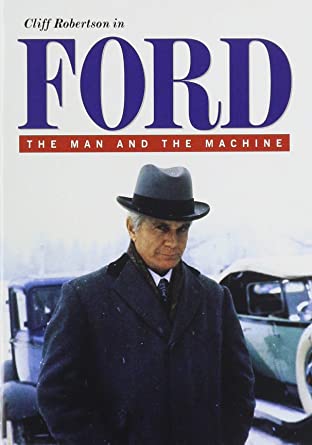
First broadcast over two nights in 1987, Ford: The Man and the Machine was a Canadian miniseries about the long and controversial life of Henry Ford.  Cliff Robertson played Henry Ford.  Hope Lange played his wife while Heather Thomas played his mistress.  R.H. Thomson played Ford’s son, the sensitive Edsel.  Michael Ironside played Harry Bennett, a sinister figure who was hired to break up union activity and who eventually became Ford’s right-hand man.  If I remember correctly, I believe Canadian law actually required that Michael Ironside appear in almost every Canadian film and television show made in the 80s and the 90s.  His glowering presence and menacing line delivery practically shouted out, “Don’t mess with Canada,” and he does bring a note of genuine danger to his performance here.

Ford: The Man and the Machine opens in the late 20s, with an aging Henry Ford already starting to lose control of his mental faculties.  A series of flashbacks then show how Ford built his first engine, his first car, and eventually his first factory.  We watch as Ford goes from being an enthusiastic, self-taught engineer to being one of the most powerful men in the world.  Along the way, Ford grows arrogant.  The same stubbornness that led to his early success also leads to his later problems.  For all of his ability, Ford’s ego and his refusal to reconsider his conclusions leaves him vulnerable to both flattery and manipulation, whether it’s coming from the White House of Woodrow Wilson, from his own executives, or from the authoritarians who rose to power in Europe following the first World War.  As portrayed in the movie, he’s a loving father who also flies into a rage when Edsel designs a car on his own.  He loves his wife but he keeps a mistress.  He loves his family but he’ll always prefer to spend time working on his cars than spending time with them.  Henry Ford changes the world but his own hubris makes it impossible for him to change with it.

The miniseries is built around Cliff Robertson’s performance as Ford and Robertson does an excellent job in the role, convincingly playing Ford as he goes from being an enthusiastic dreamer to a paranoid millionaire to a doddering old man, a Bidenesque figuredhead who is only nominally in charge of his own company.  Neither the film nor Robertson shy away from showing us Henry Ford’s flaws.  Instead, both the production and the actor offer up a portrait of a complex man who transformed the way that people lived but who couldn’t escape from his own prejudices and resentments.  Ford: The Man and The Machine is a history lesson but it’s a valuable one.  If you’re a student of history, you’ll find much to think about in this miniseires.

For the record, I do drive a Ford and it’s a good car.  However, I tell myself that it’s named after Gerald Ford.

Titans S3 Ep6, “Lady Vic”, Review by Case Wright


The holidays are over and I know A LOT about Electricity, Magnetism, and Titans. The episode opens with a brutal scene of a woman killing two cops. I almost had to look away. It is NOT for the faint of heart. What got to me was the cold psychopathy of it. The reason for this little Kill-spree is poorly developed. It quickly cuts to Wayne Manor and Blackfire is now a quasi-Titan and she still prevents me from totally concentrating. She and Superboy have REAL chemistry. So… pretty sure that’s happening very soon. Kyptonians get all the luck!

Lady Vic really more of a B-Storyline. We see how Barbara Gordon and Dick became an item. Boy knows girl, boy and girl both dress flamboyantly, and boy and girl knock over a museum for an old trinket, which of course leads to Knocking Boots. There’s a lid for every pot, but museum heist leading to intercourse doesn’t seem like a direct route to me, but what do I know- I study hours of Math …. for fun. Through flashbacks, we learn that Babs and Dick went on heists for fun, but ended up killing Lady Vic’s husband, brother… or something.

I guess that I have to note that there is a plotline of when will Blackfire and Superboy hook up? However, this plot-line is just so predictable that it’s not great. The show needs Hawk back. He added a terrific wisecracking element and Gar and Superboy just don’t quite make up for his loss.

Jason Todd is still Red Hooding with Dr Crane. Lady Vic works for him too, but just as a side-hustle.

This episode was more disjointed than a knee replacement, but I guess you have to watch it to prepare for the next episodes.

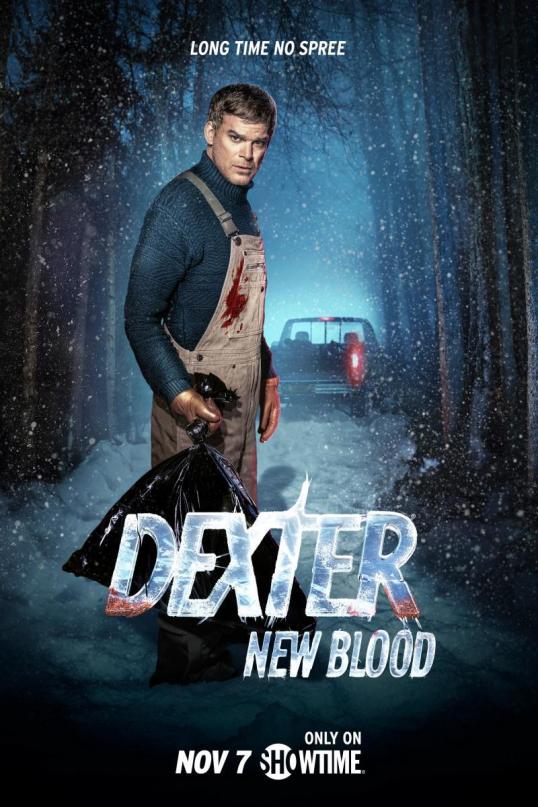
TV Review: Dexter: New Blood 1.10 “Sins of the Father” (dir by Marcos Siega)


I’ve been thinking about the finale of Dexter: New Blood for about three days now.  I’m going to guess that if you’re a Dexter fan, you’ve already seen it so I’m going to just talk about what happened without posting any spoiler warnings.  I hate spoiler warnings anyways.

Harrison shot and apparently killed Dexter.  Now, I have to admit that, when Harrison first showed up during the first episode, my initial thought was that Harrison was going to end up killing Dexter for the same reason that Dexter had killed so many others.  And, as other have pointed out, the entire show was pretty much leading up to either Harrison killing Dexter or Dexter being forced to kill Harrison.  So, really, I guess I should be happy that the show followed its storyline to its only logical conclusion.  I can certainly respect the show for staying true to itself but respect and happiness don’t always go together.

To be honest, even though I knew that it should happen, I really thought there was no way that the show would actually do it.  I was so used to Dexter being able to get out of any situation that I just naturally assumed that he would be able to do it again.  And if Dexter had managed to escape from the jail without killing Logan in the process, I think Dexter probably could have pulled it off.  But, by killing Logan, Dexter broke Harry’s code.  Dexter revealed that the code was really just a part of his own sociapathic ritual.  It wasn’t something that he truly obeyed,  Instead, it was something that he used to justify his dark urges.

Harrison realized what Dexter had done and, as a result, Harrison shot him.  I didn’t necessarily buy the idea that Dexter would just stand there and encourage his son to kill him.  That was a bit convenient and it required Dexter to have a conscience, which is something that we all know he didn’t have.  Even Dexter’s comment that he had never felt love until the minute Harrison pulled the trigger felt like another case of Dexter what he knew the audience wanted to hear.

My main issue with the episode wasn’t so much Harrison shooting Dexter as it was what happened next.  Allowing Harrison to escape and agreeing to cover up what he did was totally out-of-character for Angela.  Angela, who has shown that she’s willing to arrest anyone in town regardless of how close she may be to them, had no problem wiping Harrison’s prints off the gun and tossing him some money for his journey.  It didn’t make any sense.  Angela barely knows Harrison.  How does she know that Harrison didn’t help Dexter with the murders?  Also, after Angela discovered that Dexter was a murderer, did it not occur to her that there might be something strange about the stabbing at the school?  Is Angela okay with Harrison driving off to freedom while the kid that Harrison tried to murder is destined to always be remembered as a potential school shooter?  I can accept Harrison shooting Dexter.  I can even respect it.  But I cannot accept that Angela would let him get away with it.

There were other loose ends that bothered me.  Why was Edward Olsen such an important character in the first few episodes?  Why did he mysteriously vanish?  Why did the show seem to building up to a twist about Audrey’s parentage, just to abandon the whole thing an episode later?  How did Kurt manage to capture Molly, who was more or less aware that Kurt was a killer and certainly wouldn’t go anywhere willingly with him.  Considering that this episode appeared to be the definitive end of Dexter’s story, those loose ends are frustrating.

That said, it was a well-directed episode.  Michael C. Hall was riveting and genuinely frightening in the scenes where he manipulated Angela and Logan.  The final montage of the faces of everyone innocent person who died as a result of Dexter’s actions was an emotional moment and I’m glad to see that Doakes was included with Deb, Rita, LaGuerta, Lundy, and all the rest.  Doakes always got a raw deal.

Dexter: New Blood was a success.  Even the fact that I have mixed feelings about how it ended is proof of how well executed this revival was.  (Trust me, I could have hardly cared less when Dexter sailed into that hurricane, so fed up was I with the show at the time.)  And, between you and me, I’m not convinced that Dexter’s dead.  Yes, he was shot.  Yes, he didn’t look good.  But Harrison drove away before the paramedics arrived.  Dexter’s survived a lot.

At the very least, Ghost Dex would be amusing….

Lisa Marie’s Week In Television 1/2/22 — 1/8/22


As the first week of 2022 comes to a close …. I have yet to watch the fourth season of Cobra Kai!  What’s up with that?  Oh well, I’ll watch it next week.  This week, I was busy.  Next week, I’ll ignore everything else I need to do and watch TV.  How is that not a good plan?

Anyway, here’s what I watched this week:

Allo Allo (Sunday Night, PBS)

After being gone for a month due to pledge programming, Allo Allo returned to the PBS line-up on January 2nd.  Having escaped from the hospital, Rene returned to the café and dealt with Michelle’s latest scheme to get the airmen out of France.  It involved hiding them in a hollow bomb that would be dropped over England.  The only problem is the Resistance needed a place to hide the bombs.  Michelle, of course, volunteered Rene’s cafe.

While I continue to laugh at Crabtree’s mangled French, I also find myself looking forward to the every scene involving LeClerc and his attempts to disguise himself.  “It is I, LeClerc.”

The Amazing Race 33 (Wendsenday Night, CBS)

I wrote about the premiere of The Amazing Race here!

The Bachelor (Monday Night, ABC)

Big goofy Clayton is the new Bachelor.  Big goofy Jesse Palmer is the new host.  Honestly, we need more of a break between installments of this franchise.  Anyway, Monday’s episode featured Clayton meeting the girls and, of course, sending one of them home on the first night because she wasn’t there for the right reasons (plus, she was like sloppy drunk).  It was such an obvious set up.

Dexter: New Blood (Sunday Night, Showtime)

I reviewed the latest episode of Dexter: New Blood here!

Joe Millionaire (Thursday Night, Fox)

On this dating reality show, a group of women are competing to end up with one of two men.  One of the men is a millionaire.  The other isn’t!  The twist is that the women don’t know which is which.  Unfortunately, the viewers do know and that takes a lot of the fun out of the show.  It would be a lot more enjoyable if we were guessing along with the women.  Instead, we know that the farmer is actually very wealthy and the dude who looks like a European prince is actually a construction worker.

(To be honest, this show seems more like a parody of a reality show than an actual show.)

The first episode of this new edition of Joe Millionaire aired on Thursday.  One of the women was sent home because she followed one of the men on social media.  The show handled this development as if it was the most serious thing ever.  I guess sending one random person home on the first day is going to be a new dating show ritual.  Anyway, Joe Millionaire was pretty stupid.  The men were boring.  The women were boring.  The host is also the butler at the mansion where everyone is staying.  There was a lot of nonsense over whether or not everyone was there for the right reason.  (What is the right reason when it comes to stuff like this?)  Who cares?

I’ll probably watch it, though.  I just won’t talk about it on twitter.  It’ll be our little secret, my dear readers.  Sound good?

The Love Boat (Sunday Evening, MeTV)

The Love Boat and its enthusiastic crew completed their cruise to Alaska.  Everyone learned an important lesson about being too competitive and the importance of following one’s heart.  Yay!  Needless to say, it was a pretty silly show but sometimes, it’s good to watch something silly.

And Love …. won’t hurt anymore….

The Office (All The Time, Comedy Central)

I watched a few episodes from the fourth season on Thursday.  Michael hanging out in New York with Ryan was good.  The dinner party remains a classic.  I had to change the channel once we got to the one where Jim was playing golf with the client and, for some stupid reason, he brought along Kevin and Andy.  It never felt right whenever the show featured Jim actually working.

Open All Hours (Sunday Night, PBS)

After being off the air for the month of December due to pledge programming, Open All Hours has returned to the PBS lineup.  On Sunday’s episode, Arkwright longed for Nurse Gladys Emmanuel while Granville continued to stew in resentment.  I don’t blame Granville.  It couldn’t have been easy being a 40 year-old stockboy.  I always find myself wondering what Granville did to get sold into indentured servitude in the first place.

Shipping Wars (Tuesday Morning, A&E)

A&E is now showing the old, original episodes of Shipping Wars in the morning and new episodes at night.  I have yet to watch any of the new episodes, mostly because the old episodes got so annoying after Roy died that I can’t imagine that the new episodes could be any better.

Anyway, on Tuesday, I mostly had the show on for background noise.  I did notice that one episode featured a bunch of people pointing guns at Roy.  It was presented as being a very dramatic situation but if Roy was really going to be shot, I kind of doubt that Shipping Wars film crew would be allowed to just hang out while it was happening.  Eventually, it all turned out to be an elaborate prank.

Another episode featured Jen basically destroying a butter sculpture that she had been hired to deliver.  Apparently, this was no prank.  On the original Shipping Wars, Jen ruined nearly every delivery she was supposed to make.  It’s kind of odd that people kept hiring her.

The Twilight Zone (Sunday, SyFy)

SyFy completed its Twilight Zone marathon on Sunday.  I caught two of the marathon’s final episodes, both of which were from the season when the show had an hour running time instead of 30-minute.  The hour-long Twilight Zones tend to be uneven.  The first episode I watched was about a ship that came across as possibly haunted submarine.  It would have been an enjoyably creepy 30-minute episode but, at an hour, there was just too much obvious padding.  The second episode featured a young Dennis Hopper as a Neo-Nazi loser who finds success after a mysterious benefactor takes him under his wing.  The identity of the benefactor was obvious from the start (it rhymed with Jitler) but Hopper’s odd and unhinged performance made this episode memorable.

U.S. Figure Skating Championships 2022 (Saturday afternoon, NBC)

USA!  USA!  USA!

Great Moments In Television History #11: Elvis Sings With Sinatra


The fourth episode of The Frank Sinatra Timex Show was officially called It’s Nice To Go Trav’ling but it’s unofficial name was Welcome Home Elvis.  That’s because this special, which aired on May 12th, 1960, also marked Elvis Presley’s first appearance on television after his release from the U.S. Army.

It was a 30-minute special, sponsored by Timex.  Elvis only appeared in 8 of those minutes.  The rest of the show’s running time was made up of Frank Sinatra hanging out with his Rat Pack pals.  Still, in those 8 minutes, Elvis performed with Sinatra and television history was made.  (Elvis even wore a tuxedo for the occasion, so he would fit in with Frank and the pack.)  This special was the highest rating program of the week and it proved that being away in Germany hadn’t diminished Elvis’s popularity one bit.

Elvis, who was born 87 years ago on this day, would later go on to star with Nancy Sinatra in 1968’s Speedway.

Previous Great Moments In Television History:

  1. Planet of the Apes The TV Series
  2. Lonely Water
  3. Ghostwatch Traumatizes The UK
  4. Frasier Meets The Candidate
  5. The Autons Terrify The UK
  6. Freedom’s Last Stand
  7. Bing Crosby and David Bowie Share A Duet
  8. Apaches Traumatizes the UK
  9. Doctor Who Begins Its 100th Serial
  10. First Night 2013 With Jamie Kennedy

TV Review: Dexter: New Blood 1.9 “The Family Business” (dir by Sanford Bookstaver)


We all knew that, at some point, Dexter would have to welcome Harrison into the family business.  It finally happened on this week’s episode of Dexter: New Blood.

Set on Christmas day (but, oddly enough, airing during the first week of January), the ninth episode of Dexter: New Blood found Dexter and Harrison finally bonding.  Dexter told Harrison the story of Wiggles the Clown though, at the insistence of Ghost Deb, Dexter said that he just told Wiggles to stop doing what he was doing.  Even when Dexter was telling the story, it was obvious that Harrison knew there was more to it than just Dexter giving a stern lecture.

Harrison also told Dexter that he had stabbed his friend and that he wasn’t the hero that everyone made him out to be.  Yeah, we all figured that out a while ago, Harrison!  Still, it was interesting to watch Harrison discover what the rest of us take for granted.  We’re so used to the idea of Dexter tracking down serial killers and murdering them that it’s easy to forget just how weird and traumatic it would be for someone to learn about it or witness it for the first time.  One of the big problems that I had with the final season of Dexter’s original run is that Deb never seemed to be truly shocked at the discovery that her brother was a serial killer.  Fortunately, the reboot did a better job with Harrison than the original did with Deb.

And yes, Harrison did learn the truth.  He and Dexter tracked down Kurt’s secret lair and saw Kurt’s “trophies.”  And when Harrison announced that Kurt needed to die, just the slightest smile came to Dexter’s lips.  Dexter managed to bring Harrison over to his side without actually having to confess to all of the people that he had killed.  Only after Harrison had announced that he was on board with the idea that some people deserved to die, did Dexter admit to killing Wiggles the Clown and Arthur Mitchell.

Kurt met his end in this episode.  Harrison watched as Dexter killed him and then, somewhat ominously, had a flashback to Rita’s murder.  Is Harrison going to realize that, for all of Dexter’s rationalizations, his father is a serial killer as well?  If Harrison truly buys into the code, then Dexter could be in some trouble.

Actually, Dexter might be in trouble regardless.  Angela appears to have figured out that Dexter killed the drug dealer.  And, at the end of this episode, she received a letter telling her that “Jim Lindsay Killed Matt Caldwell” and one of the titanium screws that was left behind after Dexter burned Matt’s body.  If Angela learns the truth, will she arrest Dexter or will she let him and Harrison go free?  Angela has sworn to uphold the law but Kurt also murdered Angela’s best friend.  And, as we learned on Sunday, Kurt also murdered Molly.  Angela might be tempted to let Dexter escape.  I guess we’ll find out next week.

It was an excellent episode, though I have to admit that I was really disappointed when Molly showed up as one of Kurt’s trophies.  When Molly first appeared, her character annoyed me but, as the season progressed, I came to appreciate both the character and Jamie Chung’s performance.  In many ways, she was the stand-in for the viewers.  It was hard not to feel that she deserved better than to be killed off-screen.  Indeed, considering that she knew that Kurt was probably a killer, you have to wonder how he managed to ever get to her in the first place.

Still, that aside, The Family Business was Dexter at its best.  The deliberate pace and the atmospheric direction all reminded of the classic early seasons of Dexter.  Michael C. Hall perfectly captured Dexter’s love of his work while Jack Alcott played Harrison with the right mix of fascination and fear.  Still, I have to wonder what the show’s end game is going to be.  Ghost Deb was pretty adamant about Dexter not bringing Harrison into the family business and Ghost Deb usually know what she’s talking about.

We’ll find out next week!

Miniseries Review: The Last Don II (dir by Graeme Clifford)


The Clericuzio saga continues and it’s sillier than ever!

The Clericuzios were the Mob family who were first introduced in a Mario Puzo novel called The Last Don.  In 1997, CBS turned The Last Don in a three-part miniseries.  The ratings were good enough that, in 1999, the network gave the world a two-episode sequel, The Last Don II.  The Last Don II was created without the input of Mario Puzo (who died shortly before the miniseries aired) but director Graeme Clifford returned, as did a few members of the cast.

For example, Danny Aiello briefly returns as the honorable but aging Don Domenico Clericuzio, talking about life in the old country and demanding to know why some of his children have yet to marry.  Under his leadership, the Clericuzios are almost totally legit and they’ve even become powerful in Hollywood.  Claudia De Lena (Michelle Burke) is in charge of the family’s film studio and has recently become engaged to a film star named Dirk Von Schelburg (Andrew Jackson, trying to do an Arnie impersonation but coming across more like Jean-Claude Van Damme).  Still, despite the fact that the Clericuzios are (slowly) abandoning organized crime, they haven’t completely cut their ties.  They still have enemies.  And when Don Clericuzio dies after dancing at his final birthday party, those enemies are set to strike.

Who can run the Clericuzio family?  Only one of the Don’s son was actively involved in the underworld aspect of the organization and he’s promptly (and, to be honest, hilariously) crushed when someone drops a shipping crate on him.  Another Clericuzio son is gunned down at his legitimate business, proving that someone is trying to take out the entire family, regardless of whether they’re a part of the family business or not.  Georgio Clericuzio (David Marciano) goes to Paris and tires to convince Claudia’s brother, Cross (Jason Gedrick), to return from exile to take things over.  Cross refuses because he’s happily married to the most famous actress in the world, the improbably named Athena Aquataine (Mo Kelso, replacing Daryl Hannah in the role).  However, Athena is subsequently blown up by a bomb that was meant for Cross and that’s all it takes to bring Cross back to America.

Now that Cross is in charge, he sets about to discover who, among the other Families, is targeting the Clericuzios.  Helping him out with this is Billy D’Angelo (James Wilder), who we are told is the the most important of the Clericuzios capos, despite the fact that he was neither seen nor mentioned in the previous Last Don.  It seems pretty obvious from the start that Billy is not to be trusted.  Everyone who has ever seen The Godfather will automatically look at Billy and say, “There’s your rat.”  But Cross is a remarkably naïve crime lord.  He’s apparently the only guy in the Mafia who has never seen a Mafia movie.

Of course, there’s more going on than just Cross trying to figure out who is targeting the Clericuzio family.  His unstable aunt, Rose Marie (Kirstie Alley), wants revenge for the murder of her son Dante but, fortunately, she’s distracted by an affair with the family’s priest (Jason Isaacs, of all people).  Disgraced former studio exec Bobby Bantz (Robert Wuhl) is plotting against Claudia.  And finally, Cross is falling in love with his stepdaughter’s nanny (Patsy Kensit) despite the fact that it’s kind of obvious that the nanny is actually an undercover FBI agent.  Remember what I said about Cross being impossibly naïve?

The Last Don was a fairly silly miniseries.  The Last Don 2 is even sillier but, for that every reason, it’s also a bit more entertaining.  If the first Last Don was held together by the rivalry between Cross and Dante, the sequel is held together by a nonstop flow of melodrama, overheated dialogue, and thoroughly unsubtle acting.  It’s as if the director looked at every over-the-top scene and said, “It’s okay but can we turn things up just a little bit more?”  As such, tt’s not enough for Danny Aiello to merely make a cameo before his character dies.  Instead, he has to deliver cryptic words of wisdom about family and and honor and he has to do one final, Zorbaesque dance of joy before his heart gives out.  Meanwhile, Kirstie Alley really throws herself into playing the insane Rose Marie and whether she’s seducing a priest or hoarsely yelling that she doesn’t know how to ice skate, her performance is always more than strange enough to be watchable.  Jason Isaacs, meanwhile, furrows his brow desperately as he tries to resist temptation.  Patsy Kensit is the world’s worst FBI agent while Kim Coates shows up as one of her colleagues.  Conrad Dunn returns as Lia, the Sicilian assassin with the world’s silliest mustache.  Even the presence of Robert Wuhl is less of a problem in the sequel.  With everyone chewing up every piece of scenery that they can get their hands on, it somehow makes sense that Robert Wuhl would show up and start yelling, “DON’T LAUGH AT ME!”  Somehow, it even seems appropriate that Joe Mantegna receives a “special appearance” credit, even though his character pretty much only appears in the archival footage used during the opening credits.  The Last Don II is just that type of miniseries.

Jason Gedrick and James Wilder are both good actors and they both do what they can with the roles of Cross and Billy.  Unfortunately, both of them were seriously miscast in The Last Don 2.  Neither one of them is the least bit Italian and Wilder was a bit too young to be convincing as the most feared capo in the family.  Compared to the classic gangster films that inspired them, both The Last Don and its sequel feels more like gangster cosplay than an actual portrait of life as a member of the Cosa Nostra.  Like the first Last Don, The Last Don II suffers from a lack of authenticity but it’s just ludicrous enough to be fun.

Great Moments in Television History #10: First Night 2013 With Jamie Kennedy


Back in 2012, someone at KDOC-TV, an independent television station in Orange County, was trying to figure out a new and unique way to welcome the new year.  The major networks had their own spectaculars set up for the new year, with live shots from Times Square and big-time celebrity hosts.  What could a little independent station do to compete with that?

Two words: Jamie Kennedy.

Why not bring in stand-up comedian and occasional actor Jamie Kennedy to host the station’s New Year’s special and hopefully bring his own “unique” style of comedy to the proceedings?

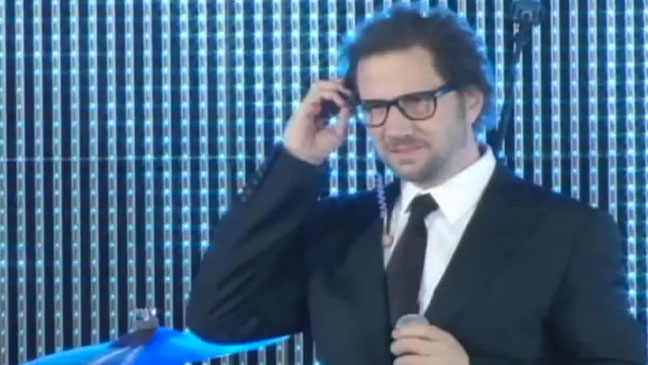
Kennedy was hired and the show that he hosted went on to become infamous far beyond Los Angeles.  Featuring a myriad of technical issues, problematic humor, and even a fight that broke out on stage during the closing credits, First Night With Jamie Kennedy has since regularly been cited as one of the worst shows of all time.  Patton Oswalt talks about in his stand-up.  Nathan Rabin wrote an entire article about it.  First Night has become a legendary disaster.

What happened during First Night that made it such a surreal disaster?  Let us count the ways.

The mics often did not work when they were supposed to and the suddenly came on whenever nearby was uttering an expletive.

The crews’ walkie-talkies failed early, which meant that Kennedy was often not aware of when he was on camera and when he wasn’t.  There were frequent shots of Kennedy standing on the stage, looking miserable and obviously wondering how he had gone from Scream to hosting First Night.  At one point, when Stu Stone was interviewing Shannon Elizabeth, the camera lingered on an abject-looking Jamie Kennedy.

Along with making jokes about “Asian rappers,” Kennedy also appeared in comedy skit where he played a Mayan chief at a casino.

Macy Gray performed a song while appearing to be under the influence of something.

The countdown started late, so by 2013 had already arrived by the time the crowd hit zero.

Kennedy awkwardly hit on two drunk girls, one of whom resolved to “get rid of all my haters.”  Kennedy told two girls (who were both black) a joke about what happens when you “go white.”

As if the night could not get bad enough, there was skit featuring puppets making lewd jokes.

And, of course, A FIGHT BROKE OUT DURING THE END CREDITS!

As the legend of First Night spread, Kennedy said that it was supposed to be bad and a parody of a typical network TV new year’s special.  Sure, Jamie, we believe you.

The entirety of the show has been uploaded to YouTube.  It’s not pretty and it’s not great but it is a Moment in Television History!

Previous Great Moments In Television History:

  1. Planet of the Apes The TV Series
  2. Lonely Water
  3. Ghostwatch Traumatizes The UK
  4. Frasier Meets The Candidate
  5. The Autons Terrify The UK
  6. Freedom’s Last Stand
  7. Bing Crosby and David Bowie Share A Duet
  8. Apaches Traumatizes the UK
  9. Doctor Who Begins Its 100th Serial

Resolution Help From Monty Python’s Flying Circus


As the first day of 2022 comes to a close, now is a good time to stop, take a look back over the past 24 hours, and determine how many of your resolutions have already been broken.  Have you broken one or two of them?  How about all of them?  Or did you forget to make a resolution all together?

Well, don’t worry!  Seriously, New Year’s resolutions are the worst!  Every new year, people resolve to make changes and it rarely happens.  Instead, people almost immediately break their resolutions and then they spend the next 12 months feeling like a failure.  The amount of pressure that people put on themselves to try to change their lives for the better, it’s not fair, to be honest.  If you’ve already broken your resolution, don’t feel bad about it.  As long as your resolution wasn’t to stop doing something terrible and illegal, I forgive you if you’ve already totally failed to keep your promise to yourself.  Take some comfort in that.

(My own resolution for 2022 was to be nicer to my friends and stop putting so much pressure on myself.  I think that was last year’s resolution as well and we all know how well that went.  I think my most successful resolution was from 2004.  That was when I resolved to survive any serious car accidents that I got involved with and to go to college and I managed to keep both of those resolutions.  BOOM!)

We always hear that change is good but sometimes it isn’t.  And here to illustrate that point are John Cleese and Michael Palin from Monty Python’s Flying Circus!  Below is one of my favorite sketches from that famous show.  Palin is a chartered accountant who wants to be a lion tamer.  He has no experience but he does have his own hat!  Cleese shows him the error of his ways, including revealing that Palin has long been mistaking anteaters for lions.  Who hasn’t made the same mistake?

(I have to admit that my favorite Monty Python moments often involved Palin somehow getting on Cleese’s nerves.  Palin’s eagerness to please and his way with a deceptively passive statement was always the perfect foil for Cleese’s slightly more aggressive style of comedy.  Perhaps not coincidentally, I’ve read on numerous occasions that Cleese’s main motivation for getting involved with what would become Monty Python was so he could work with Michael Palin.)

My favorite line from this particular vignette: “Yes, yes, yes, I do follow, Mr Anchovy, but you see the snag is… if I now call Mr Chipperfield and say to him, ‘look here, I’ve got a forty-five-year-old chartered accountant with me who wants to become a lion tamer’, his first question is not going to be ‘does he have his own hat?'”

Think of this whenever you fear that you’re not living up to your resolutions!  After all, sometimes there’s more to changing one’s life than merely having the right hat (though, I imagine it does help).

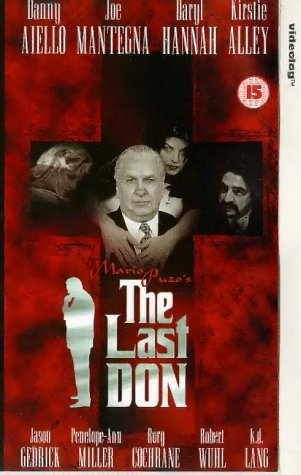
Miniseries Review: Mario Puzo’s The Last Don (dir by Graeme Clifford)


First broadcast over three nights in 1997, The Last Don tells the story of a powerful and respected Mafia family. They control politicians across the country and they own casinos in Vegas and their power even extends all the way to Hollywood. Despite having many enemies, the family has thrived due to the leadership of a wise but ruthless Don.  This Don remembers the old ways and imparts lessons about honor to the members of his own family.  Never let anyone know what you’re thinking.  Never side against the family.  If someone like you were to make enemies, they would become the Don’s enemies and then they would fear you …. you know, stuff like that.

However, times are changing and America is changing with it.  The underworld is no longer run by men of honor.  On top that, the Don is aging and in ill-health. Who will succeed him? One possible successor is respected by all but he’s stayed out of the dirtier aspects of the family’s business and, in fact, he seems to have no desire to be a feared man.  Another possible successor is ruthless and has a terrible temper.  He sometimes speaks out of turn, because the Don has a sentimental weakness for his children.  This possible successor’s anger is feared but perhaps fear is the future of the organized crime in America.  The old ways are changing but one thing remains the same.  The Don believes in America and he believes in family and….

Wait.

Okay, is it just me or does this all sound just a little bit familiar?

If it does, that’s probably because The Last Don is based on a novel by The Godfather‘s Mario Puzo.  Though the family may be called The Clerichuzios and the action may have been moved fro the 40s and the 50s to the 60s, 70s, and 80, the story is still the same basic one that was told in The Godfather.  Don Clerichuzio (Danny Aiello) is an honorable man whose time is coming to an end.  His grandnephew, Cross (Jason Gedrick), is the possible successor who isn’t crazy.  His grandson, Dante (Rory Cochrane), is the possible successor who is violent and doesn’t know how to negotiate.  Don Clerichuzio’s dream is for the family to become completely legitimate but good luck with that when the film business and the political world are just as corrupt as the Mafia.  I supposed one could argue that The Last Don is narrated by Don Clerichuzio while The Godfather has no narration at all but, seriously, once you have to add a voice-over to explain what’s going on, you have pretty much already last the war.

And yes, I did mention the film business.  When Francis Ford Coppola first read The Godfather, he famously hated the Hollywood sections of the book and, with the exception of Tom Hagen’s visit to Jack Woltz (and Woltz’s subsequent discovery of a horse’s head in his bed the next morning), Coppola refused to include them in the movie.  The second half of The Last Don, however, goes full Hollywood and, more or less, proves Coppola’s point.  Cross’s sister, Claudia (Michelle Burke, who also co-starred with Cochrane in Dazed and Confused), gets a job as an agent and one of her clients is the world’s most famous actress, the ludicrously named Athena Aquataine (Daryl Hannah).  When Athena has trouble with her crazy ex-husband (Chris Meloni, bringing a spark of genuine danger to the production), Cross helps her out, falls in love, and gets involved in the production of her next film.  This brings him into conflict with a studio exec named Bobby Bantz (Robert Wuhl).  Unfortunately, all of the Hollywood stuff is pretty dull.  One gets the feeling that Puzo was perhaps settling some old scores with the character of Bobby but Robert Wuhl is one of those goofy actors who belongs nowhere near a Mafia drama.  And don’t even get me started on country singer k.d. lang, who is bizarrely cast as a film director.

(Add to that, how can anyone take a character named Athena Aquataine seriously?  I never miss an Athena Aquataine movie!))

The Hollywood stuff distracts from the Mafia stuff, which is unfortunate because the Mafia stuff is at least occasionally interesting and it’s certainly better-acted than the Hollywood scenes.  Joe Mantegna plays Pippi, who is Cross’s father and who, years earlier, killed Dante’s father.  (Mantegna’s always good but it’s a struggle to take any character named Pippi seriously.)  Kirstie Alley plays Rose Marie, who is Dante’s mentally unstable mother and the Don’s only daughter.  Aiello, Mantegna, and Alley all give good performances, as do Burt Young and Seymour Cassel in the roles of family associates.  As for the “younger generation” of Clerichuzios, Gedrick is a bit dull but then again, Cross isn’t a very interesting character.  The slightly-built Cochrane is miscast as Dante but ultimately, that miscasting kind of works in that it reminds us that, due to his father being the scion of a rival family, Dante is destined to always be viewed as being an outsider.

As I said earlier, The Last Don was originally broadcast over three nights.  I watched the whole thing — all five hours of it — in one sitting and, yes, it was a bit of an endurance test.  It’s not just that it’s long but also that it keeps getting bogged down in all of the Hollywood stuff.  You don’t watch a film like this because you want to spend five hours watching Robert Wuhl mug for the camera.  You watch a film like this for the Mafia action and, for a film called The Last Don, there really wasn’t enough Mafia action.  It has its moments but it never feels as authentic as The Godfather, Casino, Goodfellas, The Irishman, The Sopranos or any of the other classic films and shows about the Mafia..  The Last Don needed to be extremely Italian but instead, it was only slightly Italian.  Robert Evans famously said that Coppola was selected to direct The Godfather because Coppola would make audiences “smell the pasta.”  There’s very little pasta in The Last Don.