Music Video of the Day: I Don’t Care Anymore by Phil Collins (1983, directed by Stuart Orme)


Phil Collins takes a lot of abuse.  Remember Noel Gallagher telling voters to vote Labour in 2005 because Phil Collins was threatening to return to the UK if the Tories got in?  Admittedly, Phil brings some of that abuse on himself by being notoriously thin-skinned and quick to take offense.  (I’ve always gotten the impression that one reasons why the Gallagher brothers always picked on Phil was because they knew he’d never have sense enough to just ignore them and would always reply.)  But Phil Collins deserves better than he’s often given.

Not only does his music epitomize an era but he’s also one of the better drummers around.  Collins famously started out as a Genesis’s drummer, only becoming their ubiquitous lead singer after Peter Gabriel left the band.  (Going from Gabriel to Collins was just as extreme as you might think, which is why Peter Gabriel’s Genesis is often considered to be a totally different band from Phil Collins’s Genesis.)  In I Don’t Care Anymore, Collins shows off his skills as a drummer and regardless of what you might think about Collins’s overall career, the song definitely rocks.

Like most of Collins’s better songs, I Don’t Care Anymore is a dark and angry song that exists a universe away from the Disney soundtrack material that Collins produced in the 90s.  He wrote this song while he was going through his first divorce, a process that left him emotionally exhausted and feeling as if he didn’t care anymore.

The video, which is largely a performance clip, was directed by Stuart Orme, who directed several videos in the 80s.  He also did the video for Collins’s In The Air Tonight, a song that’s even darker than this one.

Enjoy!
 

Music Video of the Day: Hourglass by Squeeze (1987, directed by Adrian Edmondson)


“Lyrically it doesn’t mean much but we had some fun writing it.”

— Chris Difford on Hourglass

In the 80s, Squeeze was one of the most popular bands in the UK but they often struggled to find the same success in the U.S.  Some of that was because, much like Madness, Squeeze wrote songs that were undeniably British.  Their relatively few U.S. hits were also the relatively few Squeeze songs not to feature any obviously British references in the lyrics.

Hourglass, for instance, was largely a nonsense song that had a strong hook and an unforgettable melody.  What does “Take it to the bridge, throw it overboard, see if it can swim” refer to?  No one knows and it doesn’t matter.  Along with being insanely catch, Hourglass also had a memorable music video.  The video was popular on MTV and, in the 80s, that usually led to success on the U.S. Charts.  Hourglass became on the few Squeeze songs to break into the U.S. Top 40.

The video features the band performing amongst a series of optical illusions.  The video was directed by Adrian Edmondson while the Salvador Dali-inspired concept for the video was credited to Squeeze’s keyboardist Jools Holland.  Holland would later go on to host Later …. with Jools Holland on BBC Two and has become a British cultural icon.

Enjoy!

Music Video of the Day: Strait Playin’ by Shaquille O’Neal (1996, directed by ????)


Shaquille O’Neal, rap superstar?

Yes, that actually happened.  He released four studio albums and a handful of singles and his videos were popular on MTV, back when MTV still played videos.  Actually, Shaq wasn’t a bad rapper but he never escaped the impression that his musical career was just a celebrity vanity project.  Considering some of the other celebrity rap albums that came out in the 90s, Shaq’s work holds up as listenable if not exactly inspired.  (I’ve never heard Brian Austin Green’s rap album and I’m planning on making sure that I never do but I’m still sure that Shaq was better.)

Strait Playin’ is from his third studio album, You Can’t Stop The Reign.  It was produced by DJ Quik and featured verses from Quik and Peter Gunz.  The song peaked at #33 on the U.S. R&B charts but it was more popular in New Zealand, for some reason.  It hits #17 on the New Zealand charts.  It was also featured on the soundtrack for Steel, a movie that featured Shaq in the lead role.

As for the video, every 90s rap video cliché is present, from driving around in an open top car while rapping to the house party at the end.

Enjoy!

Music Video of the Day: Ant Rap by Adam and the Ants (1981, directed by Adam Ant and Mike Mansfield)


You learn something new every day.  Up until Monday, I didn’t even know this song existed but it does and it’s even got some historical importance as this was one of the earliest “rap” singles to chart in the UK.  It reached number three on the UK charts.

As for the video, what you have to remember is that it was released shortly after the success of John Boorman’s Excalibur and knight in shining armor were suddenly very popular again.  Terry English, who designed the armor in Excalibur, also designed the armor that Adam Ant wears in this video.  Why does Adam turn into a football player?  Why is the song’s co-writer, Marco Pirroni, dressed up like Liberace?  How did they get Lulu to agree to play the princess that Adam rescues from the castle?  When did Adam Ant turn into Bruce Lee?  When Adam Ant is rapping, anything can happen.  In the video’s final moments, we return to Excalibur as Adam loses his sword to a mysterious figure in the moat.

This video was filmed at Bodiam Castle, which has stood since 1385 and has been open to the public since 1921.  (It’s currently owned and operated by the National Trust.)  The video was co-directed by veteran music video director Mike Mansfield and Adam Ant, himself.

Enjoy!

For those curious, here are the full lyrics to Ant Rap:

Put some wax on the trax and slide on onta here
Hane hane hane hane hane
Hatchets in the corner ears to the ground
Improve to the groove get down to the sound
Buttons and bows and bleu blanc rouge
All things lively must be used
Liberte, egalite, au jour d’hui see’est tres tres tres
Voici l’opportunite nous incroyables
I got the moves they got the grooves
Summoned the gods and they all approved
Bad vibes akimbo on the shelf
Bit of a rap thing going for myself
This gold on the teeth’s no sense at all
It only matters when it’s on the wall
I’m standing here with my four men
Let’s start that rapping thing again:
Marco, merrick, terry lee, gary tibbs and yours truly
In the naughty north and in the sexy south
We’re all singing I have the mouth
In the naughty north and in the sexy south
We’re all singing I have the mouth
I have the mouth
So tired of anarchists looking at me
Don’t need their credibility
“Destroy, ” they say, “defy! Condemn! “
As long as you don’t destroy them
With twenty years of drugs and drink
I thought the time had come to think
About standing up and saying that
It’s tragedy and such old hat
I’m standing here with my four men
Let’s start that rapping thing again:
(I got) marco, merrick, terry lee, gary tibbs and yours truly
In the naughty north and in the sexy south
We’re all singing I have the mouth
In the naughty north and in the sexy south
We’re all singing I have the mouth
I have the mouth
These happy feet are all we need
Summoned the gods and they all agreed
These feet won’t stop they’re in such a hurry
I knock it on the head and I go for a curry
Staying sober can be neat
Get drunk on these here happy feet
Keep on trying to pin me down
“Why a title for your sound? “
I’m standing here with my four men
Let’s do this rapping thing again:
I got marco, merrick, terry lee, gary tibbs and yours truly
In the naughty north and in the sexy south
We’re all singing I have the mouth. ..
And I have the mouth
And you have the mouth
And they got the mouth


Music Video of the Day: No More Words by Berlin (1984, directed by Evan English and Paul Goldman)


On Friday night, I watched Thank God It’s Friday with Lisa Marie and the Friday Night Flix gang and I’ve been in a Terri Nunn mood ever since.  Before she joined Berlin and became their lead singer, Nunn was an actress.  Along with appearing in a small but important role in Thank God It’s Friday, she was also a finalist for the role of Princess Leia in Star Wars.  According to what I’ve read online (as with all things that I’ve read online, take it with a grain of salt), the casting came down to Mark Hamill, Carrie Fisher, and Harrison Ford vs. William Katt, Terri Nunn, and Kurt Russell.  Carrie Fisher got to be Leia but Terri Nunn got musical superstardom.  I’d say it was a fair trade for both of them, though it is tempting to imagine Terri Nunn singing the Life Day song at the end of the Star Wars Holiday Special.

No More Words is one of Berlin’s most enduring songs.  (I know a few people who are still convinced that the song’s title was No More Worlds.)  Produced by Giorgio Moroder and Richie Zito, No More Words was the first single off of Berlin’s 1984 album, Love Life.  It was also the band’s first Top 40 hit in the States.  It was later used in the film Vision Quest and re-released as the B-side of Madonna’s single Crazy For You.

The video pays homage to the 1967 film, Bonnie and Clyde.  Taking place during the Great Depression, it features the band robbing a bank and then fleeing from the cops.  Terri Nunn is dressed-up to resemble Faye Dunaway in the role of Bonnie Parker.  Despite the fact that they appear to be robbing a small town bank in the South, there are Thomas Dewey campaign posters on the buildings.  In the 30s, Dewey was New York’s district attorney so it’s not likely that anyone living in the Dust Bowl would have been campaigning for him.  The video goes on to loosely recreate several scenes from Bonnie and Clyde, though Terri Nunn seems far more conflicted about the violent bank robber life style than Faye Dunaway ever was.

This video was directed by Evan English and Paul Goldman.  While this is Goldman’s only credit as a video director (according to the imbd), Evan English went on to direct the videos for Elvis Costello’s Veronica and Crowded House’s Nails in My Feet.

Enjoy!

Music Video of the Day: Spider-Man by the Ramones (1995, directed by Jonathan Dayton and Valerie Faris)


In 1995, producer Ralph Sall and MCA released an album called Saturday Morning: Cartoons’ Greatest Hits.  The album was made up of covers of the theme songs of various Saturday morning carton shows.  For instance, Matthew Sweet covered Scooby Doo, Where Are You?  Sponge covered Go Speed Racer Go.  Liz Phair did a version of the Banana Splits theme song.  In order to promote the album, MCA released a music video compilation on VHS tape.  It was hosted by a young Drew Barrymore.  You can still order a copy of it off of Amazon.  It’ll only cost you around twenty dollars.

The Ramones were brought in to cover the theme song for the first Spiderman-Man cartoon show.  The video, which was directed by Johnathan Dayton and Valerie Faris, features animated Ramones performing while an animated Spider-Man swings around the city.  (If Jonathan Dayton and Valerie Faris sound familiar, that’s because they went on to direct feature films.  They’re best-known film is probably still Little Miss Sunshine.)  The Spider-Man theme song proves to be the perfect song to be covered by the Ramones, as they give an energetic performance that feels like it could have been written for any of the current MCU productions.

Interestingly enough, both Spider-Man and the Ramones were from the Forest Hills neighborhood of Queens.  There’s no evidence that any of them met Uncle Ben before this unfortunate demise.  If they had met, Ben probably would have told them that with great audio equipment comes great responsibility.  Ben then would have kicked everyone off of his lawn and gone inside to take a boomer nap.

The theme song for Spider-Man was written, in 1967, by Paul Francis Webster and Bob Harris.  Before he wrote the Spider-Man theme, Webster won three Oscars for Best Original Song.  Over the course of his career, he would be nominated a total of 16 times.  Of his Oscar-nominated sons, I guess Love Is A Many-Splendored Thing is the best known but its popularity pales in comparison to the song he wrote for Spider-Man.  Who doesn’t know that Spider-Man can do everything that a spider can?


Music Video Of The Day: TV Crimes by Black Sabbath (1992, directed by Nigel Dick)


Today, this video seems dated.  That’s to be expected from any video that was released nearly 20 years ago.  Today, it’s hard to imagine anyone going through that much trouble to steal a TV as small as the one that is at the center of this video.  In 1992, the idea of a wireless TV that didn’t need an antenna seemed like science fiction.  Today, though, it’s pretty much a part of everyday life.

TV Crimes was the first single to be released off of Black Sabbath’s 1992 album, DehumanizerDehumanizer would be the last Black Sabbath album to feature Ronnie James Dio until 2006, when Dio returned for a greatest hits album, Black Sabbath: The Dio Years.  Dio subsequently appeared on a 2008 studio album, The Devil You Know (a.k.a. Heaven & Hell).  The Devil You Know would prove to be Dio’s final studio appearance before his death in 2010.

This video was directed by Nigel Dick, who is one of the strongest and most prolific music video directors around.  He started in 1983 and has directed videos for basically everyone.  If you were a successful rock band in the 80s or 90s, Nigel Dick directed at least one video for you.  He continued directing into the 21st century and he’s still going at it.  Duran Duran, Oasis, Guns ‘n’ Roses, Brooke Hogan (?), Def Leppard, Madness, they’ve all had videos directed by Nigel Dick.  Dick also directed some videos for Nickelback but we won’t hold that against him.

Enjoy!

Music Video of the Day: View From A Bridge by Kim Wilde (1982, directed by Brian Grant)


Not to be confused with the Arthur Miller play of almost the same name, View From A Bridge was the second single to be released from Kim Wilde’s second album, Select.  The song tells the story of a girl who discovers that her boyfriend is cheating on her so she goes to a bridge and considers jumping off.  Though it’s open to interpretation, the song suggests that she ultimately does just that.  This song is a good example of a song about something that no one should do in real life.  No one is worth jumping off a bridge for so if you’re thinking about doing it, don’t.

When it was released in 1982, it became on Wilde’s biggest hits in Europe and Australia.  It was especially popular in France.  If it was released today, at a time when we are all very aware of teen mental health and the dangers of suicidal ideation, this is one of those songs that would probably be very controversial.  I know that when I was growing up, there was tendency to laugh off threats of suicide as just teenagers being dramatic or looking for attention.  Luckily, that’s no longer the case today.

The video, fortunately, does not feature Kim on a bridge.  Instead, it features her and the band performing in a pink-tinted room.  This was a popular look for music videos in the 80s and the pinkness of it all helped to keep people from noticing how depressing the lyrics were.

The video was directed by Brian Grant, who was one of the go-to video directors in the 1980s.  He did videos for everyone from The Human League to XTC to Peter Gabriel and Duran Duran.  According to Wikipedia, he directed a total of 225 music videos during the 80s.  He has also directed several shows for British television, including the episodes of the Doctor Who reboot.

Enjoy!

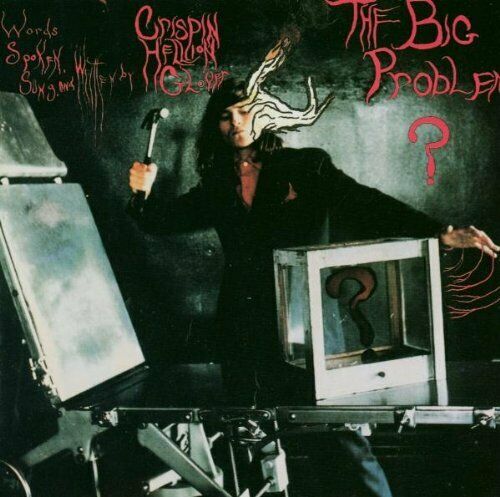
Music Video of the Day: Clowny Clown Clown by Crispin Hellion Glover (1989, directed by Crispin Glover)


Let’s start 2021 with Crispin Glover.

The song Clowny Clown Clown comes from Glover’s first album, The Big Problem ≠ The Solution. The Solution = Let It Be.  The album, which also featured Glover covering songs like These Boots Are Made For Walking and The Daring Young an On The Flying Trapeze, was released in 1989 and the liner notes invited anyone who could figure out what the “Big Problem” was to give Glover a call.  The liner notes included a phone number that you could call, which was apparently Crispin’s phone number at the time.  The number has since been disconnected so don’t waste your time trying to give Crispin a call.

Before making this video, Glover was best-known for playing George McFly in Back to the Future and for nearly kicking David Letterman in the head during an interview in 1987.  Much like Joaquin Phoenix’s infamous later appearance on Letterman, it is believed that Glover was attempting an Andy Kaufmanesque stunt during his first appearance, as well as trying to promote an upcoming film.  (The film was Rubin and Ed, which was filmed in ’87 but wouldn’t be released until 1991.)  On March 28th, 1990, Glover returned to Letterman’s show, where he discussed his music and where a clip from the Clowny Clown Clown video was shown.

Below is Glover’s first appearance on Letterman:

Here is Glover’s subsequent performance, in which he attempts to explain himself and shows a clip of this video:

While I think it’s clear the Glover was playing a role in both of his appearances, I’m not sure if Letterman was in on the joke as he seems to be genuinely annoyed during both interviews.  Of course, back then, genuinely annoyed was Letterman’s default interview style.

Back to Glover’s album, if anyone knows the Big Problem or its solution, let us know in the comments and we’ll try to get word to Crispin.

Enjoy!

Music Video of the Day: You Can’t Change That by Raydio (1979, directed by ????)


Happy New Year’s Eve!

Today’s music video of the day is for Raydio’s You Can’t Change That.  Raydio is an American funk band that was founded by Ray Parker. Jr.  Though they had a handful of hits, including You Can’t Change That, Parker is still probably best known for performing the Ghostbusters theme song.

Like many of the music videos that were made in the days before MTV, this is a performance clip and it keeps thing simple.  This was before videos’ came to be seen a mini-movies and before every music video director was looking to move up to feature films. You Can’t Change That keeps things simple and it’s just right for the song.

Enjoy!