A Scene That I Love For Halloween: The Rules of Trick-Or-Treating From Curb Your Enthusiasm


We did not get many trick-or-treaters tonight but the ones that did show up were all wearing costumes and were all age-appropriate.  When it comes to giving out candy, I follow the rules set out by Larry David on Curb Your Enthusiasm.

Remember: no costumes = no candy!

Here is Dracula, presented by Orson Welles and The Mercury Theater!


Did you know that in 1938, the same year that they horrified America with their production of The War Of The Worlds, Orson Welles and the Mercury Theater did a radio version of Dracula?

Check out this amazing cast list:

Orson Welles – Dracula/Dr. Arthur Seward
George Coulouris- Jonathan Harker
Ray Collins – Russian Captain
Karl Swenson – The Mate
Elizabeth Fuller – Lucy Westenra
Martin Gabel – Professor Van Helsing
Agnes Moorehead – Mina Harker

Coulouris, Collins, and Moorehead would, of course, all go one to appear with Orson Welles in Citizen Kane.

And now, we are proud to present, for your listening pleasure …. DRACULA!

Horror Review: The Long Walk (dir. by Francis Lawrence)


“In this Walk, it’s not about winning. It’s about refusing to be forgotten while the world watches us fade away.” — Peter McVries

Francis Lawrence’s The Long Walk (2025) delivers a relentlessly brutal and unyielding vision of dystopian horror that explores survival, authoritarian control, and the devastating loss of innocence. The film immerses viewers in a grim spectacle: fifty teenage boys forced to participate in an annual, televised event known as the Long Walk. To survive, each participant must maintain a constant pace, never falling below a minimum speed, or else face immediate execution.

At the heart of this bleak narrative is Raymond Garraty, played with earnest vulnerability by Cooper Hoffman. Garraty’s backstory, marked by the tragic execution of his father for political dissent, sets a somber tone from the outset. As the Walk drags on, Garraty forges fragile bonds with fellow contestants, particularly Peter McVries (David Jonsson), whose camaraderie and quiet resilience inject moments of hope and humanity into the harrowing journey. These relationships become the emotional core, grounding the film’s relentless physical and psychological torment in deeply human experiences.

The setting enhances this oppressive atmosphere. The time and place remain deliberately ambiguous, with evident signs that the United States has recently suffered a second Civil War. The aftermath is a landscape ruled by a harsh, authoritarian military regime overseeing a nation economically and politically in decline. Though visual cues evoke a retro, 1970s aesthetic—reflected in military hardware and daily life—the film resists pinning itself to an exact year. This timelessness amplifies its allegorical power, emphasizing ongoing societal collapse and authoritarianism without tying the story to one era specifically. The dystopian backdrop is populated by broken communities and a pervasive sense of hopelessness that mirrors the characters’ internal struggles.

Visually, The Long Walk employs stark, gritty cinematography that traps viewers in the monotonous expanse of endless roads and bleak environments. Lawrence’s direction is unflinching and unrelenting, echoing the merciless march to death and the broader commentary on institutionalized brutality. The atmospheric score complements this oppressive tone, underscoring the emotional and physical exhaustion pacing the narrative.

Performances elevate the film’s emotional stakes significantly. Hoffman’s portrayal of Garraty captures the youth’s evolving vulnerability and determination, while Jonsson’s McVries adds a poignant emotional depth with his steady, hopeful presence. Supporting actors such as Garrett Wareing’s enigmatic Billy Stebbins and Charlie Plummer’s self-destructive Barkovitch bring vital complexity and urgency. Stebbins remains a figure whose allegiance is ambiguous, adding layered mystery to the group dynamics. Judy Greer’s limited screentime as Ginny Garraty, Ray’s mother, stands out powerfully despite its brevity. Each of her appearances is heartbreaking, bringing a wrenching emotional weight to the film. Her panicked, anguished attempts to hold onto her son before he embarks on the deadly Walk amplify the human cost of the dystopian spectacle, leaving a lasting impression of maternal agony amid the surrounding brutality.

Mark Hamill’s role as The Major is a significant supporting presence, embodying the authoritarian face of the regime. The Major oversees the brutal enforcement of the Walk’s rules, commanding lethal squads who execute those who falter. Hamill brings a grim and chilling force to the character, whose cold charisma and unwavering commitment to the ruthless system make him a menacing figure. Despite relatively limited screen time compared to the young participants, The Major’s presence looms large over the story, symbolizing the chilling machinery of power and control that governs the dystopian world.

Yet, the film is stark in its depiction of violence. The executions and suffering are raw and often grotesquely explicit, serving as a damning critique of authoritarian cruelty and the voyeuristic nature of state violence televised as entertainment. This unfiltered brutality can, however, become numbing and exhausting as it piles on relentlessly, occasionally undercutting emotional resonance. The narrative embraces nihilism fully, underscoring the dehumanization and futility within the dystopian world it portrays.

The film’s overall pacing and structure reflect this bleakness but at times suffer from monotony. The heavy focus on walking and survival mechanics leads to a lack of narrative variation, testing the audience’s endurance much like the characters’. There is likewise a noticeable stretch of physical realism—the contestants endure near-impossible physical feats without adequate signs of weariness or injury, which can strain believability.

Character development is another area where the film falters slightly. While Garraty and McVries are well-drawn and immunize emotional investment, other characters tend toward archetypical roles—bullies, outsiders, or generic competitors—diminishing the impact of many deaths or interactions. Similarly, the repetitiveness of the setting and cinematography, relying mostly on basic shots following the walkers, misses opportunities for more creative visual storytelling that might heighten tension or spotlight key emotional beats.

The film’s conclusion, stark and abrupt, offers no real catharsis or closure, reinforcing the overarching theme of unyielding despair. While this resonates with the film’s nihilistic motif, it may alienate those seeking narrative resolution or hope. The visceral shock and bleak tone permeate to the end, leaving the viewer with a lasting impression of relentless suffering and sacrifice.

This demanding yet visually striking and emotionally intense film challenges viewers with its unrelenting bleakness and brutal thematic content. It critiques societal violence, media spectacle, and authoritarianism through starkly powerful performances and an oppressive, immersive atmosphere. Though it excels in evoking emotional rawness in key moments and maintaining thematic consistency, it struggles with pacing, character depth beyond the leads, and occasional narrative monotony. Its ambiguous setting in a post-second Civil War America ruled by a declining authoritarian regime adds a timeless, allegorical layer to its exploration of human endurance and societal collapse.

Ultimately, this film is best suited for viewers prepared for an uncompromising, intense vision of dystopia. It stands as a compelling, if bleak, meditation on youth, survival, and the human spirit under extreme duress, showcasing Francis Lawrence’s aptitude for crafting thought-provoking, provocative horror.

Doctor Who — The Leisure Hive, Meglos, Full Circle, State of Decay, Warrior’s Gate, The Keeper of Traken, Logopolis


The 18th season of Doctor Who started with the show getting a new producer, John Nathan-Turner.  Depending on who you ask, Nathan-Turner was either the best or the worst thing that ever happened to Doctor Who.  He pushed the series away from what he felt was the “silliness” of the previous season and, in doing so, he alienated both Tom Baker and Lalla Ward.  (Ward was close friends with Douglas Adams, whom Nathan-Turner blamed for turning the show silly.)  Nathan-Turner pushed for more serious stories and for better production values.  He also hated K-9, which upset a lot of younger viewers.  My personal feeling is that Nathan-Turner was not a good producer for Tom Baker’s Doctor but he was a great producer for Peter Davison’s interpretation of the character.  As for the Colin Baker and Sylvester McCoy years, let’s keep things cheery and not go there.

By the end of the 18th season, Tom Baker, Lalla Ward, and John Leeson (the voice of K-9) had left the show.  Completing my look back at Doctor Who, here are Tom Baker’s final serials.

The Leisure Hive (1980, directed by Lovett Bickford)

John Nathan-Turner hated K-9.  If there was any doubt about that, consider that his first serial as the show’s producer opens with the Doctor and Romana on holiday Brighton.  K-9, for some reason, rolls out to the ocean and explodes, taking him out of commission until the Doctor can rebuild him.

Personally, I would have been happy if this entire serial had just been Tom Baker and Lalla Ward on that beach in Brighton.  Nathan-Turner may not have been a fan of the Doctor and Romana working together by Baker and Ward but viewers like me definitely disagreed.  Alas, it is not to be.  Romana wants a real holiday (Brighton, in a reminder of just how British Doctor Who really was, doesn’t count) so she and the Doctor and the remains of K-9 go to the leisure planet of Argolis.  Unfortunately, Argolis is having financial problems and is at risk of being taken over by the Foamai.  When the Doctor is framed for a strangulation murder that was committed with a scarf, he is forced to stand trial and become an experimental test subject.

It’s an okay start for Season 18, though Tom Baker, for the first time since taking over the role of the Doctor, was starting to look disinterested.  John Nathan-Turner was eager to get away from the “silliness” of the previous season but, ironically, a story set on a leisure planet and featuring an intergalactic crime syndicate would have very much benefitted by Douglas Adams’s sense of humor.

Meglos (1980, directed by Terence Dudley)

The Doctor is asked to help broker a peace between two warring planets.  Unfortunately, Meglos — a sentient cactus — traps the TARDIS in a time loop and then plots to thwart the peace.

When viewers think of this serial, they usually remember Meglos taking on the form of the Doctor and Tom Baker wearing makeup that made him look like a humanoid cactus.  That’s because the plot is nothing special, though I do appreciate that we finally got to see what it’s like to be stuck in a time loop.  Jacqueline Hill, who played Barbara when the serial first began, appears as Lexa, a high priestess of the planet Tigella.

Full Circle (1980, directed by Peter Grimwade)

Having been ordered to return Romana to Gallifrey, the Doctor instead materializes on a swampy plant that is located where Gallifrey should be.  The TARDIS has slipped into E-Space, a small pocket universe.  As for the planet that they’ve landed on, it’s inhabited by swamp monsters, a group a humans who live around a crashed starliner, and a mad scientist.

The idea of E-Space was an interesting one and Lalla Ward gives one of her strongest performances of the series, as Romana is briefly possessed in this episode.  Unfortunately, this episode also introduced Adric (Matthew Waterhouse), an annoying child genius who became the Doctor’s newest companion.  Adric was one of the least popular of John Nathan-Turner’s additions to Doctor Who.  A few seasons later, Adric would be blown up while fighting the Cybermen and there would not be a dry eye in the house.

Tom Baker, unhappy with Nathan-Turner’s ideas and annoyed with Waterhouse decided to leave the role while filming this serial.  Waterhouse reportedly cursed at Baker while filming one scene.  They should have left the little punk behind just for doing that.

State of Decay (1980, directed by Peter Moffatt)

Still trapped in E-Space, The TARDIS materializes on a planet where the villagers live under the shadow of a dark tower. Ruled over by three cruel lords, Zargo, Camilla, and Aukon, the villagers are forced to regularly sacrifice their young to appease their rulers. The Doctor, Romana, K-9, and Adric investigate and discover that Zargo, Camilla, and Aukon are vampires! After being defeated by the Time Lords, the vampires retreated into E-Space, where they found a new planet to rule. Of course, that little tosser Adric wants to become a vampire. Why Romana and the Doctor didn’t leave Adric behind on the vampire planet, I’ll never understand.

Even the weaker seasons of Doctor Who usually featured at least one classic serial and, in the case of Season 18, it was State of Decay.  For all of the justified criticisms of John Nathan-Turner time as producer, he did make an attempt to improve the show’s production design and it paid off with this atmospheric serial that paid homage to the great vampire films while also retaining its Doctor Who identity.  Tom Baker seems to be rejuvenated by the clever script and he and Lalla Ward’s chemistry is allowed to shine.  K-9 even gets to do something other than getting kicked around.  State of Decay is a Doctor Who classic.

Warrior’s Gate (1981, directed by Paul Joyce and Graeme Haper)

Still trying to escape E-space, the TARDIS materializes on a similarly trapped spaceship that is run by Captain Rorvik (Clifford Rose).  Learning that the ship is carrying an enslaved race known as the Tharils, the Doctor set them free.  The Tharils help the Doctor reenter N-Space.  However, Romana decides to stay behind to help the Tharils.  The Doctor gives her K-9 and then leaves with Adric.  The Doctor should have left Adric behind too.

This was Lalla Ward’s final episode and both she and Romana deserved a better send-off.  Romana deciding to disobey the Time Lords, I can understand.  Leaving the Doctor, even to help the Tharils, doesn’t seem like something Romana would have done.  John Nathan-Turner finally got his wish, though.  K-9 stayed with Romana.  What are Romana and K-9 going to do in an alternative universe?  They don’t even have a TARDIS.

The only highlight of this episode was Clifford Rose’s manic performance as Captain Rorvik.  Otherwise, it was a forgettable send-off for two great companions.

The Keeper of Traken (1981, directed by John Black)

The Doctor and annoying Adric are summoned to the planet Traken, where the Master (Geoffrey Beevers) is attempting to capture a power source that will give him a new set of regenerations.  (The Master doesn’t look as badly decayed here as he did during The Deadly Assassin.)  With the help of the Keeper of Traken, Tremas (Anthony Ainley), and Tremas’s lovely daughter Nyssa (Sarah Sutton), the Doctor is able to stop the Master.  However, as soon as the Doctor leaves, the Master emerges from a long clock and somehow merges with Tremas’s body, giving him a new set of regenerations.

Despite the presence of Adric, this is not a bad story.  The Master makes his return and, in the final minutes of the serial, Anthony Ainley takes over the role.  Ainley would play The Master for the rest of the original show’s run.  While Ainley’s Master was always more cartoonishly evil than Roger Delgado’s, he still proved to be a worthy adversary for the Fourth, Fifth, Sixth, and Seventh Doctors.

Logopolis (1981, directed by Peter Grimwade)

This is it.  This is final serial to feature Tom Baker as the Doctor.  Things start with the Doctor materializing the Tardis around an actual police box in an effort to fix his chameleon circuit.  The Master then materializes his TARDIS around the Doctor’s.  It all fun and games until the universe starts to unravel and the Doctor sacrifices his life while literally holding space and time together.  Along the way, the Doctor gets two new companions, Nyssa (who has been traveling with the Master under the impression that he’s her father) and Teagan (Janet Fielding), an outspoken Australian flight attendant who entered the TARDIS thinking that it was a police call box.

Whatever else you might want to say about season 18, it gave Tom Baker a fitting send-off.  After seven years of saving civilizations and planets, the Fourth Doctor finally saved the entire universe.  Perhaps knowing how traumatized viewers would be to see the Fourth Doctor die, this episode featured Peter Davison (familiar to viewers as Tristan Sebring from All Creatures Great And Small) as the Watcher, a mysterious figure who merged with the Doctor at the end of the serial and turned out to be his Fifth Incarnation.

I had hoped to discuss some of the Fifth Doctor’s adventures this October but time has caught up with me.  (It’s a pity because Peter Davison more than made the role of the Doctor his own and several of his serials — Kinda, Snakedance, and Enlightenment to name just three — are worthy of being considered classics.)  For me, as someone who to watch Tom Baker’s Doctor on PBS while growing up, this does seem like the right place to stop.

For now.

8 Shots From 8 Horror Films: The Conclusion


This October, I’m going to be doing something a little bit different with my contribution to 4 Shots From 4 Films.  I’m going to be taking a little chronological tour of the history of horror cinema, moving from decade to decade.

Today, we bring our history of horror to a conclusion …. for now.

8 Shots From 8 Horror Films

The Witch (2015, dir by Robert Eggers)

Hereditary (2018, dir by Ari Aster)

Midsommar (2019, dir by Ari Aster)

Us (2019, dir by Jordan Peele)

The Lighthouse (2019, dir by Robert Eggers)

Malignant (2021, dir by James Wan)

X (2022, dir by Ti West)

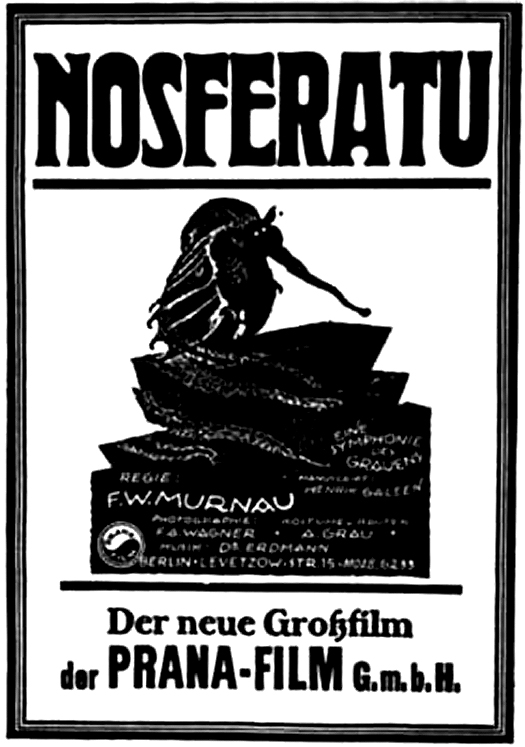
Nosferatu (2024, dir by Robert Eggers)


Onstage On The Lens: The Rocky Horror Show (dir by Christopher Luscombe)


With Halloween approaching, the Shattered Lens presents to you a recording of the 2015 West End production of The Rocky Horror Show, featuring Richard O’Brien, Emma Bunton, Stephen Fry, Anthony Head, Ben Forster, Haley Flaherty, and David Bedella.

The film is so popular that I think some people tend to overlook Rocky Horror‘s theatrical origins.  Personally, I prefer this energetic stage version to the film.


Horror Song of the Day: Monster (by Irene & Seulgi)


“Monster” by Irene & Seulgi (sub-unit of the K-pop girl group Red Velvet) dives into a dark and captivating space, blending eerie visuals with a sound that really sticks with you. The music video channels the vibe of classic sapphic vampire films, especially those atmospheric, haunting works by Jean Rollin. Irene takes on the role of a succubus-like figure, this hypnotic presence who seems to dominate Seulgi both visually and emotionally. Their movements, cold doll-like expressions, and the green light symbolizing possession all come together to paint a picture of seduction as a form of power struggle, where desire and control are beautifully intertwined.

Sonically, the song pushes boundaries with a mix of dark pop, industrial beats, and dubstep textures. The production is sharp, with synths that cut through like shadows and a bassline that grabs hold and won’t let go. Irene and Seulgi’s vocals glide between whispery softness and fierce intensity, capturing the delicate balance of temptation and danger that drives the song’s energy. The repetitive hook has a spell-like quality, reinforcing the feeling of being caught by this irresistible “monster.”

What really makes “Monster” stand out is how the song and video come together to create a seamless fusion of horror and sensuality. This isn’t just spooky imagery matched with a dark sound—it’s a fully immersive experience that captures the intoxicating mix of fear and desire. The supernatural themes of possession and seduction fit perfectly with the song’s hypnotic beats and evocative vocal delivery. “Monster” tells a story framed in shadows and light, a stylish journey where eroticism and horror enhance each other, pulling the listener deeper into its mesmerizing hold.

Monster

My move is unique
Not ordinary
1 2 5 to 7
I’m a dancer in the darkness
I’ll crack every joint in my body
And come close to your bed
I’ll horribly steal your heart
And dominate you

Under a single lighting, why are there two shadows?
I guess something else woke up inside me
I’m a little monster, be scared of me
I’m bothering you making you dream only about me
I’ll dance and play as I cast a spell
On your body in a nightmare
I’m a little monster

I rose from
The ashes in the cold ground
From dusk to dawn
I still exist
I don’t hate this madness
I’m having fun
You can’t get out
Don’t run away, you’ll get hurt
I save you and tease you again
Oh I’m perfect and messed up again

I’m a little monster, be scared of me
I’m bothering you making you dream only about me
I’ll dance and play as I cast a spell
On your body in a nightmare
I’m a little monster

See, I’m just playing
No bad intentions
I’m small but dangerous
Who would refuse me?
It’s time for the red sun to rise at dawn
Now that you are relieved
You try to come out of the dream
But monster lives forever

I’m a little monster, be scared of me
I’m bothering you making you dream only about me
I’ll dance and play as I cast a spell
On your body in a nightmare
I’m a little monster