Video Game Quick Review: The Amazing Spider Man


Rocksteady changed things with 2009’s Batman: Arkham Asylum. As a brand new IP, it’s starting to become the template for a few popular games. Beenox has noted that the game was an influence on their “The Amazing Spider Man” game, and it really shows. Eidos’ Hitman:Absolution will also be working off the same engine (if not a similar one).

Before playing Activision and Beenox’s “The Amazing Spider-Man”, you should first know that it takes place after the events of the Marc Webb’s film that opened recently. Playing the game will give away major plot points from the film, but visually, it’s quite a treat. Unlike the other Spider-Man related tie in’s, this game doesn’t feature the voices of the movie cast. I was kind of hoping that it would, really.

Activision, along with Treyarch, created all of the movie related Spider-Man games (which I’ve owned), and by far, I’ve always thought of Spider-Man 2 as the best game in the franchise. The control in that game, which allowed you to shoot separate weblines from each hand, was amazing. It allowed you to pull off some incredible turns mid-swing and if timed just right, you could pull off sideways swinging. Beenox decided to change the style of the game, focusing on more of a Parkour-style swinging dynamic. This adds two great touches:

The “Web-Rush” system allows you to pick predesignated places for Spider-Man to go at any time. Once chosen, the game will take the quickest route to that target, even if it means Spider-Man has to bounce from Building A, hop off the fire escape of Building B and flip over some cars to get there. The Web Rush system also works similar to Batman’s Detective Mode in the Arkham games, allowing you to lock onto targets of attack, object to grab and use against your enemies. In flight (or fall, however you choose to look at it), it slows down time to allow you to select your destination. It makes it all look very beautiful and stylish, but also manages to take away the effort required to make it happen. It’s not a terrible thing at all, but I suppose it could be compared to Assassin’s Creed vs. Mirror’s Edge. Both games have you climb a building. Assassin’s Creed uses one button to get you to the top. Mirror’s Edge requires a number of calculated button presses to do the same thing. The reward is different, and I tend to prefer the latter. Still, it’s very fun to use, especially in close quarter interior battles. You can leap backwards to the ceiling and then advance right back to the enemy with a button press.

The controls are incredibly easy to access. Climbing a wall is as simple as pushing against it, and you can alternate between climbing and “perching” against any sideways wall. This turns the camera back to it’s original state to give you an idea of where you are as you move.

The camera is closer to Spider-Man overall, so you get a better sense of vertigo during swinging. You aren’t able to do any acrobatics while swinging, but that free fall experience is still there. It’s definitely beautiful. You can literally spend your time swinging all across the city all day. Note that the map is condensed, compared to Spider Man 2, which also contained part of Queens. Considering all of the graphical data that had to be generated, I can understand shrinking the map.

Collector Fiends will love that there are almost 700 comic book pages floating around the city, similar to the feathers in the Assassin’s Creed games. Collecting enough of these will unlock actual viewable versions of classic Spider-Man comics. XP gained from collecting these, along with taking out bad guys via the main storyline or the random crimes that occur in Manhattan will allow to unlock new moves and stealth actions for the old webhead. At one point, you’ll also obtain a camera that will allow you to take pictures around the city. It would have been nice if there was a way to capture screenshots of yourself swinging, but I’ll take it.

Stealth is a new factor in this game, a carryover from the Batman games. Spider-Man has the ability to now climb above and behind bad guys to web them up and get them out-of-the-way. It works to some degree, though some bad guys move in such tight nit groups that it’s hard to get them away from each other to take them out. You’ll be able to stealth eliminate two at a time (with an upgrade), but the rest of the group sees this, you’ll be under attack. Bad guys range from normal thugs to some monsters to even giant robots, which are pretty fun.

The problem with The Amazing Spider-Man is the same problem that plagued all of the other free roaming versions of the game. The mini crimes are so predictable and monotonous that you’ll probably end up getting bored doing them. They literally are all the same ones from the original Spider-Man game, though cleaned up a bit.The web swinging and comic page collecting will make up for it, but I’m not sure if any game developer can find a better way to make the city defending elements better than what they are.

Overall, The Amazing Spider-Man is a fun game to try out, and the reply value is okay in the sense that you can just pick it up and go, but like every other game in the series, it still requires a few tweaks. The game is available for all the console systems.

The Magic of Duels of the Planeswalkers


A couple of years back I was bored one afternoon and browsing the XBox Live Marketplace. I didn’t have any real expectation of finding a game that would get me through the afternoon, let alone something that would have real staying power for me, and I would revisit time and again. When I saw that there was a Magic the Gathering game, it was suspicions that became aroused, not interest. Out of a kind of morbid curiosity I selected the game and read a little more into it, saw that a couple of my friends had played it, and that it seemed to be a self-contained engine of a game, and not simply another attempt to sell me Magic the Gathering Online in a repackaged form (don’t get me wrong, I don’t have anything against MTG:O. In fact, it’s a clever idea to reach people who either don’t have an active local Magic scene, or hate their local Magic scene, but if I had money to waste on Magic, I personally would do it at my local comic store).

But, oddly, the complaint that I keep hearing from people about Duels of the Planeswalkers (aside from some more quantitative complaints, which I’ll get into) is that it’s a self-contained thing, not a beautifully rendered amalgamation of all Magic ever.

…Well, duh.

You may bring whatever expectations you wish into your gaming experiences, but I find it’s better to try and keep things a little bit in perspective. For a $10 XBox Live Arcade title – a game that by definition is not a full retail game – you are expecting a full pool of Type II cards, a fully operational deck builder, and carte blanche to build as many decks as you like and play them against other humans? How much money does that privilege cost in real life? If some quickly-researched netdecking can be believed, a couple hundred bucks will buy you a top end deck in the current meta (and someone bought those cards at $4 for each randomized pack or whatever at retail, let’s not forget). Let’s say each ranked DCI event costs another $7 as an entry fee. So for one singular deck, you must expend hundreds of dollars, and much of that income reaches Wizards of the Coast. Then, if you wish to change decks, you’re likely to need more cards. Wizards will release new expansions, and you will need still more cards. All of this generates revenue for the company that is printing the game (and all of the creative people behind its design, etc.) and you honestly approach Duels of the Planeswalkers with the expectation that it’s going to just replace the CCG model forever?

Come on.

So now that that soap box moment is out of the way, let’s talk about the game. 2013 is the latest upgrade to the now-yearly franchise. Much like regular Magic’s Type II environment, DotP can be seen as a sealed ‘block’ of decks of cards, and it evolves year by year. The game-play improvements in 2013, then, are very slight, since the game of Magic hasn’t changed much. The most meaningful one is the long-awaited ability to manually select your own lands to tap for Mana instead of letting the CPU select them for you (the CPU attempts to do this intelligently, but unfortunately, the CPU has no idea what it’s doing). The main difference is, therefore, the entirely new pool of decks that players can customize and compete with. The game launched with 10 available decks which come with a basic pool of 35 cards (plus the necessary land to make the deck function of course) and an additional 30 unlockable cards. The cards are unlocked – unfortunately – one by one, by winning duels, or if you’re lucky enough to be playing the console versions, by the purchase of Deck Keys (those cost about $1 of your real money each) which completely unlock the deck in question. This represents a large increase in possible customization over the selection offered by 2012.

The decks themselves are primarily monochrome, which is a shame. I understand that Wizards probably sees DotP as a tool to draw people into the world of Magic: The Gathering either on or off line, hoping to gain more lifetime players who are eager to experience the full game. However, many players do want to enjoy DotP as a game in its own right, and while monochrome decks are easier to play and make a decent introduction, the truth is that the Magic decks you’re going to see even at a local Friday Night Magic tournament are going to include a lot of paired colours for a simple reason – each colour is deliberately designed with shortcomings. Black has access to many easy fire-and-forget creature destruction spells and no enchantment removal at all. White has only a tiny splash of creature removal (and each of their ‘removal’ cards has a drawback printed on the card!) but many good cards for destroying enchantments or artifacts. If you combine the two, you can have both of those strengths, and cover for the weaknesses, at the expense of a deck that can be less reliable (since you must now possess two different colour resources) and harder to play. The trade-off is almost always worth it.

Hopefully DLC (it’s already in the works, of course!) will expand a little bit on this, and throw in some more two-colour decks (and a few fewer absolutely atrocious 3-colour decks. Please?).

As for the Planechase mode, I haven’t got much to say. I’ve never liked Planechase because it can really take a long time to play a single game of it, so I’ve avoided testing it extensively. I can say that it works just like I remember it working in real life, and it can definitely be fun if you have the patience to stick with it. The unpredictable and powerful effects of the different twisting Planes can really throw a traditional match-up on its head. Combined with the inevitable chaos of FFA multiplayer, and you definitely have a format with legs – no two games of Planechase will ever be exactly the same.

I suggest that you think of Duels as a Magic format much like Captains or, frankly, Type II… and enjoy it for what it is; a closed Magic experience that doesn’t cost you a lot of cash out of pocket to play. The added levels of customization (regrettably, still not the ability to pick how many lands your deck has in it. Grrr!) make the environment more varied than ever (mind you, I did not suggest the environment was balanced. It’s much too early to speak on that) so it’s definitely a game that’s got some depth if you’re willing to take the time to learn the format and delve into its own quirks and strategies.

The game reportedly suffers from numerous bugs. I have not encountered any that are more severe than the ‘mild annoyance’ variety, but I suspect there are uglier ones to be found in those innumerable lines of code somewhere. I wish I could say this was uncommon for releases in 2012, but I try to remain honest when I write these columns.

So there it is. I find Duels to be a fantastic addition to my summer, and I’m more excited than ever to waste countless hours trying to determine the best combination of 60 cards in the fixed pool that makes up my blue deck that will best let me control the decks I’ve seen people playing this week. Oh, and if you pick it up, do try it out with a friend in Two-Headed Giant at least once. It’s riotously fun.

Mass Effect 3


I finished Mass Effect 3! The first video game I’ve ever finished! … Or, at least, for a long time.

Shall we talk about it?

Mass Effect 3 is (ostensibly, we know how sequels work these days) the conclusion to the story of one Commander Shepard, a human of exceptional skill, whose whole history is determined by the player. Shepard has journeyed long and hard to make people aware of the threat posed by the Reapers, synthetics bent on annihilating all organic life. From what I’ve seen, Mass Effect 3 is receiving decidedly mixed reviews. I think most of the negativity is oriented toward the ending, and we’ll talk about that later, but I’m going to start with a list of things that are ‘to like’ about this game. Even though if you have even the slightest interest in the franchise, you’ve already bought it.

Mass Effect 3 improves on the gameplay of Mass Effect 2.

Let that statement hang in the air for a moment. Why? Because I already thought Mass Effect 2’s gameplay was incredible; the game’s best feature, aside from its variety of characters and character interactions.

It still pads its play time by giving you lots of relatively minor quests, and forcing you to scan systems for ‘War Assets’ which involve running from Reaper forces and wasting a bunch of time. This is nothing new. After all, we drove the Mako around identically featureless planets in ME1, and we scanned for resources in ME2. The difference to me is that while we’re running around the Citadel recovering missions in ME3, we’re also subjected to background conversations between the inhabitants of that great space station. Their lives are affected by the war, and overhearing snippets of conversation lets us understand how so. It drew me into the setting of a (seemingly) hopeless war more than any activity aboard the Normandy. After all, Commander Shepard runs a stealth vessel with the most deadly folks around aboard. We don’t have any reason to fear the Reaper forces for the most part, because we’re better than they are. But on the Citadel, the Everyman is on the run. The Everyman fears that they will never see loved ones again.

In a holding area for Refugees, there’s a teenage girl waiting for her parents who has a variety of conversations with a C-Sec officer about her parents, and their transport, and when it’s going to arrive. It’s kind of heartwrenching. But also extremely appropriate.

In the field I suspect players will find much to like. The variety of enemy types is vastly improved over Mass Effect 2, as you combat the forces of the Reapers (now with more than just Husks and minibosses!), the forces of Cerberus (who are varied and deadly, very appropriate) and the traditional Geth opponents as well. I often felt that ME2’s opposition was pretty vanilla, but the unique properties of the enemies in ME3 make them feel much more varied even if (as I suspect) the actual number of “different” enemy types is not much different. The variety of powers IS improved, and now re-implements the use of grenades (an odd omission from ME2!) while keeping the basic gameplay mechanics of the second game intact. The most tangible difference is that you can now see Shepard’s hit points reflected in a bar with five segments. Once a segment is totally depleted, it only replenishes with the use of Medi-Gel. This is a significant feature of the game, especially on the harder difficulties.

Weapon upgrades are back with a vengeance. They operate like they did in the original Mass Effect, only +1. Now, you can acquire more advanced versions of weapons, and install increasingly powerful upgrades, to customize weapons to fit your playstyle. All classes now wield any weapon you like, with the newly devised penalty of heavier weapons slowing the recharge time of your special powers. So, a Biotic Adept is fully free to carry a sniper rifle and assault rifle, but it may mean that their Singularity cools down three times slower. Is that trade-off worth it? The answer is no, but it’s still definitively up to the player.

I was favourably impressed with the character moments and interactions in this game. Your own mileage will vary based on choices in previous games (and yes, while I have heard complaints that your choices don’t have a significant enough impact on the ending, they certainly have a significant impact on the game at large) but I was treated to a number of unexpectedly poignant and emotional character moments from both new and old faces. To me, this is the best work BioWare has done yet in terms of the characters involved… perhaps even exceeding Dragon Age II (although that entire game is so character-based, it’s a tough comparison). Some may be disappointed that many of the discussions no longer involve choosing options on the conversation wheel, but rather just talking it out after the fashion of conversations with companions Zaeed Massani and Kasumi Goto in Mass Effect 2.

I hesitate to say more, because it’s a story game, and I won’t be the one to spoil things for those who haven’t completed it.

Multiplayer!

Yes, there is now a multiplayer mode. It feeds the single player in that you can use any multiplayer character of level 20 as a War Asset, and in that it improves your Galactic Readiness score. For anyone who is wondering why your Galactic Readiness sits at a mediocre 50%, this is why! The multiplayer mode is a horde-styled mode where you fight against any of the three enemy forces (Geth, Cerberus, or Reaper) on one of several small maps, over the course of 10 waves, and then a “bonus” wave in which your squad waits for extraction. Three difficulty levels are available, which mirror normal, hardcore, and insanity level enemies, and thereby force different tactics to be used by the players.

I’d heard rumours that the single player was also supposed to support the multiplyer, but I’ve seen no evidence of that.

If you’re into Horde modes, you’ll almost certainly enjoy the multi-player here. Just be aware that you’ll have to work your way through a lot of matches to earn weapons and characters if you want the full experience, and getting a character to level 20, while not hard per se, can be time consuming. If you’re only looking to supplement your single player experience, your mileage will vary with the multiplayer mode.

And that’s where I’ll stop. I’d be happy to answer any specific questions, but I certainly don’t want to spoil the game for you. Just know that it’s a good game, and I hope you like it.

2011 in Review: Video Games!


    The Games of 2011!

Yes, a year-end wrap-up column in lieu of an actual review of an actual game! Why, you ask? Because I can’t stop playing Star Wars ToR, of course! I haven’t played anything new that I can talk about, aside from a little daliance with Dynasty Warriors 7 – actually, more than a little daliance. It’s getting talked about in this very column!

Now, after I went through everything I played this year, I realized I didn’t have enough material to make a list of good games or bad games. I just didn’t play enough different games this year. That’s the tragedy of writing about a medium where I either have to wait a while for availability (still plodding along with Gamefly. I haven’t mastered the magic of RedBox yet) or spend $60 in order to play the game. The other problem is that it takes me ages to finish things off; even RedBox might not be able to save me.

So in lieu of some kind of ferentic rankings column where I attempt to explain which game I liked best, I’m instead going to count down 10 games I liked from this year in a numerically ranked order, then give some honourable mentions.

10. Bulletstorm
A game which received seemingly almost universally positive reviews, but only Arleigh and I seem to have ever played. Granted, it has its obsession with peurile humour – it stirred up some heated controversy with morons. However, the game has a rich environment (with refreshingly brilliant backgrounds, colour is everywhere!) and its storyline is full of dark humour which I very much appreciated. The gameplay is exactly like a Gears of War title that doesn’t take itself seriously. This was a solid title.

9. Madden NFL 12 / NCAA Football 12
Neither of these games merits full consideration. If you don’t like paying the Madden Tax, you probably buy these games only when your current copy begins to feel dated. It’s worth mentioning that the dynasty modes in NCAA Football 12 have expanded considerably in scope, and Madden NFL 12 has a (relatively) credible electronic opponent. The online franchise mode in Madden is worth owning one of the newer titles (I believe it was introduced in Madden 10) if you have other folks you want to break on the interwebs.

8. L.A. Noire
The motion-capture technology used to produce this game remains one of the most stunning achievements I’ve ever come across in video games. I also think it’s an inspired choice by Rockstar to make a game that breaks away from the style of both GTA and Red Dead. Although many of the controls are the same, L.A. Noire is a very distinct experience from Rockstar’s other offerings. Note that it does not have a number after its name. That’s kind of exciting! I will say, the game seems to demand to be played in small doses… there are only so many faces I can analyze for tiny lies in one feverish night before they start to blend together, and it’s not always ‘traditionally’ fun to play. My other main complaint? The game doesn’t do nearly enough to tell the player what level of accusation we should be leveling at the suspect.

7. Call of Duty: Modern Warfare 3
I don’t have too much to add about this one. I think it’s an improvement on the previous installments of the game. I find it more accessible, I like the weapon selections, and I greatly prefer shotguns being a primary weapon. That having been said, the map selection in this title doesn’t offer enough variety of ranges. It’s missing a big, sniper-friendly map. That really encourages people to quickscope more, and nothing frustrates me more (well, when I’m not the one doing it) than a lot of quickscopers running around. Bah.

6. Marvel vs. Capcom 3: Fate of Two Worlds
This game’s stock took a huge hit when they abandoned trying to support it and decided to put out a re-issue instead. At least the re-issue isn’t going to cost me $60 when I get around to picking it up. I did like the title enough to pay for a bunch of new characters…. I guess. But this was still mishandled. Disappointing!

5. Bastion
This game would have made my top ten list (not that I’m doing a rankings column) if there was a bit more meat to it. I actually thought the game experience was roughly of perfect length, but I have a thought process issue where I associate longer games giving me more pleasure for the same amount of money with… oh, wait, Bastion was just an Arcade title? That’s why I loved it! There’s so much to this little title. The narration is a standout – the game’s best feature, and the storytelling style makes it quite unique in feel, even if the gameplay itself is something we’ve seen before.

4. Star Wars: The Old Republic
Yeah, it’s pretty good. I had huge reservations about this one going in, but it’s so much better than I had ever expected. Congratulations BioWare, you might have managed to climb your way back to the top of my video game developer power rankings.

3. Deus Ex: Human Revolution
This is a great game. I never did get around to reviewing it, because it took me ages to beat… but I loved the fact that the game encouraged and rewarded me for handling things stealthily. I haven’t played a game that truly, really, madly, deeply, embraced stealth from start to finish in… I don’t know, when did Thief II come out? Yikes!

2. Might and Magic Heroes VI
I’m a lifelong fan of this series, which is the same as Heroes of Might and Magic, despite the inexplicable re-arrangement of the words in the title. I was grievously disappointed with Heroes V (apparently in the minority on this, although I seem to remember hearing a lot of negative comments. Maybe people just hated that PC-crippling DRM it came with?) and found Heroes IV, while enjoyable, to be too much of a departure from the classical gameplay style. This franchise hit its pinnacle in Heroes of Might and Magic III, but this new installment… well, it took me back. I don’t necessarily approve of the degree to which it has simplified the resource management and strategy aspect of the original games, but it has plenty of improvements to make up for that, and the total control over your hero’s skill progression is a change I very much appreciate.
I should probably just review this game. Let’s move on.

1. Dragon Age 2
Well, I certainly played it the most. I was unbelievably impressed with the characters and conversations and interactions in this game. I fully understand the issues people had with it; I had some of the same issues, but every time someone asks me about this game I find that I just don’t care about its flaws. I love it so much that I totally overlook its imperfections. I can’t even be objective. I don’t know why I’m still talking.

    Other Titles


And, just as importantly, why are these other titles not on this list?

Gasp! Dragon Age 2 at number 1? Where, you ask, is Gears of War 3? You’re violently shaking me, wondering how I could have liked Bulletstorm better. The truth is? Gears of War 3 is still in its wrapping. I haven’t even played the damn game.

Well what about Arkham City? I haven’t played that one either. The market is saturated with games!

Assassin’s Creed? Looking at borrowing this one soon. What I heard about it kind of killed the series’ momentum for me, even though I’m certain this is still a fine title and enjoyable to play.

As I mentioned in the column intro, I’ve played a lot of Dynasty Warriors 7 lately. It’s exactly the same game as ever. I’m not sure what I can tell you about it that you don’t already know. I’d try anyway if I was going to do a full review; we’ll see about that.

I think I’ll do a full review on Forza Motorsport 4 when I have time to play it more thoroughly. I didn’t know I liked racing games until I got a free copy of Forza 3 with my 360 Arcade console (I had never cared much for racing games earlier in my life). Anyway, it’s an excellent title so far, but I wouldn’t feel good about slotting it anywhere at the moment. Maybe it’s like

    Final Thoughts

So, that’s it. That’s the list. Those are the games I played this year that I liked the most. I know I ranked them from 10 to 1 like some kind of rankings column (which is a kind of column I don’t do) but I’ll be honest; aside from Dragon Age at the top of the list, the rest of the order is probably arguable. And here’s the part where you argue with me! Use that handy-dandy leave a comment button below, and set your synapses firing. I want to hear why I’m wrong, and I want to hear impassioned pleas for games I either haven’t played or hated.

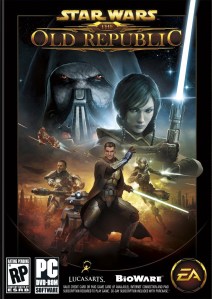
Star Wars: The Old Republic


As BioWare’s ad campaign boldly proclaims… the wait is over.

I don’t know how many Star Wars fans are still willing to embrace new products that come out without some measure of hesitation. I’m certain that many people still love Star Wars, and refuse to let their love be tainted by any of the more questionable decisions that the brand has made over the years. As a boy, I would certainly have counted myself amongst that group; as an adult, I simply feel free to make the choice not to give money to things that I don’t enjoy. It was definitely with a significant measure of hesitation that I placed a pre-order for BioWare’s brand-spankin’-new MMO, Star Wars: The Old Republic.

As the name implies, this game takes place during that lengthy and largely unexplored time of the Old Republic. Since the Republic persisted for thousands and thousands of years, it makes for a seemingly endless breeding ground for unique and individual stories without the need to be concerned with the absolute canon of the six Star Wars films. In other words, the further removed we are from characters like Luke Skywalker and Darth Vader, the easier it is to make a game that still feels like Star Wars… but doesn’t even attempt to infringe upon the films or their core events. The setting for The Old Republic is set some time after the events of the two “Knights of the Old Republic” games. Darth Revan, at least, is considered to be an almost-mythical figure in this time period. It still follows the progress of ongoing hostilities (if not outright war) between the Sith Empire and the Republic. Beyond that, the game’s story depends heavily (at least insofar as I’ve progressed myself) on which character class you’ve selected. Unlike other MMORPGs that you might have played in the past, the Old Republic is designed to provide a story and interaction-rich single player leveling experience. It uses a dialogue wheel with a variety of options and relies heavily on interactive conversations with NPCs to determine which quests your character obtains, what rewards you get from them, your alignment toward the Light or Dark sides of the Force, and how much your companions (more on this in a moment) like you. There are definitely still periods in your leveling experience which feel like a traditional grind; you will find yourself completing circuits of non-individual quests to shore up your XP total and bring in much-needed credits.

Based on your character class, you have a main personal story that you’re progressing through. My character, a bounty hunter, is attempting to be the overall winner in a massive competition of bounty hunters staged by the Mandalorians that requires me to go around the galaxy hunting the most difficult of targets – and the other hunters who have been assigned to the same targets. The missions specific to this bounty hunter storyline are accessed through single-character “phases” – areas only accessible to you – and serve to give the player the impression that they are advancing their character’s story along with their skills. Because these events are personal to the player and follow a linear progression, the NPCs involved become increasingly impressed with you, your reputation, and your abilities. Compared to other MMO-style games where your personal contribution to the world is rarely felt in any meaningful way, this game goes out of its way to try and make the player feel involved and important. This is particularly important, I think, in the context of the Star Wars setting. While of course the game involves fighting through seemingly endless hordes of creatures, rebels, insurgents, bandits, etc. in the wilds and in quest areas, the pacing of the game and the structure of the quests all seem bent toward keeping the feel of a Star Wars adventure. The game is not encouraging a long grind against increasingly formidable types of bats; your character has important business to be about, and just has to scythe through bad guys of various competency levels in order to complete that business.

Further adding to the immersion of the game is the aforementioned companion system. As you progress through your story, your character will acquire access to different companions. As you’d expect, these companions (one of them, anyway) joins you in battle and helps by fighting your enemies. In addition, your companions deal with the responsibility of gathering and crafting for the game’s profession system, which boasts an impressive variety of skills, from which your character may select three. Since your companions take care of most of this nonsense, it might sound like the professions are fairly hands-off. Fortunately or unfortunately, this is not really the case; you still must micromanage your crew of companions, dispatch them on missions, and set them to crafting. You cannot simply queue up a list of things for them to make or do, and it can quickly become tiresome to constantly refer to your crew management window and dispatch your minions. Unlike most of the game’s other features, this one does feel like it breaks the rhythm of your individual Star Wars story.

Incidentally, your friends still can have plenty to do with your experience in the game; situations called Flash Points call for parties to group up and take on significant challenges together (much like a dungeon in Everquest’s Lost Dungeons of Norrath, or in World of WarCraft). End game content is also available, but even with my early access, I certainly haven’t achieved such a high level as to be involved in any of that yet. Still, given the composition of the game so far, there is reason for me to remain optimistic about continuing game content.

The last thing rolling off my tongue is a little discussion of the space combat system. Yes! There is space combat! You can take your starship into space combat missions which are worth XP and credits for your character. They use a Starfox-style system of controls; your ship moves toward your mouse cursor, you have both lasers and missiles, and you can perform a barrel roll (the default key is the space bar!) You’ll have to deal with both enemy starfighters and capital class starships, and complete different objectives like escorting a friendly starship to safety, or destroying certain elite enemy targets, etc. It’s very much in the background (most of the action takes place ‘on the ground’ for your character) of the game, but it’s certainly a lot of fun, and the XP rewards are more than worth delving into it if you find the space combat minigame at all playable. My recommendation is to try it and have fun.

Halo: CE Anniversary


Some of you may remember, back to a day just over 10 years back, when a little console called the XBox launched. It was, at the time, a seemingly suicidal attempt to challenge the dominance that Sony held over the home console market – albeit without much relevant interference from previous juggernaut Nintendo – and to establish a new console master. The XBox had such innovative features as an onboard hard drive (only standard on PCs since they were conceived) and a more interactive BIOS that let the owner of the console do things that had never really been possible with a home entertainment console before. At its launch, the XBox boasted such titles as Dead or Alive 3… Project Gotham Racing… Jet Set Radio Future (and I don’t think this launched in the US!) annnnnnnnd a very tiny game called Halo: Combat Evolved.

Most game fans, at least those who dabble in first person shooters, have played Halo: CE. Even in 2011, ten years after CE’s launch, with a whole new generation of gamers. At the very least, contemporary gamers are familiar with the Halo franchise, which has now spawned seven games (counting the offshoot Halo Wars), as well as novels, comics, and even an animated feature which tried to delve deeper into the mythology of the Halo universe. All of that – a billion dollar franchise – was spawned by this one little, innovative title.

Before I begin my review of the new game, launched a mere week ago, I think it’s important that we take a peek at the significance of Halo: Combat Evolved, as a franchise. Until CE launched, the gold standard for console FPS games was 007: Goldeneye, on the Nintendo 64. Now, Goldeneye is a fine game, and it actually incorporates many of the same elements that Halo would later exploit to their fullest potential, but there was never any danger of Goldeneye challenging PC titles like Counterstrike. At the time, the keyboard and mouse were irrefutably better for the world of the first person shooter. Goldeneye was really the pioneer that taught us how much fun it could be to play locally with a few friends split screen and try to kill one another. But Halo perfected this art; we learned to love the 16 player LAN, with a game that had faster pacing and a shallower learning curve than any PC-based shooter title, and was dramatically more advanced than Goldeneye.

You can look back and criticize the game now. It had poor multiplayer balance (well, really, the balance was excellent, so long as everyone had only a human pistol or sniper rifle), the single player re-used a lot of set pieces and enemy models, and the lack of true multiplayer – to be fair, XBox Live did not exist at this point! – made it impossible for Halo to truly outshine fully multiplayer active PC titles. But there is simply no denying that Combat Evolved launched a franchise which is now viewed as the flagship title of the XBox and Xbox 360, and one of the most successful shooter games of all time. Even Call of Duty, the chief rival in the field, has adapted a number of features from Combat Evolved over time.

Flash-forward to November, 2011.

I belatedly remembered that Microsoft Studios, in a shameless attempt to milk more revenue out of the franchise, was releasing the 10th Anniversary edition of Combat Evolved. Bungie has released the Halo franchise, and stated over and over that they’ll release no new Halo titles. Microsoft Studios, on the other hand, spun off 343 Studios (343 Guilty Spark, anyone?) specifically to create more Halo games. This remake of the original is just the beginning, as Halo 4 is already slated to be released sometime during 2012. Many fans may be turned off by Bungie’s dissociation with the brand, and I assume most every fan is going to look with some skepticism at this Anniversary Edition release of Halo: CE. To be honest; if I’d had to pay $60 US for a copy of this 10th Anniversary Edition, there’s simply no chance that I would have. Instead, I was able to rent the game, and so guilt-free I offer the following review:

The graphics are good. They are not cutting edge, and certainly do not test the limits of the XBox 360’s hardware. In a very real sense, the graphics of this updated remake were obsolete even before the launch. They don’t compare to the visual spectacle that we see in the level and model design of, say, Modern Warfare 3. So, those expecting some kind of visual masterpiece had best look elsewhere. However, the updated graphics are so far beyond the capabilities of the original XBox (the original graphics, like many XBox Arcade titles, are available with one button press). A couple of swaps between the original graphics and the updated ones should be more than enough to demonstrate how far graphical processors have come in such a short time.

If you’ve ever waxed nostalgic for the single player mode of Halo: CE, the Anniversary edition is for you. It adds nothing. Literally; nothing. But it does take us back to a game that many of us now lack the means to play; a classic title, but with beautiful new set pieces. The control setup feels very ‘classic Halo’, right down to the speed the Master Chief moves, and the way that he jumps. This will be unsettling for players of contemporary titles like Halo: Reach at first, but you’ll settle back in without too much trouble.

As for multiplayer, the Anniversary Edition builds on Halo: Reach. It features a number of remakes of original Halo maps, including Battle Creek, Damnation, Prisoner, Hang ’em High, and the Halo 2 map Headlong. All of these maps are set in the Halo: Reach multiplayer engine, so Halo multiplayer diehards will find nothing new here beyond the maps.

Of course, the Anniversary Edition also includes Online Co-Op, so you can play the story mode with friends across the world. Don’t sell that short; Halo’s storyline has always been more involved than people give it credit for.

Call of Duty: Modern Warfare 3


So. At long last, here it is. The latest installment from the shell that remains of Infinity Ward, bringing back those endlessly popular features like sniper rifles, killstreaks that build on one another, and host migration that keeps the multiplayer modes playable!

The first reaction I’ve heard from people on the fence about this game (and, let’s be honest, there aren’t that many) is that they don’t want to pay the Madden Tax to play yet another Call of Duty that, much like any sports game, just isn’t that different from year to year. If you’re of that mindset, you’ve likely already made up your mind about this title. This review probably isn’t going to change your mind either way about this title, so I’m going to try and keep the review brief and focused upon specific observations I have about this game, the ground it breaks (or doesn’t break, as the case may be), etc.

Before I do some quick hits on the game though, it’s worth visiting the game’s new mode. The outstanding mode in Modern Warfare 3 is Survival Mode, which is an offshoot of the single/multi player Covert Ops mode from Modern Warfare 2. Like that title, Modern Warfare 3 includes a panel of special missions (based on levels that appear in the single player, of course) that you can run through that pose unique challenges. New this incarnation, however, is a wave-based horde mode that is very much in the vein of (nearly) identical modes in the last couple of Halo or Gears of War games. If you found those modes satisfying in Halo or Gears (or another title I’ve forgotten. Please forgive me?) you’ll like Modern Warfare 3’s take on it as well. The only possible downside is that, like the true PvP mode, Modern Warfare 3’s survival demands that its players level up to unlock certain equipment pieces. The problem is that the equipment curve in Survival begins with an even more boring selection of equipment. It’s worth noting that the level curve is so much lower that you should earn the equipment you really want in no-time flat, if you’re dedicated to doing so.

So, assuming you’re one of three human beings sitting on the fence today… you’re asking the question, do I want to buy this game? (Or, perhaps more probably, is this game right for X gift recipient?)

FULL DISCLOSURE: I pre-ordered and received the ‘Hardened’ Edition of Modern Warfare 3. I’ll try not to harp on pre-order features, but I’m not going to guarantee I’ve got it right. In addition, I am playing this title on the XBox 360. Addressing technical aspects of the game is pertinent only to the XBox 360 game system.

The Good!
– Multiplayer mode features more guns than ever. Not all of them seem powerful, but none of them seem un-useable (with the possible exception of the handguns, which I don’t deal in).
– Story isn’t bad, actually. It’s well-conceived, and fun to play. The variety in the level design is a nice change!
– Multiplayer mode rewards you for past service by giving you a head start if you’re achieved prestige mode in a previous title (going back to CoD 4!)
– The Prestige Mode now has its own shop that gives you a choice of rewards. Prestiging players can now keep a piece of equipment (such as a favourite gun) through the Prestige Mode. Players are, of course, free to go with more traditional benefits such as adding a custom class or gaining a bonus title and emblem set. The player is able to choose between options at each Prestige level.
– Netcode is very passable. The game will hand off host in extreme circumstances in order to improve gameplay (this was the single biggest downfall of Call of Duty: Black Ops, and no, it’s not close)
– The gun customization in this game is awesome. Adding the customize menu (including such benefits as reducing gun kick, or equipping two attachments) on top of the attachments available really makes you feel like you can get the gun you want to play with.
– New Strike Package system in multiplayer is endless fun.

The Un-Good

– Frankly, it’s Call of Duty. There’s no real innovation here, just a lot of touch-ups. It’s up to you to decide if that’s worth it!
– This game pushes the hardware limits of the console hard, and fast. I’ve noticed some weird system lag issues as a result of this, and the game frankly just doesn’t run as crisply as earlier entries (particularly, CoD 4).
– Story contains a horrifying twist… although, this can be disabled in the game options, much like the level ‘No Russian’ in Modern Warfare 2.
– Weapon balance is – as ever – questionable. Why bother including some weapons that feel utterly useless at higher difficulty levels and in multiplayer arenas? It’s worth noting that all weapons have some (read: dramatically more) use in the single player modes as opposed to the multiplayer environment, but it still feels like some weapons are universally strong, useful, and sustainable… and most others just simply aren’t. Given how many incarnations of Call of Duty we’ve suffered through now, this is the sort of thing that should have started to be fixed.
– Online players are as annoying as ever. Need proof? Take a look back at this review. I’ll see you on XBox Live. 🙂

Bastion!


A short while back, I got a message from a friend of mine. He urged me to download a game available on the XBox Live Arcade called Bastion. Actually, it was more like he demanded. Well, I acquiesced. And I could not possibly be more pleased that I did. Bastion is going to cost interested parties $14.99 (US currency) and is available for the XBox 360 and for PC gamers as well via the Steam network. I have heard no word about it being available (now or in the future) on the Playstation Network.

So what is Bastion?

Well, it’s an action RPG in the tradition of games such as Diablo. You control a character who is known only as the Kid, who makes his way through a city and world that have been ruined by an apocalyptic event referred to as the Calamity. The Calamity not only destroyed the magnificent city of Caelondia – where the Kid hails from – but also seemingly everything nearby, including the home of the Ura… a superstitious warrior tribe who had often been at odds with the Caelondians. Unfortunately for the Kid, he has no idea how this transpired, or what to do in a world where everything has been smashed to bits. Helping him on his way is a low-voiced narrator who guides the Kid – and, by extension, the player – through the game’s action. The story is told (almost) entirely through the narrator’s quips, which come one line at a time. Rather than having to read through large blocks of text, we instead are treated to a consistent flow of short quips from the narrator. He remarks on almost literally everything… from the progress of the story, to the different perks the Kid equips as he levels up, to the Kid’s choice in weapons… and, of course, on every piece of junk that the Kid finds lying around the burnt-out wreckage of their former home.

As a result of this narration, I would say the story of Bastion is considerably richer than that of many other action-style RPGs – Diablo springs prominently to mind. However, the story is also fairly simple, despite a couple of twists, and there is a dearth of developed characters. It doesn’t play with the same richness as some of the all-time greats in the genre (like some of the Legend of Zelda games). I should, however, note that the casting of newcomer Logan Cunningham as the voice of the narrator does a lot to give this game a style all of its own. Not only does he seek to bring this world alive for us, but he imparts some significant emotion into the games’ heavier moments.

Gameplay takes place over a series of beautifully rendered worlds which are restored a bit at a time (in the form of terrain pieces, both the actual surface of the world and the details accompanying it) recalled from the aether beyond. A variety of enemy types inhabit this world, each with their own quirks. The Kid equips two weapons (and while a melee and ranged weapon are strongly encouraged for ease of use, these weapons can be any pair you desire), a shield which can be used to both block and reflect enemy attacks, as well as a spell chosen from a list of at least 25 such spells (in earnest, I didn’t count. I suspect I missed a few anyway). In addition, the Kid can carry a number of health potions and black potions which restore health and power spells, respectively. Using these implements, the Kid fights his way across a dozen or more chunks of the world, interspersed with ‘Proving Grounds’ for each weapon, where the Kid is called on to complete an extraordinary task with each weapon for big rewards. Between missions, he’ll return to the last safe haven of Caelondia, called the Bastion. In the Bastion, the Kid can purchase upgrades (ten for each of the game’s 11 weapons!), equip spirits (of the 80+ proof kind) that give him significant bonuses, and select his weapon loadout. The player can also make the game more challenging by equipping idols (similar to equipping skulls in the Halo game franchise).

The single player will take perhaps 8 hours to complete (more if you’re extra thorough or big on using idols) and is followed by a New Game+ mode.

I really can’t recommend this one enough. Even at the (seemingly) hefty price tag of $15, it delivers as much content as some newer games which have the gall to charge a full $60~ retail.

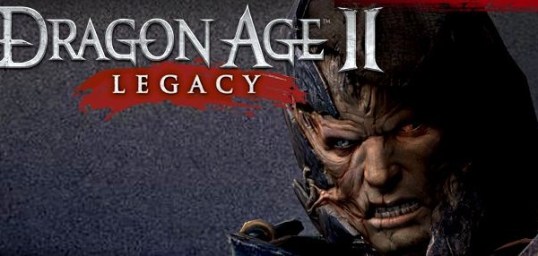
Review: Dragon Age II: Legacy


Dragon Age: Legacy is the first post-release DLC available for BioWare’s hit dark fantasy epic. Available for 800 MS Points (or $10), this DLC is launched from your in-game home (whether this is Gamlen’s House or the Hawke Estate, depending on when you launch the DLC) by interacting with a creepy statue that you’ve apparently kept as a memento. Depending on your difficulty settings, level, and party make-up, the DLC will take about 2 hours to complete. It is not noticeably more or less difficult than the primary game, but it does introduce a number of new adversary types that were not present in Dragon Age II (more on that later).

This DLC is visually impressive, using all new set pieces (including a set of desert ruins, a Carta base, and the interior of a Grey Warden fortress) and a location outside of Kirkwall or its immediate vicinity. Hawke and a chosen party of three head into the Vinmark Mountains in pursuit of a group of dwarven Carta members who have made an assassination attempt against Hawke. I have not completed the DLC with all of the different party members available, but I can safely say that there are significant (and pleasant) tie-ins for Varric, Anders, and Bethany (presumably Carver as well) as you proceed through the DLC. Although it is told largely through the prism of combat, as you would expect, there is a fairly hefty dose of story in Legacy. Several smaller stories are told through side quests, and the main plot thread takes us some place unexpected in the climactic scene as you confront the DLC’s final boss. The encounters in this DLC are a little more thought out than many of the ones in the original game, with scenarios such as enemy archers attacking from raised positions, and areas you are herded into that have been deliberately trapped (complete with activation levers! Try turning some of these traps on their owners instead!) New enemies include brontos (the large dwarven pack animals) which make charge attacks that will bowl members of the party over and have tough hides, the re-designed genlocks (who are now quite distinct from the hurlocks; especially their alphas!) and the Alpha darkspawn that were absent from Hawke’s foray into the Deep Roads in the original game. Also returning are the deep stalkers, who are in large-scale battles with spiders at several points during the DLC.

Legacy also features no fewer than three boss encounters that have some unique elements to them. The final boss uses a lot of impressive visual effects and set pieces, but quickly grows repetitive. You’ll see what I mean.

One of the selling points of this DLC will no doubt be the large amount of gold and gear that can be obtained by playing it. You should note before launching the DLC that you will find a goodly number of useful green items scattered throughout it, and the relative power of these items is determined by Hawke’s level when you enter the DLC. None of the new items improve as you level, so if you visit Legacy very early in the game (when you’re still leveling frequently and replacing gear often) you may not get the best bang for your buck. In addition, only Hawke’s new weapon is truly awesome; the other items may not be as useful later in the game when you have access to many powerful items. I personally attempted Legacy a few quests before proceeding into the Deep Roads, and then in a post-game save. Hawke’s new weapon (typed appropriately for you based on your weapon group, i.e. a dagger or a longsword) is pretty dang awesome. It will begin with a high damage for your level and add a little to a key attribute for your class. As you make your way through the Grey Warden fortress, it will gain three upgrades that you’ll select from a total pool of twelve, including an elemental damage upgrade.

Even before the sale of junk items from Legacy, you’ll have easily made 40 gold or more. In addition, your party will gain a large amount of experience in the play-through (for example, I leveled from 11-14 just through playing the DLC); especially if you complete all of the available side quests.

I genuinely enjoyed this one. It’s easily worth the $10 in my estimation, and shows the care that I thought was typical of DLC in the original

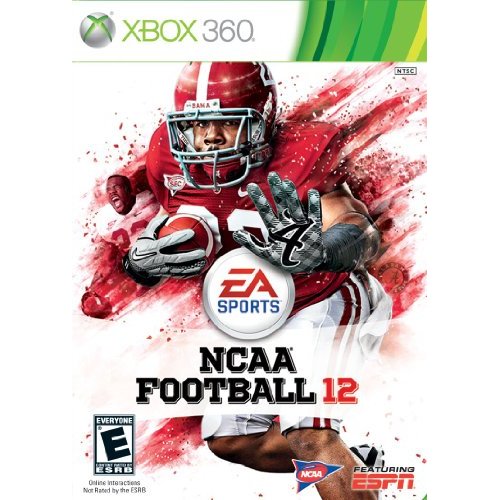
Review: NCAA Football 12


Yes, it’s that time of year everyone. Football season looms … at least, it does for the thousands of student athletes within the NCAA system. The NFL is still in limbo, even if it now appears inevitable (although either way, it won’t slow down the annual Madden release). Now, let me preface this review by saying that I don’t actually enjoy college football. I find the poor defensive play and imbalanced match-ups boring, and I hate the way that the BCS standings come together over the course of a season. The fact that the Big East has an automatic bid is a bad joke, etc. All of this is probably because I never attended a university where college football mattered. But absolutely none of that counts in the world of video games!

As a visceral experience, there’s a lot to be said for the college football style. Here, we still live in a world where running the football can be king, and a world in which the QB option (in a shocking variety of forms) can still be a primary offensive tool. Teams suffer every year from playing the service academies (who still run the triple option) because defending it is so different from the spread, or even the spread option, that most teams run. If you’re looking for a football experience where all of these systems are in play, then you should run — not walk — toward NCAA Football 12. Of course, most people are more NFL fans than NCAA fans, if the numbers are to be believed… but the one thing that the video game version will always have over Madden is that it isn’t quite so formulaic. We’re dealing with an eclectic mixture of offenses and defenses. If you care to start a dynasty (and the dynasty features are outstanding in the new version. In NCAA Football 12 we’re treated to the full coaching experience. More on that in a bit.) you have a ton of player turnover, which can make it difficult to have a consistent program. I suppose it’s probably easier if you’re a fan of Alabama or Florida. I’m not, so this title has a refreshing ‘battle uphill’ feel, especially in the Dynasty Mode.

The flagship promotion for this game has to do with the authentic recreations of the university celebrations, pre-game ceremonies, etc. It deserves to be the most outstanding feature. Granted, it has absolutely no effect on game-play, but one of the things that sets college football apart from the professional game is the sheer number of teams in play – each with their own unique celebrations, entries, and whatever else – who have their own tradition. If that kind of personalized experience doesn’t faze you, then you won’t find much of note has changed between iterations of this game. The graphics are still in the same generation, we have the same playbooks, the announcers have actually become less interesting (which may be a selling point, depending on your point of view – Lee Corso has made his departure), and there are no real innovations in game-play. The tackling feels slightly more authentic — that is, there’s less magnet tackling — and the AI that guides defensive players in zone defenses is dramatically improved over the 2011 version of this title. You can actually feel pretty confident when calling cover 3 defense… of course, this goes double for the AI player, who aggressively bats down passes (but mercifully doesn’t seem to randomly intercept any more). Still, the game emphasizes more than ever the value of lofting a pass high to avoid marauding defenders as opposed to just firing laser beam passes from point A to point B.

Outstanding features include the Dynasty mode. Returning are the online dynasty features, which were a huge improvement in last year’s title… but massively upgraded are the single player versions. You can now create your own coaching avatar who can hold the position of Offensive/Defensive Coordinator, or Head Coach, at a university of your choice – but who is held accountable for the team’s performance. The university has expectations, and you can experience first-hand being on the coaching hot seat and being fired from your job. Of course, if you’re good enough at the game, this is hardly a concern… but it does add a fascinating dynamic to the experience – a bad recruiting class could still doom you! If you are fired, you end up on the coaching carousel looking for a new job. It’s definitely a cool feature, even if you probably won’t run into it much.

The other game mode which received a significant overhaul is the Road to Glory mode. As always, you create a single player, and advance from a top-rated high school prospect through your collegiate career at whatever university. However, this time around, the experience is much more interactive. We’re treated with a game mode that allows us to fully develop a single player in a much more immersive way than in previous installments. Your created player will gain experience and skills — as always — but also adapt to (or be moved into) a specific role on the team. I imagine this is a much more authentic recreation of what going out for Div 1 sports is really like… but you tell me.

The game does take a significant step back in terms of calling audibles. I would say that the player is given more freedom than ever in terms of setting up audibles (with the addition of custom playbooks) but gone are the menus that actually tell you which button push calls what. Or, at least, they were absent for me. It seems like a senseless change, and one that left me feeling pretty bitter through my Dynasty play… when I had to frequently consult my audible chart in order to keep track of what I was calling, and when. If I could remember all of this playart, I’d probably be playing Div 1 football myself.

As always, this game will synergize with the Madden release in terms of draft classes, as the Madden schedule continues uninterrupted. Definitely worth a pick-up if you’re starved for some video game football, or if you consider yourself a college ball fan.