Review: By Dawn’s Early Light (dir. by Jack Sholder)


1990’s By Dawn’s Early Light is a film adaptation by HBO of William Prochnau’s novel Trinity’s Child. The film, when it first aired on HBO, seemed dated since the Soviet Union was ultimately going through its death throes as the military build-up initiated during the Reagan Administration crippled the USSR economically (they too tried to match the build-up in conventional and nuclear forces). Yet, despite the ending of the Cold War, recent events domestically and around the world has shown that the world never truly left behind the shadow of nuclear war.

The film is simplicity in the way the plot unfolds. A failed coup by dissident Soviet military commanders fails, but it’s after-effects of creating a “hot war” between the US and the USSR succeeds as both US President and Soviet Premiere make mistakes in their decisions. Decisions heavily influenced by their military commanders who see only black and white in how their respective nations should respond militarily. By Dawn’s Early Light shares some similarities to the classic 60’s Cold War films like Dr. Strangelove and Fail-Safe. Both films deal with the human frailties and flaws helping influence events that could lead to nuclear Armageddon for the whole planet. By Dawn’s Early Light concentrates on several storylines to highlight the stress and difficulties individuals must face to either follow their orders to their inevitable conclusion or allow their conscience to help make the moral decisions in trying to stop the madness spiraling out of control. Though some people’s decisions are left wanting, the film ends with a glimmer of hope that may just bring the world from the brink of annihilation.

The acting by the cast of Rebecca DeMornay, Powers Boothe, James Earl Jones, Darrin McGavin, Martin Landau and Rip Torn are well done. Rebecca DeMornay and Powers Boothe anchor one of the subplots as romantically involved B-52 crew pilots whose conflict comes from their own intimate closeness affecting command decisions and from the stress of families lost by the rest of the bomber crew. Darrin McGavin, Rip Torn and Martin Landau anchor the other subplot of competing Presidents. One a physically incapacitated US leader trying to avert escalating the conflict to the point of no return with another recently sworn in who fears of losing a nuclear war and thus wanting to strike back full and hard. In between these two leaders is the diabolical performance by Rip Torn as a warmongering Army colonel who sees only winning the war as the only objective. At times, the performances do become hampered by the simplicity of the script, but the cast power through to the end.

In the end, the film might look a bit dated in its production design (this was 1990 and many years before HBO became known for premiere television production) but the story itself is very current and relevant.  What might have been a nice Cold War relic fairy tale when it first aired in 1990 on HBO has taken on more of a cautionary tale as more nations begin to acquire nuclear weapons with some of these nations not just enemies of the US and the world in general, but also led by men whose hold on sanity seem tenuous at best. By Dawn’s Early Light is a great piece political “what if” that hopefully remains just that and not a prediction of reality to come.

I Watched Fatal Exposure (2025, Dir. by Sam Coyle)


Red flags, girls!  You need to know how and when to spot them!

Photographer Ariel (Sofia Masson) is the victim of a violent home invasion and her sex buddy Derek (Stephen Huszar) just happens to show up a minute later?  Red flag!

The only photograph from Ariel’s exhibit that sells is an erotic selife called “No Daddy Issues” and then Derek suddenly wants to be called “daddy” while in the bedroom?  Guess what?  That’s a red flag!

Derek invites Ariel to his estate for the summer without telling her that he’s a widower and that he has a stepdaughter named Chloe (Jasmine Vaga)?  You better believe that’s a red flag!

Chloe is the same age as Ariel and physically resembles Ariel and calls her stepfather “daddy?”  Red flag, red flag, red flag!

I watched this movie because it was about a photographer and there really aren’t that many non-documentaries about photographers.  I didn’t think that the selfie that Ariel sold was that impressive but some of her other photographs showed a hint of talent.  But a photographer has to be aware of the world around her and she has to be able to see the things that other people miss.  That’s what distinguishes a photographer from someone who just has a camera.  How could any photographer miss all the red flags and all the strange atmosphere inside of Derek’s estate?

(I did like that Ariel had somehow developed a system to allow her to develop film and make prints within seconds.  I’d love to know how she did that.)

Fatal Exposure requires a big suspension of disbelief.  If you can do it, then the film itself is enjoyably trashy.  Derek’s gothic mansion is a great location and the acting wasn’t bad at all.  But you just have to be willing to accept that someone could miss all of those red flags.  Derek was too obviously evil from the start but he did give Ariel a nice studio to work in.  Maybe he wasn’t all bad.


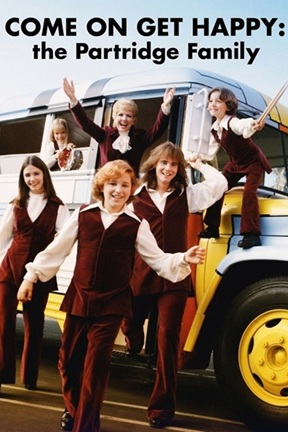
Come On Get Happy: The Partridge Family Story (1999, directed by David Burton Morris)


In 1969, a group of television network executives get together and decide the world needs a sitcom that will mix music with family comedy.  The result is The Partridge Family.  While Shirley Jones (Eve Gordon) tries to keep her television family safe from the networks and, in some cases, their own dysfunctional families, David Cassidy (Rodney Scott) struggles with being a teen idol and Danny Bonaduce (Shawn Pyfrom) deals with living with an abusive father (William Russ).  Danny finds a new father figure in the form of co-star Dave Madden (Michael Cheiffo) while Danny dates his tv sister, Susan Dey (Kathy Wagner).

This was one of the many made-for-TV movies that took advantage of boomer nostalgia at the turn of the 20th Century.  Like most of those movies, Come On Get Happy is on the shallow side, providing the details that everyone had already heard without digging too far underneath the surface.  The main thing that sets this film apart from so many other behind-the-scenes movies is that the cast, for the most part, actually resemble the real-life people that they’re playing.  That’s especially true in the case of Shawn Pyfrom.  If you’re a fan of the show or Cassidy’s music, this movie might appeal to you.  I Think I Love You is still a banger.

It’s well-made but it’s still hard not to feel that it would have been more entertaining just to watch a 2-hour interview with the real-life Danny Bonaduce.

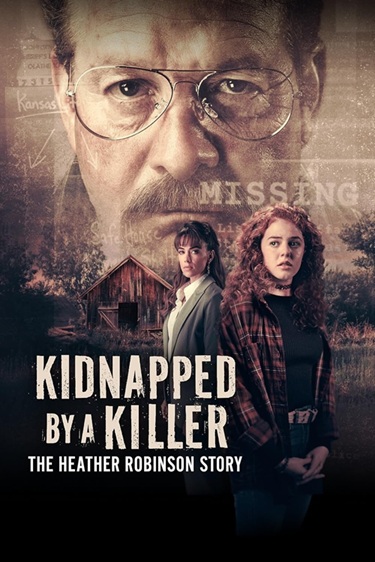
Lifetime Film Review: Kidnapped By A Killer: The Heather Robinson Story (dir by Lee Gabiana)


John Robinson has been described as being the Internet’s first serial killer.

I don’t know if that’s an accurate description but it is true that Robinson, who most of his neighbors and family knew as just being a somewhat eccentric businessman who always seemed to be in trouble with the IRS, did make contact with several of his victims in online chatrooms.  No one is quite sure how many women Robinson killed in the 80s and the 90s.  Robinson himself has given contradictory numbers.  What is know is that Robinson started out by luring women to his home by claiming that he had a job for them.  Many of the women who accepted his job offer were either never seen again or their bodies were eventually found on his properties in Kansas and Missouri.  Eventually, after serving time on fraud conviction, Robinson started to use internet chatrooms to find his victims.  He used the screenname Slavemaster, something that would have undoubtedly stunned all of his neighbors.

In Kidnapped By A Killer, Steve Guttenberg plays John Robinson.  Now, it should be noted that Guttenberg doesn’t get much screentime and he’s also nearly unrecognizable under a ton of old age makeup.  Guttenberg plays Robinson as being a creepy old man who uses the fact that he walks with a cane to put people at ease.  The film doesn’t spend much time with Robinson and it doesn’t show any of his murders.  Instead, the focus is on the police who investigated Robinson and also on Heather Robinson, a young woman who was Robinson’s adoptive niece but who was also the daughter of one of Robinson’s victims.  After killing her mother, Robinson “gave” Heather to his brother and sister-in-law, telling them that her mother had been a drug addict who abandoned her baby.

The majority of the film focuses on Heather (Rachel Stubington), who is a teenager when John is arrested for the murders that he committed.  Heather struggles to come to terms with the knowledge that her uncle — who seemed kindly, if a bit corny — murdered her mother and that she was essentially kidnapped and given away.  What seemed like an act of kindness — Uncle John not wanting a drug addict’s daughter to get lost in the system — was actually John Robinson’s attempt to cover up his crimes.  Much like the criminal who starts a business to launder money, Heather’s adoption was John’s attempt to launder evidence.  Stubington does a good job as Heather, capturing her struggle to come to terms with her identity.  The scenes of her dealing with her feelings towards John and the scenes of hardened detectives recoiling in shock as they discover the remains of John’s victims all serve as a reminder that murder is not an isolated crime.  It’s something that effects communities and families long after the act itself has been completed.

Kidnapped By A Killer deserves credit for focusing on a victim instead of on John Robinson, himself.  Too often, when it comes to true crime movies, the victims are forgotten while the serial killer gets all the best lines and the big moments.  Kidnapped By A Killer presents John Robinson as being a rather pathetic old man and that’s perhaps the best thing about it.

The Films of 2025: Emmanuelle (dir by Audrey Diwan)


This film is taking itself way too seriously….

I had that thought 16 minutes into Emmanuelle.  A remake of the wonderfully trashy 70s film that made a star (of sorts) out of Sylvia Kristel, this version of Emmanuelle takes itself way too seriously.  It should be noted that no one is under the impression that the original Emmanuelle films or any of the unofficial spin-offs were high art.  The first film may have pretended to be about something but, ultimately, it was a trashy sex romp that was made because some folks wanted to make a lot of money.  That’s one reason why the original film and Kristel’s version of the character continue to be popular.  Both were totally shameless and unapologetic.

The remake, though, is boring.  Emmanuelle (played by Noemie Merlant) even has a boring job.  She works in quality control for a large chain of luxury hotels.  That’s right, quality control.  This film reimagines Emmanuelle as being the female version of Creed from The Office  Emmanuelle has been sent to Hong Kong so that she can evaluate a hotel that is being managed by Margot (Naomi Watts).  The company has tasked Emmanuelle with finding an excuse to fire Margot and Emmanuelle is feeling conflicted about it.  Let me tell you, there’s nothing sexier than quality control.

Emmanuelle has several sexual experiences while staying at the hotel.  The sensuality of Hong Kong gets to her.  While wearing a towel, she flirts with a nervous room steward.  She touches herself in front of an escort who hangs out at the hotel’s pool and she gets upset when Margot sends the escort and her friends away.  Emmanuelle wanders through the film with a blank expression on her face, staring at things that are often happening off-camera.  Hong Kong is presented as being a world where everything is for sale and no desires are forbidden.  If this was one of Joe D’Amato’s Black Emanuelle films, the decadence would probably be strange and entertaining.  However, since this is an Emmanuelle film that takes itself seriously, it’s kind of boring.

In fact, this film really does get caught up in the whole “Will Emmanuelle get Margot fired?” plot.  That is probably the least interesting part of the movie but the filmmakers really do want us to understand that Emmanuelle could lose her job if she doesn’t give Margot a bad report.  But honestly, who cares?  This film makes the mistake of assuming that “quality control” is a lot more exciting than it actually is.

Emmanuelle does fall in love over the course of the film.  Kei (Will Sharpe) is an enigmatic guest who hasn’t had sex in “two or three years” because he lost his desire.  He’s suffering from ennui!  Emmanuelle yells at Kei for smoking in the hotel but she’s attracted to him as well.  At least, that’s what the film wants us to believe.  Merchant and Sharpe have so little chemistry — romantic or sexual — that it’s hard to really care.  They have some philosophical discussions, the type of stuff that even Zalman King would have dismissed as being rather pretentious.

The main problem, as I said before, is that this film just isn’t fun.  It gets bogged down with its plot and Merlant, Watts, and Sharpe all sleepwalk through their roles.  This film should have been glorious trash.  Instead, it’s just dull.

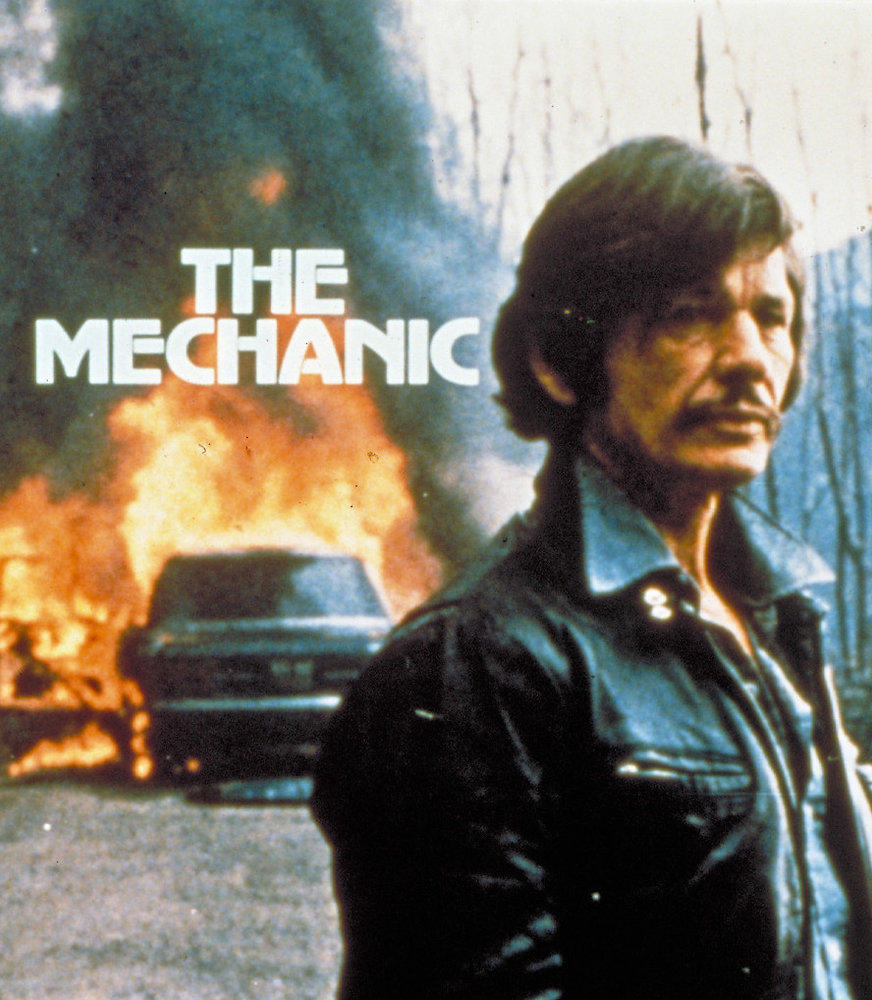
#MondayMuggers present THE MECHANIC (1972) starring Charles Bronson & Jan-Michael Vincent!


Every Monday night at 9:00 Central Time, my wife Sierra and I host a “Live Movie Tweet” event on X using the hashtag #MondayMuggers. We rotate movie picks each week, and our tastes are quite different. Tonight, Monday June 16th, we are showing THE MECHANIC (1972) starring Charles Bronson, Jan-Michael Vincent, Keenan Wynn, Jill Ireland, and Frank DeKova.

In THE MECHANIC, Charles Bronson plays a hitman who takes on a young apprentice (Jan-Michael Vincent) and trains him to be a professional assassin. But in their world, you never know when you’ll go from being the killer… to becoming the next target!

I reviewed THE MECHANIC for The Shattered Lens back on New Year’s Day!

Join us tonight for #MondayMuggers and watch THE MECHANIC! It’s on Amazon Prime. The trailer is included below:

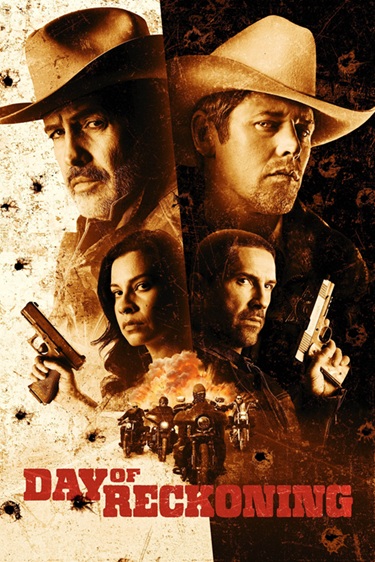
I Watched Day of Reckoning (2025, Dir. by Shaun Silva)


In this modern day western, Billy Zane plays a U.S. Marshal who recruits a down on his luck sheriff (Zach Roerig) to help him capture a banker robber (Scott Adkins).  Zane goes out to Adkins’s ranch and holds Adkins’s wife (Cara Jade Myers) hostage.  Roerig is not okay with this, especially since he thinks that Zane and his men have ulterior motives for wanting to track Adkins.  Eventually, some other yahoos show up, all wanting to join Zane’s posse, setting up a final violent showdown and Roerig having to decide which side he’s on.

Day of Reckoning had the right, dusty look and the acting was decent but it took forever for the action to actually start.  Instead, there were way too many scenes of Roerig bonding with Myers, who spent nearly the entire running time handcuffed in a bathtub.  Scott Adkins is a martial artist who has a huge online following but he didn’t get to show off any of his skills in the movie so I’m not sure what the point of casting him was.  Trace Adkins (no relation to Scott) and Mike Wolfe (from American Pickers) are also in the movie and I’m always happy to see them.  Rapper Yelawolf, who was supposed to be the next big thing 15 years ago, is also in Day of Reckoning.  He plays the imaginatively named Wolf.  I liked Billy Zane’s performance but it was mostly just because he was Billy Zane.  (I even liked him in Titanic because it’s impossible not to like Billy Zane.)  There’s nothing that interesting or surprising about his character.  It’s obvious that he’s going to turn out to be bad from the first moment he shows up.

Once the action does start up, it’s decent.  I just wish there had been more of it and less scenes of everyone standing around giving each other the evil eye.


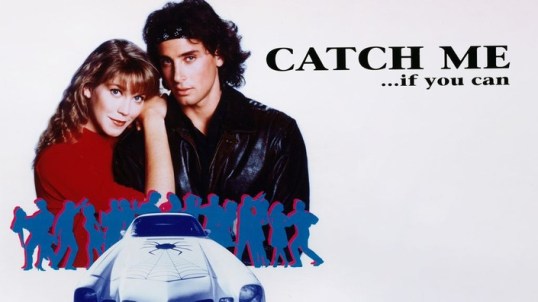
I Watched Catch Me If You Can (1989, Dir. by Stephen Sommers)


I hated Grind so much that I decided to watch another movie to get it out of my head.  I’m glad I did because, for my second movie, I picked a good one.

Catch Me If You Can takes place in Minnesota.  The school board is planning on closing down Cathedral High School unless the school can raise $200,000.  Class president Melissa (Loryn Locklin) takes charge of the fundraising drive but, even though she pours her heart into all of the car washes and bake sales, she’s only been able to raise $19,000.  Dylan Malone (Matt Lattanzi, who was married to Olivia Newton-John) is the school bad boy, who is always late to class because he’s busy racing other cars on the country roads near the school.  The principal (Geoffrey Lewis) gives Dylan an option.  He can either help Melissa or he can go to detention.  Dylan’s idea of helping is to take the money that Melissa has raised and bet on the illegal races that he’s entering.  At first, it works.  But when the Fat Man (M. Emmet Walsh) challenges Dylan to race his best man and then tells his racer to cheat, Dylan and Melissa lose all the money.  The Fat Man has a proposition.  The Fat Man dares Dylan to enter an impossible, timed race.  If Dylan wins, he’ll make the double the money that he lost and he and Melissa will be able to save the school. Dylan agrees.  Luckily, it turns out that the school’s principal is also the legendary Fast Freddie, the only person to ever win the Fat Man’s race.

It may not be anyone’s idea of great art but Catch Me If You Can is still a delightful and fun 80s teen movie, complete with a nerdy sidekick who turns out to be secretly cool, a bad boy with a heart of gold and a mullet, and a big football game at the end.  The plot doesn’t even make sense but the cast gave it their all and, as someone who took part in way too many car wash fund raisers in high school, I knew exactly what Melissa was going through!  I’ll admit that, towards the end of the film when everyone was counting down how many seconds Dylan had to make it to the finish line, I got a little caught up in the moment and I may have even cheered a little.  Catch Me If You Can is a wonderful slice of 80s goodness.

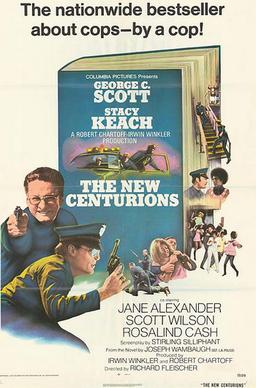
The New Centurions (1972, directed by Richard Fleischer)


Fresh from the police academy, three rookie cops are assigned to a precinct in East L.A.  Gus (Scott Wilson) is a father of three who just wants to do a good job and support his family.  Sergio (Erik Estrada) is a former gang member who saw the police academy as a way to get out of his old neighborhood, and Roy (Stacy Keach) is a new father who is going to law school at night.  Most of the movie centers on Roy, who goes from being an idealistic rookie to being a hardened veteran and who comes to love the job so much that he abandons law school and eventually loses his family.  Roy’s wife (Jane Alexander) comes to realize that Roy will never be able to relate to anyone other than his fellow cops.  Roy’s mentor is Andy Kilvinski (George C. Scott), a tough but warm-hearted survivor who has never been shot once and whose mandatory retirement is approaching.

Based on an autobiographical novel by real-life policeman Joseph Wambaugh, The New Centurion’s episodic structure allows the film to touch on all the issues, good and bad, that come with police work.  Gus is shaken after he accidentally shoots a civilian.  Sergio feels the burden of patrolling the streets on which he grew up.  Roy becomes a good cop but at the cost of everything else in his life and he deals with the stress by drinking.  There are moments of humor and moments of seriousness and then a tragic ending.  Just as Wambaugh’s book was acclaimed for its insight and its realistic portrayal of the pressures of being a policeman, the movie could have been one of the definitive portraits of being a street cop, except that it was directed in a workmanlike fashion by Richard Fleischer.  Instead of being the ultimate cop movie, The New Centurions feels more like an especially good episode of Police Story or Hill Street Blues.  (The New Centurions and Hill Street Blues both feature James B. Sikking as a pipe-smoking, martinet commander.)

George C. Scott, though.  What a great actor!  Scott only has a supporting role but he’s so good as Kilvinski that you miss him when he’s not around and, when he leaves, the movie gets a lot less interesting.  Scott makes Kilvinski the ultimate beat cop and he delivers the closest thing that The New Centurions has to a cohesive message.  A cop can leave the beat but the beat is never going to leave him.

Brad reviews MEN & CHICKEN (2015), starring Mads Mikkelsen!


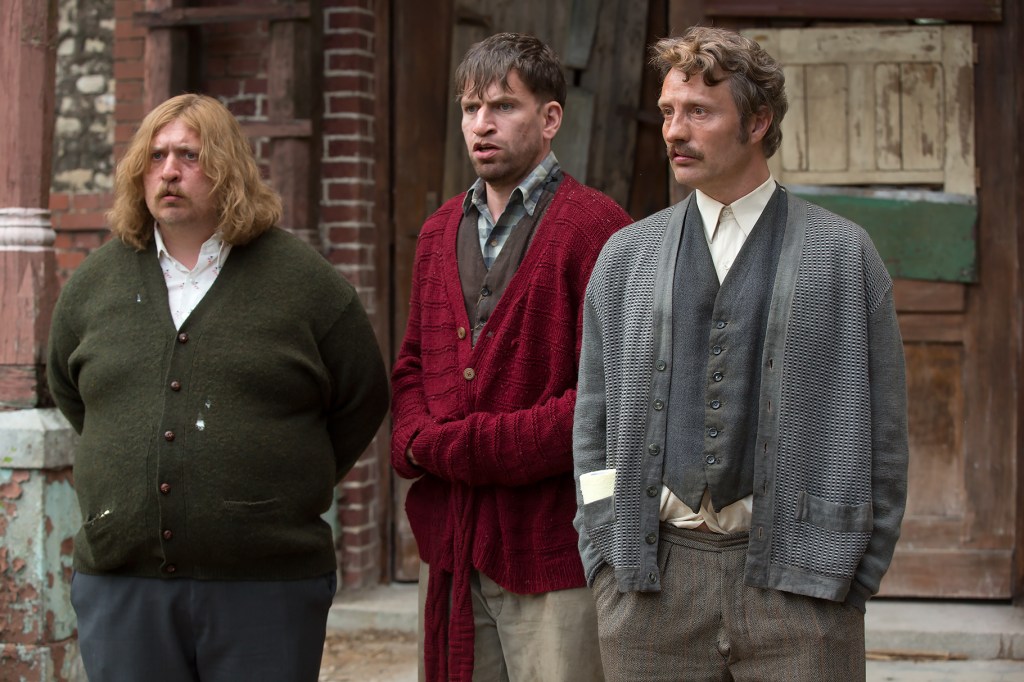
MEN & CHICKEN (2015) is the story of two estranged, and flat out strange, brothers, Gabriel (David Dencik) and Elias (Mads Mikkelsen), who find out a family secret when their father passes away. It turns out that their “dad” is not their biological father, so the two brothers head out to find their real one. They know he’s a reclusive scientist named Evelio Thanatos, and that he lives on a remote island. When they arrive on his island, they meet their three half-brothers Josef (Nicolas Bro), Gregor (Nikolaj Lie Kaas) and Franz (Soren Malling), who are some real weirdos, and who are prone to violently beat visitors in the head with heavy cookware and stuffed beavers. After taking a couple of beatings from their brothers, Gabriel and Elias are able to work their way into their family’s dilapidated mansion where they find that it is filled with chickens, pigs and a bull named Isak. This is a strange group, with each brother exhibiting certain physical abnormalities and odd behaviors. There’s something dark going on here… and why won’t their new brothers let Gabriel and Elias meet their dad, who apparently sleeps all day in an upstairs room? The remainder of the film deals with the brothers getting to know each other and discovering their family’s deep, dark, animalistic secrets!

I’ve presented a plot summary of MEN & CHICKEN above, but no summary can really do this film justice. It’s a film that has to be seen to be believed. The first thing I really noted about the film is its complete commitment to its weird tone and a twisted sense of humor. We meet Mikkelsen’s character Elias on the most awkward date ever, which he follows up by going to the bathroom and immediately masturbating. We soon learn that masturbating is just something he always has to do. The way his brother accepts the behavior as if it’s no different than him tying his shoes is odd and funny at the same time. There’s also a sight gag early in the film where Gabriel is watching from afar as his brother is being beaten repeatedly in the head by kitchen pots the size of bathtubs that made me laugh out loud. Of course, it’s meant to be funny, but the film’s visuals are also realistic enough that when we see Elias up close his face is a bloody mess! I haven’t watched a lot of Danish films in my life, but I’m starting to get a sense of just how twisted their senses of humor can get! Director and writer Anders Thomas Jensen is somehow able to balance the dark comedy of his setup, the strange nature of the characters he’s created, and the grotesque, horrific visuals that we see inside their family home in a way that’s both absurd and increasingly poignant as the film continues on. I’m so used to movies that follow the same plot points and formulas, but Jensen’s films are wildly unpredictable. You truly never know what you’re about to see next, to both good and bad effect, but it’s definitely not boring!

Mads Mikkelsen is incredible as brother Elias. This role could not possibly be farther away from his repressed badass in Jensen’s RIDERS OF JUSTICE, but you can’t take your eyes off of him. As odd and repulsive as his character can be, the actor’s instincts for absurd comedy are perfectly on display and he’s incredible. I also liked actor David Dencik as his brother Gabriel. His more “normal” character grounds the film as all sorts of craziness is going on around him. They complement each other well. I also recognized Nikolaj Lie Kaas and Nicolas Bro as two of the odd brothers, who were also in RIDERS OF JUSTICE. It’s fun seeing Jensen’s stock players in such unique and versatile performances.

After having now watched Jensen’s films MEN & CHICKEN and RIDERS OF JUSTICE, one of the things I’m picking up on is his ability to create an endearing “family” out of almost any kind of circumstances. These are some of the most strange and troubled people that you will ever see on screen, but beneath the perversity of it all, a theme emerges on the power and acceptance that can be experienced inside of a family, and, ultimately, on the nature of humanity itself. It may not be altogether realistic, but there’s an idealism and hope that resonates with me. 

As I wrap this up, let me just say that MEN & CHICKEN is not for everyone, so I can’t recommend it wholeheartedly. It goes to some deep, dark places in both its humor and the revelation of their dad’s disturbing scientific experiments. However, adventurous viewers with a perverse sense of humor and a willingness to follow a story wherever it may lead will be rewarded by this wholly unique film. A 25 year old me would have probably not been a fan, but 50+ year old me thinks it’s great!!