Music Video of the Day: King Nothing by Metallica (1997, directed by Matt Mahurin)


The music video for King Nothing was shot in Park City, Utah in December of 1996.  I could not find any information on who had to pick up all those crowns after shooting ended but hopefully, they were paid well.

This video was directed by photographer Matt Mahurin.  Mahurin directed his first music video in 1986 and he’s been churning them out ever since.  Among the artists that Mahurin has worked with: Disturbed, Goo Goo Dolls, Marilyn Manson, Tom Waits, Alice in Chains, Queensryche, R.E.M., Tracy Chapman, and U2.

Enjoy!

Bonanza Town (1951, directed by Fred F. Sears)


The frontier community of Bonanza Town has been taken over by the corrupt businessman, Krag Boseman (Myron Healey).  No one can stand up to Krag because the local judge (Luther Crockett) is under Boseman’s control.  The judge’s son (Ted Jordan) writes to the Durango Kid and asks him to come to Bonanza Town and lead a group of vigilantes to overthrow Boseman.

The Durango Kid, whose real name is Steve Ramsay (Charles Starrett) somehow receives the letter and heads into town.  As Steve, he gets a job working for Boseman and looks for evidence that Boseman is actually being bankrolled by a notorious outlaw named Henry Hardison (played by the film’s director, Fred Sears).  As the masked Durango Kid, he defuses the vigilante’s violent plan and, with the help of Smiley Burnette, he investigates what Boseman has on the judge.

Charles Starrett played the Durango Kid in 131 films.  In fact, he appeared in so many movies that the majority of Bonanza Town is made up of flashbacks from 1947’s West of Dodge City.  Despite all of the flashbacks, Bonanza Town is one of Starrett’s better films, featuring an interesting story and good performances from both Fred Sears and Luther Crockett.  Sears shows some imagination with his staging of the many gunfights and, as always, Starrett is convincing riding a horse and carrying a gun.

Bonanza Town is a fairly serious film and Smiley Burnette’s trademark comedic relief feels out of place but the kids in 1951 probably enjoyed it.  While everyone else is shooting guns and committing murder, Smiley is running his barber shop and turning a potato into a musical instrument.  While the Durango Kid dispenses frontier justice, Smiley sings a song and leaves his customers bald.  They were a good team.

Music Video of the Day: We’re An American Band by Poison (2006, directed by Poison)


In 2006, as a part of their 20th anniversary celebration, Poison recorded a cover of We’re An American Band and also released this music video, which is made up of behind-the-scenes footage of Poison recording the song and also archival footage from the band’s Glam metal heyday.

After all these years, Poison still occasionally play and tour together and they seem to have accepted their status as a nostalgia act with more grace than many of the other bands from the hair metal era.  Even back in the 80s, when they were huge, Poison seemed to have a more down to Earth attitude about stardom than many of their contemporaries.  You wouldn’t necessarily expect it from the music they were performing at the time but their interview was one of the highlights of Penelope Spheeris’s The Decline of Western Civilization Part II.  Unlike some other performers, they stayed focused on having a good time and making the type of music that they wanted to hear and, as a result, they have the type of fan loyalty that many American bands could only hope for.

Enjoy!

Deputy Marshal (1948, directed by William Berke)


Deputy Marshal Ed Garry (Jon Hall) is pursuing two bank robbers in Wyoming when he comes across a wounded man.  Harley Masters (Wheaton Chambers) has been shot in the gut but his main concern is holding onto his hat.  Ed takes Harley into town.  They go into the local saloon, where Harley reveals a map hidden in his hat.  He slips the map to Ed before an unseen gunman shoots him a second time.  This time, Harley does not survive.

With the current sheriff “laid up,” Ed decides to stay in town and not only catch the bank robbers but also solve Harley’s murder.  Ed soon finds himself in the middle of a conflict between two rival women (Frances Langford and Julie Bishop) who own ranches and stand to make a lot of money when the railroad comes through.

Deputy Marshal is one of the B-westerns that was produced by Robert Lippert and directed by William Berke in the 40s and 50s.  This one is a step above the usual Lippert production because it combines a murder mystery with the standard western action and there are enough suspects to keep the story interesting.  Jon Hall was best-known for appearing in exotic adventure films, often playing islanders.  His career was in decline when he starred in Deputy Marshal but he makes for a surprisingly believable western hero.  It helps that Hall was older than the typical B-western hero.  His weathered looks make him convincing as an experienced lawman who understood the ways of the west.

Frances Langford, who plays the nicer of the two ranchers, was married to Jon Hall when she appeared in this film.  She gets to sing two songs because this is a Lippert production and Robert Lippert believed that every western should open with a horse chase and should feature at least one song.

While it obviously never won any awards for originality, Deputy Marshal is a better-than-average B-western with an interesting mystery story and a convincing hero.

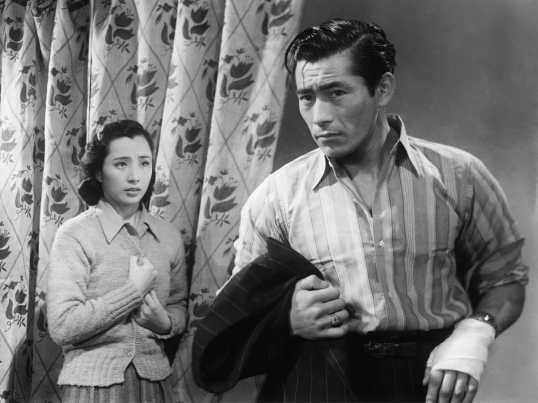
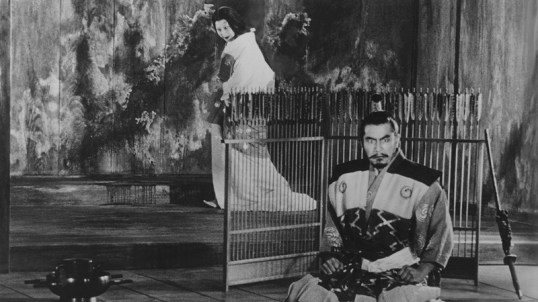
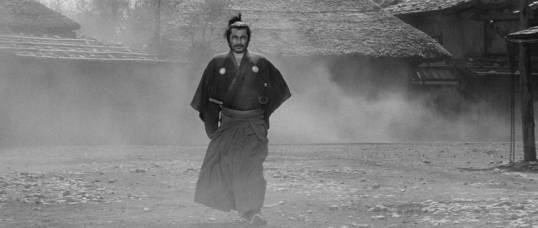
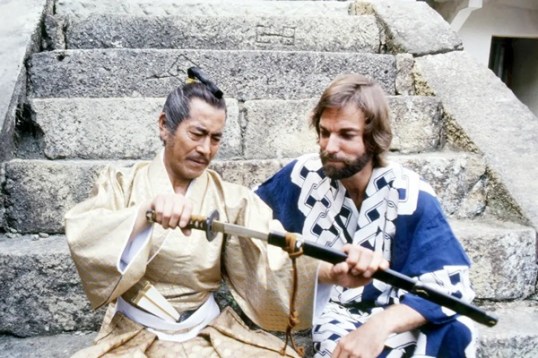
4 Shots From 4 Films: Special Toshiro Mifune Edition


4 Shots From 4 Films is just what it says it is, 4 shots from 4 of our favorite films. As opposed to the reviews and recaps that we usually post, 4 Shots From 4 Films lets the visuals do the talking!

104 years ago today, the great Japanese actor Toshiro Mifune was born in Qingdao, Shandong, China, which was under Japanese occupation at the time.  After working as a photographer and as an assistant cameraman, Mifune made his acting debut in 1947, playing a bank robber in Snow Trail.

Mifune would go on to become an international superstar, appearing in hundreds of films before his death in 1997.  Sixteen of those films would be directed by Akira Kurosawa and Mifune’s performances in Kurosawa’s yakuza and samurai films would go on to inspire actors the world over.  When Sergio Leone adapted Yojimbo into A Fistful of Dollars, Clint Eastwood based his performance on Mifune’s performance in the original.  George Lucas would later create the character of Obi-Wan Kenobi with Mifune in mind.

In honor of the man and his career, here are

4 Shots From 4 Films

Drunken Angel (1948, directed by Akira Kurosawa)

Throne of Blood (1957, directed by Akira Kurosawa)

Yojimbo (1961, directed by Akira Kurosawa)

Shogun (1980, directed by Jerry London)

Music Video of the Day: The Sun and the Rain by Madness (1983, directed by ????)


This song from Madness is about walking and standing in the rain so, of course, the music video features the members of the band wrecking havoc in Suggs’s ear and Lee Thompson with a rocket strapped onto his back.  The video also features several fans of the band hanging out withe Madness and a clever parody of Bob Dylan’s music video for Subterranean Homesick Blues.

The store at the start of the video was “Holts,” a shoe shop in Camden Town.  The name of the store has since been changed to British Boot Company.

Who directed this video?  I can not find a credited director but Dave Robinson seems like a good suspect since he directed the majority of Madness’s early videos and this video does have the same light-hearted style that he brought to his other videos for the band.  But Madness also worked with other directors during this period, including Nigel Dick and Chris Gabrin so who knows for sure?

Enjoy!

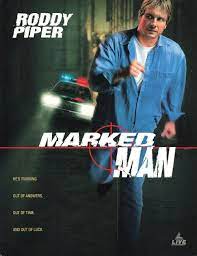
Marked Man (1997, directed by Marc F. Voizard)


How much keeffe is in this film?

Miles O’Keeffe!  But that’s still not enough.

Not even the presence of Roddy Piper is enough to make Marked Man work.  Piper plays an auto mechanic who kills the drunk driver who ran over his girlfriend.  Piper is sent to prison where he learns how to kickbox because why wouldn’t the authorities teach a prisoner foot-to-foot combat?  After ten years as a model prisoner, he is forced to run for his life after he witnesses a murder committed by two corrupt guards.  Piper jumps over the fence and, after finding a clue while breaking into one of the guard’s house, heads to Albany.  Miles O’Keeffe is the mercenary who is hired by the bad guys to track Piper down.  Piper not only has O’Keeffe after him but also every cop in the northeast.

When a movie has got both Roddy Piper and Miles O’Keeffe in the cast, there’s no excuse for it to be as boring as Marked Man.  Roddy Piper gets to kickbox and show off his wrestling moves but he spends most of the movie hiding in the back of pickup trucks and running away from prison guards.  For some reason, instead of just heading for the border and freedom, Piper sticks around America and tries to prove that the dead prisoner was killed by corrupt guards.  The final confrontation between Piper and O’Keeffe is as anti-climatic as everything else in the movie.  Maybe it would have been more effective if there had been a shared history between Piper’s prisoner and O’Keeffe’s bounty hunter but instead, they confront each other as strangers and their final confrontation feels impersonal.

Considering the cast and the story’s B-movie potential, Marked Man is a definite missed opportunity.

Music Video of the Day: When We Was Fab by George Harrison (1988, directed by Godley & Creme)


George Harrison would have been 81 years old today.  Sadly, he was taken from us at far too young an age.  It only seems appropriate to honor him with today’s music video of the day.

When We Was Fab, which appeared on Harrison’s album Cloud Nine, was one of the many songs that the surviving Beatles wrote about their time as members of the world’s greatest band.  For the music video, Ringo Starr made an appearance, as did old Harrison friends like Elton John and Jeff Lynne.  It has been rumored that Paul Simon also appears in the video but directors Godley & Creme have both denied that Simon was present during filming.  Godley & Creme were known for their technically innovative music videos and I remember that the effects in When We Was Fab, as simple as they seem today, were considered to be ground-breaking when the video was first released.

Enjoy!

Music Video of the Day: Shot In The Dark by Ozzy Osbourne (1986, directed by Andy Morohan)


Shot In The Dark was the ninth and final track on Ozzy Osbourne’s 1986 album, The Ultimate Sin.  The video features a group of attractive women looking for a good time, which, in this video, means going to an Ozzy show.

Director Andy Morahan was a director who worked with everyone who was anyone in the 80s.  He directed music videos for Pet Shop Boys, Wham, Luther Vandross, The Human League, Tina Turner, Cyndi Lauper, Wang Chung and others.  Later he would move on to feature films and direct the infamous third Highlander film.

Enjoy!

Smokey And The Good Time Outlaws (1978, directed by Alexander Grasshoff)


After meeting a talent agent while spending a night in jail, aspiring singer J.D. (Jesse Turner) and his best friend, The Salt Flat Kid (Dennis Fimple), decide to leave Texas for Nashville.  J.D. wants to be a star and the Salt Flat Kid is a ventriloquist who doesn’t go anywhere without his dummy.

On the way to the Grand Old Opry, they pick up two women (Dianne Sherrill and Marcia Barkin), one of whom was engaged to marry the idiot nephew (Gailard Sartain) of Nashville’s Sheriff Leddy (Slim Pickens).  The sheriff sets out after the two men, planning on sending them back to Texas.

Despite the title and the subplot about the sheriff searching for his nephew’s former future wife, Smokey and the Good Time Outlaws doesn’t have much in common with Smokey and the Bandit.  J.D. has a Burt Reynolds-style mustache but he’s not a bandit.  He is just someone who wants to be a star and most of the movie is about him and the Salt Flat Kid tying to make their way onto the stage of the Grand Old Opry.  Helping them out is an eccentric woman named Marcie (who is played by Hope Summers, who older viewers will immediately recognize as having been Clara Edwards on The Andy Griffith Show).  When J.D. can’t get an audition, it occurs to him to just rush out on stage and start performing.

This film was a dream project for Jesse Turner, who was a real-life country musician.  He co-wrote and produced the film, as well as starred in it.  Jesse Turner wasn’t much of an actor but he’s surrounded by a good supporting cast.  Slim Pickens steals the show as a more menacing version of Buford T. Justice but he’s not in the film nearly enough.  Dennis Fimple is likable but appears to be too old to be known as “the Kid.”  You can tell this is a movie because no one is creeped out by the Kid’s ventriloquist dummy.

Smokey and the Good Time Outlaws was made for the Southern drive-in circuit and it is good-natured, even if the story is never that interesting.  Country music fans of a certain age will appreciate it.