Music Video Of The Day: Tommy Gun by The Clash (1978, directed by Don Letts)


“I was saying us rock ‘n’ rollers are all posers and egomaniacs, but we know that terrorists are as bad, or worse than we are. They definitely love to read their own press… I know they dedicate their life to a cause, but they’re always posing for pictures.”

— Joe Strummer, on Tommy Gun

It’s always hard for me to listen to The Clash without also thinking about the way that Johnny Lydon dismissed them as not being a real punk band.  (Lydon was fond of pointing out that Strummer was a diplomat’s son and that he had previously been in a “pub band” before getting involved with punk scene.)  Johnny may have had a point about The Clash never really being as working class as they claimed to be, though that didn’t stop him from collaborating with members of the band on a few projects after The Clash broke up.  Still, I’ve always liked The Clash’s music.

Tommy Gun was the band’s take on international terrorism.  When it was first released, there was some controversy over whether the band was pro-terrorism or anti-terrorism.  As with many of The Clash’s songs, it could be read both ways.  It was The Clash’s first top twenty hit in the UK, peaking at #19.

This video was one of the first of many to be directed by Don Letts.  Some sources say that this was the first video that Letts shot for the band, though Lett’s video for The Clash’s White Riot was actually released before the video for Tommy Gun.  I don’t know how true that is but I do know that Letts went on to direct several videos for both The Clash and Mick Jones’s Big Audio Dynamite.

Enjoy!
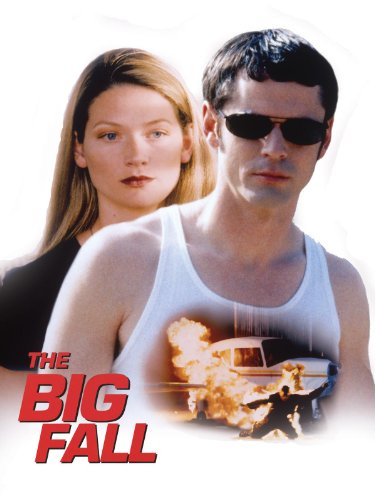
Cinemax Friday: The Big Fall (1997, directed by C. Thomas Howell)


Directed by C. Thomas Howell!?

You read that right!  After spending years as a straight-to-video mainstay, C. Thomas Howell finally stepped up from just starring in these films to directing one.  Of course, Howell still stars in The Big Fall as well as directing it.  What better way to make sure that your star takes your direction than by casting yourself in the lead role?  It makes sense.  The end result is a lot better than anyone would probably expect it to be.

Howell plays Blaise Rybeck, a self-described “private dick,” who works in modern Los Angeles with his protege (Sam Seder) and his secretary (Kathy Griffin, whose role is thankfully small).  Rybeck talks and dresses like a hard-boiled, 1940s P.I., right down to wearing a trench coat and a fedora while delivering his lines in a Bogart-style rasp.  The decor of his office is straight from the 40s as well.  Despite this, the movie takes place in modern times, with people using cell phones and bungee jumping off of bridges.  That no one comments on how out-of-time Rybeck seems to be indicates that Howell knew exactly what he was doing with his directorial debut.  The Big Fall is a tone perfect send-up of the neo-noirs that Howell spent most of the 90s appearing in.  His direction shows far more wit than you might expect from the star of Soul Man.

Rybeck is hired by sultry Emma Roussell (Sophie Ward) to find her brother.  It turns out that her brother has gotten involved with a bunch of extreme sports-obsessed bungee jumpers.  (This film attempts to do for bungee jumping what Point Break did for surfing and it actually succeed because the bungee jumping scenes are pretty damn cool.)  It all has to do with a criminal named Axe Roosevelt, played by the great Jeff Kober.  Of course, it also turns out that there’s more to Emma than meets the eye because this is a noir and there always is.

As a director, Howell does a good job of spoofing the material while still playing it straight enough that the movie doesn’t just become one big inside joke.  Jeff Kober and Titus Welliver are great as the bad guys, Sophie Ward is sexy as the femme fatale, and C. Thomas Howell keeps things moving both in front of and behind the camera.  This is an unexpected straight-to-video gem.

Music Video of the Day: Maybe Tomorrow Maybe Tonight by Earth and Fire (1973, directed by ????)


For today’s music video of the day, we have another song from the Dutch progressive band, Earth and Fire. I wrote a little about the history of Earth and Fire yesterday.

This is off of their third album, Atlantis.  From what I can tell, Maybe Tomorrow Maybe Tonight was the only single released off of Atlantis.  It was a hit for the band, breaking into the top ten in both their native Netherlands and in Belgium.  It only reached the 44th position in the German charts.  Who knows why.

This video, like the majority of the music videos from the 70s, is a performance clip.  Apparently, it was originally filmed for a Dutch television show.

Enjoy!

The Tie That Binds (1995, directed by Wesley Strick)


John (Keith Carradine) and his wife, Leanne (Daryl Hannah) are two white trash murderers who are on the run with the police.  When the cops catch them in the act of burglarizing a house (and murdering the people who live there), John and Leanne manages to narrowly escape but they’re forced to leave behind their 6 year-old daughter, Janie (Julia Devlin).

Traumatized by her former life, Janie is adopted by an architect named Russell (Vincent Spano) and his wife, Dana (Moira Kelly).  Dana, who lost her previous baby, and Russell are convinced that they can give Janie a loving home and help her overcome her past traumas.  And it seems like they might be correct, even though Janie is still terrified of a mysterious monster that she calls “the tooth fairy.”

However, John and Leanne are determined to get their daughter back and they’ve just found out where Russell and Dana live.

The Tie That Binds is a stupid movie from 1995 that, like a lot of stupid movies from the 90s, was put into heavy rotation on HBO and Cinemax after a brief box office run.  The main problem with the film is that everyone consistently makes the dumbest decisions possible but then we’e expected to sympathize with them when everything goes wrong.  John and Leanne may be extremely evil but they’re also extremely stupid so it’s hard to really buy into the idea that they could somehow successfully evade being caught by the police long before the inevitable scene where they confront Russell and Dana in the unfinished house that Russell’s spent the entire movie working on.

The Tie That Binds does feature good performances, all from actors who deserved better.  Keith Carradine and Daryl Hannah are frightening and Moira Kelly and Vincent Spano are convincing as a normal couple who just want to do the right thing.  Both Kelly and Spano should have been bigger stars back in the day but instead, it seems like they usually just ended up in stuff like The Tie That Binds.

Music Video Of The Day: Thanks For The Love by Earth & Fire (1975, directed by ????)


Up until YouTube recommended this video to me a few hours ago, I had never heard of Earth & Fire.  In fact, when this video first popped up under my recommendations, I assumed that it was for a song that Earth, Wind, and Fire had performed with a special guest singer.

Once I played the video, I discovered that wasn’t the case.  Instead, Earth & Fire was a Dutch group that was active from 1968 to 1983.  They were big in the Netherlands but it appears that they never really broke through in the rest of the world.  This was also apparently one of those bands that went through a large number of different line-ups over the course of its existence.  Wikipedia lists a total of 16 musicians who were, at one time or another, a member of Earth & Fire.  The band’s lead singer was Jerney Kaagman, who went on to become the president of the Dutch musicians’ union and who was one of the judges on Idols, the Dutch version of the British show Pop Idol.  (Pop Idol also served as the inspiration for American Idol.)

Earth & Fire had a series of hits as a prog rock outfit in the early to mid-70s.  In the later part of the 70s, they tried to rebrand themselves as a disco act.  Apparently, it didn’t work because the band broke up shortly afterwards.

When it was released as a single in 1975, Thanks For The Love reached number 8 on the Dutch Top 40.  This music video, like many of the videos that were released in the days before MTV, is a simple performance clip.

Enjoy!

Hail, Hero! (1969, directed by David Miller)


After going away to college, Carl Dixon (25 year-old Michael Douglas, in his film debut) has returned to his rural hometown.  Though Carl comes from a family with a long military tradition, he’s against the war in Vietnam and is considered to be a hippie by his family.  As soon as his stern father (Arthur Kennedy) sees Carl, he sits him down in the kitchen and, after declaring that no one is going to mistake his son for a girl, cuts his hair.  Meanwhile, Carl’s mother (Teresa Wright) stays out of the conflict between her husband and her son while Carl’s older brother (Peter Strauss) continues to resent Carl for the accident that injured his spinal cord and kept him from going off to war.

Carl has an announcement to make.  Despite being against the war in Vietnam, he’s joined the army.  He will soon be going overseas, where he’ll get a chance to be a hero and where he says he hopes to love the enemy.  No one in his family can understand his decision, though they certainly spend a lot of time talking about it.  Carl can’t explain it either, though he certainly keeps trying.  Eventually, Carl ends up going for a swim with a local girl (Deborah Winters), smoking weed with a woman who lives in a cave with a mummified baby, and painting the family barn with a mural that’s supposed to explain it all.

Hail, Hero! is an extremely talky film that wants to say something about the war in Vietnam but it doesn’t seem to know what.  The film’s too sincere in its confusion to be a disaster but it’s also too muddled to really be effective.  Carl is opposed to the war but he drops out of college and enlists because it’s what his father would have wanted him to do but his father doesn’t seem to be impressed with the decision and Carl doesn’t seem to like his father to begin with so why volunteer for something that you find to be immoral?  The film would have been effective if Carl had been drafted into the war and had to choose between reporting for duty or fleeing to Canada.  But having him drop out of college and volunteer to serve makes it more difficult to sympathize with him when he talks about how opposed he is to the war.

If the film gets any attention today, it is probably because of Michael Douglas in the lead role.  This was Douglas’s film debut.  He was 25 when he made the film and he was already a dead ringer for his father.  Unfortunately, he doesn’t give a very good performance.  He’s miscast in the lead role.  Carl Dixon is supposed to be insecure and conflicted.  Insecure is not something that comes to mind when you think about Michael Douglas.  Instead, Carl just comes across as being petulant and self-righteous.  Hail, Hero! tries to say something about the war in Vietnam but Carl Dixon’s the wrong messenger.

Music Video of the Day: Just Can’t Get Enough by Depeche Mode (1981, directed by Clive Richardson)


Just Can’t Get Enough is about as upbeat of a song as you are ever going to get from Depeche Mode.  That has a lot to do with the fact that it was written by Vince Clarke, who was a founding member of the band and who was considered to be the band’s leader until he left in November of 1981.  While Clarke went on to become best known as a member of Erasure, Depeche Mode went in a harder, less pop-orientated direction, with Martin Gore eventually taking over Clarke’s role as the band’s main songwriter.

Just Can’t Get Enough was the third single from Depeche Mood’s debut album, Speak & Spell.  The song was written as the punk scene was winding down and London club kids were looking for new music that wasn’t quite as aggressive and self-destructive.  Just Can’t Get Enough was the first Depeche Mode song to become a top ten hit in the UK.

The video, which was directed by Clive Richardson, was the band’s first and it remains the only Depeche Mode video to feature Vince Clarke.  The outdoor scenes were filmed at the Southbank Centre in London.  Though the video did occasionally air on MTV, it wasn’t placed in the station’s regular rotation.  In fact, MTV didn’t really embrace Depeche Mode’s videos until the release of Personal Jesus in 1989.

Enjoy!

Fatal Instinct (1993, directed by Carl Reiner)


Ned Ravine (Armand Assante) is a cop who is also a lawyer.  His shtick is to make an arrest and then defend that person in court.  He’s married to Lana (Kate Nelligan), who is having an affair with a mechanic named Frank (Christopher McDonald).  Lana has taken out a life insurance policy on Ned, one that has a triple indemnity clause.  If he’s shot on a northbound train and then falls off and drowns in a nearby stream, Lana and Frank will make a lot of money.  However, Lana and Frank are not the only people who want to kill Ned Ravine.  One of Ned’s former clients, Max Shady (James Remar), has just been released from prison and is seeking revenge.  The main reason why Ned hasn’t figured out that everyone is trying to kill him is because he’s been distracted by the seductive Lola (Sean Young), a client who asked him to look over some legal papers and who has an improbable connection to Lana.

As you might guess by the plot and Carl Reiner’s directorial credit, Fatal Instinct is a spoof of detective movies, with the majority of the jokes being inspired by Basic Instinct, the remake of Cape Fear, Double Indemnity, and Body Heat.  How much you laugh will depend on how well you know those films.  There’s a scene in Ned’s office where Ned notices that Lola isn’t wearing panties.  He helpfully produces a pair from inside his desk and hand them to her.  In 1994, that scene was funny because Basic Instinct and whether or not Sharon Stone was aware of how her famous interrogation scene was being filmed were still a huge part of the pop cultural conversation.  Today, it might just seem weird.

Carl Reiner has always been an uneven filmmaker and that trend continues in Fatal Instinct, where he tries to do to erotic thrillers what Mel Brooks did to westerns and Airplane! did to disaster films.  Unfortunately, Reiner often gets bogged down by the film’s plot, which should really be the last thing anyone should be worried about when it comes to a spoof like this.  Some of the jokes are funny and some of them aren’t but, because Reiner doesn’t duplicate the joke-every-minute style of a film like Airplane!, there’s a lot more time to think about the jokes that fall flat.

Fatal Instinct does have a good cast, featuring a lot of actors who probably should have become bigger stars than they did.  I especially liked Kate Nelligan’s and Christopher McDonald’s performances as the two triple indemnity conspirators.  Sherilyn Fenn plays Ned’s loyal secretary and seeing her give such a fresh and likable performance in this otherwise uneven film makes me regret even more that, outside of Twin Peaks, she never really got the roles that she deserved.

Music Video of the Day: If You Leave by Orchestral Manoeuvres in the Dark (1986, directed by ????)


The year was 1986 and director John Hughes had a problem.

Test screenings for his latest film, Pretty in Pink, indicated that his target teen audience loved the film up until the final scene, which featured Molly Ringwald going to prom with her geeky best friend, Jon Cryer.  Audiences booed when they saw Ringwald dancing with Cryer instead of with Andrew McCarthy.  Realizing that he would have to refilm that entire final scene in order to give the audience what they wanted, Hughes also realized that he would need a new song to fit the mood.

As OMD’s Andy McCluskey later told Songfacts:

“We were delighted to be asked by John, and went to the set where Molly and John Cryer were shooting. Unfortunately, the original song that we wrote didn’t fit after they changed the whole ending. We had 2 days to write a new track at Larabee Studios in L.A. We worked until 4 a.m. writing a rough version and sent a motorbike to Paramount. John heard it, liked it, and our manager phoned us at 8 a.m. and told us to go back in and mix it. That’s how ‘If You Leave’ Happened! The song had to be 120 BPM cos that’s the tempo of ‘Don’t You (Forget About Me),‘ which is the track they actually shot the prom scene to. Unfortunately, the editor obviously had no sense of rhythm because they are all dancing out of time in the final film.”

The popularity of Pretty in Pink led to If You Leave becoming OMD’s biggest hit in the United States.  As a band, OMD was always more popular in the UK than in the US.  Interestingly enough, just as none of OMD’s UK hits were big in the U.S., If You Leave was not a hit in the UK.

The video is typically 80s, made up of footage of the band performing intercut with a few scenes from Pretty In Pink.  About halfway through the video, the lead singer starts to knock out pieces of a pink wall, as if they’re showing Roger Walters that tearing down a wall isn’t anywhere near as difficult as he made it sound.

Enjoy!

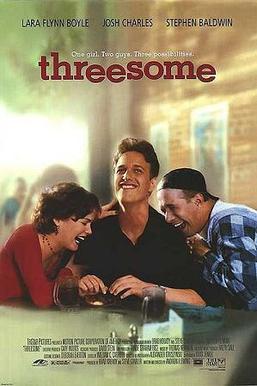
Threesome (1994, directed by Andrew Fleming)


Due to the type of administrative mix-up that always happens in the movie but rarely in real life, a college has assigned female student Alex (Lara Flynn Boyle) to share a dorm room with two males, Eddy (Josh Charles) and Stuart (Stephen Baldwin).  Stuart is an outwardly obnoxious jock while Eddy is a sensitive and gay film student who is obsessed with Jules and Jim.  It does’t take long for Alex to fall in love with Eddy but Eddy is in love with Stuart while Stuart is in love with Alex.  See where this is leading?  The three of them become close friends, to the extent that they actively drive away anyone else who shows any romantic or sexual interest in either one of them.

The title is not a lie.  There is an eventual threesome, though it’s a very tastefully shot threesome and it only happens once.  After all, this was a studio film, not a late night, direct-to-video Cinemax offering.  Unfortunately, things fall apart for the roommates after their threesome, as they are forced to reconsider all of their previous feelings towards each other and one of them is driven to a melodramatic breakdown.  The film’s story would work better if we cared about the characters but they’re all so shallowly written (and Eddy’s overwrought narration doesn’t work) that it’s hard to care about them.  They just come across as being three snobs.  Eddy may be obsessed with Jules and Jim but he doesn’t seem to have learned much from watching the movie.  As for the cast, Josh Charles and Lara Flynn Boyle are both likable but too bland to really hold your attention.  (There’s a reason why both of these actors found more success on television than on the big screen.)  Stephen Baldwin actually brings some depth to his character though I doubt he spends much time bragging about starring in a film called Threesome nowadays.

Threesome is a film that seems to think that it has much to say but it’s impossible for me to think about it without being reminded of the Menage a Trois episode of Seinfeld and Jerry’s plaintive declaration of, “I’m not an orgy guy!”  With those five words, Seinfeld said more about the reality of threesomes than Threesome does in its entire 93 minute running time.