Music Video of the Day: A Song for Donny Hathaway by The Whispers (1979, directed by ????)


With this song, The Whispers paid tribute to the legendary soul singer Donny Hathaway, who was best-known for songs like “The Ghetto”, “This Christmas”, “Someday We’ll All Be Free”, and “Little Ghetto Boy” and for his collaborations with Roberta Flack. Tragically, Hathaway, who struggled with depression and who was diagnosed as being paranoid schizophrenic in 1971, committed suicide in 1979 but his music and influence lives on. The Whispers were one of the many groups to pay tribute to Hathaway after his death.

This video is a simple performance clip, as the majority of music videos were in the days before MTV.

Enjoy!

Music Video of the Day: Night and Day by U2 (1990, directed by Wim Wenders)


Since I’ve already shared the videos that were made for Annie Lennox’s and David Byrne’s contributions to the Red, Hot + Blue compilation album, it seems appropriate to share the best known cover and video to come out of that project. With Night and Day, U2 not only provide their own spin on Cole Porter’s best-known song but they also introduced the sound that would define them throughout the 90s. This was the first song of U2’s post-Joshua Tree era.

The video was directed by the German director, Wim Wenders. U2 would subsequently provide songs for Wenders’s Until The End Of The World and Far Away So Close. Bono would also produce and provide the story for The Million Dollar Hotel, one of Wenders’s less regarded films.

Enjoy!

Music Video of the Day: Don’t Fence Me In by David Byrne (1990, directed by David Byrne)


This cover of Cole Porter’s Don’t Fence Me In appeared on Red Hot + Blue, the same compilation album that featured Annie Lennox’s cover of Ev’Ry Time We Say Goodbye. Along with singing the song in his own unforgettable style, Byrne also directed the music video that was used to promote it. Byrne’s cover and the video both turn Porter’s song into an anthem of tolerance and liberation.

Of course, before Byrne covered the song, Don’t Fence Me In was made famous by one of the original singing cowboys, Roy Rogers. Rogers appears in archival footage throughout this video. The song itself was originally written ten years before Rogers first sang it in the 1944 film, Hollywood Canteen. Porter originally wrote the song from a never-produced western that was going to be called Adios Argentina. Porter based the lyrics on a poem that was written by Montana engineer Robert Fletcher. Fletcher was originally only paid $250 for his contribution to Don’t Fence Me In. A decade later, after Rogers made the song a hit, Fletcher was able to negotiate with Porter’s estate to get a co-writer credit and to also collect royalties on the song.

Enjoy!

Music Video of the Day: Ev’ry Time We Say Goodbye by Annie Lennox (1990, directed by Ed Lachman)


Annie Lennox sings Cole Porter!

Actually, Annie Lennox wasn’t the only rock star singing Cole Porter in 1990. She was one of 20 artists to appear on the compilation album, Red Hot + Blue. The album was the first to be put together by the Red Hot Organization and the money made from it was donated to the battle against AIDS.

Cole Porter originally wrote the song in 1944. The song, which quickly became a jazz standard, is sung from the point of view of someone who is happy when they are with their lover but who, at the same time, is heartbroken when they’re separated. Lennox used her cover of the song to pay tribute to the filmmaker Derek Jarman, who would die of AIDS-related illness in 1994. In fact, Jarman was originally meant to direct the video but, when he became too ill, he was replaced by Ed Lachman. The home movies that appear in the video are of Jarman as a child.

Music Video of the Day: The Drowned Girl by David Bowie (1982, directed by David Mallet)


I was surprised to discover this when I went searching for David Bowie music videos. This is a video that Bowie did for his version of Kurt Weill’s The Drowned Girl. This was included as a part of the Baal EP, which was released to coincide with Bowie appearing in a BBC production of the Bertolt Brecht’s play of the same name. The play is about an irresponsible womanizer whose actions lead to all sorts of tragedy. In The Drowned Girl, the play’s main character (played, of course, by Bowie) sings about a former lover who committed suicide after her left her.

This video was directed by David Mallet and was filmed at the same time as the video for Bowie’s version of Wild Is The Wind. This video was apparently shot in Berlin and the black backdrop and stark lighting was meant to reflect the style of Bowie’s Isolar-1976 Tour.

Enjoy!

Music Video of the Day: Addicted to Love by Tina Turner (1988, directed by ????)


Since I shared the video of Kim Gordon’s cover of this Robert Palmer song yesterday, it only seem right to now share Tina Turner’s version. Kim did her video at a make-your-own-video booth in Macy’s. Tina did her version before a sell-out crowd in Europe. I like both versions.

Enjoy!

Music Video of the Day: Addicted to Love by Ciccone Youth (1988, directed by Kim Gordon)


Yes, this is a cover of the Robert Palmer song that, for many, epitomizes the 80s. The music video for Ciccone Youth’s version probably cost considerably less than the video for the original Palmer version. Back in the 80s, stores often had booths where, for $19.99, you could stand in front of a blue screen and lip sync along to a song while images were projected behind you. This video was shot at Macy’s. Palmer performed his song with a group of models playing his backup band. Kim Gordon performed the song in front of what appeared to be a documentary about the war in Vietnam. As for Gordon’s vocals, they were recorded in a karaoke booth.

Ciccone Youth was a side project of Sonic Youth members Steve Shelley, Kim Gordon, Lee Ranaldo and Thurston Moore, featuring contributions from Minutemen/Firehose member Mike Watt and J Mascis of Dinosaur Jr. They released one album in 1988, The Whitey Album. Ciccone Youth were not the only artist to cover Addicted to Love in 1988. Tina Turner was doing the same thing and she even released her own video of the song at roughly the same time that Kim Gordon was dancing at Macy’s.

Enjoy!

The Angst of Replaying Red Dead Redemption II


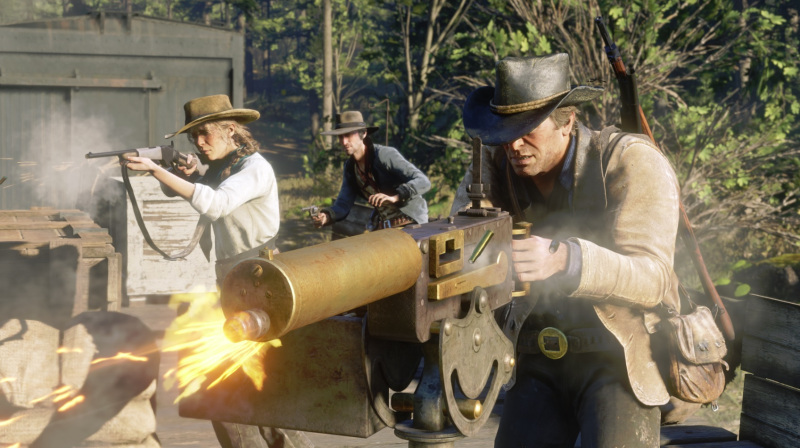
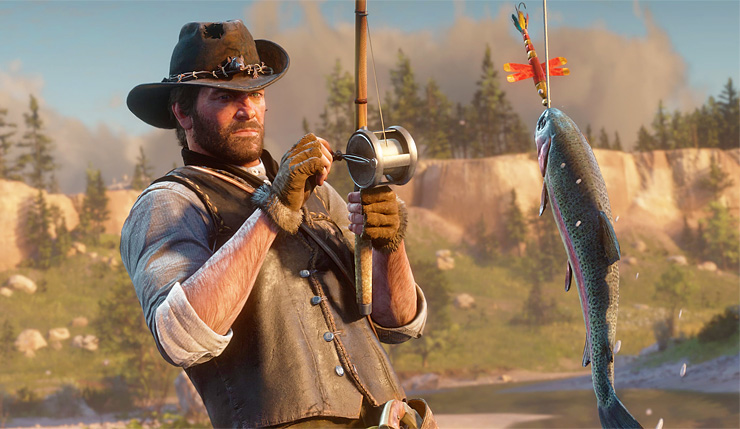
Last month, I started replaying Red Dead Redemption II and it’s been nice to be reminded of just how good this game actually is. I usually only play for an hour or two a night. Since I already finished the game the first time I played, I’m taking my time with this replay and I’m trying to enjoy all of the little details that I originally missed. After a long day at work, it’s relaxing to come home and just spend a while riding my horse through the countryside. I might stop to do some hunting or just to relax at camp. Red Dead Redemption II is a thoroughly immersive world and one of the great things about the game is just how easy it is to lose yourself in the world that it creates. Even if you don’t feel like doing the missions or following the game’s storyline, you can still just ride out and enjoy the scenery. Rediscovering the visual beauty of Red Dead Redemption II has been a wonderful experience.

At the same time, it has also been downright traumatic to rediscover just how easy it is to accidentally shoot people.

From the minute I started my replay, I promised myself that I was going to play Arthur Morgan as being a good guy. He may be an outlaw but he’s not a cold-blooded murderer. At least, that’s what I wanted to believe. Unlike the first I played, I wasn’t going to rob any strangers unless it was absolutely necessary. I wasn’t going to shoot any helpful shopkeepers. I was going to help everyone who needed help. Though the game may require me to play an outlaw, my goal was to promote peace in the wild west and to only fight when I had no other choice.

It hasn’t worked out that way, though.

It’s not intentional. It’s just that it’s very easy to push the wrong button on your controller. Over the past few weeks, there have been so many times when I’ve thought I was pushing the “greet” button just to discover that I had accidentally pushed the open fire button. Just last night, I entered a cabin. The old woman inside the cabin asked me if I was delivering her groceries. I walked up to her, fully intending on telling her that I was the deliveryman and I’d help her in any way that I could. Instead, I hit the wrong and shot her in the face. I’ve felt bad about it every since. Tragically, it’s not the first time that I’ve shot someone while trying to do the right thing. Accidentally shooting the man who just wanted someone to help find his way back to the town of Strawberry is one of the biggest regrets of my Red Dead Redemption II life. I’ve even gone back and restarted the game a few times because I’ve felt so bad about shooting the wrong person.

The big difference between Red Dead Redemption II and a game like Grand Theft Auto is that when you kill someone in Red Dead Redemption II, they don’t come back. In Grand Theft Auto, you can run over a hundred pedestrians just to find them all resurrected as soon as you turn onto a new street. In Red Dead Redemption II, accidentally shooting the wildlife photographer means that you never see him again. It can be traumatic but, at the same time, it’s also emotionally rewarding when you manage to get through an entire mission without accidentally murdering anyone.

As I said earlier, I’m taking my time with my replay so I’m just wandering my way through Chapter Three right now. I’ve been busy exploring the towns and the countryside. There’s many more chapters and locations to come. Hopefully, I’ll remember to push the right buttons and the violence can finally come to an end.

Music Video of the Day: Far Away Eyes by The Rolling Stones (1978, directed by Michael Lindsay-Hogg)


“You know, when you drive through Bakersfield on a Sunday morning or Sunday evening, all the country music radio stations start broadcasting black gospel services live from LA. And that’s what the song refers to. But the song’s really about driving alone, listening to the radio.”

— Mick Jagger on Far Away Eyes in 1978, to Rolling Stone

The Rolling Stones do country!

Actually, the Stones were always heavily influenced by both the Blues and Country music. This song was written by Keith Richards and Mick Jagger and there’s a bootleg version of Richards singing the lyrics. The official version, with Jagger singing, was the sixth track on the Stones’s 1978 album, Some Girls.

The video, a clip of the Stones performing the song in an intimate studio, was directed by Michael Lindsay-Hogg, who did a number of videos for both the Stones and the Beatles. For instance, Lindsay-Hogg is the credited director on Let It Be.

Enjoy!

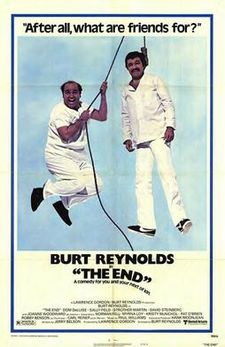
Film Review: The End (1978, directed by Burt Reynolds)


What if you were dying and no one cared?

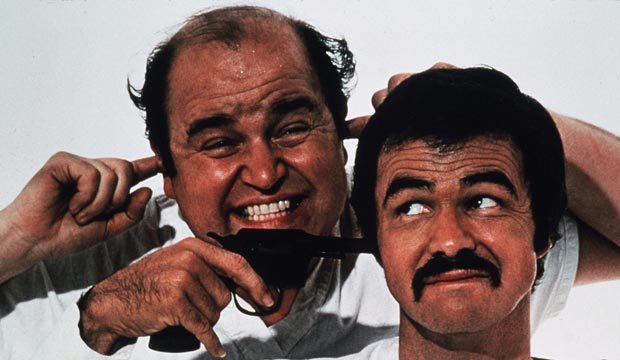
That is the theme of The End, which is probably the darkest film that Burt Reynolds ever starred in, let alone directed. Burt plays Sonny Lawson, a shallow real estate developer who is told that he has a fatal blood disease and that, over the next six months, he is going to die a slow and painful death. After seeking and failing to find comfort with both religion and sex, Sonny decides to kill himself. The only problem is that every time he tries, he fails. He can’t even successfully end things. When he meets an mental patient named Marlon Borunki (Dom DeLuise), he hires the man to murder him. Marlon is determined to get the job done, even if Sonny himself later changes his mind.

Yes, it’s a comedy.

The script for The End was written by Jerry Belson in 1971. Though Belson also worked on the scripts for Spielberg’s Close Encounters of the Third Kind and Always, he was best-known for his work on sitcoms. (Belson was an early collaborator of Garry Marshall’s.) The End was originally written with Woody Allen in mind but when Allen passed on it to concentrate on directing his own movies about death, the script spent five years in limbo. Reynolds later said that, when he eventually came across The End, he knew he had to do it because it was the only script that reflected “my strange sense of comedy.” United Artists was uncertain whether there was much box office potential in a film about a self-centered man dying and they required Reynolds to first make the commercially successful Hooper before they would produce The End.

The End was made for 3 million dollars and it went on to gross 40 million. That the film was a box office success is a testament to the late 70s starpower of Burt Reynolds because it’s hard to think of any other mainstream comedy that goes as much out of its way to alienate the audience as The End does. While watching The End for the first time, most viewers will probably expect two things to happen. First off, Sonny will learn to appreciate life and be a better person. Secondly, it will turn out that his fatal diagnosis was incorrect. Instead, neither of those happen. Sonny is going to die no matter what and he never becomes a better person. What’s more is that he never even shows any real interest in becoming a better person. The film’s signature scene comes when Sonny prays to God and offers to give up all of his money if he survives, just to immediately start backtracking on the amount. It’s funny but it’s also a sign that if you’re looking for traditional Hollywood sentiment, you’re not going to find it here.

Burt not only stared in The End but he also directed it and, as was usually the case whenever he directed a film, the cast is a mix of friends and Hollywood veterans. Sally Field plays Sonny’s flakey, hippie girlfriend while Robby Benson is cast as a young priest who fails to provide Sonny with any spiritual comfort. Joanne Woodward plays his estranged wife and Kristy McNichol plays his daughter. Myrna Loy and Pat O’Brien play his parents. Norman Fell, Carl Reiner, and Strother Martin play various doctors. The movie is stolen by Dom DeLuise, playing the only person who seems to care that Sonny’s dying, if just because it offers him an excuse to kill Sonny before the disease does. DeLuise was a brilliant comedic actor whose talents were often underused in films. The End sets DeLuise free and he gives a totally uninhibited performance.

Despite DeLuise’s performance, The End doesn’t always work as well as it seems like it should. Though Reynolds always said that this film perfectly captured his sense of humor, his direction often seems to be struggling to strike the right balance between comedy and tragedy and, until DeLuise shows up, the movie frequently drags. As a character, the only interesting thing about Sonny is that he’s being played by Burt Reynolds. That is both the film’s main flaw and the film’s biggest strength. Sonny may not be interesting but, because we’re not used to seeing Burt cast as such a self-loathing, self-pitying character, it is interesting to watch a major star so thoroughly reveal all of his fears and insecurities.

If you’re a Burt Reynolds fan, The End is an interesting film, despite all of its flaws. Burt often described this as being one of his favorite and most personal films. It’s a side of Burt Reynolds that few of his other films had the courage to show.