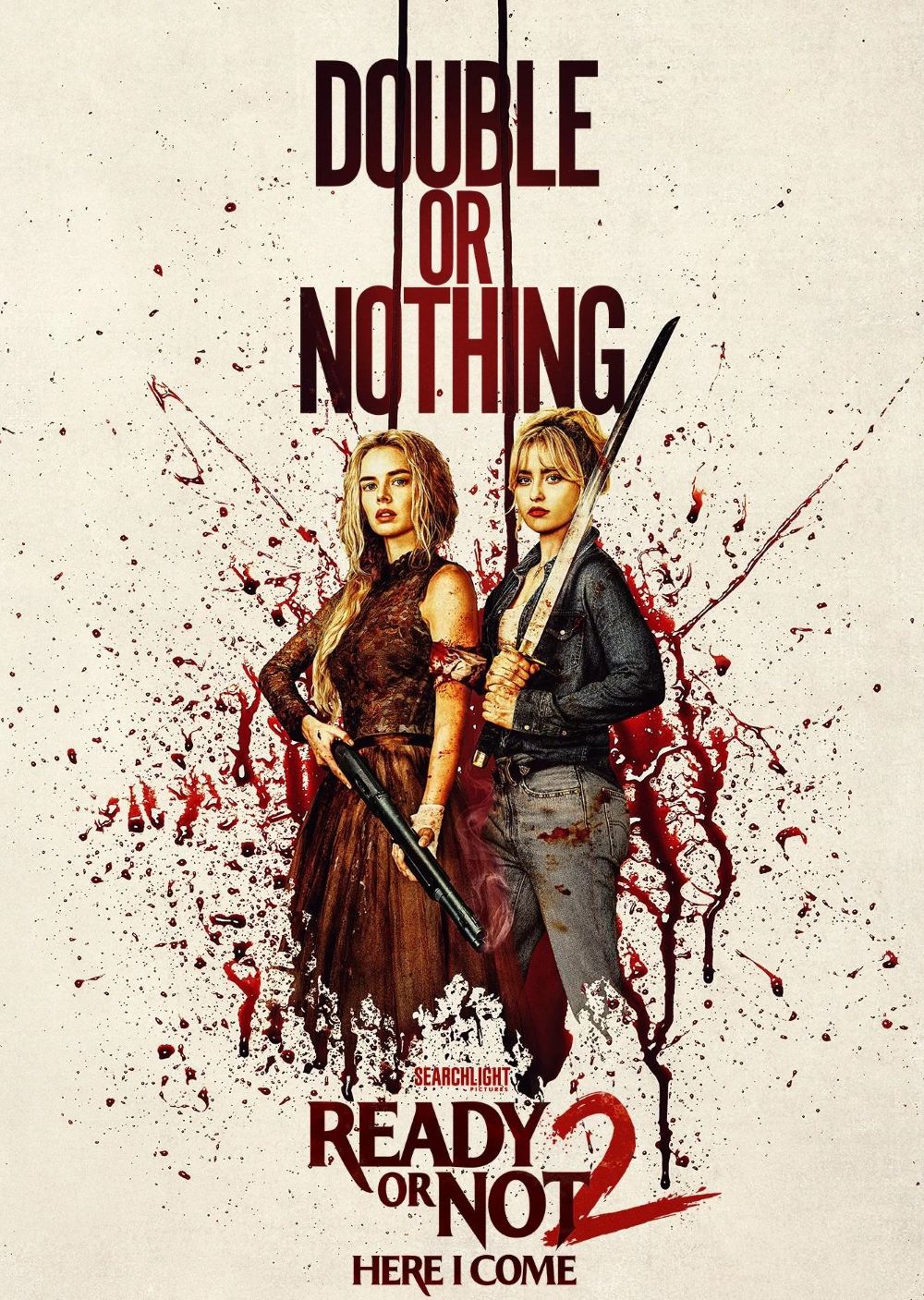
“You call it tradition. I call it rich people practicing murder.” — Grace
Ready or Not 2: Here I Come returns to the savage, high‑class dystopia of the Le Domas bloodline with a more manic, more crowded, and far bloodier version of the original’s “game‑night‑from‑hell” premise. Picking up years after the events of Ready or Not (2019), the film keeps Samara Weaving’s Grace at the center but expands the stakes beyond one family’s cursed estate into a loose oligarchy of ultra‑rich cultists, each with their own warped sense of tradition and entitlement. The result is a horror‑comedy that feels less like a slow‑burn ambush and more like a running, blood‑slicked marathon, where the line between satire and spectacle blurs but rarely collapses.
What distinguishes Ready or Not 2: Here I Come from many sequels is how deliberately it both leans into and pushes past the formula that made the first film such a cult hit. Rather than replay a single night of hide‑and‑seek in a shuttered mansion, this chapter sends Grace and her newly introduced estranged sister Faith (played by a suitably frazzled and sardonic Kathryn Newton) hurtling through multiple estates, country clubs, and private compounds, each governed by its own set of sadistic rules. The “game” is no longer a one‑family ritual but a broader network of wealthy families that have weaponized occult tradition as a way to justify their casual cruelty. This widening of the universe gives the film a more sprawling, almost procedural feel, as if the audience is being dragged through a gauntlet of different flavors of rich‑person depravity.
The script’s decision to pair Grace with another female lead is one of the film’s stronger creative choices. The strained sibling dynamic between Grace and Faith mirrors the original’s examination of family, but through a more grown‑up, emotionally messy lens. Their bickering and reluctant cooperation prevents Grace from simply repeating the same resilient‑final‑girl schtick; instead, she becomes a kind of worn‑out mentor forced to drag someone else into the nightmare she barely survived. The sisters’ chemistry—equal parts snark, vulnerability, and grudging solidarity—stops the film from devolving into pure nihilism and keeps the audience invested in their survival, even when the body count around them threatens to overwhelm the narrative.
Visually, Ready or Not 2 leans harder into its gore‑buff aesthetic than the first film did. The kills are more elaborate, more inventive, and frankly more grotesque, with set‑pieces involving everything from industrial kitchen equipment to ritualized animal sacrifice and spiked pits. Director Matt Bettinelli‑Olpin and Tyler Gillett, collectively known as Radio Silence, understand that the franchise’s appeal lies as much in its darkly comic carnage as in its social commentary, and they lean into that balance with gusto. The camera lingers on the absurdity of seeing millionaires in bespoke suits and designer gowns being dismantled in grotesque, almost slapstick fashion, which heightens the film’s “eat‑the‑rich” subtext without feeling like a lecture. The horror is still visceral, but it’s also frequently absurd, which fits the tone they’ve established since the original.
The escalation of violence, however, is also the film’s most obvious point of tension. Some of the more extreme set‑pieces verge on the gratuitous, and the pacing occasionally stumbles when the movie pauses between massacres to re‑establish lore or introduce new cult families. Not every supporting antagonist lands with the same impact as the original Le Domas clan; a few of the new patriarchs and matriarchs feel more like walking punchlines than genuinely threatening presences. The film compensates by front‑loading its energy with early, high‑impact kills and goofy one‑liners, but there are stretches where the plot feels like it is waiting for the next big set‑piece rather than organically building toward it.
One of the more interesting additions to the cast is Sarah Michelle Gellar, who pops up in a mid‑film role that taps into genre‑fan nostalgia while also deepening the film’s exploration of complicity and corruption. Gellar’s character is not the altruistic hero she personified in earlier horror‑adjacent roles; instead, she embodies a kind of jaded, self‑interested survivor who has learned to weaponize the same systems of privilege that the Le Domas exploited. Her presence calls attention to the cyclical nature of abuse and privilege in the film’s world: evil tendencies don’t disappear with one family’s downfall; they simply migrate to the next generation of the wealthy and powerful. This commentary on systemic rot is not subtle, but it also doesn’t feel out of place in a franchise that has always mixed political anger with slapstick brutality.
Where Ready or Not 2 arguably falters is in its structural confidence. The original film’s strength lay in its tight runtime and single‑location claustrophobia; the sequel’s sprawling geography and ensemble of killers make it feel looser and more episodic. The middle section in particular risks feeling like a series of vignettes tied together more by tone than by forward momentum. Some of the attempted twists and revelations toward the end rush past the audience before they can fully land, and there is at least one late‑stage development that feels less like a surprise and more like a contractual obligation to franchise‑building. The film clearly wants to set up a possible trilogy, but in doing so it occasionally sacrifices the emotional and narrative payoff that would make its closing sequences truly memorable.
Even with these flaws, the core appeal of Ready or Not 2: Here I Come remains intact. Samara Weaving continues to command the screen with a mix of physical toughness and wounded intelligence, and she’s paired here with a credible foil in Kathryn Newton who pushes her character into new emotional territory. The film also maintains the sharply satirical DNA of its predecessor, using its murderous rituals as a funhouse‑mirror reflection of real‑world conversations about wealth, inheritance, and generational trauma. The kills are over‑the‑top, the politics are broad, and the pacing is uneven, but the movie never loses sight of what it wants to be: a darkly comic splatterfest that lets audiences cheer for the underdog while watching the decadent one percent spectacularly implode.
 Through the Shattered Lens