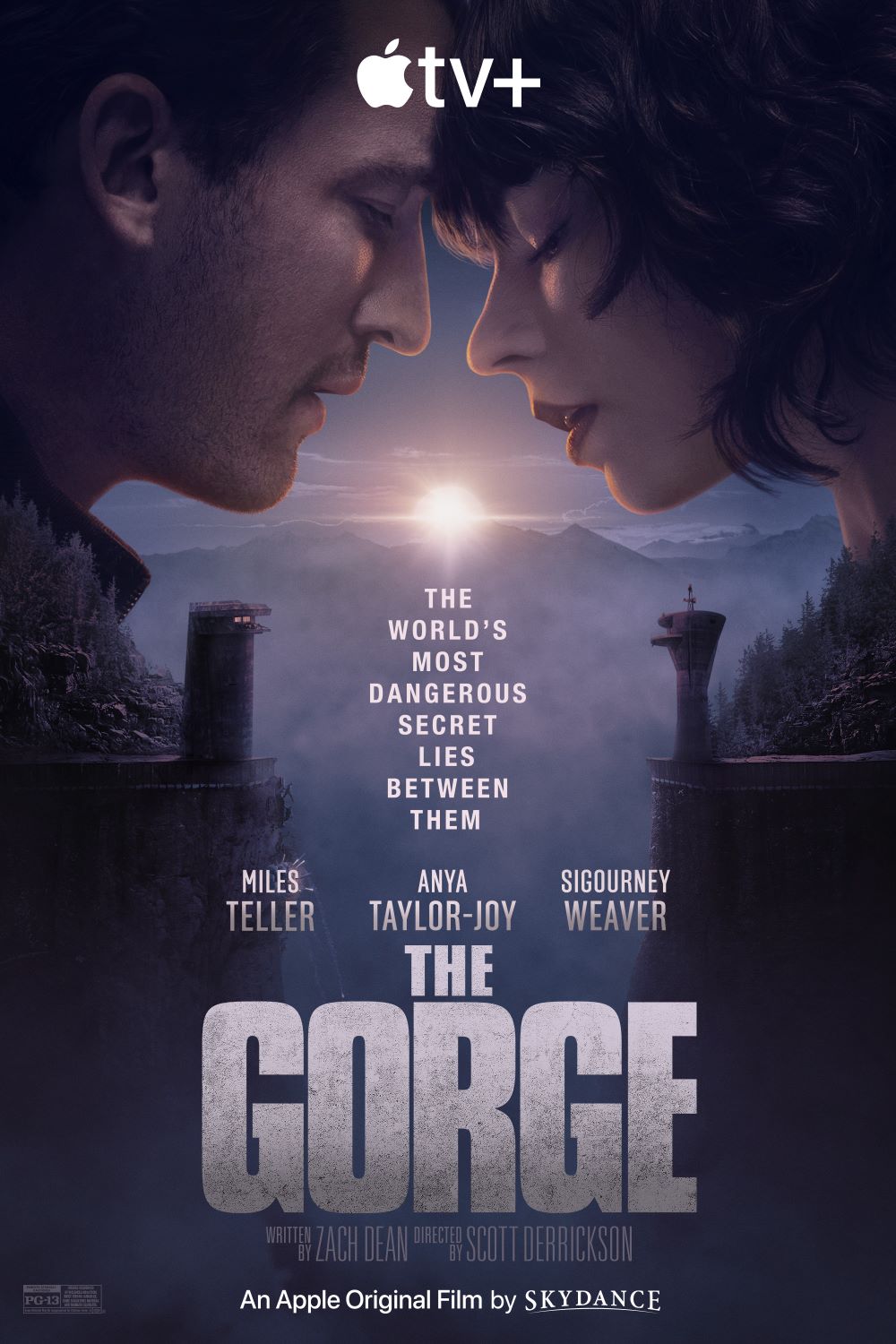
“The theory I think summarizes the situation most succinctly is, the gorge is the door to Hell and we’re standing guard at the gate.” — Jasper “J.D.” Drake
The Gorge delivers a gripping streaming thriller anchored by a fresh premise and strong performances, even if it doesn’t always sustain its early promise. Directed by Scott Derrickson, this Apple TV+ film stars Miles Teller and Anya Taylor-Joy as elite snipers posted on opposite rims of a massive, shadowy chasm, charged with guarding against mysterious dangers rising from its depths. Mixing sci-fi intrigue, budding romance, and horror-tinged action, it hooks you early but shows some cracks later on.
The setup grabs attention right away. Levi Kane (Teller), a haunted ex-Marine sniper, signs on for a year-long solo stint in a high-tech tower overlooking the gorge’s west side—no outside contact allowed, and strict radio silence with whoever’s stationed opposite. Anya Taylor-Joy’s Drasa, a tough Lithuanian operative with Kremlin roots, faces her own isolation on the east rim, wrestling with personal demons tied to her family’s struggles. Trapped in these fortified outposts, they scan the foggy abyss through scopes and monitors, the vast divide amplifying their solitude. Sweeping drone shots make the gorge feel alive and oppressive, a character in itself that looms over every scene.
The film’s strongest stretch comes in the first half, where tension simmers through daily grind broken by fleeting human sparks. Levi copes with PTSD nightmares by scribbling poetry in quiet moments, while Drasa bends rules on her birthday—flashing signs across the void to goad Levi into a long-distance shooting duel. What starts as competitive jabs turns into warm, flirtatious banter, like forbidden notes swapped in a deadly game. Teller brings coiled intensity with an everyman edge, making Levi instantly sympathetic, while Taylor-Joy layers Drasa with fierce independence and subtle vulnerability. Their chemistry bridges the chasm convincingly, nurturing a romance that cuts through the routine. When threats finally breach the surface—nightmarish entities clawing upward—the defense sequences snap to life: precise sniper fire synced with automated turrets and mine blasts, all taut and thrilling.
Derrickson keeps the pace deliberate yet engaging, drawing on isolation vibes from classics but spiking them with sharp combat and emotional beats. Sound design builds dread masterfully—distant rumbles and unnatural cries echoing from below—while the score pivots from pulsing synth menace in fights to softer strains during tender interludes, like Levi’s daring zipline crossover for a candlelit meal from scavenged supplies. A shared poem moment lands with quiet impact, balancing the gunfire without veering into cheese. It’s this blend of intimacy and adrenaline that gives the movie its heart.
The story shifts midway when Levi’s routine relief mission derails spectacularly, pulling both snipers into the gorge’s underbelly for a chaotic fight for survival. What follows cranks up the stakes with bigger set pieces—vehicle chases, mercenary clashes, and desperate ingenuity against escalating horrors—but the momentum dips as exposition rushes in and spectacle overtakes nuance. Some creature designs impress with gritty practical work, though CGI falters in brighter spots, and the human drama gets sidelined by the frenzy. The leads hold it together, capping things with a synchronized shot that unveils hidden tech and forces tough choices. The wrap-up aims for bittersweet punch but ties threads a bit too neatly, dodging bolder risks.
Teller and Taylor-Joy shine as the core duo. Teller charts Levi’s arc from withdrawn loner to committed partner with grounded charisma that tempers the sci-fi weirdness. Taylor-Joy owns every frame as Drasa, her sharp gaze conveying both killer instinct and inner turmoil. Sigourney Weaver’s cameo as a steely handler adds weighty presence, though her role follows a familiar path. The tight cast serves the contained story well, with no fat to trim—brief warnings from predecessors hint at deeper peril without overexplaining.
Visually and technically, The Gorge punches above streaming norms. Derrickson’s flair for genre hybrids—honed on atmospheric horrors—lends moody lighting: hazy green fog in the depths versus sterile tower blues. Action choreography feels authentic, rooted in real stunts for those sniper exchanges, and the gorge’s scale stuns in wide shots. The soundscape lingers, from guttural threat growls to metallic turret whirs. A few nitpicks persist—runtime drags in probe-heavy stretches, and some effects look dated up close—but the craftsmanship stands out.
At its best, the movie teases thoughtful isolation amid global secrecy, but it leans harder into creature chaos and corporate shadows than profound mystery. Romance fans will warm to the leads’ spark, action lovers get solid payoffs, while horror buffs might crave more bite given the PG-13 leash. It promises slow-burn depth yet settles for crowd-pleasing beats, leaving a few gorge secrets hanging just out of reach.
Overall, The Gorge works as a lively genre cocktail, driven by star power and a killer hook. It nods to tight-quarters thrillers with extra heart and hardware, making for engaging viewing despite uneven gears. The leads and atmosphere carry it far enough to recommend for fans of smart popcorn flicks on a chill night.




 Through the Shattered Lens