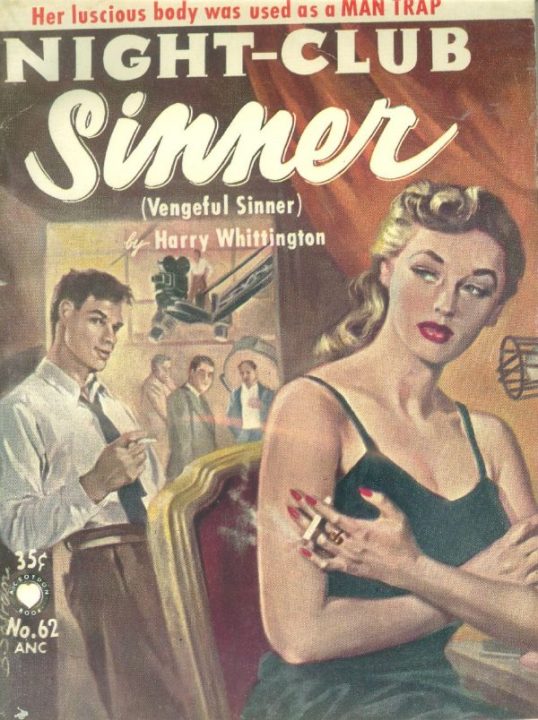
Artist Unknown
Artist Unknown
Enjoy!

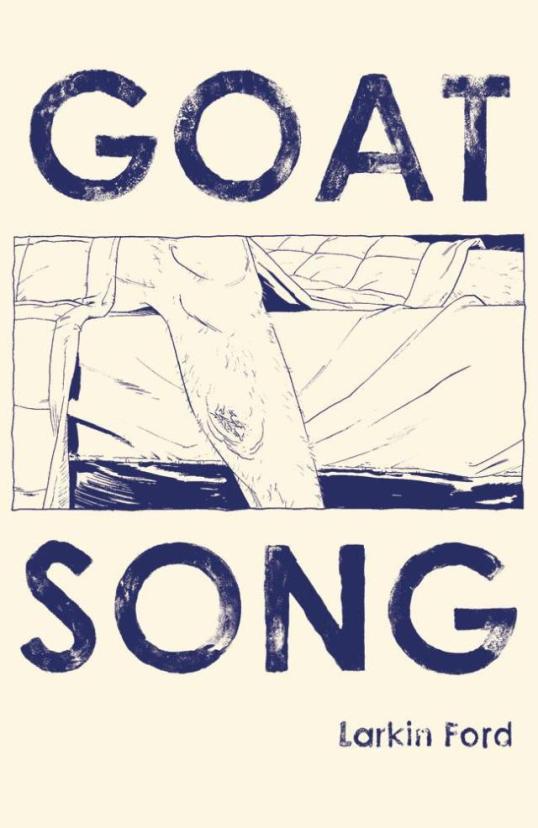
Cartoonist Larkin Ford’s 2018-published Birdcage Bottom Books mini, Goat Song, isn’t just a curious beast in and of itself — it’s also, at least partially, about a curious beast. Who’s brought into the world by an even more curious birth. And if you’re getting the distinct vibe that we’re kind of in Eraserhead territory here, pat yourself on the back because you’re absolutely right.
In purely physical terms, it’s sort of a gorgeous-looking little comic : riso-printed in rich black ink on aesthetically pleasing cream-colored paper stock and featuring coolly intriguing shades of blue on the cover, it’s a suitably raw and unvarnished item to hold in your hand, but it’s quality is also such that it almost borders on the lavish, the overall sensation not being all that unlike riding around a worn and scuffed old Rolex or Omega watch on your wrist. It’s rough around the edges…
View original post 567 more words
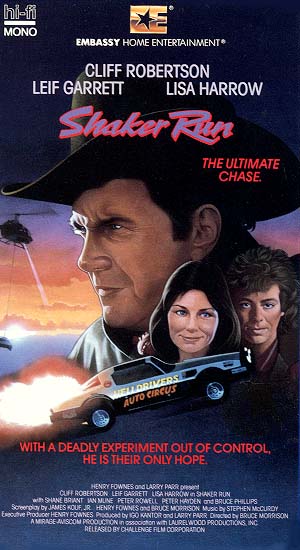 Judd (Cliff Robertson) is an aging stunt driver who has been reduced to doing minor car shows in New Zealand. He’s having trouble paying the bills and his young mechanic, Casey (Leif Garrett, looking like he’s a few days away from checking into rehab), is on him to do something — anything — to bring in some extra cash. The opportunity presents itself when the duo are hired by an enigmatic woman named Christine (Lisa Harrow) to drive across New Zealand with a mysterious package hidden away in their trunk. Christine will be accompanying them on their trip. Sounds simple, right?
The only problem is that Christine is a research scientist who has developed a deadly new virus that she doesn’t want to get into the wrong hands. She fears that the military might want to use it as bioweapon. It turns out that she’s right and no sooner has Judd tapped the accelerator than they’re being chased across New Zealand by different factions, all who want the weapon for themselves.
Usually I love car chase scenes but Shaker Run didn’t really do much for me. Some of the stunts are impressive but there’s also a lot of slow spots, especially at the start of the movie. As I watched the chase scenes, I wondered why, if Christine is trying to sneak the virus out of the country, she would be stupid enough to hire someone who drives an incredibly conspicuous pink race car. It’s not as if it’s going to be difficult for anyone to spot them on the road. As well, one of the biggest chase scenes takes place during the dark of night, making it next to impossible to discern what’s actually going on. The film also features Leif Garrett, giving a performance that’s obnoxious even for him. What’s bad is that Garrett’s character probably could have been removed from the film without it making much difference. If you’re going to put Leif Garrett in your movie, you better have a good reason.
One thing that the movie does have in its favor is Cliff Robertson in the lead role. Robertson was a good actor whose career as a leading man was pretty much topedoed in 1977 when he discovered that David Begelman, who was the head of Columbia Studios, was using Robertson’s name and forging his signature to embezzle money from the studio. Though the studios pressured Robertson to keep quiet, he went to the police and later spoke publicly about the incident. Though Begelman was the one who had committed the crime, Robertson was the one who was subsequently blacklisted. While Begelman paid a fine, did some community service, and remained a member of the Hollywood community, Robertson was blacklisted for five years. When he finally did start appearing in movies again, it was almost always in supporting roles. Shaker Run gave Robertson a rare leading role and, even if the movie isn’t good, Robertson is still good in it.
Unfortunately, even after people finally started to acknowledge that Cliff Robertson was mistreated, it still didn’t do much for his career and he continued to be cast in mostly forgettable movies. Fortunately, before he died in 2011, he did get offered one iconic role and, as a result, a whole new generation of filmgoers got to know him as Spider-Man’s Uncle Ben. If anyone could make you believe that “with great power, comes great responsibility,” it was Cliff Robertson.

by Rudolph Belarski
From 1932 to 1952, the Phantom Detective fought crime and had adventures in his very own pulp magazine. Released shortly after the first issue of The Shadow and a month before the first issue of Doc Savage, The Phantom Detective was the second pulp hero to get his own magazine and also one of the most successful. With a 170 issues, The Phantom Detective had the third-highest number of “official” adventures of any pulp character. (Ahead of him were, again, the Shadow and Doc Savage.)
Much like both the Shadow and the soon-to-be introduced Batman, the Phantom Detective was a playboy by day and a crime fighter by night. Richard Curtis Van Loon may have begun life as a member of the idle rich but, after experiencing the horrors of World War I, he found it difficult to return to his former lifestyle. So, he became the Phantom Detective and used his powers to solve mysteries, fight crime, and protect the public.
Given the magazine’s long run, it’s no surprise that many different artists did covers for The Phantom Detective. Below are just a few covers from his original run. Where known, the artist have been credited.

Artist Unknown

Artist Unknown

by Bertram Glover

by Emmett Watson

by Rudolph Belarski

by Rudolph Belarski

by Rudolph Belarski

by Sam Cherry

Unknown Artist

Unknown Artist

Unknown Artist

Unknown Artist
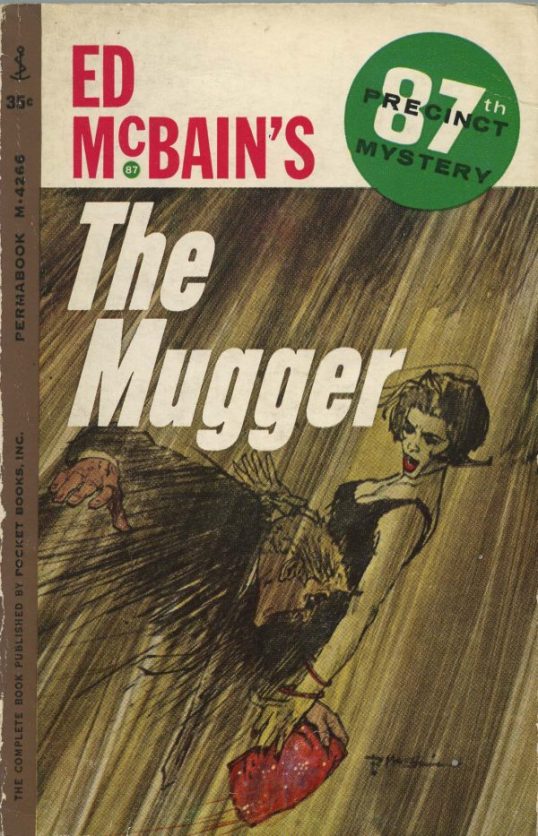
by Robert McGinnis
Enjoy!
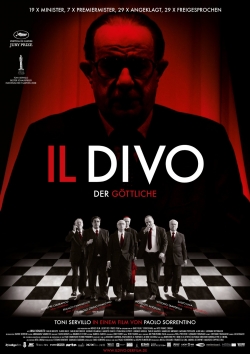
Earlier tonight, as I watched the 2008 Italian film, Il Divo, it occurred to me that political corruption really is an international language.
The film is heavily stylized biopic of Giulio Andreotti. Andreotti (who died five years after the release of this film) is nearly unknown figure in the United States but, in Italy, he spent several decades as a member of the country’s political elite. He was a controversial figure, a man who served several terms as prime minister and was later appointed senator for life but who was also accused of being politically corrupt and affiliated with some of the worst elements of the Mafia. People who threatened to investigate Andreotti or who could have contributed to his downfall had a habit of ending up dead. No sooner has Il Divo begun then we’re treated to a lengthy montage of Andreotti’s associates getting killed in various ways. Some are gunned down. One is found hanging underneath a bridge. One is in an exploding car. The film also opens with a title card that informs us that, over the course of Andreotti’s long career, he was rumored to be one of the leading members of the P2, a masonic lodge that counted among its members some of the most powerful men in Italy. P2 is one of those organizations that conspiracy theorists love to obsess upon.
Directed by Paolo Sorrentino, Il Divo is an Italian film that deals with the life of a prominent Italian political figure and, needless to say, it was made for an Italian audience. For an American viewer like me, it was often impossible not to get confused as I tried to keep up with who was working with who and who had just been killed. In short, this film was made to be viewed by people who already know who Guilo Andreotti was and who are familiar with the details of his long career. It was not made for someone like me who is still struggling to wrap her mind around the fact that Italy has both a prime minister and a president.
But, in the end, it really didn’t matter if I occasionally struggled to follow every twist and turn of Andreotti’s career. Il Divo may technically by a biopic of Giulio Andreotti but, on a larger scale, it’s about how power corrupts and the banality of evil. Those are universal themes and you certainly do not have to be any particular nationality to be familiar with the fact that people who dedicate their lives to accumulating political power often turn out to be, at the very least, willing to cut some ethical corners. I may not have always understood every detail of Il Divo‘s story but I did understand exactly what the film was ultimately about.
As played by Toni Servillo, Andreotti does not come across as being particularly charismatic politician. With his hunched back and his bat-like ears, Andreotti almost seems like a caricature of a corrupt leader. In the film, one immediately sees that Andreotti hasn’t held onto his power because he’s particularly loved by the people. Instead, he’s held onto power by being smarter than those who would try to defeat him. No matter how determined his enemies may be, Andreotti is always just a little bit more ruthless. Andreotti succeeds because he’s willing to do what he has to do to succeed and he’s willing to ally himself with people who have a stake in his continued success. While the film never comes out and says that Andreotti was personally responsible for ordering the deaths of any of his enemies, it does suggest that he purposefully surrounded himself with men who would do anything to keep Andreotti in power, if just to protect their own fiefdoms of corruption.
There’s an early scene in Il Divo where Andreotti’s allies all arrives for a meeting with the prime minister. Most of them are politicians. One of them is a cardinal. Another is simply identified as being a “businessman.” They pull up in their expensive cars and then we watch as they walk across the screen in slow motion, arrogantly confident in the fact that they’re above any and all legal or ethical considerations. They’re all wealthy men and they all seem to understand the importance of keeping Andreotti happy. Carlo Buccirosso plays Paolo Cirino Pomicino, who was one of Andreotti’s chief allies. Buccirosso plays Pomincino as being glibly hyperactive, a cheerfully corrupt ball of energy who seems to be having all of the fun that Andreotti denies himself. Because Andreotti denies himself an interest in anything other than wielding and holding power, he is invulnerable to attack and prosecution but sometimes it’s hard not to wonder if he would have rather have been Pomincino, dancing at parties and sliding across tiled floors.
Indeed, Andreotti begins and ends Il Divo as an enigma. How deeply involved is he in the murders occurring around him? Is he ordering them or is he just turning a blind eye? What makes Andeotti tick? By the end of the film, his main motivation seems to be bitterness. Death may be inevitable but he’s not going to go until everyone else goes first. That is a motivation that many politicians across the world probably share. Corruption is universal.
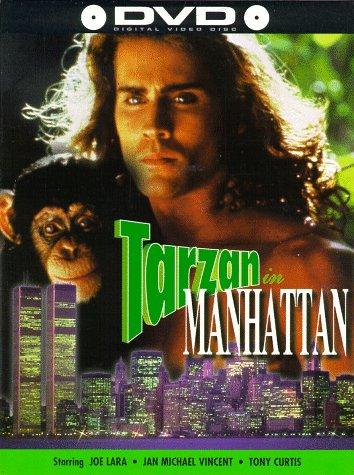
An evil businessman named Brightmore (Jan-Michael Vincent) abducts Cheetah the Chimpanzee from Africa and takes him back to Manhattan. It’s up to Cheetah’s best friend, Tarzan (Joe Lara), to rescue him. Tarzan goes to New York where he meets a cabbie named Jane (Kim Crosby) and her father, a tough private investigator named Archimedes (Tony Curtis). Tarzan is also briefly detained for being in the country illegally but he pulls the bars out of his cell window and escapes. Presumably, so does everyone else in the jail. Way to go, Tarzan.
Lisa and I discovered this playing on the Z-Living Channel last night and we watched it because it was either watch this or start binging the Police Academy films on Netflix. That’s what this damn pandemic is leading to. We know we’re probably going to have to watch the entire Police Academy franchise at some point but we’re trying to put it off. So, we watched Tarzan in Manhattan. Damn you, COVID-19!
It was bad. It was really, really bad. It was obviously meant to be a pilot for television series but I guess it didn’t happen. The timing was off. If Tarzan in Manhattan had been made in the 90s, it probably would have led to a syndicated series that would currently be airing on H&I, next to episodes of Renegade and Sheena. It came out in 1989, though, too early to cash in on the wave of syndicated crap that was unleashed after the success of Baywatch proved that you didn’t have to produce a quality show to find success in syndication. Because it came out too early, we were spared annual Tarzan in Manhattan conventions. Let that sink in and be happy.
Plus, it’s just really, really bad. Did I say that already? It’s true. There’s nothing consistent about Tarzan in Manhattan. It wants to be a comedy, it wants to be a drama. It wants to be an updated version of Tarzan but it still wants him to be confused by the modern world. The movie also doesn’t seem to know if Tarzan is famous or not. It seems like he must be because Brightmore went through a lot of trouble to kidnap his chimpanzee. But, in Manhattan, no one seems to know who he is. The movie also doesn’t get Tarzan’s famous jungle call right, either. This Tarzan just yells, without any special inflection to let the world know that he’s Tarzan. Instead of It’s like he’s not Tarzan at all. Jan-Michael Vincent and Tony Curtis both seem bored while Joe Lara has the right look for Tarzan but not much else to recommend him. The chimpanzee survives without being used to test makeup or whatever it was Brightmore was planning on doing with him so at least the movie has that going for it.
 Through the Shattered Lens