
Unknown Artist
Unknown Artist
“Freedom!”
This video features a prison break. Apparently, the best way to escape from prison is to go straight up. Don’t waste your time with any of that digging stuff. I would actually be in a lot of trouble if I ever had to escape from prison. I’m scared of heights so I can’t really go through the roof. And I have a thing about not getting dirt under my fingernails so I’d have a hard time tunneling through the walls. I guess if I was in prison, I’d have to seduce the warden or something. Either that or I’d just do my time and then write a book about it. Chained Redhead: The Lisa Marie Bowman Story. It would be a best seller, I think.
Among the prisoners escaping from the prison is Hardwell. I’m glad he made it.
Speaking of prison, has anyone watched that 60 Days In show on A&E? By the time this post drops, this season’s finale will have aired. I have to say that this season was a hundred times better than the previous seasons. I’m just a little bit worried about how everyone’s going to adjust to being out of prison. For instance, Abner and David both really got into the whole prison mentality. Anyway, if you didn’t watch this season, you really missed out.
Enjoy!

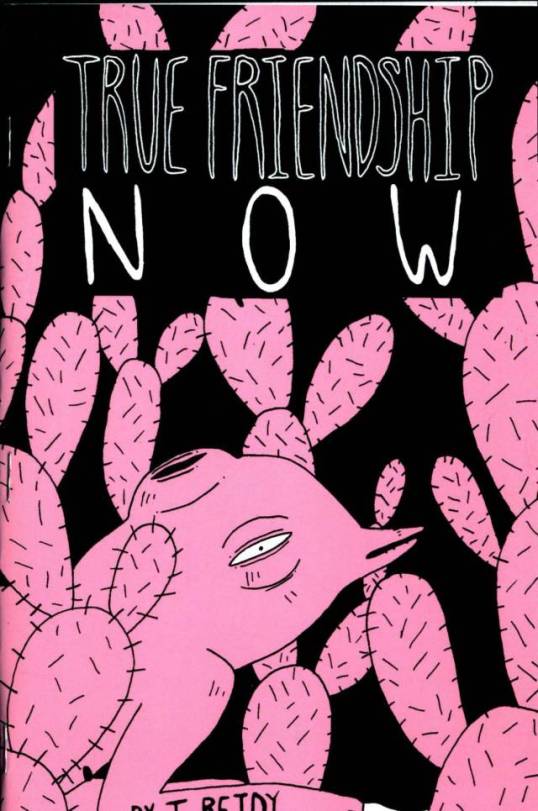
I love a good challenge, but few things have taxed my feeble mind more in recent weeks than figuring out just how the hell I was going to approach this review. The work of Isabel Reidy (or, if you prefer, Izzy True) is always breathtakingly and wondrously open to interpretation, it’s true, but their self-published mini from a few years back, True Friendship Now, is probably the most ambiguous of the bunch : a rumination of sorts on exactly what its title implies, certainly, but also on identity and its boundaries and on absorption, even cross-contamination, of people (or, as is customary with Reidy, creatures), ideas, emotions, realities.
If it sounds like a lot to mull over, rest assured that it is, but that doesn’t mean the book itself is a rough slog by any stretch of the imagination. It’s a brisk enough read on the surface, as…
View original post 526 more words
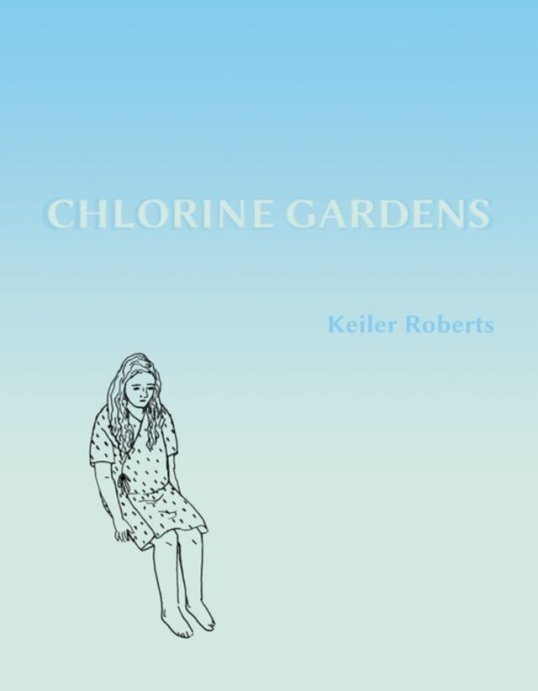
Somewhere in between life’s big moments is hidden, I’m told, its secrets, its power, its richness. The literal “little things that make life worth living.” I humbly submit that no cartoonist around these days captures the often-bittersweet character of those “little” things than Keiler Roberts, and her latest Koyama Press collection, Chlorine Gardens, is the best evidence yet for this assertion.
Not that the book doesn’t chronicle huge, life-changing moments and do so with a kind of quietly vigorous poignancy : the birth of her daughter Xia, a fixture in her strips for years now, is related by means of both “emotional memory” and “just the facts” experiential narrative; her grandfather’s death is told as part rumination on the importance of familial ties, part philosophical treatise on mortality as that which well and truly unites us all; her continuing struggles with bipolar disorder give her ample opportunity to hone…
View original post 495 more words
“…some people say that I am a poet… ”
– Bob Dylan, in the liner notes from the 1965 LP “Bringing It All Back Home”
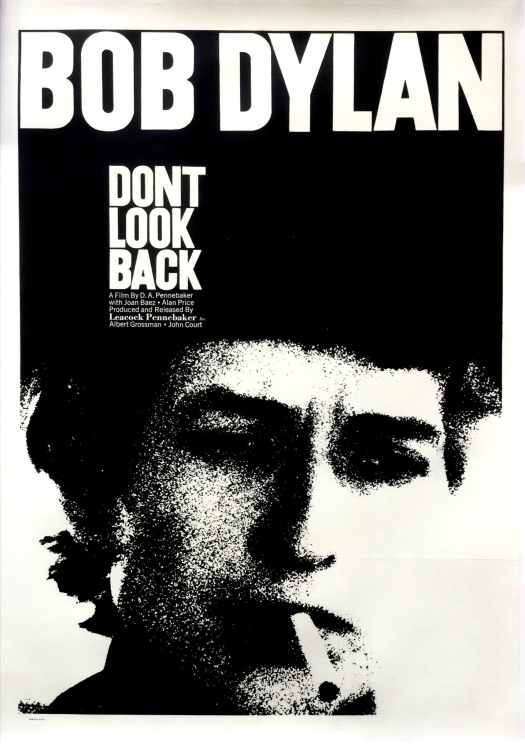
Bob Dylan has been put under the media microscope, bisected, dissected, and trisected for the past six decades, with everyone and their mother trying to interpret the essence behind the enigma. Documentarian D.A. Pennebaker doesn’t go that route in DON”T LOOK BACK; instead, his cinema verite, free form style adheres to the old adage “show, don’t tell”, as he and his camera crew follow the troubadour on his 1965 tour of Great Britain, culminating in his historic set at the Royal Albert Hall. This would be Dylan’s final tour as a solo performer with guitar and harmonica – the album “Bringing It All Back Home” would soon be released, featuring electric and acoustic sides, and later that year he’d plug in with his band…
View original post 531 more words

by Verne Tossey
Would I love you if you killed someone for me?
Well, it would probably depend on who you killed and what the exact circumstances were. For the most part, I’m against killing but I also support self-defense. If you killed someone who was about to kill me, I would at least be appreciative. I can’t guarantee that I’d love you but I’d probably allow you to take me to a movie.
Of course, Alec Benjamin isn’t actually offering to kill anyone in this song. Instead, he’s singing about changing who he is to please the person to whom he is singing. He’s willing to “kill” who he has been and become someone new. That’s really not the best way to go about a relationship, of course.
As for the video, it’s got a nicely ominous atmosphere. A truck stop is always a good place to have an existential crisis.
Enjoy!
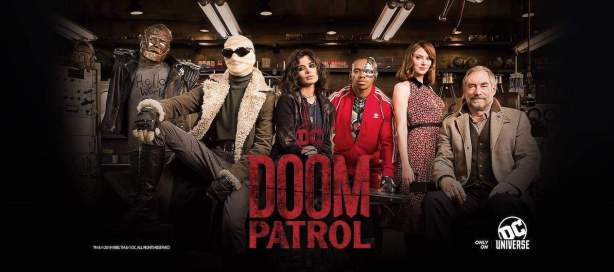
Three episodes in, the DC Universe streaming television series Doom Patrol is proving to be a genuine amalgamation : yeah, the Grant Morrison/Richard Case era of the comic is still the primary “source material,” but more and more the Arnold Drake/Bruno Premiani influence is being felt, and there’s plenty here that’s altogether new, as well, making this show that rarest of rare things : one where you literally never know what’s going to happen.
The most recent installment, “Puppet Patrol,” is probably the farthest “step out of the nest” yet — for both the characters in Tamara Becher and Tom Farrell’s razor-sharp script, and for the program in a more general, thematic sense. With Timothy Dalton’s Chief missing and a localized search proving fruitless (there’s a surreal and hilarious scene centered around Diane Guerrero’s “Crazy” Jane kicking off the episode that drives this point home with some bloody laughs)…
View original post 570 more words
“Is it okay to still listen to the music of Michael Jackson?”
Over the past few days, I’ve seen many different variations of that headline. The Guardian asked, “Can We Still Listen To Michael Jackson?” From Slate: “Will Michael Jackson songs still play at weddings? We asked three DJs.” And, of course, Entertainment Weekly chimed in with: “Can we still listen to Michael Jackson’s music after HBO doc Leaving Neverland?” As far as I know, the Guardian has yet to accuse Entertainment Weekly of headline plagiarism. That’s how seriously this question is being considered.
Fortunately, for me, it’s not a question that I have to answer. Michael Jackson’s music has never been an important part of my life. All of the songs and albums that people rave about — Thriller, Bad, that song about the rat — were all pretty much before my time. Usually, whenever I have heard any of those so-called classics, my usual reaction has been that 1) they’re ludicrously overproduced and 2) they tend to drag on forever. (Seriously, there’s no reason to ask Annie if she’s okay that many times.) Some people grew up with the idea of Michael Jackson being the King of Pop and a musical innovator. I grew up with the idea of Michael Jackson being a rather frightening eccentric who didn’t appear to have a nose and who wrote songs about how unfair it was that the world wouldn’t accept that he just really, really enjoyed the company of children. Since neither Jackson nor his music have ever been an important part of my life, it’s rather easy for me to shrug and say, “Sure, let us never hear his music again.”
Still, there are many people debating the question of whether or not it’s time to cancel the legacy of Michael Jackson. That’s because of Leaving Neverland, a 4-hour documentary that premiered at Sundance and which recently aired on HBO. Leaving Neverland deals with two men — choreographer Wade Robson and former actor Jimmy Safechuck — who claim that they were both sexually abused by Michael Jackson as children. Interviewed separately, both Robson and Safechuck tell nearly identical stories about first meeting Jackson, being invited into the sanctuary of Jackson’s Neverland, and eventually being brainwashed, abused, and eventually abandoned by Jackson. It’s not just that Robson and Safechuck both separately tell the same story. It’s also that the details will be familiar to anyone who has ever been abused. The grooming. The manipulation. The thrill of sharing a secret eventually giving way to the guilt of feeling that you’re somehow at fault. And, of course, the combination of fear and denial that both Robson and Safechuck say initially caused them to lie and deny having been abused by Jackson. Both men talk about how Jackson used their own broken families to control them, suggesting that only he understood what they were going through and that they were only truly safe when they were with him. Jimmy Safechuck, in particular, speaks in the haunted manner and nervous cadences of a survivor. Their stories are frequently harrowing and, watching the documentary, one can understand why counselors were on hand for the Sundance showing.
That said, those who have complained that Leaving Neverland is a very one-sided affair do have a point. (To see what many of Michael Jackson’s supporters have to say about the men and their stories, check out #mjinnocent on twitter.) Leaving Neverland is very much a product of our current cancel culture. From the start it clearly chooses a side and, for four hours, it focuses only on that side. Far more attention is paid to the civil suit that Jackson settled out of court than the criminal trial in which Jackson was acquitted. Much has been made on twitter about inconsistencies in Safechuck and Robson’s stories. Yet, are those inconsistencies the result of an intentional attempt to subvert the truth or are they the result of the trauma that the two men suffered at the hands of their abuser? When I checked in on twitter during the documentary’s airing, it was fascinating to watch as the two camps debated who should be cancelled, Michael Jackson for being accused of pedophilia or Wade Robson for saying that Jackson’s hair felt like a brillo pad.
https://twitter.com/morgandallasx/status/1103422069495250950
Ultimately, Leaving Neverland is a portrait of the power of fame. One imagines that if a stranger had approached the mothers of Wade Robson and Jimmy Safechuck and said that he wanted to spend a weekend sleeping in the same bed as their sons, the mothers would have a very different response than they did when Michael Jackson did essentially just that. For all the red flags to be found in Jackson’s public behavior, he was often dismissed as just being an eccentric artist, a harmless Peter Pan-like figure. (You have to wonder if there was no one in his camp who was willing to say, “Y’know, Michael, maybe you should stop being photographed with little boys for a while.”) One of the more interesting things about the documentary is to see how quickly Jackson recovered from the 1993 abuse allegations. The same reporters who very gravely report the allegations about Jackson in ’93 are later seen glibly referring to Jackson as being the “king of pop,” just a few years later.
Leaving Neverland is a powerful documentary but I doubt it will change anyone’s mind. That’s one of the dangers that comes from picking a side as deliberately and unapologetically as this documentary does. Your argument may be great but only those who agree with you are going to listen. Those who support Jackson will see it as being a hit piece. Those who believe Jackson was guilty will see the documentary as being validation. Ultimately, whether or not it’s still okay to listen to Michael Jackson’s music is a decision that only you can make for yourself.

by George Ziel

 Through the Shattered Lens