Italian Horror Showcase: City of the Living Dead (dir by Lucio Fulci)


In New York City, a group of people sit around a table, holding a seance.  One of them, a woman named Mary (Catriona MacColl) has a vision.  She sees a sickly, hollow-cheeked priest walking through a cemetery.  She watches as he hangs himself and, as the priest dangles from a tree branch, Mary lets out a piercing scream and collapses to the floor.  The police are called and they promptly declare that Mary has died.  Later, while a hard-boiled reporter named Peter Bell (Christopher George) watches as two grave-diggers walk away from her half-buried coffin, he hears something coming from the grave.  From insider her coffin, Mary is screaming and struggling to get out!

Peter grabs a pickax and smashes it down into the coffin.  Peter may be trying to free her but what he doesn’t realize is that, with each blow of the pickax, he comes dangerously close to hitting Mary in the face.  Somehow, Peter manages to avoid killing Mary.  Once he gets her out of the coffin, Peter and Mary go and see a medium to try to figure out the meaning behind Mary’s previous vision.

What they don’t discuss is why or, for that matter, how everyone was convinced that Mary was dead for at least a day or two.  Mary doesn’t mention that Peter nearly killed her with the pickax.  In fact, for two people who have just met under the strangest and most disturbing of circumstances, Peter and Mary seem to be getting along famously.  For that matter, they don’t appear to be too surprised when the medium informs them Mary’s vision indicated that the dead will soon be entering the world of the living.

And so begins Lucio Fulci’s wonderfully odd and surreal City of the Living Dead.  Reading the paragraphs above, you might think that I was criticizing City of the Living Dead but nothing could be further from the truth.  From the start, Fulci establishes that City of the Living Dead is going to fully embrace its own unique aesthetic.

The majority of City of the Living Dead takes place in a small town with the name of Dunwich, a name that immediately (and, I believe, intentionally) brings to mind the writing of H.P. Lovecraft.  Dunwich is a town that always seems to be covered in fog.  At the local bar, men talk about the recent suicide of Father Thomas and they discuss what to do about Bob (Giovanni Lombardo Radice), who the majority of them believe to be a a pervert.  Meanwhile, Bob comes across an inflatable sex doll in a deserted warehouse and, for the most part, just tries to stay out of everyone’s way.

(Bob was one of Radice’s first roles and, along with his turn as David Hess’s sidekick in The House On The Edge of the Park, the one that many fans of Italian horror continue to associate him with.  It’s a testament to Radice’s talent that he could make even a creepy character like Bob sympathetic.)

Even without the presence of the living dead, Dunwich doesn’t seem like the ideal place to live.  A greedy morgue attendant attempts to steal a dead woman’s jewelry.  A psychiatrist named Gerry (Carlo de Mejo) struggles to calm the nerves of his patient, Sandra (Janet Agren).  At one point, one man gets so angry with another that he drills a hole in his head.  That’s Dunwich, for you.  Who needs the dead when you’re surrounded by the worst of the living?

Speaking of the dead, that dead priest is still wandering around town.  When he comes across two teenagers making out in a jeep, he rips open the boy’s head while the girl bleeds from her eyes and proceeds to vomit up her intestines.  (Somewhat inevitably, the boy is played by Michele Soavi who, before launching his own acclaimed directing career, always seemed to die in films like this.  Even more inevitably, the girl is played Daniela Doria, who appeared in four Fulci films and suffered a terrible fate in every single one of them.)

By the time that Peter and Mary actually reach the town, the dead are already moving through the fog while storms of maggots crash through windows.  Even the sight of a seemingly innocent child running towards the camera leads to the sound of people screaming off-screen….

Even though it’s actually one of Fulci’s more straight-forward films (i.e., a character says that Dunwich is going to be overrun by zombies and then Dunwich actually is overrun by zombies), it still plays out like a particularly intense dream.  From the fog-shrouded visuals to the often odd dialogue, City of the Living Dead is a film that plays out according to its own unique logic.  The film’s surreal atmosphere may have partially been the result of a rushed production schedule but it also serves to suggest that, as a result of the priest’s suicide, the nature of reality itself has changed.

City of the Living Dead is not a film for everyone.  If I was introducing someone to Fulci for the first time, I would probably have them watch Zombi 2The Black Cat and Lizard In A Woman’s Skin long before I even suggested they take a look at City of the Living Dead.  That City of the Living Dead is a gory film should come as no surprise.  That was one of Fulci’s trademarks, after all.  Instead, what makes City of the Living Dead a difficult viewing experience for some is just how bleak the film truly is.  Even before the living dead arrive, Dunwich is a town the seems to epitomize the worst instincts of humanity.  There’s a darkness at the heart of the City of the Living Dead and it has nothing to do with zombies.

First released in 1980, City of the Living Dead is generally considered to be the first part of Fulci’s Beyond trilogy.  Catriona MacColl, who gives such a good performance here, appeared in the film’s two follow-ups, The Beyond and The House By The Cemetery.  (MacColl played a different character in each film.)  With each film, Fulci’s vision grew more and more surreal until eventually, he seemed fully prepared to reject the idea of narrative coherence all together.

Though initially dismissed by critics, The Beyond trilogy is today celebrated as one of the greatest achievements in the history of Italian horror.  City of the Living Dead is probably the most narratively coherent film in the trilogy, even if its ending raises more questions than it answers.  Personally, I love the ending of City of the Living Dead, even though it was apparently a last-minute decision.  (According to Wikipedia — so take this with a grain of salt — someone spilled coffee on the original work print of the ending, which led to Fulci having to improvise.)  It’s an ending that suggests that not only has the film broken apart but that the world is shattering right along with it.  In the end, the world falls apart not with a bang but with one long scream.


4 Shots From 4 Collegiate Slasher Films: Final Exam, The Dorm That Dripped Blood, Pieces, The House on Sorority Row


4 Shots From 4 Films is just what it says it is, 4 shots from 4 of our favorite films. As opposed to the reviews and recaps that we usually post, 4 Shots From 4 Films lets the visuals do the talking.

Many great horror films have taken place in a college setting.  Then again, so have many, many bad ones.  In honor of all of those films, here are….

4 Shots From 4 Collegiate Slasher Films

Final Exam (1981, dir by Jimmy Huston)

The Dorm That Dripped Blood (1982, dir by Stephen Carpenter and Jeffrey Obrow)

Pieces (1983, dir by J. Piquer Simon)

The House on Sorority Row (1983, dir by Mark Rosman)

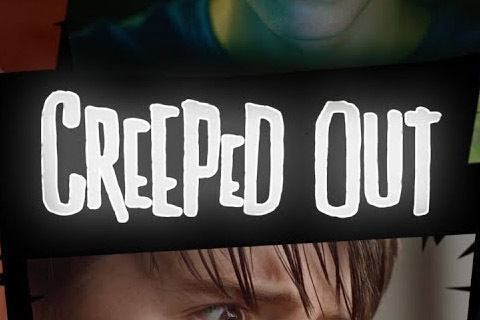
Creeped Out, S1E1, Marti, Review by Case Wright


co3

Creeped Out is a Netflix release that really isn’t.  I have noticed that Netflix will call something an original series even though they just bought the rights.  This show was originally produced by CBBC, explaining why the second episode has very hard to understand British accents.  I checked Bruce McDonald’s IMDB and yes…he’s english and wrote for the Eastenders.  Eastenders or EastEnders (sp?) is show that I believe is about poor people in London or something…I’m not investigating anymore than that.

I watched the first episode Marti with my girls (7,9).  They were quite scared by the opening and one other scene that I will get to later.  The show is a lot like the 90s show The Outer Limits.  It has a lot of spooky and technology themes that teach a morality or cautionary tale.  I was primed to like this show because I loved the Outer Limits and one of the writers is really nice: Melinda Snodgrass (follow her on twitter).

The story opens with Kim.  Kim is a pretty girl in high school who none of the boys pay attention to because that actually happens in real life.  She has nerdy friend that also is a pariah for no particular reason.  Kim is forced to hang out with her loser friend and pine for a boy who looks like Justin Bieber.  She gets a new phone and pays for it somehow.  This phone is indestructible and self-aware.

The phone’s AI calls himself Marti.  Marti is really really creepy.  He works autonomously to make Kim popular and succeeds.  Kim gets the attention of the cool kids, including Bieber.  Just when Bieber is about to go out with her, in true Lifetime MOW fashion, Marti reveals himself to be a jealous psycho boyfriend.  He threatens to destroy Kim’s new found popularity unless she agrees to be only his.  YIKES.  When Kim gets fed up, she tries to destroy the phone, it doesn’t work.  Kim tries to call customer service and a woman answer who slowly takes Marti’s side.  Then, the voice switched to Marti’s voice and my daughters both screamed.  They didn’t understand why fully it was so scary, but I finished the show alone.

Marti blackmails Kim to take him to the prom and she agrees.  It’s really creepy.  She eventually defeats Marti, but he destroys her popularity.  She entombs Marti in cement, but then considers releasing him six months later because she really liked being popular.

The show had a real Outer Limits vibe and played upon human weakness and need to be loved.  There’s always been the morality tale of giving up your soul for fame, but this is more basic.  Kim wants to be loved and our technology has never made us more isolated from real love.  Marti’s popularity is twitter popularity: fake.  Marti gave her multiple friendships that were ended as quickly as they began like muting or blocking someone.  On the other hand, Kim’s nerdy friend took the good with the bad and continued to love Kim.  It spoke to dependence and isolation because of technology and our total dependence upon instant love.


Horror Film Review: Happy Death Day (dir by Christopher B. Landon)


So, imagine this.

You’re a college student.  You’re a member of a sorority.  You start your day by waking up in a stranger’s bed, with a hangover.  When you walk across campus, you blow off the girl trying to get you to sign her anti-climate change petition.  When you get back to your sorority house, you’re rude to her roommate and refuse to eat the birthday cupcake that she made for you.  You body shame a girl at lunch.  You’re sleeping with one of your professors.  You’re rude to your father.  You’re going to a party.

Oh!  And did I mention that you’re in a slasher film and that there’s a really creepy figure wearing a baby mask who is following you around?

Seriously, you are so dead.

That’s the situation that Theresa “Tree” Gelbman (Jessica Rothe) finds herself in 2017’s Happy Death Day.  It’s her birthday and, unfortunately, she’s murdered at the end of it.  Of course, if you’ve ever seen in a slasher film, it’s not a shock when Tree dies.  She’s the quintessential self-centered girl who always gets killed in these type of movies.

(For the record, I would probably die within the first ten minutes of any slasher film.)

However, in Tree’s case, she gets another chance.  And then another one after that.  And then, another one after that… every night, Tree dies.  Every morning, Tree wakes up in the dorm room of Carter Davis (Israel Broussard) and she has to relive the last day of her life all over again.

To the film’s credit, it doesn’t take long for Tree to realize that she’s in a time loop.  (Also, to the film’s credit, Carter specifically points out that Tree’s story sounds exactly like the plot of Groundhog Day.  “What’s that?” Tree asks.  Carter explains that it’s a film with Bill Murray.  “Who’s Bill Murray?” Tree replies.)  Once Tree figures out that she’s going to have to keep living the same day over and over again, she sets out trying not to die.  She doesn’t go to the party but that just means that the killer comes to her.  She tries to spend a day barricaded in her dorm room, just to find that the killer is hiding in a corner.  She follows the various suspects around as they go about their day.  It seems like no matter what she does, she can’t keep the killer from catching her.

On the plus side, as a result of having to deal with the same crap over and over again, she does become a better person.  She’s less rude and condescending.  She grows more confident in herself and stops worrying so much about what everyone else is going to think about her.  Of course, becoming a better person isn’t going to do her much good if she keeps dying every night….

Happy Death Day is a clever combination of horror and comedy.  It’s a movie that’s smart enough not take itself too seriously.  Even when Tree becomes a nicer person, both the character and the film retain their sarcastic edge.  Even when she learns to face the world with positivity and happiness, the film seems to be gently mocking the ease by which film characters can go from being self-centered to thoroughly altruistic.  Meanwhile, the killer may be frightening but again, the film mines plenty of dark humor from the character’s pure determination.  No matter Tree does, that killer eventually shows up.

It’s a precarious balancing act, trying to be scary and funny at the same time.  Fortunately, Happy Death Day benefits from a clever script and a good lead performance from Jessica Rothe.  Rothe gives an intelligent and empathetic performance as Tree.  It’s impossible not to sympathize with her frustration as she wakes up to discover that she has to go through the exact same day yet again.  It’s a sign of the strength of Rothe’s performance that you sympathize with Tree even before she becomes a nicer person.

Happy Death Day is a clever film and one that I’m surprised to say I missed when it was originally released.  If you also missed it, now’s a great time to catch it!

Horror on the Lens: The Four Skulls of Jonathan Drake (dir by Edward L. Cahn)


It’s the voodoo!

Today’s horror on the lens in 1959’s The Four Skulls of Jonathan Drake.  It’s a film about a family, a zombie, decapitation, and a family curse.  Someone is murdering all of the descendants of the legendary Captain Drake.  Can Jonathan Drake be saved or is he destined to become just another skull?

The Four Skulls of Jonathan Drake is an atmospheric little movie, one that treats its potentially campy plot with the utmost seriousness.

Enjoy!

Music Video of the Day: Suspiria by Daemonia (2001, dir by ????)


Both on his own and as a member of Goblin. Claudio Simonetti has been responsible for some of the most iconic scores in the history of Italian horror cinema.  He is probably best known for Goblin’s score for Dario Argento’s Suspiria.  The minute you hear the opening of that score, you are immediately transported into Argento’s nightmarish world of witches, death, and ballet.

In 1999, Simonetti formed Daemonia, a heavy mental band that played updated version of his classic horror scores, along with new material.  In this video, they perform Suspiria and the end result is a perfect video for October!

Divertiti!