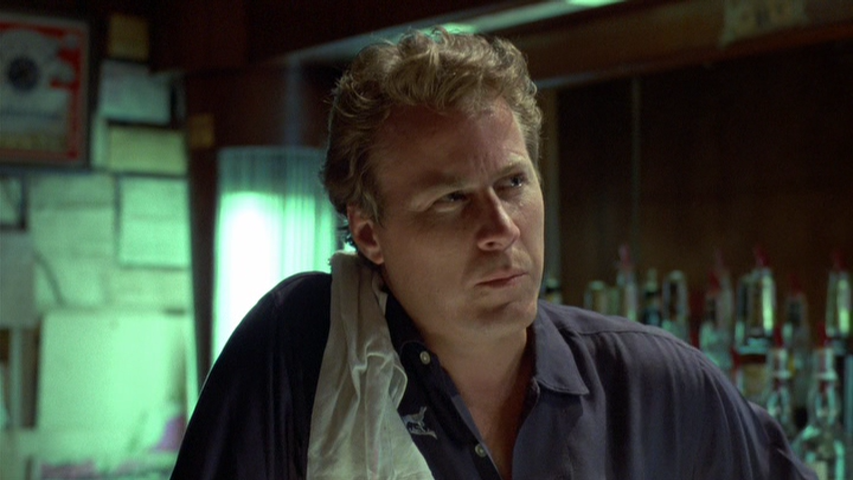
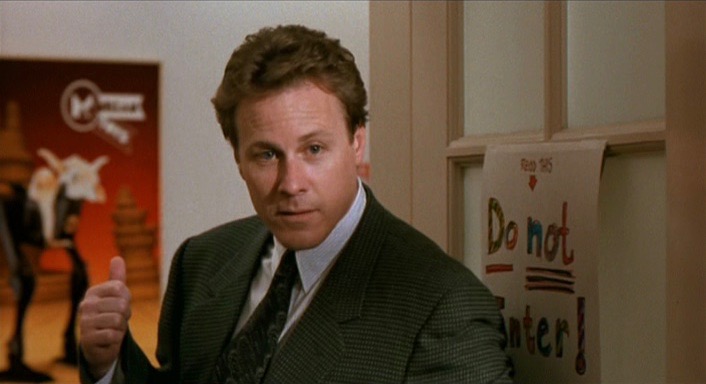
I know that almost everyone knows John Heard as either the father from Home Alone or as the detective on The Sopranos or maybe even the executive in Big. Over the course of his long career, John Heard played a lot of neglectful fathers, greedy businessmen, and corrupt politicians. Heard was good in all of those roles but he was capable of so much more. Though he did not get many chances to do so, he could play heroes just as well as villains.
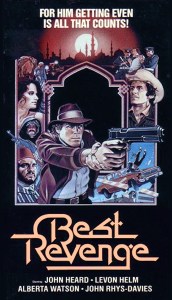
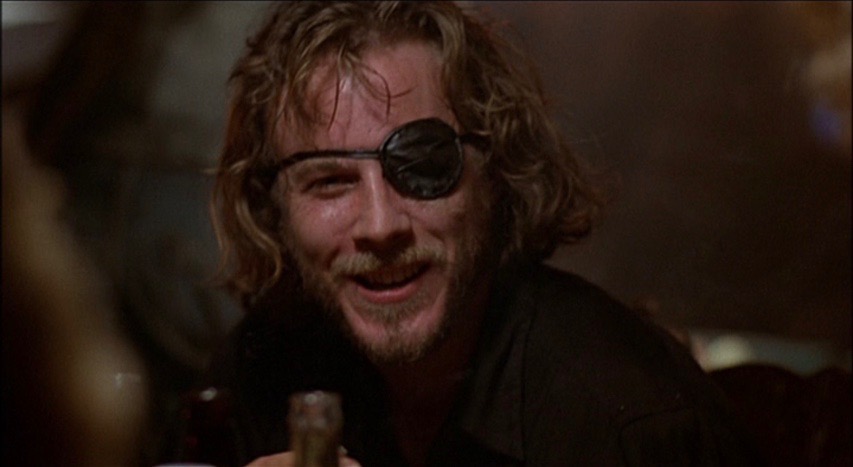
One of his best performances is also one of his least seen. In Best Revenge, he plays Charlie. Charlie is a laid back drug dealer, someone who would probably hate and be hated by most of the authority figures that Heard was best known for playing. Charlie is the ultimate mellow dude, without a care in the world. All he wants to do is play his harmonica and spend time with his girlfriend (Alberta Watson). However, an old friend (Stephen McHattie) wants Charlie to help smuggle 500 keys of hash from Tangiers to America. Charlie wants nothing to do with it but then he finds out that the Mafia will kill his friend unless the drugs make it across the ocean. Charlie and his friend Bo (Levon Helm of The Band) fly over to Morocco but are betrayed. Charlie ends up in a prison cell, from which he has to escape so that he can rescue Bo, smuggle the drugs, and get revenge on those who betrayed him.
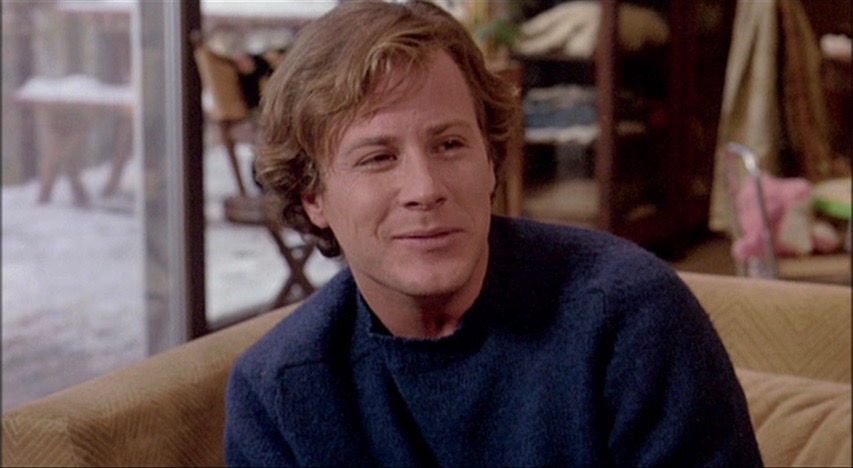
Because of the prison aspect and the fact that Charlie wears a fedora, Best Revenge was sold as being a combination of Midnight Express and Raiders of the Lost Ark but actually it is a character study disguised as an action film. Despite the title, Best Revenge is more interested in the real-life logistics and hassles of being an international drug dealer than in any sort of revenge. Though it is a role far different from the ones he may be best known for, John Heard was perfectly cast as a small-time drug dealer who suddenly finds himself in over his head. Heard gives such a good and sympathetic performance that this film, along with his work in Cutter’s Way and Chilly Scenes of Winter, shows what a mistake was made when Heard became typecast as the bad guy.
Best Revenge was filmed in 1980 but not released until four years later. Along with appreciating Heard’s performance, keep an eye out for Michael Ironside in an early, blink-and-you’ll-miss-it role.
I know everyone knew John Heard from the Home Alone series, but he did others things as well. Early on he was even given lead roles. I tried to pick a mixture of his early stuff, and when he was moved to largely playing character and supporting roles.
Rest in peace, John Heard.
Chilly Scenes Of Winter (1979, dir. Joan Micklin Silver)
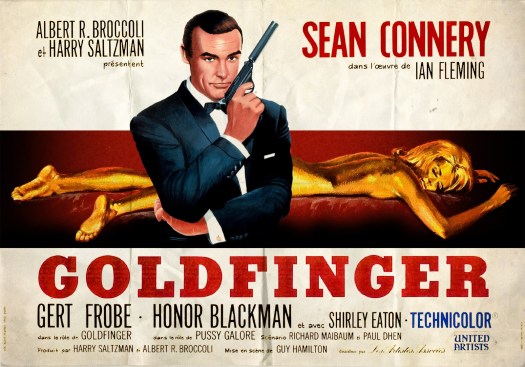
For my money, GOLDFINGER is the ultimate James Bond movie, serving as the blueprint for spy sagas to come. The action begins right off the rip as a scuba diving 007 infiltrates an oil refinery in an unnamed Latin American country, plants some plastique explosives, and changes into a tux as the whole shebang blows, then attends to some “unfinished business” with a beautiful Latina who sets him up to be killed by a bad guy, electrocuting his foe in a tub and wittily remarking “shocking, positively shocking” – all before the opening credits roll and Shirley Bassey belts out the immortal title tune by Anthony Newley and Leslie Bricusse!
Our Man Bond is then off to Miami to meet with his CIA pal Felix Leiter. He’s put on the trail of one Auric Goldfinger, a legit gold bullion dealer suspected of illegal activities. The avaricious Goldfinger isn’t above running…
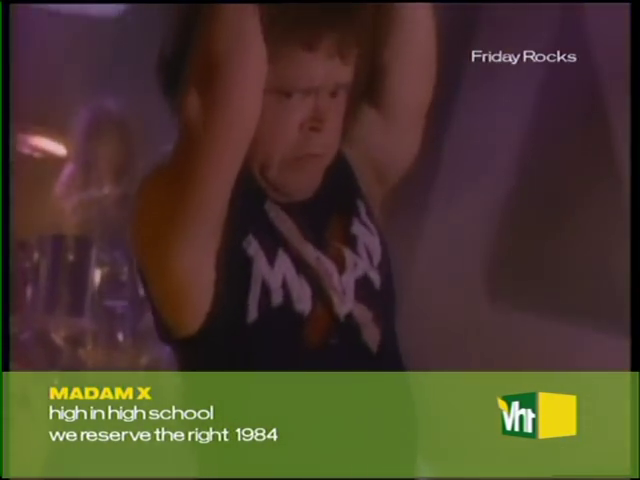
After doing a song by Vixen, I knew I would find a Madam X video somewhere.
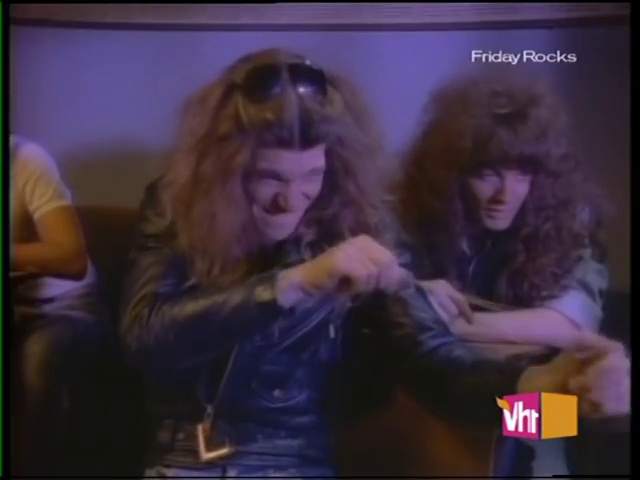
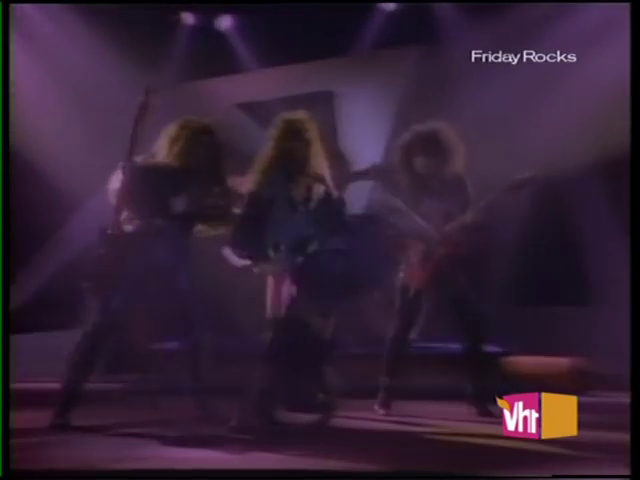
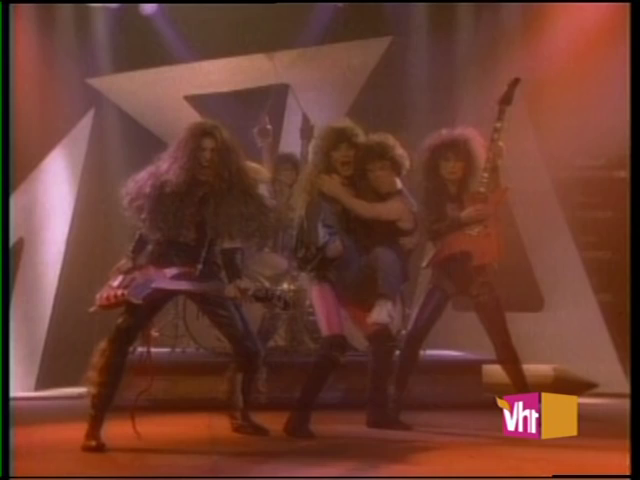
Madam X are a metal band that was originally formed by the Petrucci sisters–Maxine and Roxy. Roxy Petrucci would go on to be in Vixen. The band went through several band changes including bringing in Sebastian Bach before he went on to be in Skid Row. From what I can tell, this song is their most successful one. What a video they made for it.
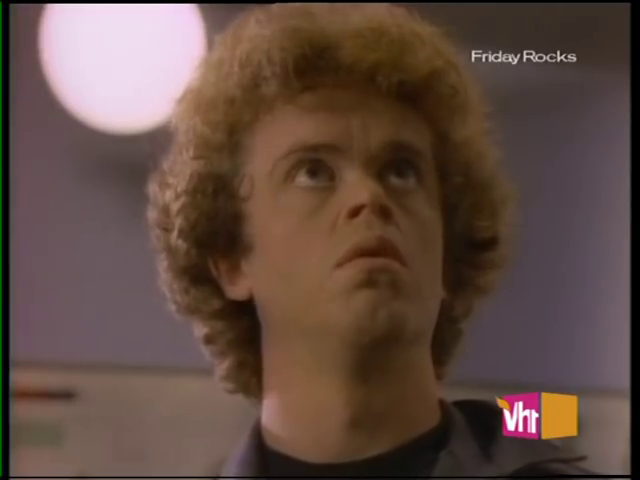
The video begins by introducing us to our main character played by a guy I have a strong feeling I’ve seen in something else. I wanna say he is the doorman in Harden My Heart by Quarterflash. He is startled by the school bell ringing.
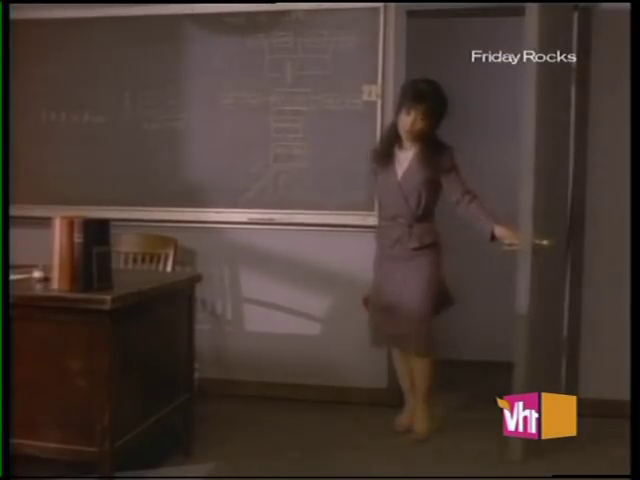
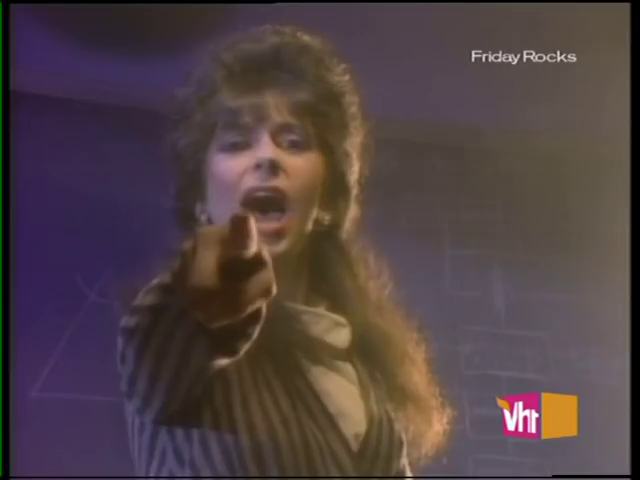
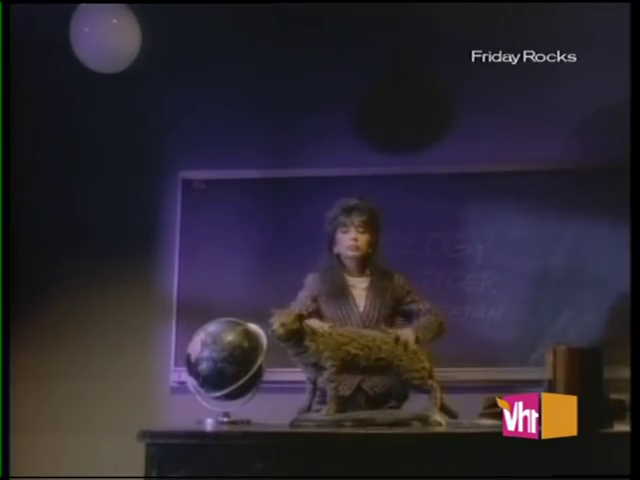
Then the teacher comes in who I’m quite sure is played by guitarist Maxine Petrucci.
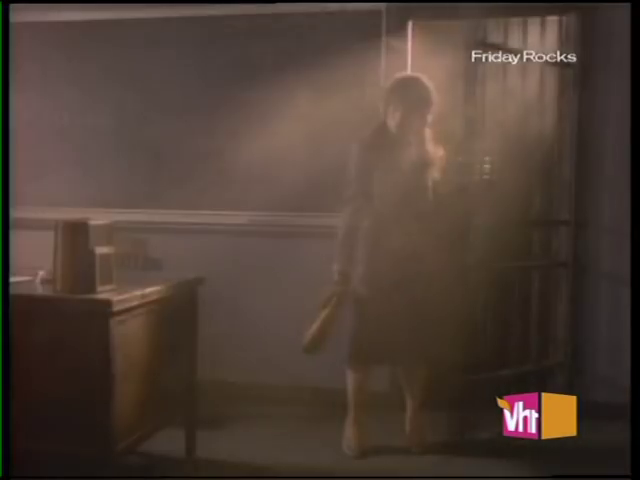
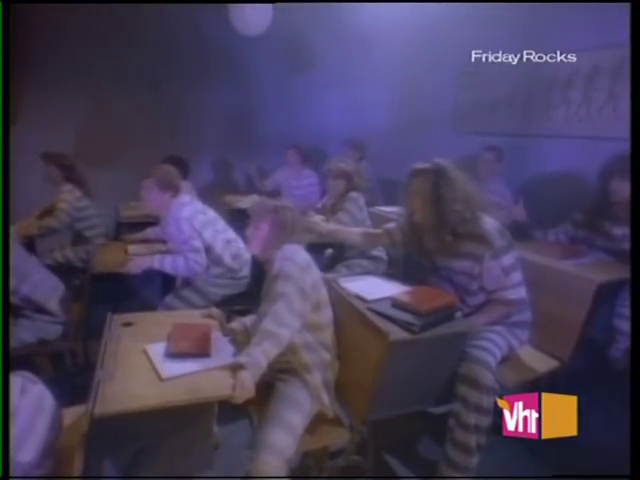
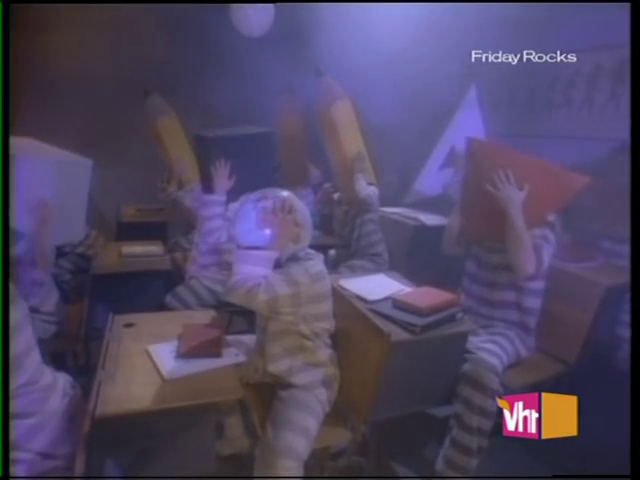
With a little jump cut, they are now in a prison, like a certain other video that takes place in a high school.
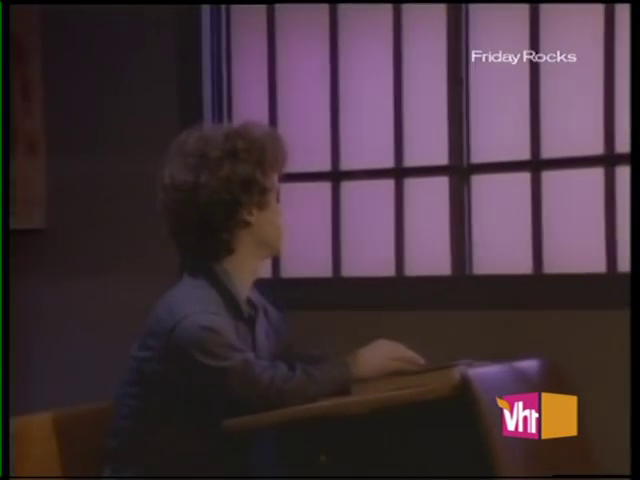
The bars come down on the window next to our hero.
The main reason I think Maxine plays the teacher is because I’m betting those are the two male members of the band–Bret Kaiser and Chris Doliber.
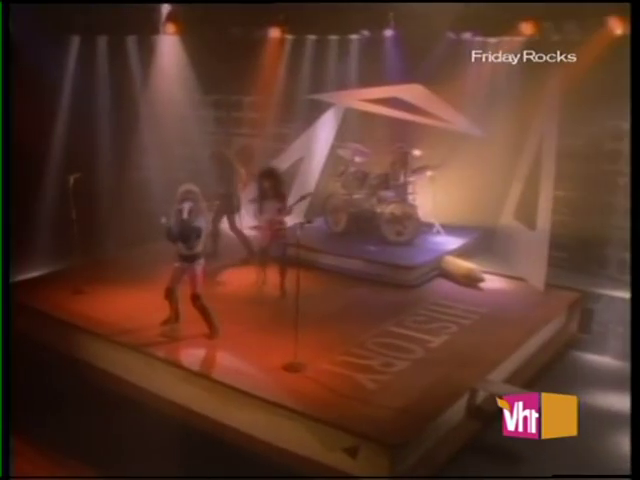
Our hero looks inside of his desk. Inside, he sees the band performing on a history book.
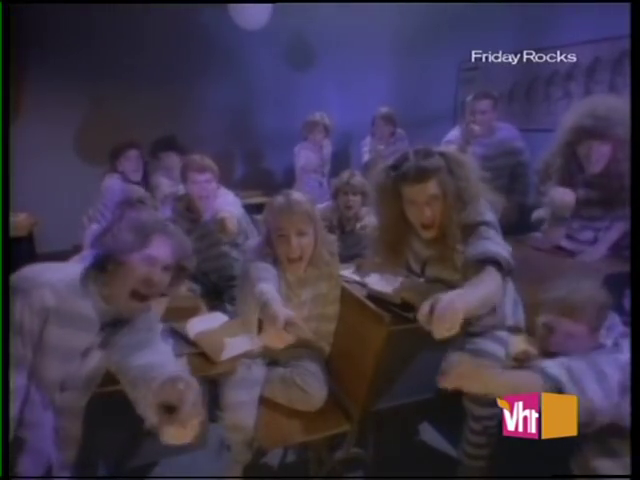
Of course simply looking inside of your desk and smiling means that the teacher and class are going to scream the chorus at you.
The teacher looks inside his desk. Seeing herself playing guitar lets him off the hook for now.
Meanwhile, one of the other band members is trying to make fire.
Teach now pulls out a leopard. With a little of laying on of the hands…
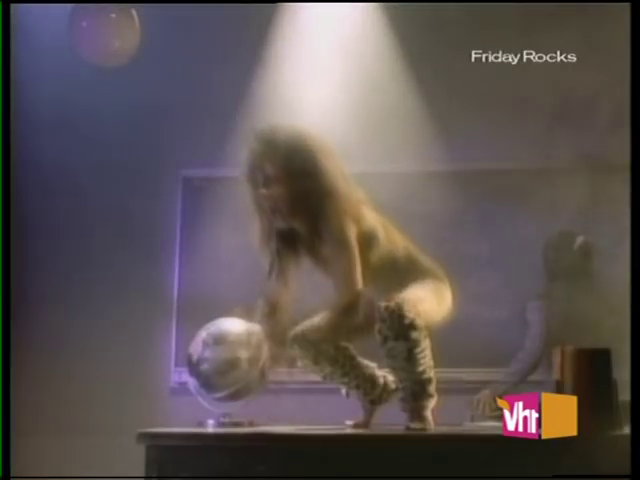
she gives birth to her sister Roxy.
Now the class sings the lyrics, “you’ll never pass by kissing ass,” at the teacher.
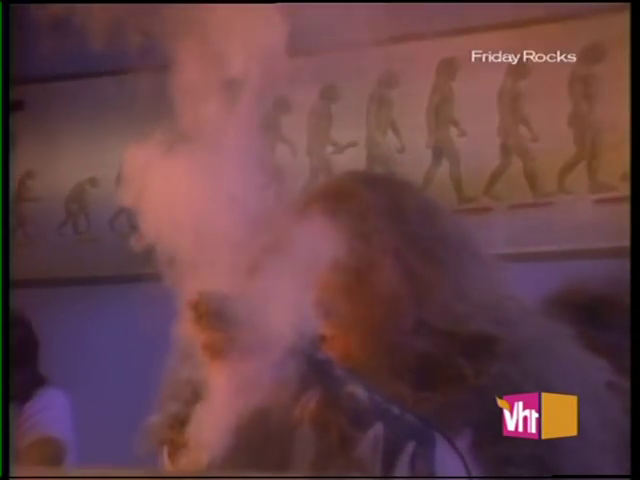
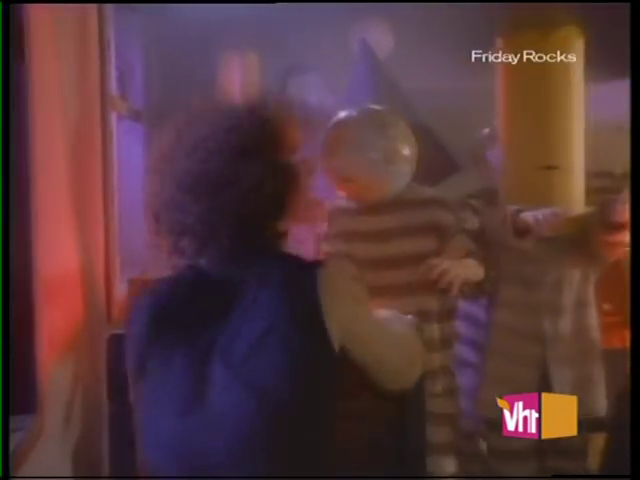
One look from teacher, and a grin from our hero, the class now has their heads replaced by things like a globe and a pyramid.
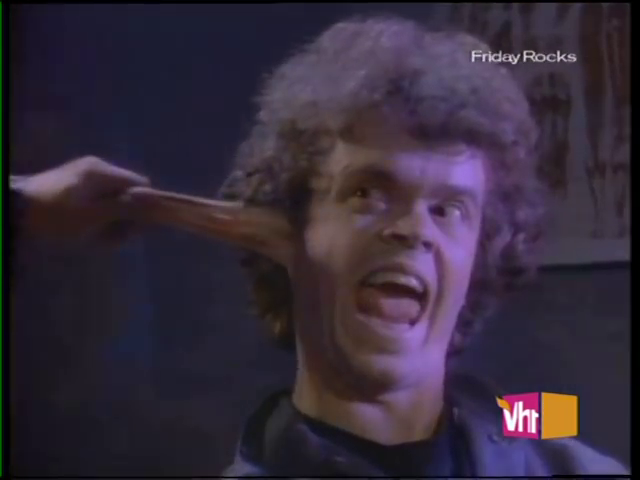
The teacher comes over to grab our hero’s ear, which stretches like Silly Putty.
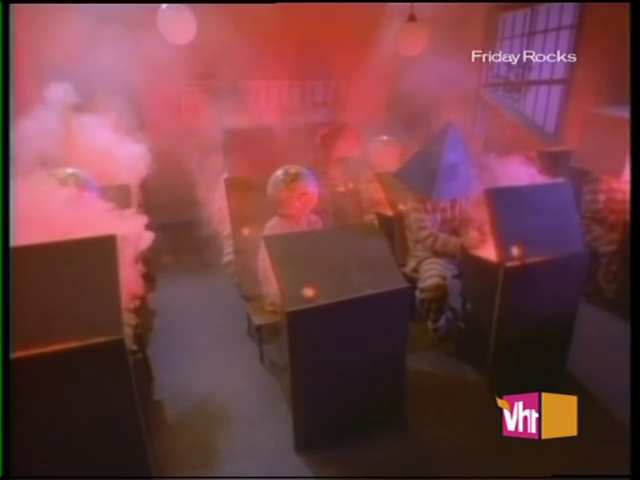
After the band plays some more, the desks open up…
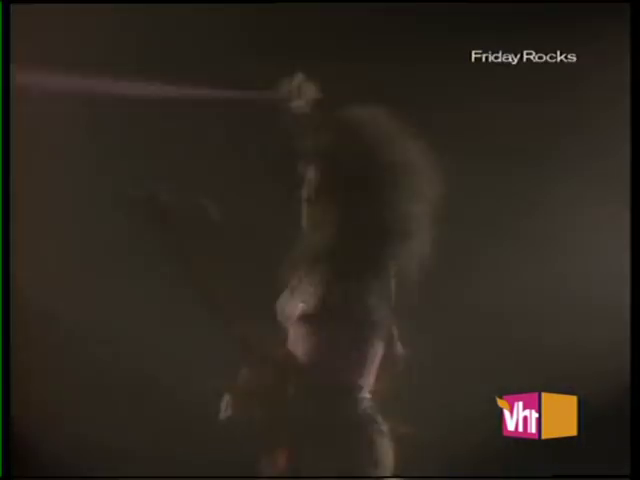
to reveal that their actual heads are trapped inside the desks.
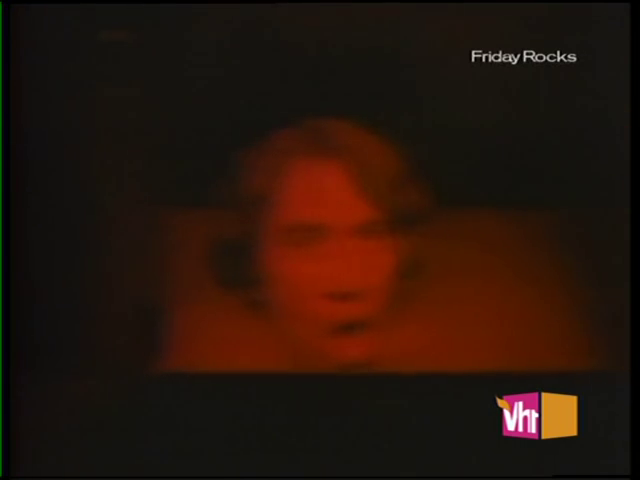
The teacher is gone now. I’m just going to assume this very quick cut to Maxine holding what looks like his ear is supposed to mean she transported into his desk.
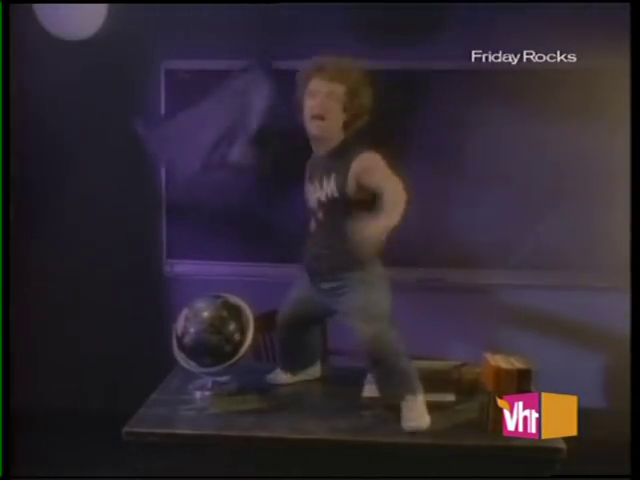
Our hero leaps up on her desk to reveal that he is a fan of the band.
The class are now zombies apparently. With them bearing down on him…
he leaps into his desk, but appears to hold on for a while for some reason.
After a little flip…
he lands and jumps into the arms of the lead-singer to end the video.
The video was directed by Marcelo Epstein. He only did a handful of videos such as Looks That Kill by Mötley Crüe.
The video was produced by Alexis Omeltchenko and Joanna Bongiovanni.
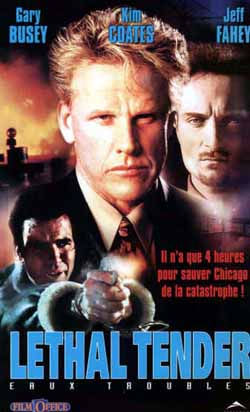
Detective David Chase (Jeff Fahey) should not be mistaken for the creator of The Sopranos. Instead, he is an eccentric and tough Chicago policeman, the type of cop who appears to have seen Mel Gibson in Lethal Weapon one too many times. His superiors send Detective Chase and his partner to keep an eye on a strike occurring outside of a water purification plant. Chase, however, is less interested in the strike and more interested in hitting on Melissa (Carrie-Ann Moss), who works at the plant.
Before you can say Die Hard All Over Again, a band of terrorists led by Montessi (Kim Coates) seizes control of the plant. Montessi threatens to poison all of Chicago’s drinking water but, what the authorities don’t realize, is that the attack is really just a distraction, designed to keep everyone from noticing Mr. Turner (Gary Busey) and his men running off with a bunch of stolen government bonds. Since Bruce Willis, Steven Seagal, and even Jean-Claude Van Damme were busy, it is up to Jeff Fahey to save the water, the money, and the day!
A Die Hard rip-off starring Gary Busey, Kim Coates, and Jeff Fahey does not actually have to be any good. All the movie has to do is let those three actors do their thing and it will be watchable. That is certainly the case with Lethal Tender, which is entertaining even if it is, ultimately, just another predictable Die Hard ripoff. Jeff Fahey does okay as the hero but Lethal Tender belongs to the villains. This was made in the days when Gary Busey playing crazy was still enjoyable instead of just sad. Realizing that he was going to have to compete with Busey’s legendary ability to overact, Coates chews every piece of scenery that he can get his hands on. Launching a major terrorist strike to cover up a simple robbery might seem like overkill but watching Busey and Coates compete to see who can steal the most scenes is so much fun that it really doesn’t matter that Chicago’s drinking water might get poisoned as a result of their shenanigans.
For fans of Busey and Coates, Lethal Tender is required viewing. For everyone else, it’s the most successful attempt ever made to transport the plot of Die Hard to a water filtration plant.
Talk about shock rock! Proto-metal rockers Bloodrock reached #36 on the charts in 1971 with DOA, a morbid little ditty about a plane crash, told from the victim’s point of view:
Bloodrock began playing local Ft. Worth, Texas venues in 1965 as The Naturals, quickly changing their name to Crowd +1. A string of unsuccessful singles followed, until they were discovered by Detroit rock impresario Terry Knight, a former DJ who once fronted his own band, Terry Knight & The Pack:
Knight changed their name to Bloodrock, taking over management and producing duties for the band. He also at the time handled the immensely popular (yet critically reviled) hard rock group Grand Funk Railroad:
After an acrimonious split with the two groups, and failing at starting his own label (Brown Bag Records), Knight vanished from the music scene. He hung out with stars, raced autos, but mostly did tons of cocaine. After getting…
Why, on June 3rd, did Billie Joe McAllister jump off of the Tallahatchie Bridge in Mississippi?
That was the question that was asked in Ode to Billie Joe, a 1967 country song by Bobbie Gentry. In the song, the details were deliberately left inconclusive. Why did Billie Joe commit suicide? No one knows. All they know is that he was a good worker at the sawmill and, the weekend before jumping, he was seen standing on the bridge with a teenage girl and apparently, they dropped something down into the river below. The song suggests that the girl and the narrator are one in the same but even that is left somewhat vague.
Ode to Billie Joe was a hit when it was first released, largely because it’s story could be interpreted in so many different ways. Why did Billie Joe kill himself? Maybe it was because he didn’t want to be drafted. Maybe it was because he and his girlfriend had killed their baby and tossed it off the bridge. Maybe it was because he was hooked on Dexedrine and his doctor wasn’t available to renew his prescription. It could be any reason that you wanted it to be.
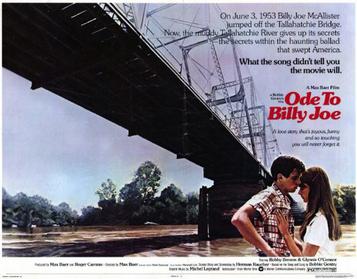
However, in 1976, when Ode to Billie Joe was turned into a movie, ambiguity would not do. As opposed to the song, Ode To Billy Joe had to answer the question as to why Billy Joe jumped into that river. In the movie, 18 year-old Billy Joe (Robby Benson) works at the sawmill and spends his time courting 15 year-old Bobbie Lee Hartley (Glynnis O’Connor). Bobbie Lee’s father (Sandy McPeak) says that she’s too young to have a “gentleman caller,” even though Bobbie Lee insists that she’s “15 going on 34 … B cup!” Bobbie Lee warns Billy Joe that her father is liable to shoot his ears off but Billy Joe insists that he doesn’t need ears because he’s in love with her. That’s kind of a sweet sentiment, even though I don’t think Billy Joe would look that good without ears.
(Whenever I complain about how Southerners in the movies always seem to have two first names, my sister Erin replies, “Yeah, that’s really annoying, Lisa Marie.” So, I won’t make a big deal about it this time…)
One night, Billy Joe and his friends go out and Billy Joe ends up getting drunk. He disappears for several days and when he shows up again, something has definitely changed. After unsuccessfully trying to make love to Bobbie Lee, Billy Joe tells her what happened that night he got drunk. Billy Joe had sex with a man, something that he has been raised to view as being the ultimate sin. When Billy Joe is later pulled out of the river, the entire town wonders why he jumped off the bridge and how Bobbie Lee was involved…
Ode to Billy Joe, which aired last Tuesday on TCM, is a better-than-average film, one that I was surprised to have never come across in the past. That doesn’t mean that it’s a perfect movie. Robby Benson, in the role of Billy Joe, gives an absolutely terrible performance. You can tell that Benson was trying really hard to do a good job but, often, he goes totally overboard, making scenes that should be poignant feel melodramatic. Though it probably has more to do with when the film was made than anything else, the film is also vague about Billy Joe’s sexuality. Is Billy Joe in denial about his identity? Is he deeply closeted or was he in such a drunken stupor that he was taken advantage of? Ode to Billy Joe does not seem to be sure. By committing suicide, Billy Joe joins the ranks of gay movie characters who would rather die than accept their sexuality. Obviously, he had to jump off that bridge because that’s what the song said he did but there’s a part of me that wishes the movie had featured someone commenting that they never actually found Billy Joe’s body and then the final scene could have taken place 16 years later, with Bobbie Lee living as a hippie in San Francisco and just happening to spot Billy Joe walking down the street, hand-in-hand with his boyfriend.
Here’s what does work about the movie. Glynnis O’Connor gives a great and empathetic performance as Bobbie Lee. The scenes with her father and her mother (played by Joan Hotchkis) have a very poignant and wonderful realness to them. Though I’ll always be a city girl at heart (well, okay — a suburb girl), I spent some time in the country when I was growing up. And while I was never quite as isolated as Bobbie Lee (who lives in a house with no electricity or plumbing) and the film took place in the past, I could still relate to many of Bobbie Lee’s experiences. The film may have been made in 1976 and set in 1952 but life in the country hasn’t changed that much.
For instance, there’s this great scene where Bobbie Lee’s father is trying to drive across the bridge. The only problem is that there’s a bunch of drunk shitkickers on the bridge, sitting in their pickup truck and blocking his way. It’s a very tense scene, one that I found difficult to watch because, when I was growing up in Arkansas, Oklahoma, Louisiana, and South Texas, I saw the exact same thing happen more times than I care to admit. In the country, no one backs down. Scenes like that elevated Ode To Billy Joe to being something more than just another movie based on a song.
Finally, there’s a beautiful scene towards the end of the film, between Bobbie Lee and a character played by an actor named James Best. I won’t spoil the scene but it’s a master class in great acting. (Best also played one of the sadistic villains in Rolling Thunder, another good 70s film about life and death in the country.)
Though I wasn’t expecting much from it, Ode to Billy Joe was a pleasant surprise. It’s not perfect but it’s still worth watching.
Yesterday I heard about the passing of Chester Bennington of Linkin Park. I have never been fan. I never really kept up on their career. However, I would feel remiss not doing a Linkin Park video today, so I picked the one video that did have a part in my life up to this point.
When this came out in 2001, I was 17 going on 18. Since I am part of whatever you want to call the transgenerational gap between Gen X and Millennials, my music as a kid was stuff like Nirvana or The Offspring. In other words, the Gen X bands of the early 90s. Despite the fact that I was in elementary and middle school during that time, watching Singles (1992) earlier this year when Chris Cornell also left us (his birthday was yesterday) was like looking through a time portal to an era I distinctly remember.
Britney Spears, Limp Bizkit, Backstreet Boys, and Blink-182 were the kind of musicians that popped up and flooded MTV and VH1 during the late 90s. Of course back then, you didn’t have a choice as to what videos you were going to see when you turned on the television. It’s not like it is today where if I want to watch Fat Lip by Sum 41, then I can, and then watch any other music videos I want for months or years before returning to watch that video. No such luck back then. If those weren’t the people you wanted to see, then too bad. As a result, I looked to the lists of greatest musicians that VH1 was putting out, and music documentaries in order to begin to fill in the music that came before my time–something I’m still doing to this day. That was me in high school. I was listening to The Velvet Underground while riding out musicians like the ones I already mentioned.
In 2001 I was in my last semester of high school. I’d been on permanent independent study for at least two-and-a-half years at that point. I watched a lot of TV, which didn’t help those musicians because it meant that I was probably seeing their video 2-3 times a day, everyday. That’s not a good thing. Aside from shows like TRL or the handful of videos VH1 played, there seemed to be no other outlet unless you were willing to be up early in the morning when MTV still played videos. Then I discovered that I had MTV2. They played all kinds of stuff. It was wonderful. This is where I remember Linkin Park first showing up on my radar. They showed up with this arguably embarrassing video. They looked and sounded like I would expect Backstreet Boys to be if they tried to combine rap with metal. They did nothing for me.
After I moved onto college and this video stopped being shown, the band basically disappeared from my life. It wasn’t until I transferred to Cal in 2007 that they showed up again. I don’t remember if my first roommate liked their music or not, but they came up. I was rooming with a freshman, so they were probably 10-11 when this came out. This was not the Linkin Park my roommate knew.
In the years that followed, I would hear them on the radio, and it wasn’t this Linkin Park. At the time of writing this, a new Linkin Park video was released for the song Talking To Myself. That is not the band in this video at all. They came a long way from my unfortunate introduction to them in presentation, style, and the place I was in at the time of its release. It’s doubtful that I’ll ever develop the kind of deep connection that many people have to the band. They slipped through the cracks in my life leaving only the memories of them that I have stated above.
Would I have written about this video at some point even if this tragedy hadn’t happened? Yes, I would have. While on the fringes, this video has stuck with me all these years. It would’ve essentially been the same thing I already wrote above about how much they changed while I wasn’t looking. It just wouldn’t have had to be in a somber tone, I would have had some fun with how ridiculous the video looks, made a comparison with It’s My Life by Bon Jovi, and it would have been wonderful to not have to include the following:
Rest in peace, Chester Bennington.
—————–
Now I need to talk a little bit about the crew because this may have one of the most unique directors I have come across while doing these posts. Gregory Dark got his start making adult films. I’ve only seen one of his movies–New Wave Hookers (1985). It is infamous for having Traci Lords in it. Well, had her in it, since the version that is available has her edited out, which is the version I saw–thankfully. The movie is bonkers, colorful, funny, has a humorous setup, and is so 80s it hurts–much like this video is so 2001 it hurts. That film seems to have kickstarted his career.
Looking at Dark’s filmography, it appears that about a decade later he moved into music videos. I can find credits for about 70 of them. I know that Michael Bay made an adult film while also doing music videos. But I’m pretty sure this is the first video I’ve spotlighted that was made by someone who had made a career out of making them.
The video was edited by prolific editor Jeff Selis. He’s done over 100 videos. Even with only 372 of these posts, this is already the third video he edited that I have put up here.
The concept for the video came from Linkin Park member Joe Hahn–according to IMVDb. According to Wikipedia, the video was originally supposed to be like the one released yesterday. He would go on to direct a bunch of their videos.
Toni Jo Peruzzi did the make-up for the video. For her, I can only find a handful of credits.
 Damn … John Heard died.


 Detective David Chase (Jeff Fahey) should not be mistaken for the creator of The Sopranos. Instead, he is an eccentric and tough Chicago policeman, the type of cop who appears to have seen Mel Gibson in Lethal Weapon one too many times. His superiors send Detective Chase and his partner to keep an eye on a strike occurring outside of a water purification plant. Chase, however, is less interested in the strike and more interested in hitting on Melissa (Carrie-Ann Moss), who works at the plant.
 Through the Shattered Lens