What happened when famed action star Steve McQueen met playwright Henrik Ibsen?
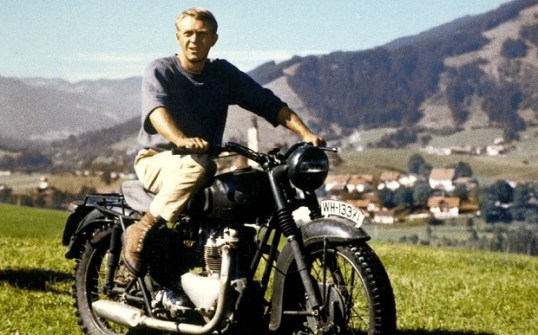
Here’s Steve McQueen in The Great Escape:
This is Steve McQueen in Bullitt:

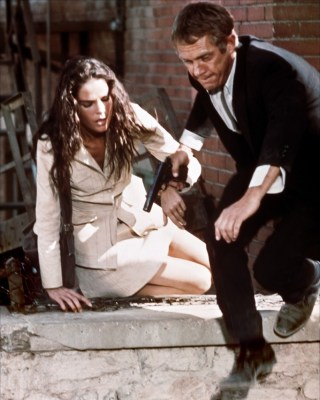
Here’s Steve McQueen with his future wife, Ali MacGraw, in The Getaway:
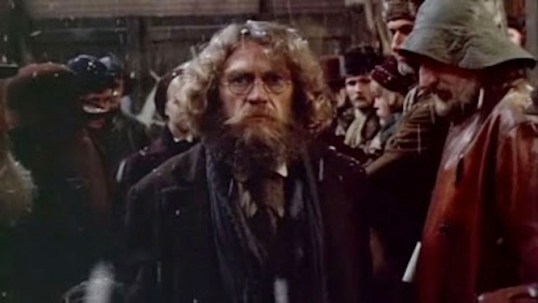
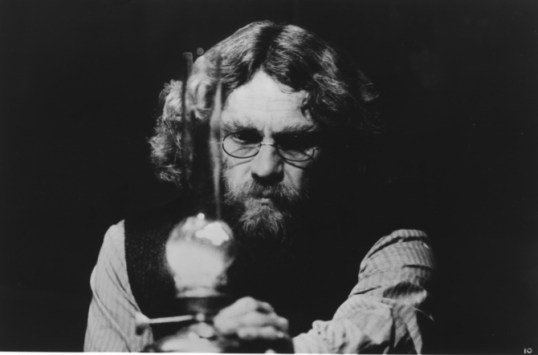
And finally, here’s Steve McQueen starring in An Enemy of the People:
In the four years between appearing in the Oscar-nominated The Towering Inferno and starring in An Enemy of the People, McQueen notoriously turned down several high-profile projects. He turned down the lead role in Sorcerer because director William Friedkin would not write a role for MacGraw. He turned down the lead role in Steven Spielberg’s Close Encounters of The Third Kind because he felt that he would not be able to cry on cue. (When Spielberg offered to take out the crying scene, McQueen replied that it was the best scene in the script.) Francis Ford Coppola could not afford his salary and McQueen missed out on the chance to play Capt. Willard in Apocalypse Now, a role he would have been perfect for.
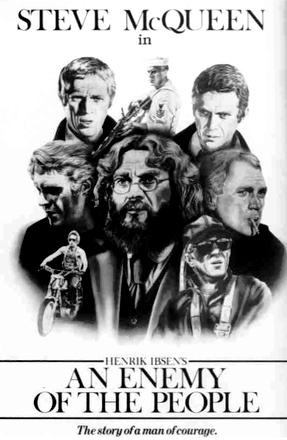 Instead, after a four years absence, McQueen returned to the screen in one of the least expected films of his career. Based on Arthur Miller’s adaptation of Henrik Ibsen’s original play, An Enemy of the People featured McQueen playing Dr. Thomas Stockmann, a scientist who discovers that his town’s local spring has been polluted by a tannery. When Stockmann reveals his findings, the town turns against him and his family. Stockmann has to decide whether to give into pressure from the town or to stay true to his principles.
As a star who was best known for playing stoic men of action, Steve McQueen was the last actor that anyone expected to appear in a film based on an Ibsen play. McQueen also insisted on playing the role with a heavy beard and a stocky build, making him virtually unrecognizable on-screen. Warner Bros. had no idea how to advertise An Enemy of The People so they didn’t. After a year of sitting on the shelf, An Enemy of the People was given a limited run in a few college towns. Many critics assumed that McQueen deliberately made an uncommercial movie just to get out of his contract with Warner Bros but, according to both Ali MacGraw and Marshall Terrill’s Steve McQueen: An American Rebel, McQueen was actually very enthusiastic about making An Enemy of the People and extremely disappointed when it was not a success. After the film failed to find an audience, Steve McQueen returned to appearing in action films and westerns.
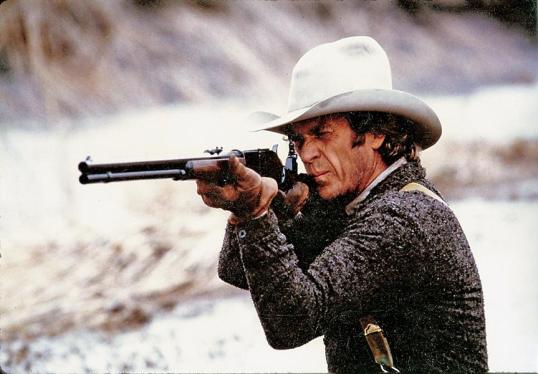
Steve McQueen in Tom Horn (1980)
I recently saw An Enemy of the People on TCM and I thought it was slow and didactic. (It did not help that An Enemy of the People is Ibsen’s weakest play.) Especially in the beginning, there are a few scenes where McQueen struggles to hold his ground against co-stars Charles Durning and Richard Dysart, both of whom had far more theatrical experience. But McQueen gets better as the film goes on and proves that his deceptively casual approach can still be effective even when he is playing an intellectual who chooses to make his point with his words instead of his fists. He does a good job handling Ibsen’s notoriously wordy speeches. By the end of the movie, the idea of Steve McQueen in an Ibsen play no longer seems strange at all.
After An Enemy of the People, McQueen would only make two more movies before dying of cancer at the age of 50. Based on his performance as Dr. Stockmann, I believe that if McQueen had not died, he would have aged into being a great actor, in much the same way as Clint Eastwood. It’s unfortunate that McQueen never got that chance.
 P.O.W. films were all the rage in the 1980s. For a country just starting to get back its confidence, refighting the Vietnam War onscreen was a way to deal with the lingering trauma of that conflict. In Rambo: First Blood Part II, Sylvester Stallone asked, “Do we get to win this time?” and for a while, the answer was yes. By sending action stars like Stallone and Chuck Norris to rescue American soldiers still being held captive in Asia, we would win this time (if only in our dreams).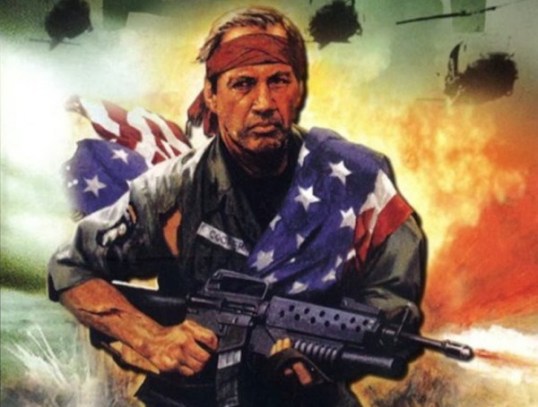



 Through the Shattered Lens