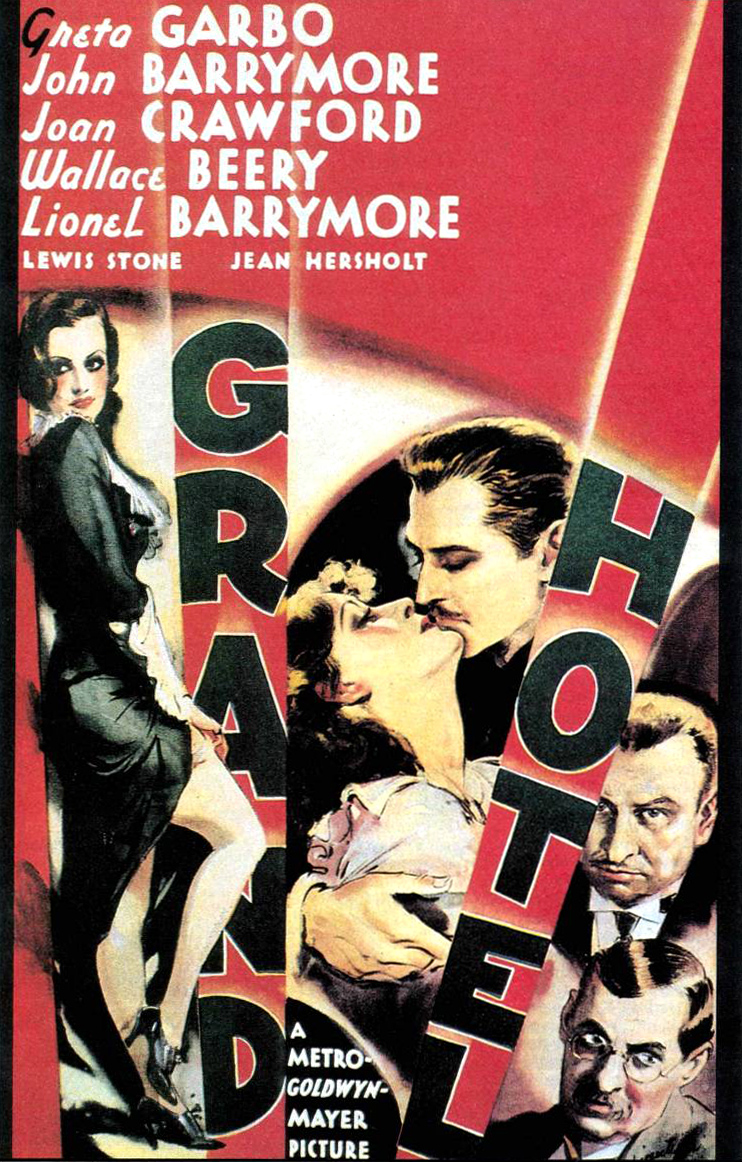
Today, we continue to chronologically embrace the melodrama by taking a look at one of the earliest examples of what would become a Hollywood mainstay, the big budget, all-start soap opera. Today, we start things off by considering the 1932 best picture winner, Grand Hotel.
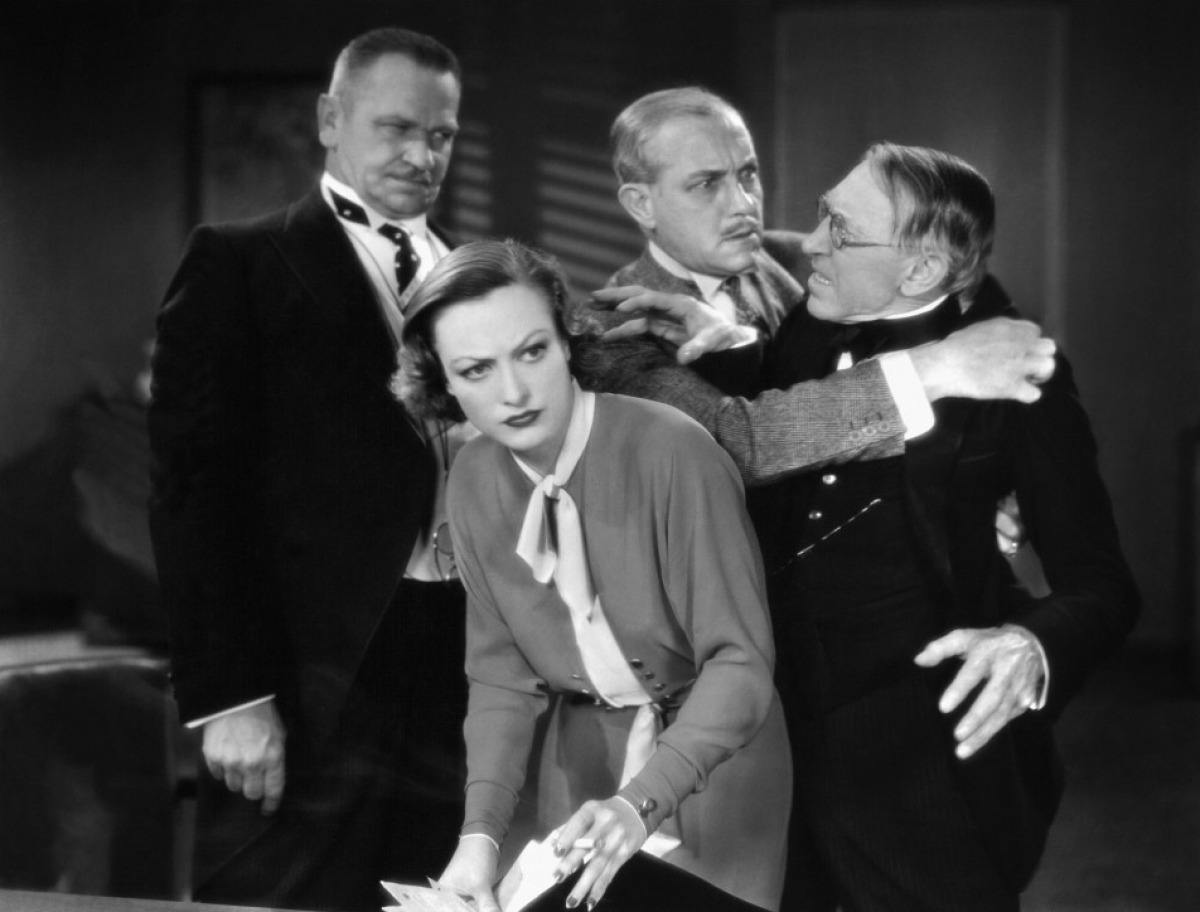
Grand Hotel follows five separate people as they all check into Berlin’s Grand Hotel. They all have their own lives, their own secrets, and their own dreams. As the film plays out, these five people will wander in and out of each other’s stories. Seeing as how this was an MGM film and MGM always promoted itself as being the most glamorous studio in 1930s Hollywood, it’s not surprising that these five characters are played by five of the biggest stars that the studio had under contract.
There’s Flaemmchen (played by Joan Crawford), an aspiring actress who, when we first meet her, appears to be willing to do anything in order to advance her career. Whenever I watch Grand Hotel, I’m also surprised by how good Joan Crawford is here. Crawford has become such an iconic character of camp that we tend to forget that she actually was a pretty good actress. In Grand Hotel, she is perfectly cast as someone who is not quite as amoral as she wants the world to believe.
There’s Preysing (played by Wallace Beery), a greedy industrialist who hires Flaemmchen to be both his administrative assistant and his mistress as well. Considering that the film is set in Germany, its’ easy to view Preysing as a symbol of the fascism that was sweeping across Europe in the 30s. I don’t know if that was the intention of the filmmakers but it’s impossible to deny that Preysing is a pretty unlikable character, the type of greedy brute who inspires otherwise intelligent people to do things like run off and join Occupy Wall Street.
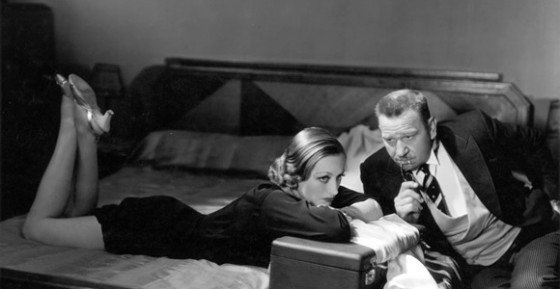
Far more likable is Otto Kringelein (Lionel Barrymore), a meek accountant who used to work for Preysing. Kringelein is terminally ill and has basically come to the Grand Hotel so that he can at least enjoy a little bit of luxury before he dies. At the hotel, he meets and falls in love with Flaemmchen. Lionel Barrymore is so likable here that it’s hard to believe that he would later be best known for playing evil Mr. Potter in It’s A Wonderful Life.
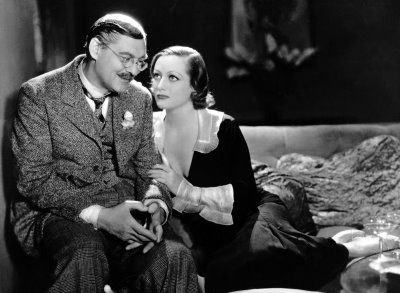
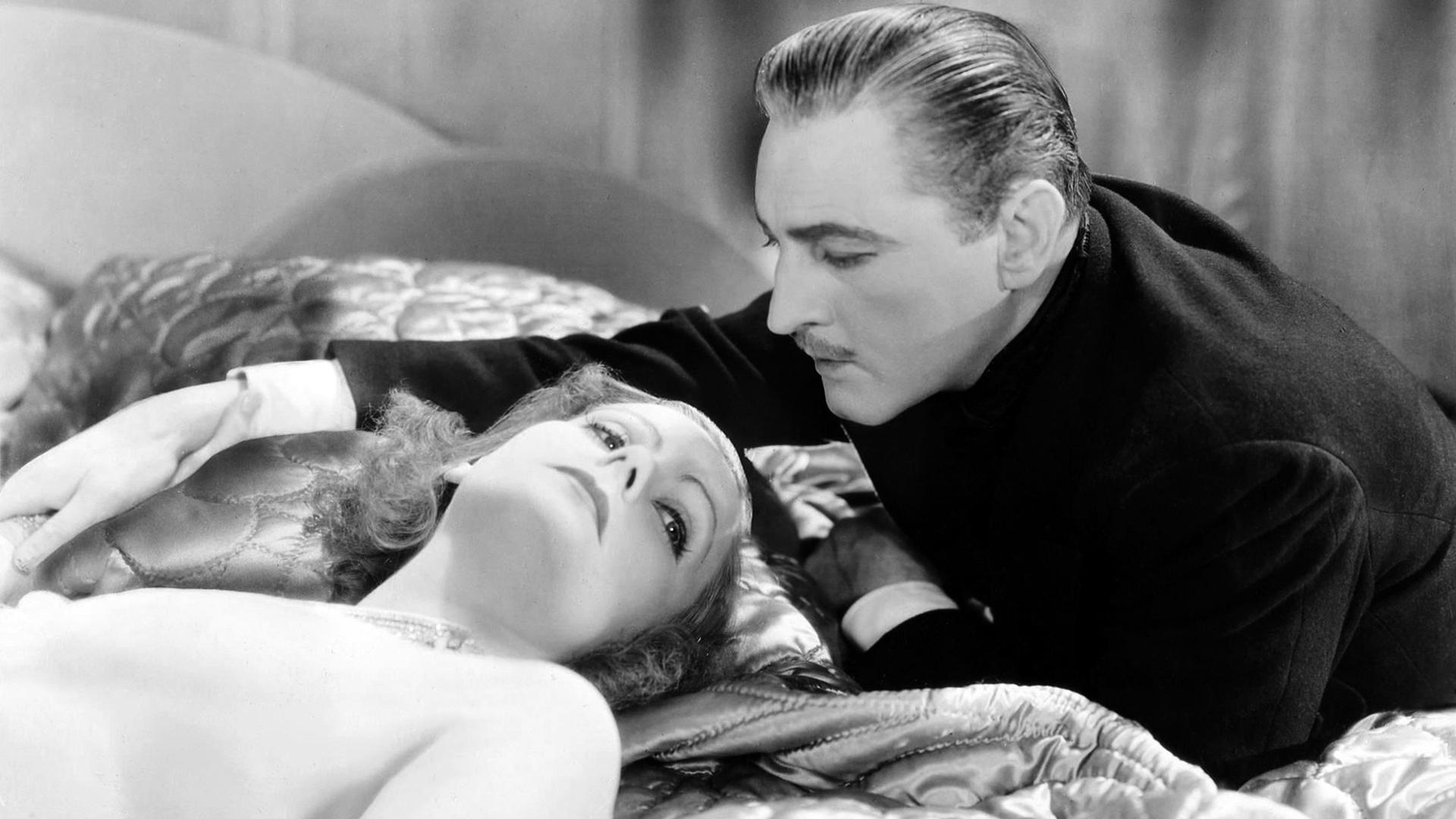
Otto also meets Baron von Giegern (John Barrymore), a penniless nobleman who supports himself as a gambler and an occasional jewel thief. If you needed proof that this film was made before the enforcement of the strict Production Code began, just consider that the Baron, despite being a criminal, is also the moral center of the film. John Barrymore gives a charismatic and wonderfully theatrical performance. The scenes where he and his brother Lionel play off of each other are some of the best in Grand Hotel.
And finally, there’s my favorite of all the characters — Grusinskaya (Greta Garbo), the Russian ballerina who famously says, “I want to be alone.” She checks into the hotel to try to escape the world and during her stay, she meets and falls in love with the Baron. Grusinskaya is the character that I most related to, because we’re both dancers and I sometimes want to be left alone as well.
I love Grand Hotel! How couldn’t I? The costumes, the sets, the actors, the glamour, the melodrama … what’s not to love!? Incidentally, compared to a lot of other film melodramas from the early 30s, Grand Hotel actually holds up as pure entertainment. The film moves quickly, much of the dialogue is still sharp and witty, and all of the actors are perfectly cast. Curiously, Grand Hotel only received one Oscar nomination, for best picture. However, it’s not surprising that it also won the only award that it was nominated for.
Grand Hotel has been described as being the first ensemble film. I don’t quite agree with that because, even though it features a large cast and several intersecting storylines, you never forget the fact that you’re essentially watching a bunch of film stars sharing scenes with other film stars. Eight decades after the film was made, the star power of Garbo, the Barrymores, Joan Crawford, and even Wallace Beery still continues to shine through and, to a large extent, your reaction to the film’s characters is pretty much the same reaction that audiences in the 1930s had to the public personas of the actors playing them. But, and here’s the thing — it doesn’t really matter. MGM made Grand Hotel to celebrate star power and, when you’ve got stars like these, can you blame them?
 Through the Shattered Lens
Pingback: Lisa Watches The Oscar Winners: The Apartment (dir by Billy Wilder) | Through the Shattered Lens
Pingback: Lisa Reviews An Oscar Nominee: Five Star Final (dir by Mervyn LeRoy) | Through the Shattered Lens
Pingback: Lisa Reviews An Oscar Nominee: The Smiling Lieutenant (dir by Ernst Lubitsch) | Through the Shattered Lens
Pingback: Lisa Reviews An Oscar Nominee: Bad Girl (dir by Frank Borzage) | Through the Shattered Lens
Pingback: Lisa Reviews An Oscar Nominee: The Champ (dir by King Vidor) | Through the Shattered Lens
Pingback: Lisa Ranks Every Best Picture Winner From Best To Worst! | Through the Shattered Lens
Pingback: Lisa Reviews An Oscar Nominee: Shanghai Express (dir by Josef von Sternberg) | Through the Shattered Lens
Pingback: The Best Picture Race In Review: The 1930s | Through the Shattered Lens
Pingback: Lisa Reviews An Oscar Nominee: Arrowsmith (dir by John Ford) | Through the Shattered Lens
Pingback: The Best Picture Race: The 1930s | Through the Shattered Lens