VGM Entry 40: End of the NES era (part 2)


VGM Entry 40: End of the NES era (part 2)
(Thanks to Tish at FFShrine for the banner)

Once again, by 1990 the Nintendo had fallen way behind the times. The Sega Genesis/Mega Drive, the Commodore Amiga 500, and the NEC PC Engine/TurboGrafx-16 had all left it in the dust. The fourth generation of home and computer gaming was in full swing, and Nintendo were not prepared to launch their version until November. NES composers struggled to keep up with higher standards in the meantime, pushing the Nintendo to its limits.

Mega Man 3 (Capcom, 1990) had a lot to offer. Yasuaki ‘Bun Bun’ Fujita (not to be confused with my favorite talking rabbit) picked up the job this time, and it’s pretty amazing that three different musicians could all so effectively maintain the series’ quintessential sound. Mega Man 3‘s opening theme is as excellent as any of them, and the rest of the music really is a good bit more compositionally consistent than may meet the ear.

“Hard Man” (1:52) for instance is written in unmistakable Mega Man fashion. The only reason it doesn’t sound entirely up to par is a product of bad mixing at the final stage. Every take I’ve heard of it just sounds a bit washed out. The volumes of each track don’t feel properly balanced, and they could perhaps have chosen fuller percussion. But the fundamental song-writing is ideal, and I think if you put it in the hands of say, Bit Brigade, it would shine as brightly as any track from the first two games. Whatever flaws it may have are only visible if you seek them out.

While I think this minor mixing problem persists throughout the game, the next track in this collection, “Snake Man” (2:45), is just so well written that any potential flaw in the final production is masked entirely. Mega Man 3 does have some less memorable tracks; it’s not quite as consistent as the first two games in that regard. You won’t hear them in this mix. garudoh did yet another excellent job of choosing only the best, and “Spark Man” (3:42), “Get Your Weapons Ready” (4:40), and “Proto Man” (5:18) finish off a very well-conceived compilation. But the likes of “Gemini Man” and “Magnet Man”, not featured here, leave something to be desired. Mega Man 3 is not quite as good as the first two, but Yasuaki Fujita definitely finds and maintains the Mega Man sound throughout, and by any other standard this is an excellent NES soundtrack.

The best NES music of 1990 though, as you may have guessed from my previous hints, belongs to Tim Follin. Follin carried his capacity to pack a huge punch into limited sound systems over to the NES, and the introduction to Solstice (CSG Imagesoft, 1990, produced by Software Creations) is not afraid to employ a little shock value. I’m not sure why the music in this sample is out of order, but you can hear how the game kicks off if you skip to 3:37. The cute little 10 second jingle at the start is almost tongue-in-cheek, mocking typical NES songs before exploding into musical fireworks in bombastic Follin fashion. The majority of the album feels to have benefited heavily from his recent work on Ghouls’n Ghosts. No individual tracks really stand out with the memorable qualities of that previous work, but you can definitely appreciate the level of imagination that went into the whole soundtrack. Follin had more up his sleeves for the NES anyway. He reserved his best efforts for a game which we would all expect to have an outstanding soundtrack….. Pictionary?

I don’t know. Tim Follin’s music was seldom relevant to the game. I suppose it’s quite possible that he submitted this soundtrack to Software Creations without even knowing what game it would be used for. But I picture a giddy Follin setting out to intentionally make Pictionary (LJN, 1990) one of the most exciting and absurdly uncharacteristic soundtracks on the NES, laughing all the way.

That’s about all I have to offer from the Nintendo for the time being, but it’s worth taking a brief look at some other systems before we move on. I don’t want to say the pickings were slim outside of the Nintendo–that would certainly contradict my entire point in these past two posts–but I did struggle to find much of interest in 1990 specifically. The PC Engine is quite obscure to me as a western gamer, and many of the Amiga titles that best caught my eye date to 1988 and 1989. The Genesis/Mega Drive was still a musical disappointment in so far as it rarely lived up to its full potential. Elemental Master (TechnoSoft) by Toshiharu Yamanishi deserves an honorable mention, but its music is nothing special really. I think the system just lacked much competition to spur it on. With the Amiga appealing to European computer gamers and the PC Engine pushing the Japanese market, the Genesis/Master System for a time stood alone in a number of markets as the only available fourth generation home gaming console. Phantasy Star III (Sega) saw Izuho Takeuchi take over Tokuhiko Uwabo’s role as composer, and the transition brought a whole new style of sound to the game. I would describe it as unremarkable but more consistent–where Tokuhiko Uwabo presented a rather unique RPG soundtrack that was fairly hit or miss, Izuho Takeuchi is a little more traditional and at no point that I’ve noticed really falls flat. But his music is nothing to brag about either.

Before I move on to the Super Nintendo, one final 1990 release that really caught my attention was Iron Lord (Ubi Soft). Now, this version that you’re hearing above is the original 1989 Atari ST version. I want you to hear it first, because I want you to know what Jeroen Tel had to work with when he made the Commodore 64 and Amiga ports.

I don’t know who the original Atari ST composer was. I don’t know who was responsible for the MS-DOS version either. But I bet it wasn’t Jeroen Tel. C64 composers had a certain attitude about them. They knew they were the best, and they were going to keep on proving it every chance they could get. And let’s not forget here; the Commodore 64 was a year older than the Nintendo.

Hence why Jeroen Tel’s Iron Lord could introduce a power metal song. The effects of layering a medieval tune with big chippy bass and that same higher spacey tone he used on Cybernoid 2 are almost comical, but they’re entirely effective. Like a typical C64 musician, Tel expanded way beyond the scope of the original composition and made it entirely his own.
AMV of the Day: Troll of Hearts (The World God Only Knows)


I would say that the AMV producer who has shown up on this “AMV of the Day” feature the most has to be tehninjarox. His videos rarely turn out to be misses and even the ones I don’t gush over still end up being very well done. It’s no surprise that one of his latest videos was chosen to be the latest AMV profiled.

“Troll of Hearts” is one of his latest and it manages tomake use of Rick Astley’s now classic and over-memed song, “Never Gonna Give You Up”, with the harem anime series The World God Only Knows. This video manages to make the anime series’ main lead, Keima Katsuragi, come off much more committed and romantic than the series really lets on. For those saying I just spoiled the anime shouldn’t worry. The World God Only Knows is less about drama and emotional growth and more the comedic side of a young man so obsessed with dating sims game that he’s forced by Hell to use those same gaming skills to try and romance real “3D girls” instead of 2D virtual ones he seems to prefer.

I know that the Rick Astley song has become the butt of many a joke and parody video. This AMV doesn’t change yet the lyrics fit in well with how tehninjarox (aka Shin) edited the scenes from the series. If there was one thing which keeps me from making this latest AMV pick as one of my all-time favorites it would be the length of the video itself which is under 2 minutes and doesn’t make use of the song’s total running time. It’s a little nitpick really since the AMV was something done for an AMV contest that didn’t require he use the whole song. The fact that he was able to place 1st even with a truncated video just goes to show the impact the video had with those judging.

Anime: The World God Only Knows

Song: “Never Gonna Give You Up” by Rick Astley

Creator: tehninjarox


Past AMVs of the Day

VGM Entry 39: End of the NES era (part 1)


VGM Entry 39: End of the NES era (part 1)
(Thanks to Tish at FFShrine for the banner)

Games would continue to be made for the NES long after the release of the Super Nintendo, but its glory days had come and gone. Already by 1990, the system was starting to sound a little stale, and even the most impressive compositions faced an enormous burden in keeping pace with video game music at large on a hopelessly outdated system.

Koichi Sugiyama certainly didn’t produce much of interest. The improved rendition of the main theme aside, Dragon Quest IV (Enix, 1990) was not a particularly memorable soundtrack. It has no faults per se. It certainly had nothing approaching the annoyance of the original Dragon Quest‘s combat theme. But no amount of listening to the tracks beyond the main theme here has revealed the slightest hint of anything special. It’s a soundtrack secure in its simplicity. The music is wholly appropriate for an RPG, never clashing with the style of gameplay, but it also adds nothing to the experience save pleasant background music. I’ve heard plenty worse by RPG composers with much more diverse sound systems to work with, but it definitely feels to me as though this one stands out more for the fact that “Dragon Quest” and “Koichi Sugiyama” are attached to it than for its own worth.

Final Fantasy III (Square, 1990) was a somewhat different situation. It’s got a lot more emotion to it, and frankly it might constitute Nobuo Uematsu’s finest compositions on the NES, but in the context of its place in time it can be pretty hard to appreciate. Here’s a track list for the video:

(0:00) Prelude
(0:56) Crystal Cave
(1:54) Jinn the Fire
(2:43) Chocobo Theme
(3:20) The Invincible
(4:11) Battle
(5:06) Last Battle
(5:59) The Boundless Ocean
(6:59) Fanfare

Nobuo Uematsu definitely climaxed as a specifically NES composer on Final Fantasy III. “Battle” and “Last Battle” express a full appreciation for the NES as an instrument, and the rapid-fire accompaniments in both, but especially the latter, are some of the most powerful on the system. The SID-like sound on “Crystal Cave” and “Last Battle” adds a new dimension to the songs which would have been unthinkable for Uematsu a mere three years prior, while “The Invincible” is a practically perfect arrangement. If Final Fantasy might best be defined as lovely compositions poorly arranged, Final Fantasy III was definitely the full package.

The problem, and the reason it took me setting the game aside and coming back to it weeks later to be able to really appreciate it, is that this was 1990. Amidst the Sega Genesis/Mega Drive, the Commodore Amiga 500, and the NEC PC Engine/TurboGrafx-16, the NES just sounded terrible; it was no longer novel and it was way behind the times. Nintendo’s lengthy development paid off, as things turned out, but a lot of early 1990 releases better suited for the SNES suffered from the delay.

Resting somewhere between these two in quality was Castlevania III: Dracula’s Curse (Konami, 1989). I have seen no less than five musicians credited with the composition. Hashing out who all among Hidenori Maezawa, Kenichi Matsubara (Castlevania II), Yoshinori Sasaki, Jun Funahashi, and Yukie Morimoto were really responsible for the music might be a fun task, but I only have the time for so many such projects. For whatever it’s worth, Hidenori Maezawa, Jun Funahashi and Yukie Morimoto are the three most frequently credited names. Consisting of a long list of virtual unknowns, this is one of those scores for which “Konami Kukeiha Club” might be the most appropriate accreditation.

One thing that strikes me as interesting here is how the drums and bass feel like they’ve borrowed from Batman (Sunsoft, 1989) by Nobuyuki Hara and Naoki Kodaka, especially considering I felt Hara an Kodaka themselves might have been inspired in part by the Castlevania series before I ever heard Castlevania III specifically. This connection, or at least the possibility of Batman‘s drum and bass influencing Castlevania III, is virtually impossible. As it turns out both games were actually released on the exact same day: December 22, 1989. (I had originally thought Castlevania III was released in 1990, hence my placing it in this post, but it’s close enough.)

The game has some pretty impressive original tracks, especially “Beginning” (0:00) and “Mad Forest” (1:10), not to mention a new rendition of “Vampire Killer” (5:49). The overall sound is a lot less classical and a lot more peppy than previous Castlevania titles, though I think that can be forgiven in light of the good, consistent job they did with it. Again, the soundtrack only took a while to grow on me due to its historical context. It was most certainly technologically behind the times, but there wasn’t much the Konami sound team could do about that.

High School DxD gets 2nd Season


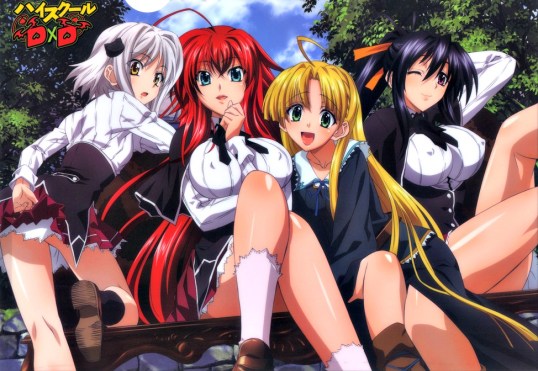
News that should make fellow site writer and contributor pantsukudasai56 very happy just came down the pipeline. According to Anime News Network the shonen series High School DxD has been given the greenlight for a second season.

While details about this second season has been, for the moment, quite sparse the fact that the season is now in production means that it’s not just a promise of one, but a guarantee that more harem hi-jinks involving the clueless Issei Hyodo and the beautiful, albeit demonic, girls of his high school. This is a series that’s definitely more about comedy than anything serious and/or thought provoking. Then again one can only survive on dramatic and deep anime for so long. Some levity needs to be mixed in with the dark and High School DxD certainly delivers in that front.

The popularity of the series (and the new season should get quite a welcome from its fans) also stems from the fact that it is a harem anime that also involves some very ecchi (fan service) moments. While this type of anime doesn’t appeal to everyone it still attracts a huge number of anime fans.

There’s no word when the new season will air, but until then I’m sure pantsukudasai56 will be anticipating ew stuff from his favorite character on the show: Koneko Toujou.

Source: Anime News Network

Scenes That I Love: Clint Eastwood Gets Results


(This is not a political post but if it was, it would solely reflect my opinion and not necessarily the opinion of anyone else who writes for this site.)

The big news tonight seems to be that former President Bill Clinton is giving a speech at the Democratic National Convention.  After being told by several people on twitter that Clinton is “one of the greatest speakers of all time,” I listened to a few minutes of “America’s greatest politician” and you know what?

I still prefer Clint Eastwood. 

That’s not meant to be an endorsement of any political position that has or has not been advocated by Clint Eastwood over the past few weeks.  This is not a political statement as much as it’s just an acknowledgement of the fact that Presidents give speeches but Clint Eastwood gets results.

And that leads me to tonight’s scene that I love.  From the classic 1971 crime film Dirty Harry, here’s the famous scene that explains why so many people love Clint Eastwood in the first place.

Artist Profile: Zoe Mozert (1907–1993)


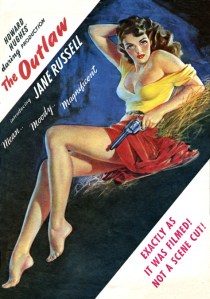
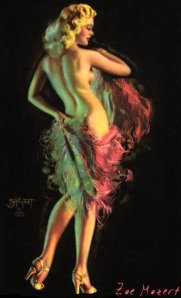
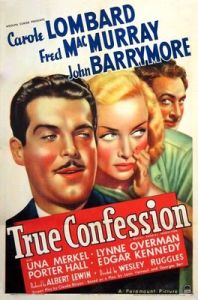
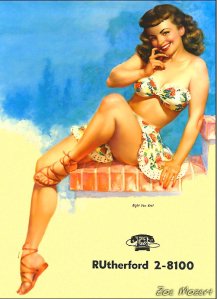
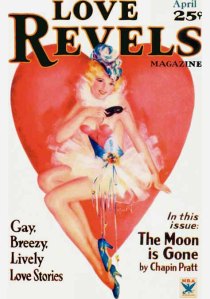
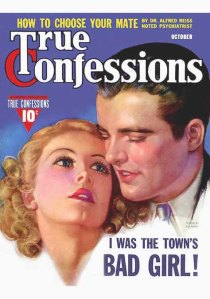
Zoe Mozert was one of the few female glamour/pin-up artists and she was one of the most famous.  A graduate of the Philadelphia School of Industrial Art, Mozert began her career as an illustrator in 1932.  She often used herself as her model and her illustrations were known for their realistic depiction of women.  Along with her pin-up work, she illustrated hundreds of covers for magazines like Romantic Movie Stories and True Confessions.

VGM Entry 38: Follin’s Ghouls’n Ghosts


VGM Entry 38: Follin’s Ghouls’n Ghosts
(Thanks to Tish at FFShrine for the banner)

Even as the Sega Genesis was coming into its own and the Super Nintendo was on the verge of release, Tim Follin reappeared to give the “old systems” a final touch of perfection. Though his non-ZX Spectrum works immediately following the 1987 Bionic Commando arrangement were fairly insignificant, he had learned a lot (not to mention ceased to be a teenager). By 1989 he was ready to take on the world, and put to the task of reworking the Ghouls’n Ghosts (Capcom) soundtrack for the Amiga and Commodore 64, he suffered a stroke of genius which few have yet to match.

This is the title theme to Ghouls’n Ghosts for the Amiga, released in 1988. Enjoy it.

Even the tracks which were not originally his took on a whole new life. With all due respect to Tamayo Kawamoto, Tim Follin’s work on the Commodore 64 rendition of “Stage Two” was a drastic improvement. From the very get-go, Kawamoto’s oompa tuba and staccato flute are replaced by a booming four-note bass line and a much smoother flute tone. The song exhibits delicious dynamics, with the flute sounding out loud for the first two seconds and then immediately quieting down to make room for a wavy, ghost-tone main melody line decisively more appropriate for the theme of the game than Kawamoto’s clarinet. Kawamoto’s counterpoint on the repeat isn’t entirely convincing, and after one time through the song transitions. Follin avoids layering the melody entirely, perhaps out of necessity, but the creativity of his additional repeats and the awkward yet delightful added percussion more than compensate. Limited in the number of tracks he could produce, Follin had no hope of replicating the second half of the song on a C64, so after faithfully playing out the lower track he just took off into his own imaginative world, leaving Kawamoto behind altogether from about the 1 minute mark on. Where Kawamoto’s entire song loops at 54 seconds, Follin’s is extended to a two and a half minutes and doesn’t loop at all, fading out as a completed piece before starting over.

The music to Level 5 on the Commodore 64 is another Follin original, and it kicks off with enough amplifier worship to make Sunn O))) proud. Unlike pretty much all of his previous works, Follin’s original tracks in Ghouls’n Ghosts exhibit a sense of awareness of the game itself. He wasn’t about to let the needs of the game hold him back, but he was for once shaping his music around an appropriate theme. Follin maintains the relativity until 1:18, at which point we’re suddenly treated to an Emerson Lake & Palmer progressive rockout. The soft distortion in the background of the whistle starting at 1:58 is just brilliant, if by now completely out of touch with the game. It briefly reminds me of foggy seaside songs like Jeremy Soule’s “Pirates of Crustacia” (Secret of Evermore, Square, 1995).

Make what you will of the “End Theme” track which follows. It’s nothing to brag about, but it’s part of the package. I think the “Hi-Score” tune wrapping up the video more than compensates.

So there’s perhaps your first encounter with Tim Follin outside of the ZX Spectrum. He’s by no means forgotten, but not overwhelmingly famous either. His work on Bionic Commando 1987 made a loud statement, and his ZX Spectrum works stand in a league of their own on the system, but the Commodore 64 and Amiga arrangements of Ghouls’n Ghosts are what really brought him into full form for the first time and cemented his place in history. He would never surpass his accomplishments in 1989, in my opinion, but he would maintain an impressively high standard for many years to come, and he would excel on a more diverse range of systems than most any other composer in the business.

Anime You Should Be Watching: Princess Tutu


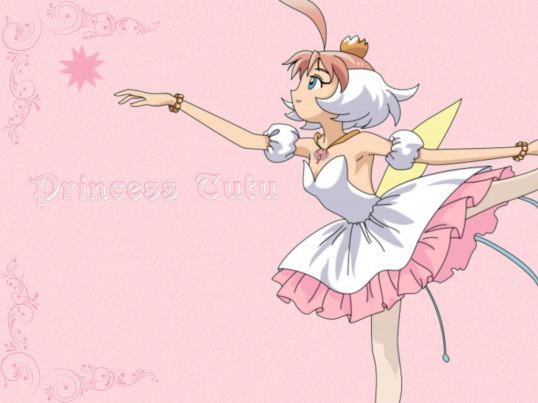
Mahou shoujo (magical girl) anime has become the bread-and-butter of the anime scene. Whether one would like to admit it or not they have watched some episode or an OVA of a magical girl anime by chance or accident. I mean if they caught reruns of Sailor Moon in the past 10 or more years then they’ve watched a magical girl anime. There’s one magical girl anime that hasn’t been getting as much attention even amongst anime watchers. It’s this mahou shoujo series that I think more people should be watching and I’m talking about Princess Tutu.

Princess Tutu is a series adapted from the manga of the same title written by Mizuo Shinonome. It’s a series that dares to do something different with the magical girl genre by relying less on violence and battles (people tend to forget that these series may be called magical girl but they’re also quite violent). The series is a sort of fairy tale but with the complex twists and turns that anime tends to layer onto something old and familiar to good effect. We have a duckling given the chance to become a human through a magical gem necklace. When in human form she resembles an awkward, sweet teen girl who reverts back to her duckling form if she quacks. Only by touching water once more can the duckling become the human girl Ahiru once more. This necklace, given to her by a sort of puppetmaster figure of the series, also allows Ahiru to take on the ballerina aspect of Princess Tutu whose mature bearing and expertise in ballet grants her special powers.

One could say that Princess Tutu only owes it’s mahou shoujo label due to the magical abilities granted to Ahiru in her Princess Tutu aspect, but other than that the series is quite different from such magical girl series like Sailor Moon, Puella Magi Madoka Magica and Magical Girl Lyrical Nanoha. While the series does have conflict between the other characters around Ahiru like Mytho, Fakir and Rue the fights doesn’t use the more typical magical duels and battles common in the genre. Instead the series uses a clever way of implementing ballet and it’s use to represent fight’s between characters.

Like some magical girl series of it’s kind Princess Tutu has it’s comedic and light-hearted moments. Where the series shines is when it delves into the darker side of the narrative. Just like the traditional fables and fairy tales this series works best when letting the darkness of the story come to the forefront instead of just being hinted at. It’s definitely a turn in the series’ narrative that may surprise some people who are expecting an anime that’s all about cute character. Ahiru and the rest of the cast might be animated young-looking (with the male leads looking androgynous), but the trials and tribulations they go through during the series’ run would be considered very adult if done live-action.

Princess Tutu is actually available as a complete set on DVD and not very expensive when compared to other anime DVD sets. So, if one looks at mahou shoujo anime as their cup of tea or just looking to dabble their feet into this type of anime then Princess Tutu is a good place to start. I would usually put up a trailer of this series to better give people an idea of what to expect but I think two great AMV (anime music videos) produced by two fans of the series best describes what people should expect.

There’s Danse De Raven by Chiikaboom…

…and then there’s Hold Me Now by Marissa Panaccio

6 Trailers That Came From Within


Hi there!  I hope everyone had a good weekend and that everyone took a few minutes to think about the true meaning of Labor Day (whatever that may be.)  Now that we’re all back and have returned to drudgery of everyday life, it seems like a perfect time for another edition of Lisa Marie’s Favorite Grindhouse and Exploitation Film Trailers!

1) They Came From Within (1975)

Seeing as I just recently saw Cosmopolis, it seems appropriate to start things off with this trailer for David Cronenberg’s Shivers or, as it was known here in the States, They Came From Within.

2) The Madmen of Mandoras (1963)

This film is also known as They Saved Hitler’s Brain.  It’s an odd little film.

3) Weekend With The Babysitter (1971)

Not to be confused with The Babysitter

4) The Babysitter (1995)

Not to be confused with Weekend With The Babysitter

5) Twisted Nerve (1968)

This looks tres creepy!

6) Son of Godzilla (1967)

Finally, did you know that Godzilla had a son?  Apparently, he did.

What do you think, Trailer Kitty?

Photograph by Erin Nicole Bowman

VGM Entry 37: DuckTales


VGM Entry 37: DuckTales
(Thanks to Tish at FFShrine for the banner)

Part of going over these older game scores involves a lot of legwork in tracking down their composers. Sometimes authorship is ascribed in a straight forward manner that raises no alarms, but more often developers were especially cryptic about their musical staff. Composers tended to go by aliases rather than proper names, and sometimes confusion between composition and sound programming lead to false assumptions. That is the topic I’d like to focus on again for this next 1989 NES title.

If you are not already familiar with NES music to some extent, this selection might seem like a joke at first glance. And after all, the first track in the video is nothing but a standard rendition of the original television theme. But as the standard expectation passes on and the soundtrack comes into its own, you’ll soon be forced to admit that DuckTales (Capcom, 1989) is indeed among the very best on the NES. If “The Amazon” (1:13) fails to instantly convince you, “The Moon” (2:16) most certainly should. It’s sad and beautiful to an extent approaching Yasunori Mitsuda’s “To Far Away Times”.

The funny thing is it’s not entirely clear who wrote it. You will almost always see it credited to Yoshihiro Sakaguchi (Yukichan no Papa)–the same Sakaguchi credited alongside Tamayo Kawamoto on Forgotten Worlds. This came into question in 2010. Yoshihiro Sakaguchi is actually a name I first encountered when I was listening to Mega Man and Mega Man 2, but I ran into an interview with Manami Matsumae, Takashi Tateishi, and Yoshihiro Sakaguchi on Square Enix Music Online (SEMO) which sorted all of that out.

I’ve mentioned a number of times the vaguaries surrounding the conversion of composition into actual game sound, especially in ports. When we’re talking Commodore 64 music this isn’t really an issue, as the composers were almost always responsible for the full project from start to finish as best I can tell. But when you get into platform systems like the NES and Genesis, and full sound teams like Taito’s Zuntata and Capcom’s Alph Lyla, the business gets excruciatingly vague. The interview expressly reveals that Manami Matsumae “did the background music and sound effects on the original Mega Man“, and Takashi Tateishi “did the background music and sound effects on Mega Man 2,” while Yoshihiro Sakaguchi “was in charge of programming the sound driver.” Where is the dividing line? Was Sakaguchi’s job to program the specific tones chosen by the composers, or did he choose the tones based on their compositions? Takashi Tateishi’s comments lead me to believe that there was some collaboration involed, and the divide in work load was by no means black and white. But we’re not talking the difference between say, composing a score and conducting an orchestra. The vast differences in quality between different ports, such as those I exemplified through “Dark Fact”/”Final Battle” from Ys I, should give you an idea of how absolutely critical the programmer/arranger/whatever you want to call its role must have been on these early systems.

My relevant point here is that any revelation that Yoshihiro Sakaguchi did not compose the vast majority of the music he is credited with should not necessarily downplay his significance. As for DuckTales in particular, it is quite safe to assume that it was composed by Hiroshige Tonomura, not Yoshihiro Sakaguchi. While the published content of the SEMO interviews never specifically addresses DuckTales, Chris on vgmdb, who had some insider knowledge, stated in responce to the DuckTales question that “there are a lot of other credits with his name in, sometimes only his name in, but Sakaguchi denied his involvement composing them.” User dissident93 followed this up by claiming to have contacted Manami Matsumae on Facebook and confirmed that Hiroshige Tonomura was the composer. Hiroshige Tonomura’s stint with Capcom was brief, joining Alph Lyla in 1988 and leaving alongside Tamayo Kawamoto for Zuntata only two years later, probably adding to the obscurity of his credits there. I am convinced he wrote it, and you probably should be too, but it does make for a fun little detective story.