Film Review: Lawless (dir. by John Hillcoat)


For most of 2012, I was excited about seeing one film and that film was Lawless.  Why was I so excited about seeing Lawless?  Well, first off, I had spent most of the year being bombarded by the film’s genuinely exciting trailer.  Seriously, that trailer was more entertaining than 80% of the film that I’ve seen this year.  Judging from the trailer, the film was a period piece that took place during one of my favorite decades, the 1920s.  The film dealt with bootleggers and I’m proud to say that there’s a few of those on my family tree.  The trailer also featured Gary Oldman firing a tommy gun, Jessica Chastain dancing, Guy Pearce acting odd, and Tom Hardy being all tough and Tom Hardy-like.

When I watched that trailer, it didn’t matter that the film starred Shia LeBouf (who has always struck me as being a bit of a whiney actor).   It didn’t matter that director John Hillcoat previously wasted good material with his adaptation of The Road.  It didn’t even matter that the film was greeted with indifference at Cannes.  “Oh,” I told myself, “that’s just the French critics being reflexively anti-American.  Lawless has Truffaut written all over it…”

The only thing that tempered my enthusiasm for Lawless was when the first of the 30-second commercials started to appear on television.  As opposed to the exciting trailer, these commercials made the film seem rather average and they now put less emphasis on the film’s stylistic excesses and more on the fact that the film was apparently “based on a true story.”  The tone of the television spots was so different from that of the theatrical trailer that it was hard not to conclude that the PR geniuses at the Weinstein Company weren’t sure how to sell the film.  I found myself wondering if Lawless would be as confused as its ad campaign.

Last Friday, I finally saw Lawless and judged for myself.

Lawless tells the story of the three Bondurant brothers.  In the 1920s, these brothers are succesful bootleggers who work out of rural Virginia and who maintain a peaceful coexistence with local law enforcement through a steady supply of bribes.  The oldest brother is a taciturn World War I veteran named Forrest (played by Tom Hardy.)  The youngest brother is Jack (Shia LeBouf), who idolizes violent gangsters like Floyd Banner (Gary Oldman).  The middle brother is Howard (Jason Clarke).  Howard spends most of the movie yelling.

Things are peaceful for the Bondurant brothers until, one day, a corrupt and oddly fastidious prohibition agent named Rakes (Guy Pearce) shows up and demands a cut of whatever profit the brothers make from their bootlegging.  Forrest refuses and soon Rakes and the Bondurants are engaged in a very violent and bloody war.

That war, however, doesn’t stop Jack from pursuing a relationship with a rebellious preacher’s daughter (played by Mia Wasikowska).  Meanwhile, Forrest hires a new waitress to work at the family bar.  Maggie (Jessica Chastain) is a former dancer from Chicago and soon, she and Forrest are cautiously pursuing their own relationship.  As for Howard, he yells a lot.

Lawless is an odd film.  The actors are all well-cast and Shia LeBouf probably gives his first genuinely good performance here.  The film’s violent action sequences are well-choreographed and one could even argue that, in the character of Rakes, the film is drawing a very relevent parallel to America’s own modern-day war on drugs.  And yet, as I watched the film, I felt oddly detached from the action onscreen and the Bondurants never came to life for me as individual characters that were worth rooting for.  I think the ultimate problem with Lawless is the same problem that Hillcoat ran into with The Road.  Lawless is a film full of beautiful visuals and striking sequences but none of it seems to naturally flow together.  As a result, the film is visually striking but narratively weak.

As a result, Lawless is ultimately a case of the triumph of style over substance.  How you react to the film will probably depend on how much importance you put into either one of those two elements.  If you’re willing to accept the film simply as a collection of striking visuals (as I was), you’ll find a lot to enjoy in Lawless but if you’re looking for something deeper, you’ll probably be disappointed.

You’re also going to be disappointed if you go to Lawless expecting to see a Gary Oldman film because Oldman is only in about four minutes of the film, his best scene is in the trailer, and his character lacks that touch of eccentric charisma that Oldman typically brings to his villains.  Instead, it falls to Guy Pearce to be eccentric and evil and he does a great job.  Sporting an accent as odd as his haircut, Pearce brings a brilliantly perverse jolt to even the simplest of line readings.  Lawless is at its best when its content to just let Guy Pearce play at being Gary Oldman.

Scenes I Love: Riki-Oh: The Story of Ricky


I finally got around to checking out Riki-Oh: The Story of Ricky over on Netflix Instant and It’s as great as the first time I saw it on VHS almost 15 years ago. It’s during the second fight Ricky finds himself in that I’ve picked the latest entry in the “Scenes I Love” feature.

This scene has Ricky in just his second day in prison (for a crime he did commit) and already gaining the attention of the prison gang leaders who control the different cell blocks. This scene has him fighting it out with Oscar who happens to be the leader of the gang that runs the North Cell. It’s a fight that has Ricky fighting unarmed against Oscar who wields a custom machete/saw-toothed sword. One would think that Ricky would be at a major disadvantage, but one would be oh so mistaken.

Ricky is not just a master of kung fu, but he’s got powers that Crouching Tiger and Hidden Dragon would kill babies and cook kittens to acquire. The scene best explains it all and having it dubbed in classic martial arts style makes it even better: “Alright! you got a lot of guts Oscar!”

VGM Entry 35: Forgotten Worlds


VGM Entry 35: Forgotten Worlds
(Thanks to Tish at FFShrine for the banner)

I mentioned that musicians had yet to properly exploit the capabilities of the Sega Genesis/Mega Drive in 1989. There were nevertheless some fairly decent efforts. I wouldn’t place most of them on par with Altered Beast, but they are still worth noting.

http://www.youtube.com/watch?v=e2TUDR3RcVA

I have seen Herzog Zwei (TechnoSoft, 1989) mentioned from time to time on ‘best of the Genesis’ type lists. It was composed by Naosuke Arai and Tomomi Ootani, and it was one of the earlier games to be released exclusively for the Genesis/Mega Drive. As a pretty standard action soundtrack, it was a definite improvement over Space Harrier II and Super Thunder Blade, and it’s got a few memorable moments, especially towards the beginning of this mix. But it sort of feels, to me at least, as though it could have functioned on just about any system. It seems backwards-compatible I guess, as if it could be transposed to the NES or SMS without any real alterations beyond the difference in tone quality. There weren’t too many Genesis titles against which to compete in the 80s, and I suppose it comes out near the top of its small field, but the quintessential sound of the system still remained to be defined.

http://www.youtube.com/watch?v=mXZOkCGo2qA

Phantasy Star II (Sega, 1989) I am a bit more fond of. The Genesis was never well known for its RPGs and adventure games, but it did have them. Phantasy Star was Sega’s own attempt at an RPG series, and its second installment was the first to appear on the Genesis/Mega Drive. Like Herzog Zwei, it was released exclusively for one system. It was composed by Tokuhiko Uwabo, or “Bo” as he’s credited–that same Bo who contributed to the rather poor Ys I SMS port I mentioned earlier. But whatever went wrong there, Phantasy Star II turned out alright.

I’d hardly call it typical RPG music. It ranges from relaxed jazz to pretty hoaky pop. It’s got some awful tracks, and there’s no getting around that. Parts of it are better off in outdated infomercials (0:44). But when it’s not bad it’s pretty enjoyable and wholly appropriate. You don’t need to see any video to know that this is not your typical wizards and knights in shining armor game, but rather something futuristic or space-oriented. It wasn’t the first game to musically break with RPG tradition. Ys II certainly did the previous year. But Phantasy Star II exhibits a great degree of stylistic consistency, despite its frequent shortcomings. All of the music is closely related through a fairly unique sound. And since that sound was definitely impossible to attain on the SMS or NES, as you can easily tell, it can be regarded as one of the first games to really put the Genesis’s capabilities to proper use. It is mainly Tokuhiko Uwabo’s hesitancy to can the cheesier tracks, not featured in this sample, which prevent it from leaving a very noteworthy mark on the development of video game music. I would also argue that the style is just a little too restricting to reflect the inherent diversity of an RPG, but it’s a solid effort in creatively applying new technology. My personal favorite is “Over” (4:13).

Capcom’s Forgotten Worlds, credited to Tamayo Kawamoto and Yukichan no Papa (Yoshihiro Sakaguchi), is a pretty interesting case. You may remember Tamayo Kawamoto from the original arcade versions of both Commando and Ghouls’n Ghosts. I have reason to believe that Tamayo Kawamoto actually wrote the music, while Yoshihiro Sakaguchi may have been responsible for the finished product and port. But I am not certain of this. At any rate, it is one of the most eclectic and bizarre game soundtracks I have ever heard, and while it’s just a little too weird to be brilliant, it cannot be wholly ignored. As with the vast majority of early Genesis/Mega Drive titles, it was released on a wide variety of platforms. The version you are hearing right now is from the 1988 arcade original. Make what you will of it. What I would like to emphasize is the differences in the Genesis port.

http://www.youtube.com/watch?v=WXYkz1kpBDc

This version, released in 1989, is an exact replica of the original in structure. Only the tones have changed. The first thing you’re bound to notice is that the opening organ on the Genesis sounds downright sinister. The arcade version has no such effect. As the song progresses, the Genesis version remains decisively sharper and more pronounced until around the break at 47 seconds. Here the composition demands a degree of clarity that the Genesis just fails to pull off. The flute is too raspy, and both the pulse tone and the sporadic deep note lack the depth of the original. It’s only as the main melody starts to run wild ten or so seconds later that the merits of the Genesis return, giving it a much more disturbing sort of feel.

I trust that both versions of the song were prepared with care. Such a peculiar song could be easily butchered, and that the Genesis version sounds, to me at least, slightly better, says something about the mindfulness with which they prepared it. It also makes the these two versions of the score a fruitful means to assess the differences between the sounds of the Genesis and the ‘arcade standard’ of the time. The Genesis seems to have lacked a little bit of the depth of arcade sound systems, but it compensated with a greater distinction of tones. Everything is a lot more pronounced in the Genesis take, and it’s only when the original calls for subtlety that the Genesis comes up a little short. I think you can hear much more vividly Tamayo Kawamoto and Yoshihiro Sakaguchi’s juxtaposition of peaceful and deranged tones in the port version, because it forcefully distinguishes the latter.

If you want a really interesting experience, try and sync up the two songs and play them simultaneously. The effect is pretty cool–better than either version individually–and you may observe that the arcade version is capable of much deeper bass tones. As I’ve always regarded Genesis music as being heavily bass-driven, at least in comparison to the Super Nintendo, this came as a bit of a surprise.

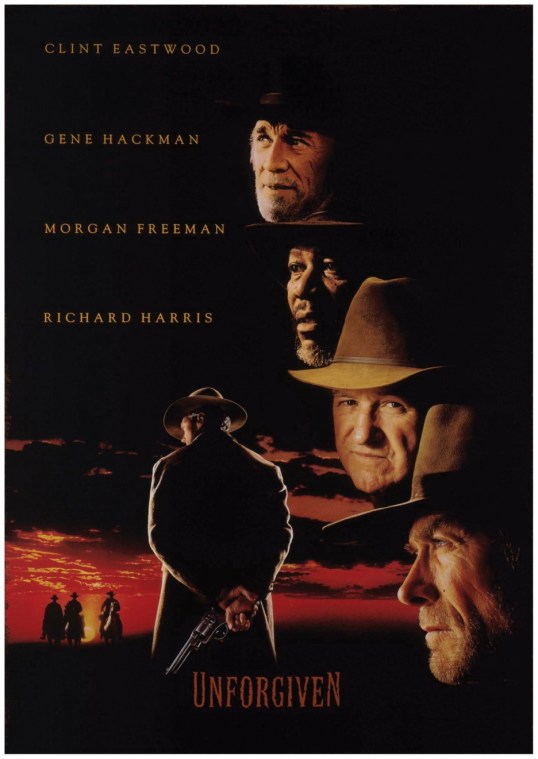
Unforgiven Remake to be a Samurai Film


Anyone who complains that all Hollywood does nowadays are sequels and remakes should think before they start to rant. Sequels and remakes are not exclusive to Hollywood (Bollywood anyone) and it’s been a tried-and-true practice both inside and outside the glitzy confines of Hollywood. Sergio Leone took classic Kurosawa samurai films and remade them into the classic spaghetti Westerns which made Clint Eastwood a household name (pre-RNC chair).

Now Japan is looking to take one of the best Westerns of the past quarter-century in Eastwood’s own critically-acclaimed and award-winning Unforgivenand remake it as a samurai film set in 188’s Japan. The film will star Ken Watanabe in the same role Eastwood had in his film with fellow actors Akira Emoto and Koichi Sato rounding out the cast. The remake will have the title of Yurusarezaru-mono and will closely follow the same story of Eastwood’s film with just changes in location and other cultural changes.

The film will be directed by award-winning Korean filmmaker See Sang-il and should see a release date sometime around 2013.

I, for one, am looking forward to see how this remake will turn out. Jidaigeki (samurai period films) have seen a resurgence in Japanese cinema these past couple years and it’s going to be interesting to see how one of Eastwood’s Western masterpieces will turn out as a samurai drama. Fans of both genres have a mutual understanding that the Western and the samurai films share similar themes and character traits so it shouldn’t have been a surprise that Unforgiven will be remade into a samurai. What is a surprise is that Japan took twenty years to decide to do it.

Source: Variety