“Everything is backwards now, like out there is the true world, and in here is the dream.” — Jake Sully
When was the last time a film became an experience for you—not just a story that made you think, but one that swept you up and immersed you completely? The most hyped film of 2009, and likely of this decade, was such an experience for me. James Cameron’s Avatar, a project over fifteen years in the making, more than lived up to the hype that followed it from the earliest production leaks.
Avatar is not the greatest film ever made, nor does it revolutionize filmmaking the way Technicolor did in the late 1950s and early 1960s. What Cameron has accomplished is providing a blueprint for how filmmakers can bring audiences closer to the stories they tell. Stories and ideas once considered unfilmable due to technological limitations are now within reach. Avatar is an experience that should be seen, regardless of whether one embraces its story. The narrative is not original—some may be reminded of an Oscar-winning film directed by Kevin Costner or an animated feature with “Gully” in the title. While the lack of originality is noticeable, the story works within the context of Cameron’s vision. Clichéd and hackneyed dialogue aside, it serves the film well. Cameron’s writing may not rival that of Kaufman or Mamet, but he knows how to tell a simple story and keep the audience engaged.
With that flaw acknowledged, I haven’t felt this way about a film—nor even the best I’ve seen this year—since the first time I watched The Fellowship of the Ring or, before that, Spielberg’s Jurassic Park. Only a few films truly sweep me into their world and hold me there. It didn’t matter that Avatar wasn’t the second coming of Rashomon or this generation’s Citizen Kane. What I watched, I fully bought into. The world of Pandora, imagined by Cameron and brought to life by WETA Digital and ILM, felt real. The detail, clarity, and dedication in its creation gave me hope that creative boundaries once thought uncrossable are now being stepped over.
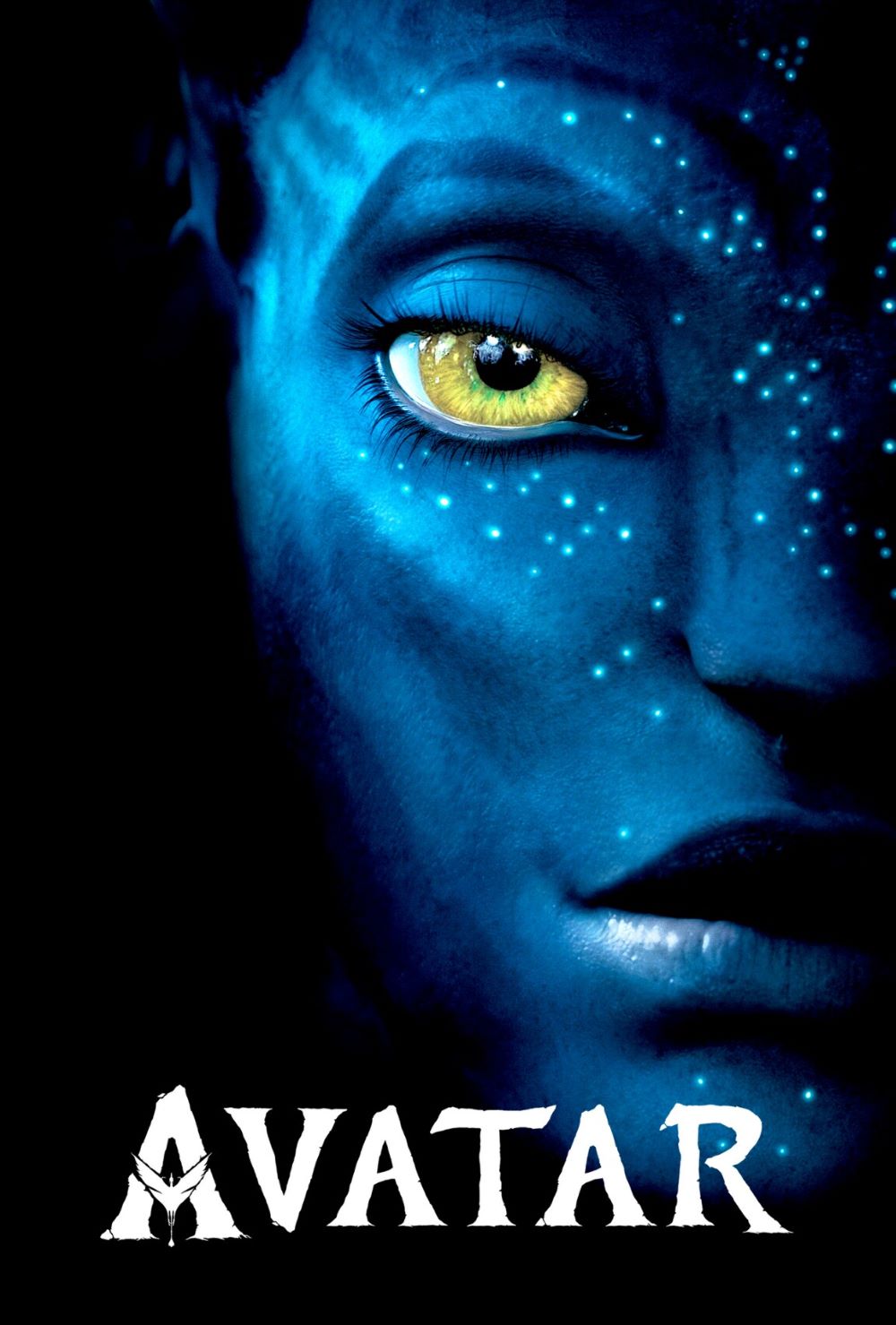
While the film is also available in 2D for theaters without 3D capabilities, it must be seen in 3D, ideally in IMAX 3D. Cameron’s use of the new “emotion capture” cameras he helped develop achieves a level of CGI photorealism that avoids the “Uncanny Valley” effect seen in films like The Polar Express, Beowulf, and A Christmas Carol. The groundbreaking “mo-cap” technique, refined by WETA Digital for The Lord of the Rings trilogy, convinced Cameron it was time to make Avatar as he envisioned. The Na’vi are now the most realistic CGI characters ever put on screen, surpassing even Gollum. Cameron demonstrates that the limit of CGI use is not quantity, but how it is implemented. Lucas, Bay, and others who have misused CGI have much to learn from Cameron’s achievement.
It took a few minutes to adjust to the 3D effect, but once my eyes adapted, the film’s magic took hold. The distinction between CGI and live-action scenes blurred and eventually disappeared. Even the best CGI-heavy films sometimes break immersion, but Avatar never did. This total immersion helped me overlook the story’s familiarity and, for some, its ordinariness.
Despite the material, the performances ranged from good to excellent. The villains, while written one-dimensionally, were played with enough conviction to be believable. Giovanni Ribisi’s corporate weasel, a clear echo of Burke from Aliens, was cartoonish in motivation, but Cameron is not known for deep, well-rounded characters. The standout was Stephen Lang as Colonel Miles Quaritch. His scenery-chewing performance was riveting, stealing the film from Sam Worthington’s “hero on a journey.” While Lang’s performance may not win awards, it stands as one of the year’s most memorable, joining the ranks of characters audiences love to hate.
Some may think I’ve joined the Cameron fan club, but I can’t explain why I love this film despite its flaws: the familiar story, clichéd dialogue, and one-dimensional characters. Is Avatar just a technical and visual marvel? Yes, and more. Does the CGI and bombastic climax overshadow the storytelling? No, it actually propels the story forward, much like Jake Sully’s own fragile legs.
In the end, my love for Avatar comes down to the experience it provided—a rare occurrence in modern cinema. Cameron didn’t make a perfect film, nor one better than sliced bread. But he created a filmgoing experience that will be remembered decades from now, much like the first time audiences saw Star Wars and believed in Jedi and space battles, or Superman and believed a man could fly. Cameron’s Avatar made me believe in Pandora, a place I hope to visit, or at least experience through his eyes. I’m eager to see what he—and other filmmakers inspired by his work—will create next.
Nice write up! I think the story gets too much heat, frankly. As we discussed on twitter, OS Card and Robert Heinlein have become sci-fi masters largely by recycling concepts that have come before.
I was not on board with the acting as much as you. The second time I saw it I could not get past the dialogue in the first 1/3 of the film. One does tend to forget about such things after that. And of course dialogue is more direction and script than acting – but it is still hard to separate the two. I thought Ripley was just as one dimensional as the villains.
The FX were stunning though. I did not think the capture effect of the navi were better than that of Gollum, but the principle applied in the movie and the complete tactile quality and alien factor of an alien land was awesome. Never has a new world been created in such detail and realism. That alone makes one forgive most of the contrivances.
My problem is that I’ll have no real reason to own it on DVD 😦
I think I did go a tad man-crush on Stephen Lang’s performance. It definitely was one-note, but man did he play that single-note to an inch of it’s life. Best moment of his character IMO was when he saw Jake and his group escaping and he takes a deep breath, opens the hatch and starts firing away at them despite not putting on a rebreather mask. And he does it after firing two weapons.
As for the perf/mo-cap effects being better than Gollum I’d still say yes in that they really captured the faces of the actors. Gollum looked great but never looked like Serkis. Both Cameron and WETA will make a ton on the improvements they made from the LOTR mo-cap tech.
As for DVD, maybe Cameron will tell Fox to hold off on releasing it on Blu-Ray/DVD until the home HDTV 3D tech have caught up. 🙂
I know I’m a bit late to the party here. But I just saw this film in IMAX 3D.
Wow, just wow. Several weeks before the film was released, I didn’t think I’d even see the film. The hype machine really turned me off on the whole thing; south park’s smurf episode just added to it. But man, I walked out afterward feeling obsessed with the film. Such color, such depth in the picture. I’m sold on digital 3d now and am fully on board with Avatar.
 Through the Shattered Lens
Great review and good to see you’ve started your own blog.
Keep posting and I’ll keep reading
LikeLike
Nice write up! I think the story gets too much heat, frankly. As we discussed on twitter, OS Card and Robert Heinlein have become sci-fi masters largely by recycling concepts that have come before.
I was not on board with the acting as much as you. The second time I saw it I could not get past the dialogue in the first 1/3 of the film. One does tend to forget about such things after that. And of course dialogue is more direction and script than acting – but it is still hard to separate the two. I thought Ripley was just as one dimensional as the villains.
The FX were stunning though. I did not think the capture effect of the navi were better than that of Gollum, but the principle applied in the movie and the complete tactile quality and alien factor of an alien land was awesome. Never has a new world been created in such detail and realism. That alone makes one forgive most of the contrivances.
My problem is that I’ll have no real reason to own it on DVD 😦
LikeLike
I think I did go a tad man-crush on Stephen Lang’s performance. It definitely was one-note, but man did he play that single-note to an inch of it’s life. Best moment of his character IMO was when he saw Jake and his group escaping and he takes a deep breath, opens the hatch and starts firing away at them despite not putting on a rebreather mask. And he does it after firing two weapons.
As for the perf/mo-cap effects being better than Gollum I’d still say yes in that they really captured the faces of the actors. Gollum looked great but never looked like Serkis. Both Cameron and WETA will make a ton on the improvements they made from the LOTR mo-cap tech.
As for DVD, maybe Cameron will tell Fox to hold off on releasing it on Blu-Ray/DVD until the home HDTV 3D tech have caught up. 🙂
LikeLike
I know I’m a bit late to the party here. But I just saw this film in IMAX 3D.
Wow, just wow. Several weeks before the film was released, I didn’t think I’d even see the film. The hype machine really turned me off on the whole thing; south park’s smurf episode just added to it. But man, I walked out afterward feeling obsessed with the film. Such color, such depth in the picture. I’m sold on digital 3d now and am fully on board with Avatar.
LikeLike
Avatar still sucks. 🙂
LikeLike
It took you long enough to comment here. 🙂
LikeLike