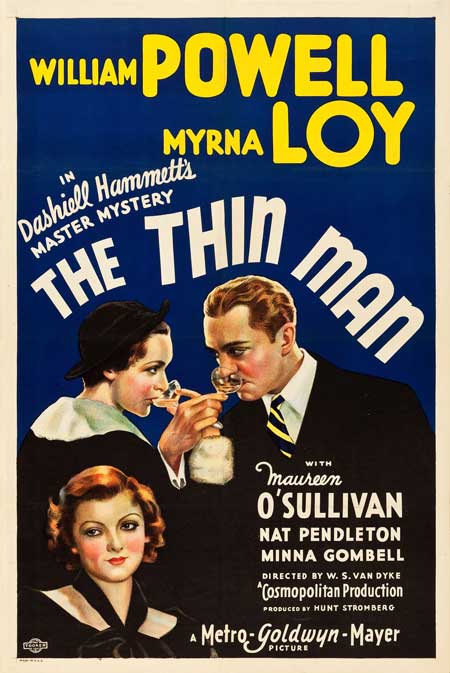
Lisa Reviews An Oscar Nominee: The Thin Man (dir by W.S. Van Dyke)


the_thin_man_1934_poster

Last night, I rewatched the classic 1934 mystery-comedy, The Thin Man.

And you know what?

Nick and Nora Charles should be everyone’s relationship goal.

Technically, The Thin Man is a murder mystery and it’s actually a pretty good one.  While I was rewatching the film, I was surprised to see that the whodunit aspect of the plot held up far better than I remembered.  But, ultimately, the movie is really a portrait of the ideal romance.  Every couple should aspire to be like Nick and Nora.

Nick Charles (William Powell) is a retired private detective, an unflappable gentleman who speaks exclusively in quotable quips.  Nick is the type who can apparently spend every hour of the day drinking without ever getting stupidly drunk.  He has beautiful homes on both coasts and a list of friends that would make anyone jealous.  Whether cop or crook, everyone loves Nick.

Nora Charles (Myrna Loy) is Nick’s wife.  She’s independently wealthy.  She’s beautiful.  She’s always chic.  She is always the smartest and funniest person in the room.  And she’s probably the only person who can outquip Nick.  Nora loves Nick’s lifestyle, whether they’re throwing a party or literally shooting ornaments off of a Christmas tree.  As Nora says at the end of one crowded party, “Oh, Nicky, I love you because you know such lovely people.”

And, of course, there’s Asta.  Asta is their terrier.  If Nick and Nora are the ideal couple, Asta is the ideal pet.  Asta is just as quick to investigate a mystery as Nick and Nora.  Asta may be a playful dog but he’s also remarkably well-behaved.  No insistent yapping.  No accidents on the carpet.  No growling at visitors.  As I’ve mentioned many times on this site, I’m not a dog person but I love Asta.

It’s not just that Nick and Nora are obviously in love and, in this pre-code film, they’re actually allowed to express that love.  And it’s not just that they say things in The Thin Man that they wouldn’t be allowed to get away with in the film’s sequels.  (If you have any doubt that this is a pre-code film, just check out the scene where the police are going through Nora’s dresser.  “What’s that man doing in my drawers?” Nora demands while Nick does a double take.)  It’s that Nick and Nora seem to be having so much fun.  They’re wealthy.  Other than to themselves, they really have no commitments.  (Nick only comes out of retirement because Nora say she thinks a mystery sounds like it would be fun to solve.)  They have no children to worry about.  Even if you don’t want to be either Nora or Nick by the end of this film, you’ll still definitely want to hang out with them.

The Thin Man is a murder mystery.  In fact, it’s probably one of the most enjoyable movies ever made about a double murder.  Dorothy Wynat (Maureen O’Sullivan) asks Nick to help find her father (Edward Ellis), the thin man of the title.  The investigation leads to a rather complicated mystery, one in which everyone that Nick and Nora meets is a suspect.  I have to admit that, with my ADD, I always have a hard time following all of the clues.

Of course, so does Nick.  That truly is part of the appeal of The Thin Man.  Nick is often confused about what it all the clues and evidence add up to but that never seems to upset him.  He and Nora are too busy enjoying themselves to get upset. That’s one reason why, even after you know who the murderer is, The Thin Man is a movie that’s enjoyable to watch over and over again.  The Thin Man is less about the mystery and more about the way Nick and Nora manage to throw the perfect dinner party even as they reveal who the murderer is.

1934 was a good year for comedy.  The Thin Man was nominated for best picture but it lost to another charming little comedy, It Happened One Night.
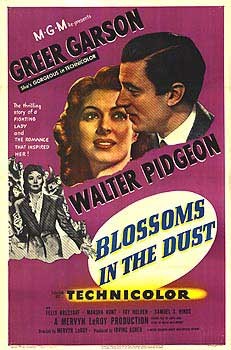
Lisa Reviews An Oscar Nominee: Blossoms In The Dust (dir by Mervyn LeRoy)


Blossoms_dust_movieposterDid you know that up until the year 1936, if a child was born to unwed parents, it was common practice to actually put the word “illegitimate” on that child’s birth certificate?  As you all know, I am perhaps the biggest history nerd in the world and, while I knew that there was once a huge stigma associated with being born outside of marriage, I did not know just how institutionalized that stigma was.

I’m also proud to say that my home state of Texas — the state that all the yankees love to bitch about — was the first state to ban the use of the word “illegitimate” on birth certificates.  This was largely due to the efforts of Edna Gladney, an early advocate for the rights of children.  Along with starting a home for orphans and abandoned children in Ft. Worth, Edna also started one of the country’s first day care centers for the children of working mothers.

That’s right — there was a time when day care was itself a revolutionary concept.

I have TCM to thank for my knowledge of Edna Gladney, largely because TCM broadcast a 1941 biopic called Blossoms in The Dust.  According to Wikipedia, the film was a highly fictionalized look at Edna’s life but, to be honest, I would have guessed that just from watching the movie.  While Blossoms In The Dust gets the important things right (and it deserves a lot of credit for sympathetically dealing with the cultural stigma of being born to unwed parents at a time when it was an even more controversial subject that it is today), it’s also full of scenes that are pure Hollywood.

In real life, Edna knew firsthand about the challenges faced by children of unwed parents because she was one herself.  Apparently, at the time, that was going too far for even a relatively progressive film like Blossoms In The Dust so, in Blossoms, Edna (played by Greer Garson) is given an adopted sister named Charlotte (Marsha Hunt).  When the parents of Charlotte’s fiancée discover that she was born outside of marriage, they refuse to allow Charlotte to marry their son.  In response, Charlotte commits suicide.

In real life, Edna was born in Wisconsin but, following the death of her stepfather, moved to Ft. Worth to stay with relatives.  Edna was 18 at the time and eventually met and married a local businessman named Sam Gladney.  In Blossoms in The Dust, Edna is already an adult when she first meets Sam (played by Walter Pidgeon, who played Greer Garson’s husband in a number of films) and they meet in Wisconsin.  It’s only after Charlotte dies that Edna marries Sam and it’s only after they’re married that Edna moves to Texas.  Whereas the real life Edna had relatives in Texas, the film’s Edna is literally a stranger in a strange land.

That said, the film is actually rather kind to my home state.  The film spend a lot of time contrasting the judgmental snobs up north with the more straight-forward people who Edna meets after she moves to Ft. Worth and it’s occasionally fun to watch.  (Of course, I would probably feel differently if I was from Wisconsin.)

Blossoms In The Dust was nominated for best picture but it lost to How Green Was My Valley.  Greer Garson was nominated for best actress but she lost to Joan Fontaine in Suspicion.  However, just one year later, Garson would win an Oscar for her performance in the 1942 best picture winner, Mrs. Miniver.  Incidentally, her husband in that film was played by none other than Walter Pidgeon.

Ultimately, Blossoms in the Dust is typical of the type of movies that you tend to come across while watching films that were nominated for best picture.  Some best picture nominees were great.  Some were terrible.  But the majority of them were like Blossoms in the Dust, well-made, respectable, and just a little bit bland.  Blossoms in the Dust is not bad but it’s also not particularly memorable.  If, like me,  you’re a student of history and social mores, Blossoms in the Dust has some historical interest but, when taken as a piece of cinema, it’s easy to understand why it’s one of the more forgotten best picture nominees.