4 Shots From 4 Films is just what it says it is, 4 shots from 4 of our favorite films. As opposed to the reviews and recaps that we usually post, 4 Shots From 4 Films is all about letting the visuals do the talking.
Today, we celebrate the birthday of Jeff Bridges! It’s time for….
4 Shots From 4 Jeff Bridges Films
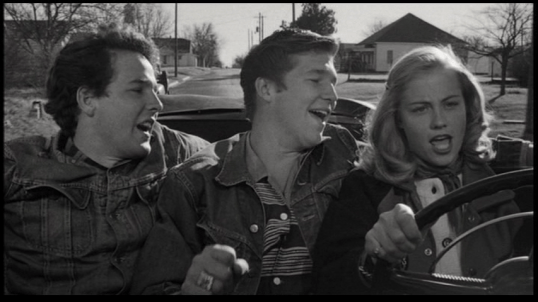
The Last Picture Show (1971, dir by Peter Bogdanovich, DP: Bruce Surtees)
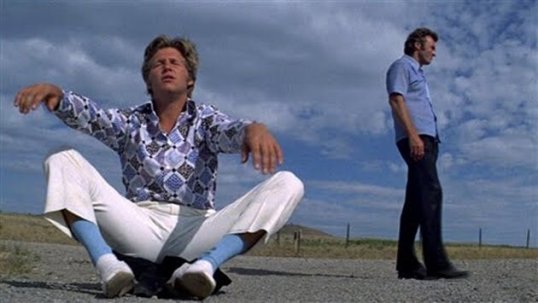
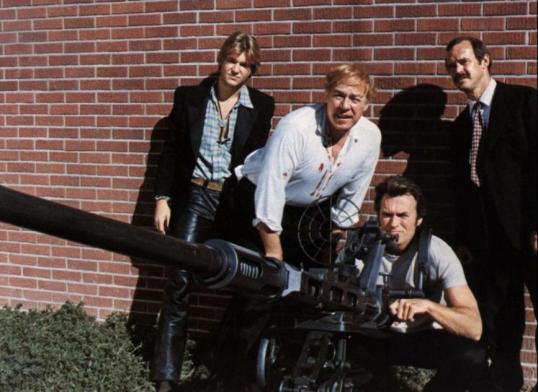
Thunderbolt and Lightfoot (1974, directed by Michael Cimino, DP: Frank Stanley)
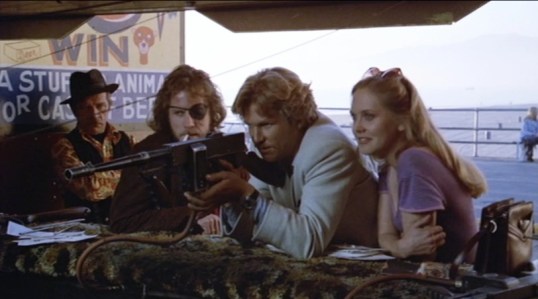
Cutter’s Way (1981, dir by Ivan Passer, DP: Jordan Cronenweth)
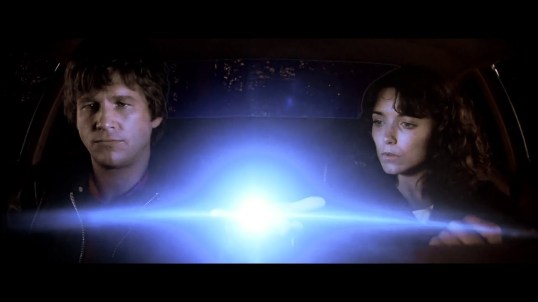
Starman (1984, dir by John Carpenter. DP: Donald M. Morgan)
1974’s Thunderbolt and Lightfoot opens with two men, one young and one middle-aged, facing a moment of truth.
The younger of the two is Lightfoot (Jeff Bridges), a wild and hyperactive rich kid who is in his 20s and who steals a corvette right off of a used car lot. The other man is simply known by his nickname, Thunderbolt (Clint Eastwood). When we first see Thunderbolt, he’s giving a sermon in a small Montana church. When a gun-wielding man steps into the church and promptly starts firing at Thunderbolt, he takes off running. Pursued by his attacker, Thunderbolt runs through a field and just happens to jump onto Lightfoot’s speeding corvette. Lightfoot runs over the Thunderbolt’s pursuer. Thunderbolt slips into the car and Lightfoot drives on for a bit. Lightfoot is excited and talkative. Thunderbolt is more concerned with popping his shoulder back into its socket. A stop at a gas station leads to the men stealing someone else’s car.
And so it goes for a good deal of the movie. Thunderbolt and Lightfoot is a road movie, the majority of which is taken up with scenes of the two men just hanging out. Thunderbolt and Lightfoot take an instant liking to each other. When Lightfoot picks up a prostitute (Catherine Bach), he makes sure to ask that she bring along a friend for Thunderbolt. When a criminal punches Lightfoot, Thunderbolt is quick to punch back. “That’s for the kid,” Thunderbolt says. That’s the type of friendship that they have. Jeff Bridges is handsome and full of energy as Lightfoot and Clint Eastwood smiles more in this film than I think I’ve seen him smile in any other film. For once, Eastwood is not playing a perpetually grumpy stranger or a supercop. Instead, he’s just a blue collar guy who enjoys having a friend to travel with.
Eventually, Thunderbolt and Lightfoot meet up with two of Thunderbolt’s former associates. Red (George Kennedy) is a brutal brawler who, it is suggested, served with Thunderbolt in the Korean War. Goody (Geoffrey Lewis) is a gentle soul who takes orders from Red but still can’t bring himself to shoot anyone, no matter how much Red demands that he pull the trigger. Red and Goody have always assumed that Thunderbolt stole the loot from a bank robbery that they pulled off. Thunderbolt explains that he didn’t steal the money. He just got arrested after hiding it. Lightfoot suggests that maybe the four of them could pull off another bank heist….
Kennedy and Lewis are perfectly cast as the two criminals who end up working with Thunderbolt and Lightfoot. In many ways, the relationship between Red and Goody mirrors the relationship between our lead characters. The main difference is that Red is sadistic and quick to loose his temper, whereas Thunderbolt controls his emotions and tries not to hurt anyone while committing his crimes. Lightfoot looks up to Thunderbolt and Goody looks up to Red. Again, the difference is that Thunderbolt actually cares about Lightfoot, whereas Red is incapable of truly caring about anyone but himself. Eastwood, Bridges, Kennedy, and Lewis make quite a team and it’s hard not to worry about all four of them, especially when the film takes an unexpectedly dramatic turn during its third act.
I really wasn’t expecting Thunderbolt and Lightfoot to make me cry but the final thirty minutes of the film brought tears to my eyes as what started out as a buddy comedy turned into a tragedy. (I shouldn’t have been surprised. I’ve seen enough 70s movies that I really should have known better than to have expected a happy ending.) Thanks to the perceptive script by Michael Cimino (who would go on to make The Deer Hunter and Heaven’s Gate) and the performances of Eastwood and Bridges, the movie’s final moments carry quite a punch and they leave you wondering if Thunderbolt and Lightfoot’s road trip was worth the price that was ultimately paid. The film works as not only a tribute to friendship but also as a fatalistic portrait of life on the backroads of America.
Thunderbolt and Lightfoot was the first Eastwood film to receive an Oscar nomination, with Jeff Bridges competing for Best Supporting Actor. (He lost to Robert De Niro’s star turn in The Godfather, Part II.) Eastwood, reportedly, felt that he deserved a nomination for his performance as Thunderbolt and, considering that that Oscar itself was won by Art Carney for his pleasant but hardly revelatory work in Harry and Tonto, Eastwood was correct. Instead, Eastwood would have to wait for another 18 years before he finally received Academy recognition for starring in, producing, and directing Unforgiven.
 Through the Shattered Lens