The history of dictatorship is littered with failed writers.
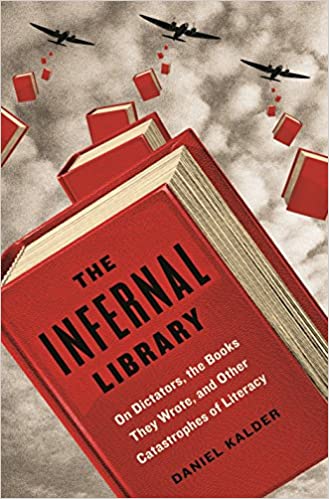
That’s one of the lessons that I learned from reading Daniel Kalder’s 2018 book, The Infernal Library. The Infernal Library takes a look at the literary output of some of the worst people who have ever lived. Some of the dictators and the books examined are to be expected. Everyone knows that Hitler wrote Mein Kampf while in prison and everyone knows that it’s a terrible book, from both a literary and a moral perspective. Many people also know that Chairman Mao was credited as authoring several books, many of which were treated as holy texts by radicals in the west who read and quoted from them while, in Mao’s own country, intellectuals were being murdered during the Cultural Revolution. And, of course, the works of Lenin and Stalin have recently found renewed popularity amongst the heirs of Walter Duranty.
But did you know that Benito Mussolini, long before he took over Italy, wrote florid novels that attacked the power of the Church? Did you know that Saddam Hussein was not only Iraq’s feared leader but also it’s most popular novelist? Did you know that Saparmurat Niyazov Turkmenbashi, leader of the nation of Turkmenistan, not only wrote his own hybrid historical-religious text but that he also sent into space so that it can be discovered and read by any intergalactic travelers who came across it?
What is up with dictators and their literary pretensions? I suppose it does make a strange sort of sense. The typical psychological profile of a writer is that they’re cynical, they’re comfortable working alone for long periods of time, they often feel alienated from mainstream and/or conventional society, and they feel that they not only have something to say but that they are the only ones who can say it. If someone who fits that profile also has talent and imagination, they’re capable of creating powerful works of art. If someone who fits that profile doesn’t have talent or imagination, then they can take over a country and force their subjects to not only read their books but to also talk about how well-written they are. As well, a literary output allows a dictator to fashion themselves as being something more than a thug. Being a published writer brings with it an aura of respectability. The more gullible assume that you must have something worth saying because otherwise, why would someone have published it?
In The Infernal Library, Daniel Kalder writes that he read these book so “you wouldn’t have to” and for that, we should perhaps be thankful. Along with often being second-rate minds, dictators are also often second-rate writers and Kalder examines their work with both a razor-sharp wit and a knowledge that the books themselves reveal much about the men who wrote them. Hitler’s paranoia, resentment, and conspiracy-fueled world-view are present on every page of Mein Kampf and, indeed, while the rest of Europe’s leaders were trying to negotiate with and contain him, they could have just read his book and discovered that their efforts would be for naught. The mix of ruthlessness and prejudice that led to Stalin starving his own citizens can be found in his own words while Saddam Hussein’s novels reveal a mind that was obsessed with a mix of preserving tradition and punishing those who have somehow failed. While some of the dictators spend more time on their ideology than others, all of them share an obsession with exposing their perceived enemies, justifying their own actions, and demanding to be respected by a world that they feel has treated them unfairly. Almost every dictator that Kadler profiles strives (often a bit too hard) to prove their literary worth while ultimately revealing the true darkness at the heart of their worldview. Indeed, only a youngish Mussolini appears to have had even the hint of any real ability as a writer, authoring sordid novels with a satirical subtext. But whatever literary talent he may have had disappeared once he gave his life over to fascism. Authoritarianism and imagination do not go well together. Indeed, imagination is perhaps the biggest enemy that the authoritarian has. The great irony is that so many dictators demanded to known as men of imagination when imagination and freedom of thought was often the first thing that they tired to stamp out upon coming to power.
The Infernal Library is an interesting and important book. Read it so you don’t have to read any of the people profiled within.


 Through the Shattered Lens