Artist Profile: Luis Royo


LUIS ROYO


Art is a word that has a broad meaning. It could mean art in the sense of how some people perceive music and films. Some people have begun to look at video games and similar entertainment media as art. I will always look at art, first and foremost, the realm of painters and those who create images on canvas and other similar materials. I also consider such individuals as purveyors of their own brand of entertainment. While some may not find entertainment when looking upon the works of masters in a gallery for others it’s the highest form.

To start of a feature that will profile artists who have contributed to the furthering of their craft I choose one of my favorite artists of any field today. The first artists chosen is Spanish fantasist Luis Royo whose work has spanned several decades. His distinctive style of blending the sensual and erotic female form with very dark and apocalyptics settings and background has made Luis Royo one of the preeminent artist in the scifi and fantasy literary world. Royo has done covers for genre literature and has even branched out to creating covers for heavy metal bands and video game titles.

Luis Royo’s particular style was first limited to sketches whose images then unveils fully once he has put brush (both traditional and mechanical air) to the canvas. Such pieces have become quite sought after by collectors. While he’s not averse to having his pieces sold to private buyers it’s usually a rare thing for him to sell from his own collection. Most of his artistic pieces owned by private art collectors have been those sold by owners who had contracted Royo to do the piece for them.

In the 1990’s he began to create pieces both in sketch and finished form and collected them into artbooks. These books usually had their artwork fall under a specific theme Royo had in mind to tie everything together. Such collected artbook like Malefic, Prohibited, Tattoos and Subversive Beauty have become fan favorites and one doesn’t have to look too hard to find them in bookstores and comic book collectible shops.

In the last couple of years, he has begun to branch out to creating his artistic pieces using other mediums. He has begun to bring his own paintings to three-dimensional life through sculpture which he saw as just a logical step in his evolution as an artist. Maybe he’ll begin to learn how to adapt his subversive beauties beyond canvas and sculpture and into the world of CGI. From this artistic genius I wouldn’t put it past him not to make that next step into the digital realm.

Official Luis Royo Website

The Daily Grindhouse: Tomb of the Blind Dead (dir. by Amando de Ossorio)


TombsoftheBlindDeadIt is once again time for another offering of The Daily Grindhouse. This time around our latest grindhouse flick comes straight from Spain. I speak of the classic zombie flick, Tombs of the Blind Dead.

The film was shot and filmed wholly in Spain in 1971 by one of Spain’s foremost horror directors, Armando de Ossorio. His film became part of what he became famous for in the horror circles and that is his Blind Dead Tetralogy. This first film in the series I still consider the best of the bunch. While it helped bring about the renaissance of the European zombie cinema craze of the 1970’s this film by Ossorio takes on a different tack from its more gross-out and gore-laden Italian cousins.

Ossorio’s film was all about supernatural and less about zombie apocalypse. His zombies were the ressurected Templars (evil in the way the film portrays them) whose eyes were plucked out by birds during their executions by way of the gallows. The film described them as demon-worshipping knights who performed Satanic rituals to gain power and immortality (propaganda pushed by the French king of the 13th Century and the Catholic Church in Rome to paint the knightly order in a bad light). These zombie knights never did get a full explanation why they rose from their tombs during the film, but for films such as these the scant explanations were always part of their charms. One either bought into the premise in the first 10 minutes or they didn’t. I, for one, bought into it hook, line and sinker the moment the first zombie knight rose.

The film was gory but not in the flesh-eating variety most zombie flicks tended to be. Tombs of the Blind Dead in its international version also showed a lot of sexuality in some of the scenes with nudity part of the norm. The film also was quite good in establishing dread and horror by the use of a creep atmosphere not just from the dark Spanish countryside but from the way the zombies hunted. Being blind they hunted by the sound of the living victims’ breathing and heartbeat. This premise led to some very tense moments as those trying to escape the zombie knights would try to stay silent as the zombies approached their hiding places.

It’s a shame that Ossorio never got the budget to truly pull of what he envisioned with this film and the rest of the tetralogy, but for having as low-budget that he had to make them he definitely created some of the higher-quality grindhouse flicks of the 1970’s.

Review: A Dog Called Vengeance (dir. by Antonio Isasi)


I’ve always felt that a truly good movie should inspire the viewer to seek to confess something about themselves.  So here’s my confession.  When I was a toddler, I was mauled by a stray dog.  I don’t remember it, of course but I still have the small scars on my left arm as proof.  As a result, I’m scared of dogs and I always have been.  I jump when I hear one barking and the sound of one growling can easily set off a panic attack.  Whenever I see one nearby, regardless of whether it’s on a leash or not, my heart starts to race.  

For that reason, I suppose it was inevitable that a movie like the 1976 Spanish production A Dog Called Vengeance would get to me.

The film opens in an unnamed South American country.  Political prisoner Jason Miller escapes from a jungle prison.  As he flees, Miller runs into a tracker and the tracker’s dog, a German Shepard named King.  Miller kills the tracker and then continues to run.  King, after a few rather sad scenes in which he tries to revive his dead master, gives chase.

And that, in short, is pretty much the entire 108-minute film.  Miller runs and King chases.  Whenever Miller thinks that he’s safe (whether he’s taking a bath in a river or making love to a woman who has agreed to hide him), that relentless dog shows up and tries to kill him.   I have to admit that this movie did little to alleviate my fear of dogs because King is truly viscous.  The scenes were attacks both Miller and other assorted humans left me cringing and I don’t think it’s just a coincidence that Miller looks to be truly scared during some of the attack scenes.  King easily dominates the 1st half of this movie.

The 2nd half of the movie feels like a totally different movie from the first.  Jason Miller, having reached the city, is reunited with his comrades in the revolution.  Whereas the first half of the movie was almost wordless, the movie suddenly become a lot more talky as Miller and his associated debate the merits and morality of revolution.  Personally, I prefer the second half if just because a nice element of moral ambiguity is introduced here as it becomes pretty obvious that the “revolutionaries” are just as corrupt as the country’s dictator.  In the city, Miller finds himself still being pursued by his enemies but now his friends want him dead as well.  And, of course, that dog shows up again as well…

Anatonio Isasi’s direction is, for the most part, strong and Jason Miller (best known as Father Karras in the Exorcist) gives a good, low-key performance as the film’s lead.  But, of course, the real star of the movie is that damn dog and, despite not being a doglover, I have to admit that it did a pretty good job.  Not only did I believe that dog wanted to kill Miller but I believed that he easily could as well.  However, at the same time, it hard not to feel a little bit of admiration for King.  He was just so compellingly relentless in his pursuit.  It’s probably one of best unacknowledged canine performances in film history.

A Dog Called Vengeance is the epitome of the type of flawed yet oddly compelling film that could only have been made outside of the Hollywood system.  By refusing to shy away from showing either the full savagery of the dog’s attacks or in man’s response to those attacks, director Isasi manages to craft a political allegory that also works as a simple thriller.  By refusing to paint either Miller or the dog in purely black-and-white terms, he introduces a moral ambiguity that most Hollywood studios would never have the guts to even attempt.  Tellingly, the most shocking and disturbing scene in the film is not one of King’s many attacks on Miller.  Instead, it’s a scene in which our paranoid “hero” guns down an innocent dog while its 10 year-old owner watches in horror.

Unfortunately, A Dog Called Vengeance isn’t an easy film to find.  I saw it as part of the Grindhouse 2 DVD compilation and the transfer — taken straight from a VHS release — was terrible with frequently blurry images and terrible sound.  To a certain extent, this did give an authentic “grindhouse” feel to the experience of watching the movie but it doesn’t change the fact that it took a while to get used to just how bad the movie looked.  Luckily, the transfer seemed to improve as the film went on and, by the end of the movie, was no longer an issue.

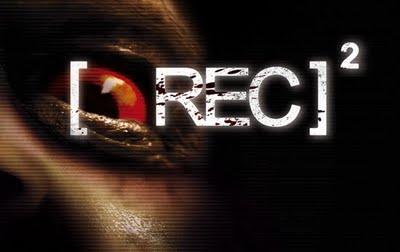
[REC]2 Teaser Trailer


I wasn’t that too big a fan of the first film ([REC]) and definitely not a huge fan of the American remake which got renamed, Quarantine. The “in-the-moment” video footage made popular by films such as The Blair Witch Project and Cloverfield really stretched the need to suspend one’s disbelief while watching the original Spanish-language film and it’s American remake. But then again I seem to be in the minority when it comes to not liking those two films.

With the popularity of both films having made its studios profits it didn’t come as a surprise to see a sequel greenlit by the original Spanish studio with the original filmmakers, Jaume Balaguero and Paco Plaza, returning. The sequel is to take place immediately after the events of the first film. From the trailer that has been released of the film the same camera-style as the first film remains, but (if I’m to go by how the trailer was put together) this sequel may actually capture my interest. There’s a sense of this sequel looking like a live-action survival-horror FPS game. I’m sure the sequel won’t just be trying to be like a video game, but the trailer sure makes the sequel seem more interesting and just a bit more energetic.

International Trailer

U.S. Trailer