Review: Blut Aus Nord – Memoria Vetusta III – Saturnian Poetry


I am definitely not a time-honored, faithful fan of Blut Aus Nord. They managed to evade my radar for over 15 years before the 777 trilogy brought them into the broader spotlight. Sect(s) impressed me from the start, but in a twisted, bewildering way that was not necessarily enjoyable. It was a car accident you slowed down to gawk at in spite of your better judgment. It was a disturbing feast of dementia. I did not hop on The Desanctification right away, naively expecting more of the same, and it was only with Cosmosophy that I finally caught on to just how intelligent and creative Blut Aus Nord could be.

I didn’t go back in time and pick up their classics, but I did eagerly await their next album with zero assumptions about where it might go. This seemed like a band that could do anything they set their mind to, and judging by Kristian Wåhlin’s cover art, it would be something fairly distinct from 777.

Blut Aus Nord – Paien, from Memoria Vetusta III – Saturnian Poetry

What I found was an album that kept a lot of basic elements intact, but, sure enough, sounded nothing like 777‘s cyberpunk journey through a hellspawn-ridden hive mind. Saturnian Poetry feels like much more traditional black metal on the surface, though you will be hard pressed to write it off as such. It takes about five seconds to realize that the blurred tremolo will not be content to loop into any stereotypical black metal monotony. The song jerks upward in a frantic fit, and by the 40 second mark we’re already on to a new rotation. Celestial keyboard “aaahhhs” and a barely sane pattern of motion rip your eyes wide open, and the clean, ethereal vocals at 1:20 tower above as an apathetic higher being uninterested in quelling the chaos beneath it. When the blast beats and constant motion do break, it is never long enough to calm the mood. It is an avant-garde, progressive approach to black metal that I can only compare to Krallice, only where they remain raw and brutal to a fault, Blut Aus Nord mellow out the drumming and keep the eye of a graceful keyboard looming ever above you.

You are being watched as you thrash about into empty space as hard as steel. We don’t know what that eye wants, but we sometimes catch a glimpse of its perspective, as at 5:10, as the beat slows to a plod and the sweeping guitar takes in a vast vision far beyond your natural senses.

http://www.youtube.com/watch?v=Qt5WOPcCPuU

Blut Aus Nord – Metaphor of the Moon, from Memoria Vetusta III – Saturnian Poetry

Blut Aus Nord is a band you can sense beyond the limitations of your ears. That was something that struck me from the first time I ever listened to Epitomes 1 and 2 on Sect(s). Where so many experimental black metal bands aim to invoke a feeling, Blut Aus Nord paint a sensory world. The motion of the guitar is so pronounced that you feel the notes cascading around you. Metaphor of the Moon opens amidst a tornado, everything spiraling downward in a rush of energy that encircles you. Wherever their songs might be headed, I tend to feel trapped within them in body–some twisted wonderland where keyboard and clean vocal spirits gaze upon me and invisible forces and amalgamations of lead guitar swoop all around, discernible only through some super-sense that informs me of their presence without ever forming a solid image.

But if I had to pick a fault in Saturnian Poetry, it would be the overly traditional percussion. Beats carried the day in the 777 trilogy. The band’s experimentation with unconventional drum tones added the final layer needed to complete the unique quasi-physical world of their music. On Saturnian Poetry, the lack of this element serves as an occasional reminder that I am, after all, only listening to a song. “Metaphor of the Moon” is the track that seems to extend beyond my attention span the most, at least to a point. I can latch on to it at just about any moment if I choose to, but it sometimes fails to hold me long without some effort on my part.

http://www.youtube.com/watch?v=C9pVt48QkcM

Blut Aus Nord – Clarissima Mundi Lumina, from Memoria Vetusta III – Saturnian Poetry

That being said, these guys are a clear cut above the vast majority of their competition in the black metal scene. It is hard to believe that France, once known for the raw and unadorned acts of Les Légions Noires, could give us three of the most significant post-black bands of our time, but Blut Aus Nord, Peste Noire, and Alcest surely stand as a triumvirate of progression and experimentation in 21st century metal. Saturn Poetry will never top the 777 trilogy in my books, and generic drumming is to blame first and foremost. Yet I’ll not soon forget a closing track like this–the listener sacrificing himself to madness, screaming towards that eye above, catching unintelligible glimpses that only make his violence more desperate. It never ends, never finds resolution, just continues to implode in perpetual waves of self-destruction. I don’t know that the song, or the album as a whole, has any clear passage. There is no apparent journey here or grand enlightenment at the end, though perhaps I ought to find the first two Memoria Vetusta albums before I pass judgment. Either way, Saturnian Poetry is another shattered window into that twisted, imaginative world that only these French masters can conjure. Whether I see in it precisely what the band intended or not, I definitely see something words cannot easily describe.

It’s also worth mentioning the Debemur MoRTi EP released earlier this year. It offers a unique cover of “Bastardiser” by Pitchshifter that I think you will all appreciate.
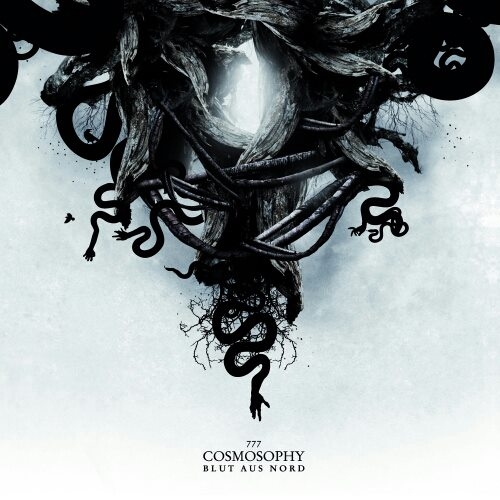
Review: Blut aus Nord – 777 Cosmosophy


Blut aus Nord generated a lot of waves in the metal scene last April when they released Sect(s), the first installment in their 777 trilogy. The album was a gripping ride through a vivid musical nightmare, merging industrial music and a particularly demented take on black metal to paint its demon-ridden post-apocalyptic landscapes. The Desanctification, released in last November, flew much lower under the radar. Lacking all of Sect(s)’s shock value, it was a more contemplative plod which capitalized on the industrial side of their 777 sound and presented the devastation inflicted first-hand on Sect(s) from a less intimate angle. If the listener was the victim on Sect(s), Desanctification offered the role of witness.

Cosmosophy, the final installment in the 777 trilogy, was released this September, and a lot hinged on it. Sect(s) and The Desanctification were drastically different and yet inseparable, the second naturally flowing from the first. How did Blut aus Nord intend to bring it all to an end?

http://www.youtube.com/watch?v=Y3krELtQpSw

In the very last way anyone could have ever expected: They repeated the exact same thing they did on The Desanctification. It’s a brooding, visually stunning bird’s-eye view of a cyberpunk holocaust, and as such it’s just as outstanding as its predecessor. But where is it going?

If Blut aus Nord released two albums like this every year they might well become my favorite band. I’ve been dying for this kind of material, and The Desanctification and Cosmosophy both fill that niche with a degree of excellence that surpasses all other attempts I have heard. But I guess for me the 777 series was telling a story, vague though it need necessarily be, and Cosmosophy just kind of waves that off. It’s an outstanding album in its own right, but it does not feel appropriate in the context of the trilogy.

Epitome XVII and XVIII are somewhat of an exception,and they’re the tracks I’ll be sampling here. XVII has a definite sense of conclusion about it. It’s not an optimistic one, especially given the lyrics–“How many seasons beyond this sacred life? How many treasons beyond this clever lie?” But the feeling is one of profound revelation, as if the listener in this nearly wordless narrative has finally come to see the grand vision we were all hoping Cosmosophy would offer. The transition that spans from about 4:20 to 6:20 is pensive, serving to reintroduce the darkness that resolution has by no means abated. As this fades and we reach the final track in the trilogy, you can definitely see the story coming to an end:

http://www.youtube.com/watch?v=DoUZRsDGlSg

Epitome XVIII is one of the finest of those bird’s-eye perspectives on the greater 777 landscape, and in its context it offers something of a new, esoteric light on the devastation below. The outro that begins to fade in after the 7 minute mark is the perfect conclusion and perhaps the darkest moment in the entire trilogy, epic in its silence. Of Cosmosophy’s two concluding tracks I have no complaints. It’s the first three that get us there that leave a lot to be desired.

If you care to revisit The Desanctification, it ends on a completely twisted industrial groove that offers all of the madness of Sect(s) without any of the fear–a sense that the subject (the listener) is breaking down into utter insanity, becoming a part of the surrounding chaos. I desperately wanted Cosmosophy to pick up on this note. I wanted to hear a merging of Sect(s)’s black metal and Desanctification’s industrial that, if you’ll humor my manner of description, merged the victim and the witness into one. I expected a juxtaposition of the sweeping landscapes and the frantic madness that could, in the context of the trilogy, depict a sort of out of body experience in the subject/listener. Epitome XIV and XVI instead feel like unused (though equal) tracks from Desanctification, while XV offers three minutes of obnoxiously spoken French which quite frankly fails to invoke anything but annoyance before plunging into an outstanding but compromised semi-operatic sweep that could have found a place on the album but lacks appropriate context as presented.

Epitome XV is the only track I dislike in the trilogy, while XIV and XVI seem out of order. In the meantime, I feel like an essential step between Desanctification’s XIII and Cosmosophy’s XVII is missing. In short, Cosmosophy does not live up to my ridiculously high expectations. If Blut aus Nord were to come out with a surprise Part 4, I certainly would not deem it overkill. But if we view Cosmosophy as just another 2012 metal album there is hardly room to complain. It is only in light of the standard set by Sect(s) and The Desanctification, and in expectation that the conclusion ought to be the 777 trilogy’s finest hour, that it slightly disappoints.

My Top 15 Metal Albums of 2011


The years I most actively indulge my musical interests are the ones I find most difficult to wrap up in any sort of nice cohesive summary. December always begins with a feeling that I’ve really built up a solid basis on which to rate the best albums of the year, and it tends to end with the realization that I’ve really only heard a minute fraction of what’s out there. I’m going to limit this to my top 15. Anything beyond that is just too arbitrary–the long list of new albums I’ve still yet to hear will ultimately reconfigure it beyond recognition.

15. Thantifaxath – Thantifaxath EP
Thantifaxath’s debut EP might only be 15 minutes long, but that was more than enough to place it high on my charts. The whole emerging post/prog-bm sound has been largely a product of bands with the resources to refine it, and it’s quite refreshing to hear sounds reminiscent of recent Enslaved without any of the studio gloss. That, and I get a sort of B-side outer space horror vibe from it that’s not so easy to come by. (Recommended track: Violently Expanding Nothing)

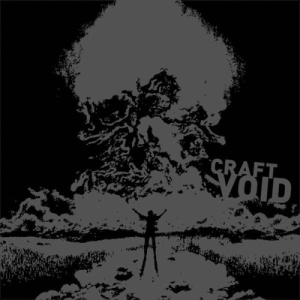
14. Craft – Void
This is the straight-up, no bullshit black metal album of the year. It doesn’t try anything fancy or original. It’s just good solid mid-tempo bm–brutal, evil, conjuring, and unforgiving. Hail Satan etc. (Recommended track: any of them)

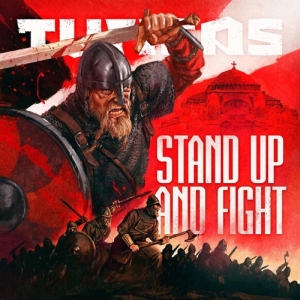
13. Turisas – Stand Up and Fight
Stand Up and Fight doesn’t hold a candle to The Varangian Way, but I never really expected it to. As a follow-up to one of my all-time favorite albums, it does a solid job of maintaining that immensely epic, triumphal sound they landed on in 2007. It lacks their previous work’s continuity, both in quality and in theme, but it’s still packed with astoundingly vivid imagery and exciting theatrics that render it almost more of a movie than an album. (Recommended tracks: Venetoi! Prasinoi!, Hunting Pirates)

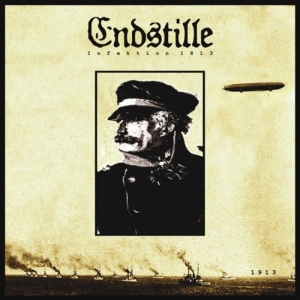
12. Endstille – Infektion 1813
Swedish-style black metal seldom does much for me, and it’s hard to describe just what appeals to me so much about Germany’s Endstille. But just as Verführer caught me by pleasant surprise two years ago, Infektion 1813 managed to captivate me in spite of all expectations to the contrary. Like Marduk (the only other band of the sort that occasionally impresses me), they stick to themes of modern warfare, but Endstille’s musical artillery bombardments carry a sense of something sinister that Marduk lacks. The dark side of human nature Endstille explores isn’t shrouded in enticing mystery–it’s something so thoroughly historically validated that we’d rather just pretend it doesn’t exist at all. The final track, Völkerschlächter, is one of the best songs of the year. Stylistically subdued, it pummels the listener instead with a long list of political and military leaders responsible for mass murder, named in a thick German accent over a seven second riff that’s repeated for 11 minutes. It’s a brutal realization that the sensations black metal tends to arouse are quite real and quite deplorable, and it will leave you feeling a little sick inside.

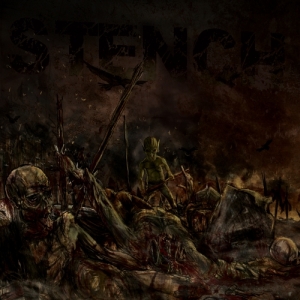
11. Nekrogoblikon – Stench
Nekrogoblikon released a folk metal parody album in 2006 that was good for laughs and really nothing else. The music was pretty awful, but that was intentional. It was a joke, with no presumption to be any good as anything but a joke. They’re the last band on earth I ever expected, a full six years after the fact, to pop back up with a really fucking solid sound. But Stench is good. I mean, Stench is really good. It’s still comical in theme, but the music has been refined beyond measure. Quirky, cheesy guitar and keyboard doodles have become vivid images of little flesh-eating gremlins dancing around your feet, whiny mock-vocals have taken the shape of pretty solid Elvenking-esque power metal, pretty much everything about them has grown into a legitimate melo-death and power infused folk metal sound. Don’t get me wrong, it’s still not meant to be taken seriously, but they’re now of Finntroll caliber. (Recommended tracks: Goblin Box, Gallows & Graves, A Feast)

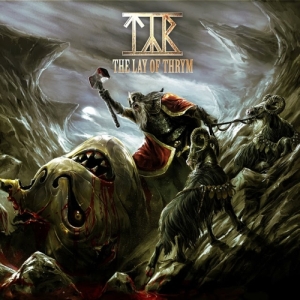
10. Týr – The Lay of Thrym
I thought By the Light of the Northern Star was a fairly weak album, and because The Lay of Thrym maintains some of the stylistic changes they underwent then, a part of me keeps wanting to say it can’t be as good as say, Land or Eric the Red. But of all the albums I acquired in 2011, I’ve probably listened to this one the most. Týr have one of the most unique sounds on the market, and it’s thoroughly incapable of ever boring me or growing old. Heri Joensen’s consistently excellent vocal performance alone is enough to make them perpetual year-end contenders. (Recommended track: Hall of Freedom)

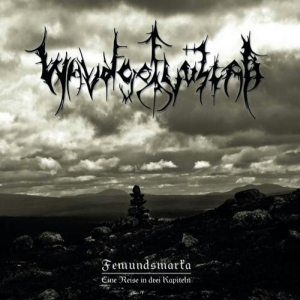
9. Waldgeflüster – Femundsmarka – Eine Reise in drei Kapiteln
This is some of the most endearing black metal I’ve heard in a while. Intended as a musical reminiscence of Winterherz’ journey through Femundsmarka National Park in Scandinavia, it’s a beautiful glorification of nature that takes some of the best accomplishments of Drudkh and Agalloch and adds to them a very uplifting vibe. Someone made an 8 minute compilation of the album on youtube which does a good job at previewing without revealing all of its finest moments. (Recommended track: Kapitel I: Seenland)

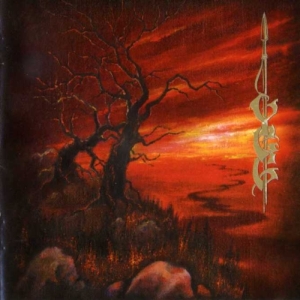
8. Ygg – Ygg
Ygg is an hour-long trance, evoking ancient gods in a way that only Slavic metal can. You could probably pick apart the music and discover plenty of flaws, but that would miss the point. I think that a lot of these Ukrainian and Russian bands are true believers, and that the purpose of music like this is more to create an experience in the listener than to be good for its own sake. This is a spiritual journey, and if it fails to move you as such it will probably come off as rather repetitive and generic, but I find it impressively effective. (Recommended track: Ygg)

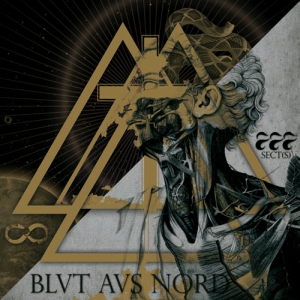
7. Blut aus Nord – 777: Sect(s)
I don’t know where to put this really. I could just as easily have labeled it second best album of the year. Dropping it down to 7th might seem a little unjustified, but eh, this is a list of my top albums, not of the “best” albums of the year. There’s no denying Sect(s) credit as a brilliant masterpiece, but it’s an ode to madness. I mean, this music scares the shit out of me, and if that means it’s accomplished something no other album has, that also means I don’t particularly “enjoy” listening to it. (Recommended track: Epitome I)

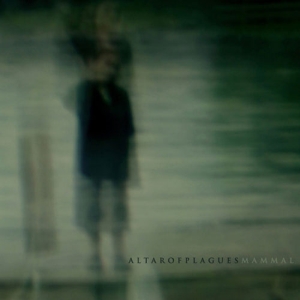
6. Altar of Plagues – Mammal
I never did listen to Mammal as actively as I would have liked. I never sat down and gave it my undivided attention from start to finish. But it’s served as a background piece for many late nights at work. It zones me in–stimulates my senses without ever distracting them from the task at hand. I don’t feel like I can really say much about what makes it great, because that’s not the sort of thing I’ve considered while listening to it, but I absolutely love it. It’s a big improvement from White Tomb, which was itself an excellent album, and more so than most other releases of 2011 I will probably continue to listen to it frequently in years to come. (Recommended track: Neptune is Dead)

5. Primordial – Redemption at the Puritan’s Hand (track: No Grave Deep Enough)
Redemption at the Puritan’s Hand is by no means perfect. It’s got a few sub-par tracks detracting from the full start to finish experience, but when it’s at its best all else can be easily forgiven. Call it folk metal or call it black metal, whichever you prefer, but first and foremost call it Irish, with every good thing that might entail. The vocals are outstanding, the music rocks out in folk fashion without ever relenting from its metal force, and while the lyrics don’t always make sense, they always hit like a fucking truck. Where they do all come together, delivered with Nemtheanga’s vast and desperate bellows, the result is overwhelming. O Death, where are your teeth that gnaw on the bones of fabled men? O Death, where are your claws that haul me from the grave? (Other recommended tracks: The Puritan’s Hand, Death of the Gods)

4. Falconer – Armod (track: Griftefrid)
Prior to 2011 I’d largely written Falconer off as one of those power metal acts that were just a little too cheesy to ever excite me. Maybe it was bad timing. Maybe I just happened to hear them for the first time while Kristoffer Göbel was filling in on vocals. Or maybe Armod is just their magnum opus–a spark of genius they’ve never neared before. Flawless if we ignore the “bonus tracks”, Armod takes that early folk metal sound Vintersorg pioneered with Otyg, merges it perfectly with power metal, and offers up 11 of the most well-written and excellently produced songs of the year. Mathias Blad’s vocals are absolutely phenomenal. (Other recommended tracks: Herr Peder Och Hans Syster)

3. Falkenbach – Tiurida (track: Sunnavend)
A lot of people might voice the legitimate complaint that Tiurida, Vratyas Vakyas’s first studio album in six years, sounds absolutely indistinguishable from his prior four. For me, that’s exactly why it ranks so high. Vakyas landed on a completely unique, instantly recognizable sound which, alongside Bathory, defined viking metal as a genre, and he’s refused to change it one bit. I fell in love with this album ten years ago. (Other recommended tracks: Where His Ravens Fly…)

2. Liturgy – Aesthethica (track: Harmonia)
Yes, Liturgy. It’s immature, childish, and imperfect, but it’s uplifting in a completely new way. No matter how far Hunt-Hendrix might go to embarrass himself and his band mates, behind all of his pompous babble there just might be some truth to it. (Other recommended tracks: True Will)

1. Krallice – Diotima (track: Dust and Light)
More than the album of the year, Diotima is one of the greatest albums ever made. I can’t fathom the amount of skill it must take to perform with the speed and precision that these guys do, but if they battered down a physical barrier to metal in 2008, they finally grasped hold of what lies beyond it in 2011. They claim that the songs on their first three albums were all written at the same time by Mick Barr and Colin Marston, before their self-titled debut. If that’s the case, then it must be the experience of performing together and the creative contributions of Lev Weinstein and Nick McMaster that raised Diotima to a higher level. It’s not just that they’ve improved in every way imaginable; the songs themselves are overwhelming, breathtaking, and chaotic to a degree they’d never before accomplished. Krallice perform an unwieldy monster that took a few albums to thoroughly overcome. Now they’re in complete control, and their absolutely brilliant song-writing can shine through. With the exception of the dubious Litany of Regrets, this is possibly the greatest album I have ever heard. (Other recommended tracks: Inhume, Diotima, Telluric Rings)