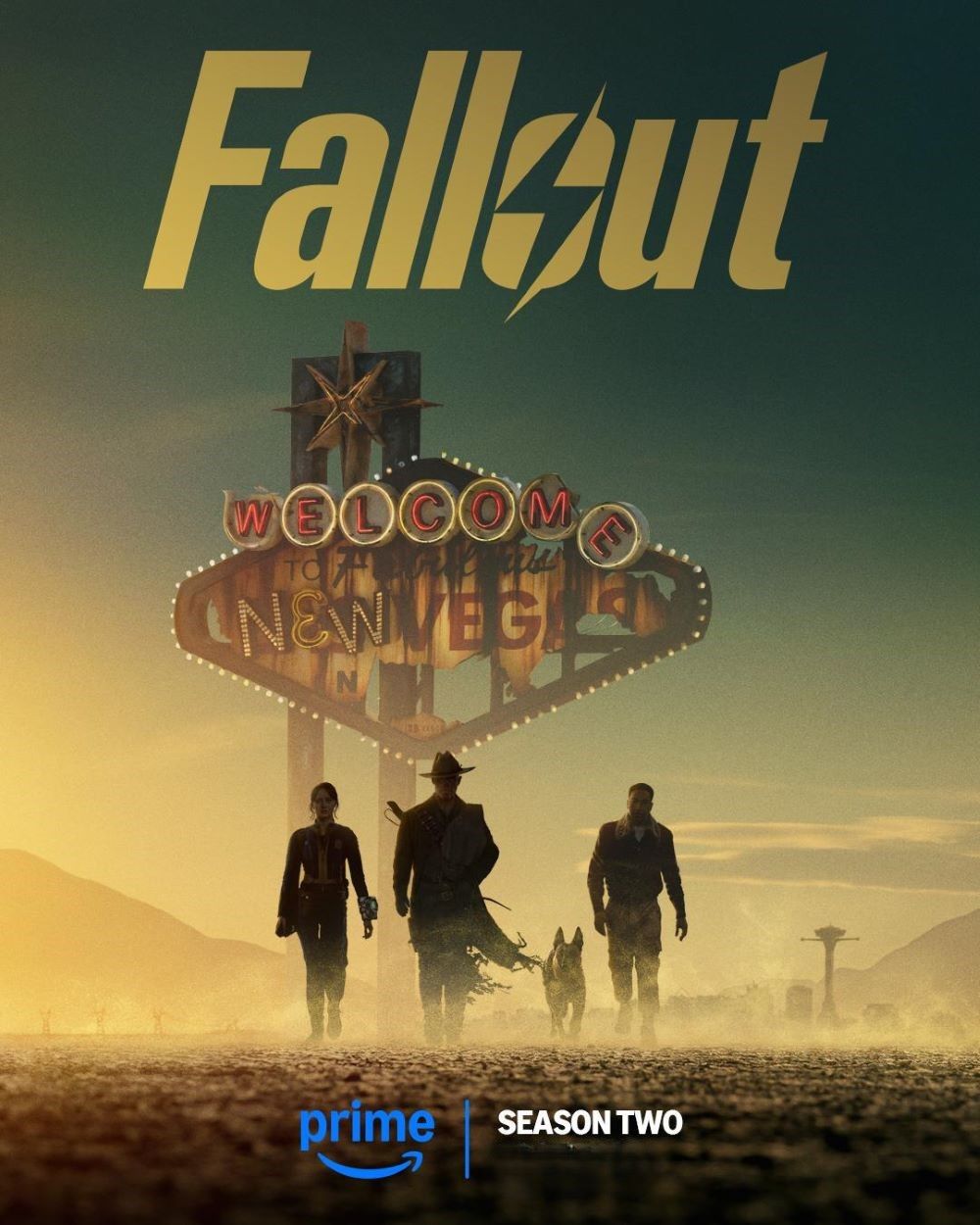
“Well, I hate to break it to you, darlin’, but the way you was raised wasn’t real.” — The Ghoul to Lucy
Fallout season 2 already felt like the show leveling up into a bigger, stranger, and more emotionally loaded story; stretching that out to look at specific standout hours just underlines how confidently it plays with tone, lore, and character this year. The season still has its pacing and bloat issues, but episodes like 4, 6, and the finale remind you why this world is worth spending time in: they mix monster‑movie mayhem with sharp character turns and some surprisingly pointed world‑building.
From the outset, season 2 signals that it’s done playing small. Where season 1 often kept things contained to a handful of locations and a relatively tight triangle of conflicts, this run treats the wasteland like a map that’s finally fully unlocked. New Vegas, the Mojave, multiple Vaults, NCR outposts, Enclave facilities, and Legion‑touched territories all start jostling for attention. That expansion comes with an “everything louder” philosophy: more factions, more lore, more experiments gone wrong, and more moral gray areas. The show leans into the idea that the real horror of this world isn’t just the radiation or the monsters; it’s the legacy of people who convinced themselves they were saving humanity while quietly deciding which parts of humanity didn’t deserve to make it.
The overarching cold fusion storyline is the clearest expression of that. Season 1 treated it as a sort of mysterious MacGuffin hovering in the background, but season 2 drags it fully into the spotlight and ties it directly to the choices that triggered the Great War. By steadily revealing how Vault‑Tec, the Enclave, and figures like Hank and House circled the same piece of technology, the show paints a picture of an apocalypse that was less an accident and more an inevitable collision of greed, fear, and hubris. The tragedy is that many of these people genuinely believed they were securing a better future — they just defined “future” in terms that erased anyone outside their bubble. That added nuance gives the season a heavier emotional punch, because the fallout (pun intended) is no longer just a backdrop; it’s the direct consequence of personal betrayals we’ve watched unfold in flashback.
Cooper Howard, now fully embraced as the Ghoul, remains the emotional spine of that history lesson. Season 2 deepens his arc by closing the gap between the smiling pre‑war cowboy and the bitter, sand‑blasted killer stalking the Strip. His encounters with Robert House, especially in the finale, turn into confrontations not just with a technocrat who survived the bombs, but with the version of himself that let things get this far. The realization that he didn’t just lose his family to the apocalypse, but that his own patriotic image and complicity helped build the machine that destroyed them, hits like a slow‑motion punch. Walton Goggins plays those beats with a mix of brittle humor and raw self‑loathing that keeps the character from slipping into pure nihilism; you can see the man he was flicker through the monster he’s become, which makes every choice he makes in the present feel loaded.
Lucy, in contrast, is the series’ ongoing experiment in whether idealism can survive honest contact with the truth. Season 2 pushes her far beyond the naive Vault dweller who stepped into the sun in season 1. Over these episodes, she’s forced to confront not just her father’s lies, but the systemic rot embedded in every power structure she encounters. Vault‑Tec’s “protection,” Brotherhood righteousness, NCR order, Enclave science — every banner comes with its own flavor of atrocity. The brilliance of her arc is that the show doesn’t simply break her and call it growth. Instead, it lets her anger simmer quietly until it finally erupts during the operating‑room showdown with Hank in the finale, where she makes a calm, devastating choice that redefines their relationship forever. That moment isn’t just shock value; it’s the natural endpoint of a season spent watching her tally up cost after cost.
Maximus, meanwhile, evolves from wobbling wannabe knight into one of the show’s most grounded points of view, and episodes 4 and 6 mark very different turning points around him. Episode 4 is where the Brotherhood’s internal fractures stop being subtext and explode into open conflict. It’s the beginning of the Brotherhood civil war, and the first time Maximus is forced to confront the idea that his “family” might be rotten at the core. Watching knights and scribes turn on each other, watching command structures splinter, he starts to see that the Brotherhood’s rhetoric about honor and protection doesn’t hold when power and ideology clash. The moment he realizes the people he idolized are willing to kill their own to maintain control is the moment the halo really slips; he begins to understand that the Brotherhood may not be the good guys after all. It’s not a neat, one‑scene epiphany, but that episode is where denial stops being an option and he starts making choices that reflect his own moral compass rather than the codex.
Episode 6, by contrast, steps away from Maximus’ internal war and digs deeper into the past that shaped the wasteland he’s fighting in. This is much more a Barbara‑and‑Ghoul hour, fleshing out their backstory and giving emotional context to the cold fusion plot and the eventual apocalypse. The episode spends time with Cooper and Barbara before the bombs, letting us see their relationship in more detail: the compromises, the arguments, and the quiet ways Barbara pushes back against Vault‑Tec’s glossy promises. It also charts Cooper’s slide from working actor and family man into patriotic mascot and unknowing cog, showing how easy it was for him to rationalize each step as “doing the right thing.” By anchoring those flashbacks in Barbara’s perspective as much as Cooper’s, the episode makes her more than just a tragic absence — she becomes the person who saw the danger, tried to steer them away from it, and got overruled.
Those mid‑season episodes also shine when it comes to pure lore and creature work. Episode 4’s introduction of the Deathclaws as a real force in the story is one of the season’s best sequences. Rather than just dropping them in for a cameo, the show frames them as the culmination of whispered rumors, suspicious carnage, and mounting dread. When a Deathclaw finally tears into the frame, the direction emphasizes scale and unpredictability: these aren’t just big lizards, they’re apex predators that shrug off conventional tactics. The way they rip through defenses and send even seasoned fighters scrambling instantly re‑calibrates the power dynamics of the wasteland. Later, when they become central to the Strip’s Earth‑shaking siege, you already understand that their presence means no one is safe, no matter how shiny their armor or how fortified their stronghold.
On the lore side, episodes like 4 and 6 weave the Deathclaws and other horrors into a broader tapestry of FEV experimentation and Enclave meddling, making them feel like part of the same long chain of sins that gave us super mutants and other abominations. That connection reinforces the season’s larger point: the worst monsters in Fallout aren’t random mutations, they’re the descendants of carefully planned projects whose creators never fully accepted the consequences. It’s a neat bit of storytelling economy, turning what could have been a simple monster‑of‑the‑week into another thread in the show’s ongoing conversation about responsibility.
Season 2 also benefits from spending more quality time with its side characters instead of just treating them as quest givers or comic relief. Barbara is the most poignant of these. Where she once existed mostly as a memory in Cooper’s flashbacks, she now feels like a fully realized person with her own fears, instincts, and lines she isn’t willing to cross. We see her wrestle with Vault‑Tec’s promises and start to question the cost of all that gleaming corporate optimism. Those glimpses of her pushing back, or trying to pull Cooper back from the brink of total complicity, retroactively deepen every ounce of his guilt. He didn’t just lose a wife and child; he ignored the one person who saw the moral cliff edge coming and still jumped.
Thaddeus, while still often played for uneasy laughs, gets just enough shading to keep him from tipping into cartoon territory. Season 2 makes it clear that his brand of cowardly self‑preservation is less a personality quirk and more a survival strategy in a world that punishes idealism. When he’s swept up in vault‑side chaos and the grotesque side effects of FEV and forced evolution, his panic and bad decisions feel depressingly understandable. He’s the guy with no faction backing, no armor, no immortal body — the perfect lens for showing how regular people get crushed when the big players start moving pieces around. The fate he stumbles into is darkly ironic, but there’s a sting to it because the show has taken the time to make him more than just the butt of the joke.
Stephanie emerges as the wild card of the season, but not for the usual “chaotic Vault teen” reasons. What really drives her is that she’s a product of a very specific trauma: she’s Canadian in a universe where Canada was annexed, occupied, and turned into a horrifying internment state. That history isn’t just backstory flavor — it’s the furnace that forged her worldview. She grew up knowing that her country wasn’t just defeated; it was erased, abused, and folded into an American narrative that pretends it all happened for the greater good. So when she pushes against authority or digs into restricted information, it’s not just adolescent rebellion or a desire to impress anyone in the Vault hierarchy. It’s the instinct of someone who has seen, or inherited, the consequences of letting American power go unquestioned.
That’s why Stephanie’s personal agenda feels so out of step with the usual factional chess game. NCR, Brotherhood, Enclave, House — none of them really matter to her in ideological terms. To her, they’re all just different masks on the same face: American power structures rearranging themselves after the bombs, pretending the past is settled and the ledger is closed. Her curiosity about hidden tech, sealed records, and buried atrocities is less about “how can I leverage this for my people right now?” and more about “how can I expose what America did, and is still doing, to people like me?” Her animosity is directed at the idea of America itself — its myths, its revisionism, its insistence on calling conquest “security” and occupation “peacekeeping.” That’s why she doesn’t fit neatly into anyone’s strategy; she’s playing a longer, more personal game, one where the win condition isn’t territory or tech, but forcing the truth about what happened to Canada and to her people into the light.
What makes Stephanie compelling is that the show lets that animus sit in a morally messy place. She’s not some pure avenger with a perfect plan. Her choices are often reckless, sometimes cruel, and frequently blind to the collateral damage she’s creating in the here and now. But they make sense when you remember her context: she comes from a lineage that was caged, brutalized, and then largely written out of the post‑war power conversation. Of course she doesn’t care about which American faction ends up on top; from her perspective, the game is rigged no matter who’s holding the pieces. That’s why she feels less like a quirky side character and more like a slow, ideological time bomb buried in the story. Everyone else is fighting over the wasteland’s future, but Stephanie is here to settle a very old score with the idea of America itself — and that makes her one of the most unpredictable, and potentially explosive, figures in Fallout’s second season.
All of this character and lore work feeds into the finale, “The Strip,” which plays like the entire season compressed into one frantic, blood‑spattered hour. The Deathclaw assault, NCR push, Legion maneuvering, Enclave gambits, and House’s machinations collide on a single battlefield, turning the Strip into both a literal and symbolic crossroads for the wasteland’s future. Maximus’ rejection of blind Brotherhood obedience, Lucy’s definitive break with Hank, and Cooper’s reckoning with House and his own past all converge in a series of confrontations that feel earned precisely because the season has spent so much time setting the pieces on the board. It’s explosive and overwhelming, and it leaves plenty of threads dangling, but it also makes one thing crystal clear: there’s no going back to the relatively simple story this show started as.
Taken as a whole, Fallout season 2 is still a fair trade‑off, even with its occasional narrative overload. You give up some of the clean, streamlined storytelling of season 1 and accept that a few side plots and characters will drift in and out of focus, but in return you get a richer, more dangerous wasteland where Deathclaws stalk neon streets, the Brotherhood’s halo has visibly slipped, and characters like Barbara, Thaddeus, and especially Stephanie complicate the moral landscape in satisfying ways. It’s a season that believes in escalation — of spectacle, of lore, of emotional stakes — and while that sometimes leads to messiness, it also makes the highs genuinely memorable. If the show can channel that energy into a slightly tighter, more focused third season, this run will stand as the wild, necessary expansion pack that blew the world wide open and dared its characters to survive the consequences.
 Through the Shattered Lens