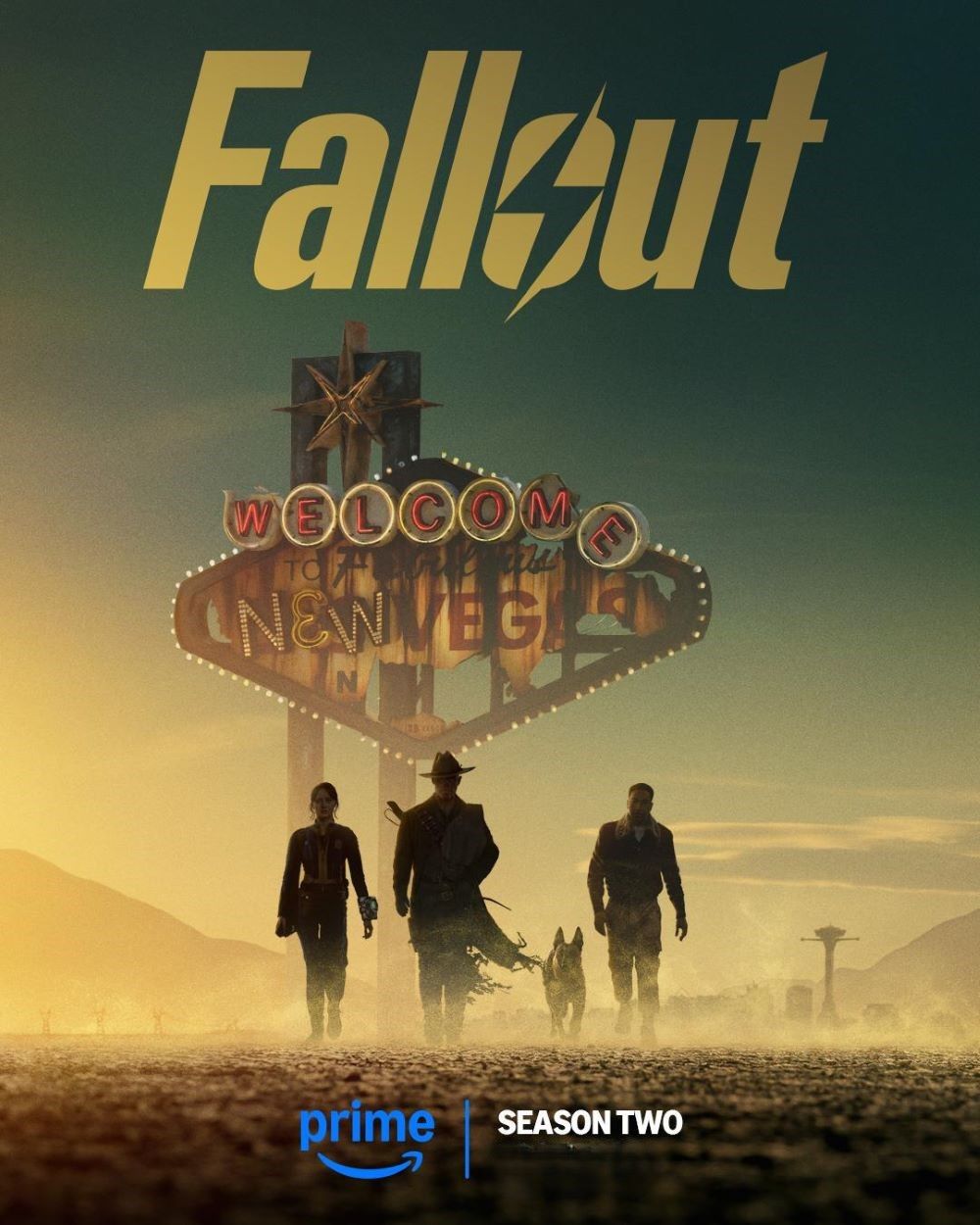
Review: Fallout (Season 2, Episode 8 “The Strip”)


“Well…Welcome to the Wasteland.” — Maximus

Diving headfirst into the season 2 finale of Fallout, episode 8 slammed into me like a radstorm tearing through the garish neon fog of New Vegas—a whirlwind of high-octane mayhem that cranks the overarching tension to eleven while scattering a bunch of tantalizing loose ends across the irradiated sands. Christened “The Strip,” this powerhouse installment rolled out in Prime Video’s carefully recalibrated evening premiere window, the sort of strategic time shift they pulled to maximize viewer frenzy and keep everyone glued from the opening credits. What starts as a scrappy tale of individual survival in the prior episodes morphs here into a sprawling canvas of factional blood feuds, deftly interweaving those delicious Easter eggs from the beloved games with audacious original flourishes that pay homage to the source material’s spirit without ever feeling shackled by it. For the uninitiated casual viewer dipping their toes into the post-apocalyptic pool, there’s just enough emotional resolution on the core trio’s personal odysseys to leave you with a satisfied glow, yet the longtime wasteland wanderers—those of us who’ve logged countless hours in the Mojave—can practically hear the massive plot engines revving up for an explosive season 3 detonation.

From the jump, the episode plunges us into the seedy shadows of Freeside, where Aaron Moten’s Maximus finds himself locked in a ferocious tussle with a rampaging pack of Deathclaws that have breached the barriers, mutating the opulent Strip into a primal pit of razor-sharp talons, spurting blood, and raw survival instinct. Walton Goggins absolutely commandeers the screen as the Ghoul in these sequences, his haunting pre-war flashbacks delivering visceral emotional haymakers as he finally corners Robert House, reimagined here as a razor-tongued artificial intelligence overlord yanked straight from the New Vegas playbook, complete with that signature blend of megalomania and dry wit. Goggins’ Ghoul doesn’t mince words or pull punches, grilling House relentlessly for intel on his vanished family, only for the AI to unload a cascade of devastating revelations: Cooper Howard, in a moment of misguided patriotism, unwittingly funneled critical cold fusion technology right into the Enclave’s greedy claws, igniting the chain reaction that birthed the Great War—turns out the President himself was neck-deep in their shadowy cabal. This bombshell doesn’t just land; it excavates and reframes every lingering enigma from season 1, transforming Coop’s well-meaning actions into the tragic catalyst that obliterated civilization, all underscored by a chilling flashback to his arrest at the hands of a HUAC-inspired congressional witch hunt that systematically dismantles his glittering Hollywood existence, blacklisting him into oblivion.

Shifting gears underground, Ella Purnell’s riveting portrayal in the vault sequences forms the pulsating emotional heartbeat of the entire hour, thrusting Lucy into a harrowing confrontation with her father Hank—now a zombified shell of his former self—trapped within one of House’s ingeniously rigged management vaults that double as psychological torture chambers. Kyle MacLachlan devours the role with gleeful malevolence, laying bare Hank’s insidious brain-chip initiative, where he’s hijacking Congresswoman Welch’s saccharine “gold standard” personality template to overwrite minds, churning out armies of compliant drones stripped of free will. The mercy killing of Welch’s grotesque severed head with a hefty crowbar stands out as a gruesomely poetic flourish, mirroring House’s own hard-knocked tales of endurance in the wastes, but the true masterstroke comes when Lucy seizes control, reversing the procedure to implant the chip into Hank himself—a merciless, ice-cold denouement to their shattered father-daughter dynamic that had been simmering all season. Emerging from the depths, she collapses into a profoundly earned, battle-scarred embrace with Maximus, who moments earlier had improvised a roulette-wheel fragment into a desperate shield during an unarmored casino melee against the Deathclaw horde, only for a thundering cavalry charge from the NCR to barrel in, smashing together divergent game endings in a symphony of chaotic convergence.

The Ghoul’s storyline weaves in its own brand of understated heartbreak, steering clear of mawkish sentimentality; the discovery of empty cryopods meant for his wife Barb and daughter Janey hits like a sledgehammer to the irradiated chest, yet a cryptic postcard from the Colorado badlands injects a slender thread of optimism, slyly foreshadowing a seismic geographical pivot toward the Rockies in the seasons to come. Notably absent is any grand, weepy reunion or reconciliation with Lucy—sure, the group hauls her out of the vault inferno, but they gloss over any substantive dialogue probing the Ghoul’s savage underbelly, marking a subtle but noticeable lapse in peeling back another layer of his evolving humanity. Across the factional divide, the Legion’s intrigue reaches a fevered crescendo as the cunning Legate anoints himself the new Caesar upon deciphering the ailing leader’s final missive—”it ends with me”—executing a textbook power consolidation by silencing potential rivals and forging the splintered hordes into a singular, unstoppable juggernaut aimed squarely at storming the Strip. Brotherhood of Steel devotees score a tantalizing post-credits morsel with blueprints for the colossal Liberty Prime, strongly implying that Michael Cristofer’s Elder Cleric Quintus is gearing up to deploy some serious mech-stomping firepower in future clashes.

Deeper in the vault network, Vault 32 erupts into pandemonium as Annabel O’Hagan’s Steph pries apart Betty’s fortified Enclave Pip-Boy cache, inadvertently triggering “Phase 2” with ominous undertones of Forced Evolutionary Virus (FEV) poised to warp the inhabitants into rampaging super mutants, a thread that masterfully callbacks to the season’s mid-point murmurs. Moisés Arias’ Norm threads the needle through a frenzied Radroach ambush that decimates Bud’s sycophantic crew, hauling Claudia to momentary safety, while Johnny Pemberton’s Thaddeus undergoes a nightmarish metamorphosis into a centaur-esque abomination—proliferating mouths, shedding limbs, and even picking off distant rescuers with opportunistic foot-triggered shots before his body fully succumbs to the mutation. Those fleeting super mutant sightings from episode 6 crystallize in a torrent of exposition, but for all its revelations, this segment mostly serves as intricate groundwork: cementing the Enclave as the puppet masters of apocalypse, with the scorched surface world reduced to their perpetual laboratory playground.

Where “The Strip” truly excels is in its pulse-pounding action choreography and the nuanced character evolution that anchors the spectacle. The Deathclaw showdown unfolds as a ballet of brutality—gory eviscerations and desperate dodges that highlight Moten’s Maximus shedding his power-armored persona for gritty, improvisational brawling prowess. The production design dazzles at every turn: heads bursting in crimson fountains, flesh shredded by incoming missiles, the Strip’s eternal neon splendor grinding mercilessly against the pervasive wasteland squalor for that quintessential Fallout aesthetic tension. Pacing remains a tightrope triumph, deftly juggling a constellation of interwoven plotlines without ever tipping into overload, while those interspersed flashbacks elegantly suture the halcyon pre-war era’s illusions of security to the grim post-apocalyptic reality. The soundscape elevates it further, layering ambient dread with precision—those eerie payphone rings slicing through the cacophony like personalized harbingers of doom.

That relentless propulsion toward future conflicts, however, exacts a toll on immediate gratification. Vault 31 lingers as overt season 3 appetizers rather than a sealed chapter, and the simmering Brotherhood internal schisms peter out without the anticipated fireworks. Hank’s reduction to a mind-wiped vagrant unceremoniously exiled to the wastes provides a poignant, if understated, capstone to his arc, but it lacks the thunderous finality one might expect for a villain of his stature after seasons of buildup. Lingering voids—like a more introspective Ghoul-Lucy exchange or a meatier exploration of House’s centuries-spanning machinations with the Enclave—cry out for expanded breathing room between the explosive set pieces. Ultimately, the episode embraces its serialized “act two finale” DNA, lavishing attention on narrative springboards and cliffhanger bait over comprehensive bow-tying, which suits the binge-watching ecosystem to perfection but might leave traditionalists yearning for a more self-contained punch.

Thematically, “The Strip” captures Fallout‘s savage satirical soul with unerring precision: the pre-war megacorporations like Vault-Tec and the Enclave emerge not as mere enablers of nuclear Armageddon, but as its deliberate architects, with the bombs themselves relegated to collateral damage. Hank’s casual invocation of the surface as his “grand experiment” reverberates with chilling authenticity, evoking the darkest chapters of Cold War psy-ops, loyalty purges, and human experimentation on a societal scale. The major factions stand poised on a razor’s edge—NCR forces rallying for resurgence, a revitalized Caesar’s Legion under iron-fisted renewal, House’s immortal digital tyranny—all converging toward an explosive proxy war in the uncharted expanses of Colorado, terra incognita even for the most seasoned game explorers. The ensemble cast remains a towering strength across the board: Purnell masterfully alloys Lucy’s wide-eyed vault idealism with burgeoning wasteland ferocity, Moten infuses Maximus’ redemption arc with hard-won authenticity, and Goggins perpetually threads the Ghoul’s needle between irreverent monster and profoundly wounded everyman.

All told, “The Strip” forges a riveting, hook-saturated exclamation point that propels Fallout season 2 far beyond the claustrophobic vault escapades and shattered Los Angeles vistas of its debut year, ascending into intricate games of wasteland realpolitik while honoring its RPG lineage and boldly scripting its own legacy. Veterans of the franchise revel in the New Vegas allusions without a whiff of exclusionary gatekeeping, ensuring broad accessibility. As the end credits fade, the anticipation builds unbearably: the Ghoul’s high-stakes pursuit into the peaks, the ripple effects of rampant FEV outbreaks, and the brutal scramble over those reality-warping chips that could redefine power in the wastes. Prime Video has cemented its grip on a genuine phenomenon; those irradiated Rockies are calling, and the fallout promises to be cataclysmic.

Fallout Season 2 Episodes

  1. Episode 1: “The Innovator”
  2. Episode 2: “The Golden Rule”
  3. Episode 3: “The Profligate”
  4. Episode 4: “The Demon in the Snow”
  5. Episode 5: “The Wrangler”
  6. Episode 6: “The Other Player”
  7. Episode 7: “The Handoff”

Review: Fallout (Season 2, Episode 7 “The Handoff”)


“If you have to hurt people, God won’t judge you. Don’t think of them as human beings. Think of them as Americans.” — Joan Harper

Episode 7 of Fallout season 2, “The Handoff,” sneaks up on you like a radstorm on the horizon—one of those late-season gut checks that reshuffles priorities without much fanfare. It’s got ambition oozing from every irradiated pore, bouncing between mind-bending Vault-Tec tech, vault-bound soap opera blowouts, and pre-war nightmares that hit way too close to home. The sprawl can feel chaotic at times, with not every character getting their full due, but the thematic throughline—how far will you go to survive, and what does it cost your soul?—keeps it cohesive and compelling. Dark humor peppers the bleakness, moral lines blur like fallout haze, and by the end, you’re left wondering who’s really pulling the strings in this wasteland mess.

Kicking things off with a bang—or more like a suicide bomber’s blast—the episode dives straight into a harrowing pre-war flashback spotlighting a young Steph Harper and her mother Joan, played with steely desperation by Natasha Henstridge. They’re clawing their way out of the Uranium City internment camp, a grim U.S. holding pen for Canadian citizens rounded up in the Resource Wars’ fever pitch. Power-armored goons close in, hurling firepower and slurs amid the pandemonium, until Joan grabs her kid and hisses that unforgettable line: “Don’t think of them as human beings. Think of them as Americans.” Oof. It’s a dehumanizing gut-punch that sets the episode’s tone right away, illustrating how the pre-apocalypse world was already a powder keg of nationalism run amok, where “us vs. them” justified any atrocity. And talk about prescient or coincidental timing—this drops amid 2026’s real-world headlines of U.S.-Canada friction, from Trump’s tariff saber-rattling and Davos snubs to wild talk of military “hypotheticals” and economic arm-twisting between the North American neighbors. Whether the writers had a crystal ball or just nailed the evergreen vibe of border paranoia, it makes the fiction feel like a mirror held up to today’s geopolitics, amplifying the episode’s warnings about how quickly “allies” turn into existential threats.

That raw survival instinct bleeds seamlessly into Lucy’s arc, which powers the hour like a fusion core. Trapped in a gleaming Vault-Tec bunker, she’s stuck playing house with her dad Hank, who’s equal parts folksy mentor and corporate ghoul. The star of the show here is their memory-reprogramming gizmo—a hulking console that dials memories up, down, or into oblivion like tweaking a Pip-Boy radio. Hank gives her the tour on a goofy golf cart joyride through empty offices, explaining it with the enthusiasm of a salesman hawking timeshares: boost the happy bits, erase the trauma, rinse and repeat. It’s genius-level creepy, transforming what could be bland sci-fi into a satire of corporate wellness gone murderous. Vault-Tec didn’t invent evil; they just bureaucratized it, turning ethical nightmares into quarterly performance metrics. Lucy starts off hopeful, probing for the father she remembers from Vault 33, but those sterile hallways and his breezy justifications erode her faith layer by layer. The awkward father-daughter chats—half bonding session, half indoctrination—build real tension, showing her idealism cracking under the weight of his casual complicity.

Then comes the dinner scene, a masterclass in quiet devastation. Lucy clocks the NCR soldier she’d warmed to earlier, now a vacant-eyed tray jockey slinging slop with a lobotomized grin. Boom—personal loss made visceral. No swelling score or slow-mo needed; it’s the everyday horror of a friend erased that ignites her fire. She snaps, cuffing Hank to the kitchen drawer in a moment that’s equal parts petty revenge and profound symbolism. No more running from the truth, pops. Ella Purnell nails the transformation: Lucy’s not snapping into cynicism, she’s forging resolve from the ashes of naivety. Her wide-eyed wasteland optimism was always her superpower, but here it matures into a fierce moral compass that doesn’t bend for family ties or Vault-Tec spin. It’s the episode’s emotional core, proving Fallout shines brightest when it grounds big ideas in intimate betrayals.

Meanwhile, Vault 32 delivers the chaos quotient with Steph’s implosion, riffing off the flashback’s desperation in a claustrophobic, community-drama wrapper. Steph’s been teetering on insecure overlord vibes all season—fake-it-till-you-make-it overseer masking cracks with smiles and status games. But Woody’s shattered glasses fished from the garbage disposal? That’s the innocuous spark that lights the fuse. Chet, nursing his quiet rage, hits critical mass smack in the middle of their wedding. Steph bulldozing ahead with vows while the room simmers? Cringe gold. When Chet unloads publicly—secrets, lies, the works—it cascades into pandemonium: guests flip to an angry horde, baying for blood as they chase her into the Overseer’s lair. It’s Fallout‘s sweet spot—pulpy melodrama meets social horror, exposing vault life as a fragile illusion of civility. One bad call, one hidden body, and poof: the social contract shreds. Steph morphs from punchline to predator, cornered and feral, hinting she’s capable of worse. The handheld camerawork ramps the frenzy, trapping you in the mob’s ugly momentum, while the petty human stakes keep it relatable amid the apocalypse schlock.

Maximus pulls a solid B-plot shift, hunkered in an NCR gear depot where he finally claims power armor like it’s his birthright. Gone’s the jittery Brotherhood hopeful; enter a guy starting to fill out the role, clanking around with newfound purpose. Aaron Moten plays it understated—no hero pose, just incremental grit that nods to his growth without overshadowing the mains. It’s smart table-setting: the season’s been chipping at Brotherhood dogma, and Maximus suiting up feels like him inching toward their ideal, blind spots and all. Could use more introspection, sure, but it plants seeds for faction fireworks down the line.

Norm? Rough week. His subplot—eavesdropped identity slip, knockout punch, prisoner drag—teases intrigue but fizzles into logistics. It’s the script shuffling pieces, not diving into his vault-rat cunning or isolation. Fans of his sly outsider lens might gripe at the neglect, highlighting the episode’s tightrope walk over ensemble overload.

Technically, it’s a banger. Vault-Tec’s retro-futurist sheen—neon signs, buzzing fluorescents—clashes beautifully with the soul-crushing tech, like a twisted ad for the American Dream. The wedding revolt goes gritty and kinetic, sweat and shouts filling the frame. Purnell anchors the heart, Steph’s portrayer the hysteria, Henstridge the haunting cameo. Sound design pops too: distant echoes in the offices, the wedding’s rising clamor, that bomber’s muffled roar.

Balance is the bugaboo—too many irons mean rushed beats for Maximus and Norm. Yet it embodies Fallout‘s messy ethos: no tidy arcs, just grinding compromises under institutional thumbs. The Uranium City prelude warns of pre-war poison still pumping through the veins, Lucy’s defiance spotlights personal agency, Vault 32’s riot proves communities devour their own. “The Handoff” probes free will amid rigged games, from neural hacks to tribal loyalties, all laced with wasteland wit. Flawed? Marginally. Essential? Hell yes. The finale looms like an Enclave drop-ship—everything teeters, primed for Fallout‘s brand of irradiated reckoning.

Fallout Season 2 Episodes

  1. Episode 1: “The Innovator”
  2. Episode 2: “The Golden Rule”
  3. Episode 3: “The Profligate”
  4. Episode 4: “The Demon in the Snow”
  5. Episode 5: “The Wrangler”
  6. Episode 6: “The Other Player”

Review: Fallout (Season 2, Episode 6 “The Other Player”)


“So, for our daughter, you would kill millions of people. Billions of people. Other-other mothers just like you. Other daughters just like our daughter!” — Copper Howard

Episode 6 of Fallout season 2, titled “The Other Player,” ramps up the tension as the series dives deeper into the messy origins of the apocalypse and the fragile illusions of control in its aftermath. This installment centers on power dynamics—who pulls the strings before the bombs fall, who grabs them afterward, and who dares to cling to ideals like justice in a wasteland that mocks them at every turn. It delivers some standout moments for key characters like Barb and Lucy, blending corporate horror with personal reckonings, though a few subplots in the irradiated wilds feel like they’re just treading water ahead of bigger payoffs.

Barb’s storyline takes the spotlight early, peeling back the pre-war curtain to reveal Vault-Tec’s chilling machinery of doom. Picture her navigating a day packed with boardroom horrors: pitches for vaults rigged to fail on purpose, exclusive escape routes for elite clients, and slick strategies to polish the end times into a marketable package. The satire bites hard, but things darken when she brushes up against the shadowy layers beneath the corporate facade, including a tense encounter that exposes the ruthless leverage being used against her family. By the time she’s cornered into advancing the nuclear launch herself, her shift from confident insider to reluctant pawn feels raw and human—someone who glimpses the abyss but steps closer anyway.

This arc shines because it doesn’t paint Barb as a cartoon villain or a blameless dupe; she’s stuck in that gray zone of complicity, making choices under duress that echo through centuries. Her eventual clash with Cooper, where he probes just how deep the rot goes, hits with real weight, forcing her to confront the fallout of her inaction. When she aids in a high-stakes extraction involving Hank, it’s a flicker of atonement laced with disaster, underscoring how good intentions in this universe always curdle. The episode leaves her arc hanging in a compelling limbo, hinting at ripple effects that could redefine loyalties as the Enclave’s shadow looms larger.

Lucy’s journey mirrors this theme of fractured morality, thrusting her into a reconstructed slice of her Vault 33 life that’s equal parts nostalgic trap and dystopian experiment. She stirs in a familiar setup, only to spot the mind-control collars on patrolling guards—Hank’s twisted vision of order, where impulses are leashed to forge a “civilized” society from savages. True to form, Lucy opts for due process over vengeance, collaring her dad for a trial back home, betting on the vault-bred rules that have crumbled around her. It’s a stubborn spark of optimism that the show handles with nuance, never letting it tip into naivety.

As she prowls Hank’s operation, Lucy witnesses the eerie results: former killers and cannibals reshaped into mundane workers, content in their programmed bliss. Her bid to liberate them backfires when some admit they’d rather stay subdued, posing the gut-punch question at Fallout‘s core—is peace worth the chains if it’s chosen? The episode’s visceral demo drives it home: a restrained brute turns feral, brutalizing a captive in a frenzy of violence until Lucy flips the override switch, transforming rage into rote camaraderie. Hank’s philosophy—that curbing free will is the ultimate mercy—creeps under the skin, challenging Lucy’s worldview without fully vindicating him.

Hank embodies the franchise’s archetype of the self-righteous tyrant, framing his atrocities as paternal duty. Shackling himself for “accountability” feels like calculated theater, a nod to Shady Sands’ destruction wrapped in protective bluster. Their father-daughter standoff crackles with unresolved pain, elevating what could be talky scenes into emotional tinder. He doesn’t dodge blame entirely, but his rationalizations muddy the waters just enough to keep Lucy—and viewers—wrestling with the cost of survival.

The wasteland threads, by contrast, deliver flashes of grit but lack the same punch. The Ghoul kicks off skewered and desperate, his radiation-fueled rasp devolving into pleas about lost family as he fights for his gear. A massive super mutant swoops in for the save, channeling that gravelly lore vibe with a uranium “cure” and whispers of an anti-Enclave uprising. It’s a thrilling nod to the games’ icons, yet the sequence fizzles by sidelining the mutant’s deeper motives and knocking Ghoul out cold too soon—cool on paper, but it whets the appetite without satisfying.

Maximus and Thaddeus fare worse, stuck in nomadic chit-chat mode. Ditching the traceable armor leads to debates over hawking their prize or gifting it to some vague “greater good,” laced with buddy-cop quips around the campfire. It’s breezy filler that humanizes them amid the heavier drama, and their eventual Ghoul rendezvous teases convergence, but it drags compared to the vault intrigue. These beats keep the ensemble breathing, yet they underscore how the episode prioritizes cerebral clashes over explosive action.

Down in the vaults, bureaucratic farce provides lighter relief: a support group devolves into snack-hoarding chaos until the overseer axes it over budget cuts. Reg’s defiant munching on pilfered treats captures that petty vault defiance, a microcosm of resistance against soul-crushing routine. Still, this undercurrent ties loosely to the topside stakes, feeling more like world-building seasoning than plot fuel.

Clocking in as a character-driven pivot, “The Other Player” excels at unpacking ethical quagmires—Barb’s pre-war slide, Lucy’s moral tightrope, Hank’s paternal authoritarianism—while teasing Enclave escalation. The super mutant tease and wasteland wanderings underwhelm in execution, marking time until the ensemble collides, but the thematic heft carries it. Season 2’s back half feels primed for chaos, with these personal fractures promising a powder keg payoff amid the radiation storms. If it balances the introspection with more wasteland fury, this episode will slot neatly as the calm before the irradiated storm.

Fallout Season 2 Episodes

  1. Episode 1: “The Innovator”
  2. Episode 2: “The Golden Rule”
  3. Episode 3: “The Profligate”
  4. Episode 4: “The Demon in the Snow”
  5. Episode 5: “The Wrangler”

Review: Fallout (Season 2, Episode 5 “The Wrangler”)


“Where I come from, which is America, the House always wins.” — Robert House

Episode 5 of Fallout Season 2 (“The Wrangler”) is the point where the show stops flirting with heartbreak and finally commits to it, using a brutally inevitable betrayal to crack open its core relationships while quietly escalating the bigger myth arc in the background. It is not the flashiest hour of the season, but it is one of the most emotionally coherent, and that focus is both its biggest strength and its main limitation.​

Most of the episode’s weight lands on the dynamic between Lucy and The Ghoul, and the writers lean hard into that “we knew this was coming” tension without turning it into a cheap twist. The Ghoul’s choice to hand Lucy over to Hank in exchange for the continued survival of his cryo-frozen family feels properly miserable: the kind of decision that is logically defendable and morally ugly at the same time. Watching Lucy slowly clock that she’s been a bargaining chip this whole time, right after she and Coop finally seemed to be in sync, gives the betrayal some sting beyond the spectacle of her Power Fist launching him out the window and onto a pole. The performances sell it; Ella Purnell plays Lucy’s hurt as a mix of disbelief and exhaustion, while Walton Goggins lets just enough regret bleed through the monster façade to make it clear that this is hurting him, too, even as he pulls the trigger on the plan.​

Structurally, the episode benefits from narrowing its scope to a few intersecting tracks instead of trying to cover the entire wasteland at once. On the Strip, Lucy’s Buffout fallout continues, sending her hunting for Addictol and instead into a mess involving price-gouging, a fake Sonny, and a very dead real Sonny in a bucket. That sequence walks the line between dark comedy and horror in a way that fits Fallout nicely, turning a simple “go buy meds” errand into a reminder that every familiar storefront can hide a fresh corpse and a new trauma. In parallel, The Ghoul drifts toward his fateful deal at the hotel bar, framed as a guy who has been running for two centuries and finally hits a wall he can’t brute-force his way through. The pacing is patient without feeling sluggish, and the way these threads converge in the final act makes the ending feel earned rather than engineered.​

The big lore bomb this week is less about who’s shooting whom in New Vegas and more about who actually ended the world and what Vault-Tec was really doing. Mr. House’s scenes with pre-Ghoul Cooper ramp up the paranoia by suggesting that Barb may not be the one who actually pushed the apocalypse over the edge, hinting at “another player at the table” tied to the creation of Deathclaws and bigger, unseen forces. It is classic Fallout conspiracy energy: corporations within corporations, shadow projects like FEV and “Future Enterprise Ventures,” and a corporate end-of-the-world plan that feels less like a singular villain’s choice and more like the outcome of a lot of self-interested people nudging the same disaster. The episode does not over-explain any of this, which is smart; it plants a few specific clues—like Norm’s discovery that Vault-Tec’s phase two revolves around genetic testing and forced evolution—and then lets your mind connect it to everything from Deathclaws to the vault experiments we have already seen.​

Norm’s storyline, which could easily feel like a cutaway from the “real” show, actually rebounds this week by giving the corporate plot teeth. His trip with the defrosted junior executives to Vault-Tec HQ mixes bleak humor—finding Janice’s corpse still at her desk, complete with coworkers sniping about her work ethic—with genuine dread as he starts to piece together that FEV is basically a “gene-altering agent for organism supercharging.” It is not subtle, but it works, especially when you realize how neatly it dovetails with what Hank is doing with that head-device in New Vegas: mind control, memory wiping, and turning humans into tools that fit Vault-Tec’s objectives better than their original personalities ever would. Norm getting choked out just as he starts to get real answers is a little on-the-nose as a cliffhanger, yet it keeps his thread from feeling aimless and promises that his office snooping will matter more than it might initially seem.​

On the spectacle side, the episode plays a funny trick: it teases what looks like a huge Deathclaw set piece on the Strip and then has Lucy and The Ghoul do what any sensible player has done in the games—run like hell and load into a different area. For anyone hoping for a full-on Deathclaw brawl, it is bound to be a letdown, especially since three of them are staged as this major escalation and then promptly sidestepped. That said, the choice is thematically on point; the show leans into the fear of the creatures rather than the mechanics of fighting them, and seeing The Ghoul genuinely terrified ties nicely back to his first encounter with one in Alaska two centuries ago. New Vegas itself feels more alive here, with Freeside looking busier and the Strip more dangerous, even if the action is more about near-misses and quick exits than big choreographed battles.​

The humor is hit-and-miss but usually lands on the right side of weird. The Snake Oil Salesman’s return, only to be drafted as Hank’s “voluntary” guinea pig for a head gadget that can pop skulls or wipe memories, leans into the show’s nastier comedic streak. His eagerness to forget a life full of sleaze says a lot about him in a single, darkly funny beat, while also underlining how casually Hank treats human minds as raw material. Not every gag works—some of the junior exec bits feel like they are chasing a joke about tech-bro sociopathy we have already seen before—but the episode keeps the comedy tightly woven into character and plot instead of dropping in random skits.​

If there is a legitimate knock against this episode, it is that the emotional gut-punch between Lucy and The Ghoul is so strong that almost everything else can feel like setup by comparison. The supposed “answer” about who dropped the bombs is really more of another mystery box, and viewers looking for a clearer reveal may feel strung along. The Deathclaw fake-out also risks feeling like the show talking a big game and then refusing to spend the budget to pay it off, even if the character beats that replace the fight are strong. And while Norm’s storyline is finally paying off, it still sometimes plays like a slower, less visceral series running parallel to the one in New Vegas, which might frustrate anyone hooked primarily on Lucy and The Ghoul’s arc.​

Still, as a midpoint episode, this is exactly where Fallout needs to hurt. The Ghoul’s betrayal is painful precisely because the show has spent so much time making Lucy good for him, setting her up as the one person who makes his humanity flicker back on—and then forcing him to choose the ghosts of his past over the partner standing right in front of him. Episode 5 might not deliver the biggest action of the season, but it gives the story a necessary emotional crash-out, sharpens the larger Vault-Tec conspiracy, and leaves nearly every character in a worse, more interesting place than they started.

Fallout Season 2 Episodes

  1. Episode 1: “The Innovator”
  2. Episode 2: “The Golden Rule”
  3. Episode 3: “The Profligate”
  4. Episode 4: “The Demon in the Snow”