Lisa Marie Reviews An Oscar Nominee: In The Name Of The Father (dir by Jim Sheridan)


One thing that I’ve come to realize is that Irish-Americans (like myself) have been guilty of idealizing the Irish Republican Army in the past.

We tend to view the IRA as being freedom fighters, battling against the occupation and standing up against religious bigotry.  The truth of the matter is that the IRA was a violent organization whose actions often made things even worse for the Catholics in Northern Ireland.  While the IRA’s American supporters always tended to present the IRA as plotting actions against the British army, the truth of the matter is that many of the IRA’s victims were Irish citizens who were judged to either be collaborators or to not be properly enthused about the IRA in general.  The popular excuse for the IRA’s terrorism is to say that the IRA usually called and gave advanced warning before a bomb went off but really, that’s kind of a weak excuse when you think about it.  Really, the only thing that the IRA had going for it was that the British were often just as bad and even more heavy-handed when it came to dealing with the Irish.

In 1993’s In The Name of the Father, Daniel Day-Lewis plays Gerry Conlon, who is sent to London by his father, Giuseppe (Pete Postlethwaite), specifically to keep him from falling victim to the IRA.  Of course, once Gerry arrives in London, he supports himself through burglaries and spends most of his time in a state of stoned bliss with his friends.  It’s while Gerry is in London that an IRA bomb blows up a pub in Guildford.  When Gerry later returns to Belfast, he is promptly arrested and accused of being one of the four people responsible for the bombing.

Gerry protests that he’s innocent and we know that he’s innocent.  We know that, when the bomb was placed, Gerry was busy getting high with Paul Hill (John Lynch).  Paul has also been arrested and the British police are determined to get a confessions out of both him and Gerry.  The interrogation stretches for hours.  Though exhausted, Gerry refuses to confess.  Suddenly, Inspector Robert Dixon (Corin Redgrave) enters the room.  He walks up to Gerry and whispers in his ear that if Gerry doesn’t confess, “I will kill your Da.”

It’s a shocking moment because the threat is delivered without a moment of hesitation on the part of Dixon.  Dixon’s voice is so cold and so direct that, when I watched this film, I actually gasped at the line.  An exhausted and terrified Gerry confesses.  Soon, Gerry is thrown in prison.  He’s joined by his sickly father, who has been accused of being a co-conspirator.  At first, Gerry resigns himself to never being free again.  He meets Joe (Don Baker), who says that he’s the one who set the bomb and that he confessed after Gerry, Giuseppe, Paul Hill, and the other members of the so-called Guildford Four had been given their life sentences.  With Giuseppe’s health faltering, Gerry finally steps up and, with the help of an attorney (Emma Thompson), fights for his freedom.

In The Name of the Father is a powerful film, one that was based on a true story.  Gerry and his father come to represent every victim of a biased justice system and an authoritarian-minded police force.  Gerry starts the movie trapped between the two sides of the Troubles.  The IRA doesn’t trust him because he’s not a bomb-thrower.  The British distrust him because he’s Irish.  Despite his innocence being obvious, Gerry finds himself sent to prison because letting him go would be viewed as a sign of weakness.  Daniel Day-Lewis gives a passionate and charismatic performance as the impulsive and somewhat immature Gerry but the film’s heart really belongs to the late Pete Postlethwaite, playing a father who refuses to give up on either his freedom or his son.

In The Name of the Father received seven Oscar nominations, including Best Picture, Director, Actor, Supporting Actor, and Supporting Actress (for Emma Thompson).  That was also the year of Schindler’s List, which took the Oscars for both Picture and Director.  Daniel Day-Lewis lost to Philadelphia’s Tom Hanks while Postlethwaite lost to Tommy Lee Jones for The Fugitive and Thompson lost to Anna Paquin for The Piano.  1993 was a good year for movies and the Oscars, though I would have voted for Day-Lewis over Hanks.
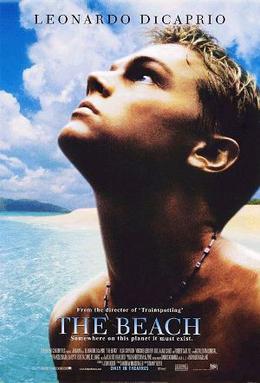
Spring Breakdown #6: The Beach (dir by Danny Boyle)


Here’s a lesson for any and all aspiring film bloggers:

Even if you’ve seen the movie before, always rewatch a film before you write about it.  This is especially true if it’s been a while since you last saw the film.  Often the pressure to say whether a film was bad or good can lead to your memory playing tricks on you.

That was certainly the case with me and the 2000 film, The Beach.  For the longest time, I remembered The Beach as being a gorgeously shot but rather shallow film, one that featured one of Leonardo DiCaprio’s least impressive performances.  Whenever I had to explain my theory that DiCaprio didn’t become a consistently good actor until 2003, The Beach was inevitably one of the film’s that I would cite as proof that, early on in his career, DiCaprio had a tendency to overact.

In short, if I hadn’t rewatched the film on Saturday morning, you would currently be reading a really negative review of The Beach.  However, I did rewatch The Beach and I discovered that both the film and DiCaprio’s performance were a lot better than I initially remembered.  Now, don’t get me wrong.  The Beach is still a frustratingly uneven film and the voice over narration (which DiCaprio recites in a rather overwrought style) still makes me cringe.  But still, it’s hardly the disaster that I initially remembered it being.

DiCaprio plays Richard, a privileged American who finds himself in Bangkok, searching for adventure.  When he meets the appropriately named Daffy (Robert Carlyle), a bemused Richard listens as Daffy talks about an uncharted island in the Gulf of Thailand.  Daffy swears that it’s a paradise that is populated by other travelers.  When Richard smirks and asks Daffy if he’s “fucked in the head,” Daffy responds by drawing Richard a map and then promptly committing suicide.  Richard and his two French friends, Françoise (Virginie Leydon) and Étienne (Guillaume Canet), go searching for the island.

And they find it!  It turns out that Daffy knew what he was talking about.  On the island, they discover a small but thriving commune.  Soon, Richard is killing sharks, having affairs, and becoming close to the leader of the commune, Sal (Tilda Swinton).  Unfortunately, Richard is also starting to lose his mind.  He grows to love paradise so much that he chooses ignore the dangers all around.  When a member of the commune is attacked by a shark, he’s left out in the middle of the jungle because no one wants to deal with the reality of his suffering.  Even more dangerous are the neighboring marijuana farmers, who allow Sal and her followers to live only under the condition that they keep the island a secret.  The problem is that Richard’s not good at keeping secrets.  Before he even knew if the island was real, Richard showed the map to a group of American surfers.  And now, the surfers are coming….

The Beach was directed by Danny Boyle, so it’s not a surprise that the film looks great and that it has an absolutely brilliant soundtrack.  (The film makes great use of both Moby’s Porcelain and Out of Control by the Chemical Brothers.)  At the same time, Boyle is too much of a subversive to fully buy into his film’s vision of paradise.  From the minute that Richard and his friends reach the island, Boyle is offering up hints that utopia isn’t as wonderful as people assume.  When Sal asks for a volunteer to accompany her to the mainland on a supply run, Boyle practically delights in showing everyone freaking out at the idea of having to indulge in responsibility.  Boyle often contrasts Richard’s pretentious narration (which, at times, sounds like it could have been lifted from a Beto O’Rourke medium post) with the rather mundane details of living on the island.  Though it may not be obvious from the start, The Beach works best when viewed as being a satire of middle and upper class ennui.

As for DiCaprio’s performance as Richard ….. well, let’s just say that he spends a lot of time yelling.  During the early part of his career — essentially the pre-Scorsese years — DiCaprio had a tendency to overact.  For all of his obvious talent, it took DiCaprio a while to really get to a point where he seemed as comfortable underplaying as he was just going totally overboard.  The Beach has its moments where DiCaprio gets awkwardly shrill.  (The scene where Richard talks about killing a shark always makes me cringe.)  But, at the same time, DiCaprio’s performance gets better as the film progresses.  (The scenes where DiCaprio is running around the jungle and trying to act like an animal are actually quite good.)  If DiCaprio’s performance sometimes seems shallow or histrionic, that’s because that’s who Richard is meant to be as a character.  (In one scene, Françoise even calls Richard out for being shallow and pretentious.)  Just because Richard’s narrating and is played by the star of the film, that doesn’t meant that we’re necessarily meant to like him.

These are all things that I didn’t really understand until I rewatched the film.  Maybe I was too immature the first time I saw the movie to understand what Boyle was really going for.  Maybe I was just having an off night the first time that I watched The Beach.  Or maybe my memory was just faulty.  For whatever reason, I’m glad that I rewatched this often uneven but still rather interesting film.  For all of its flaws. it was definitely better than I remembered.