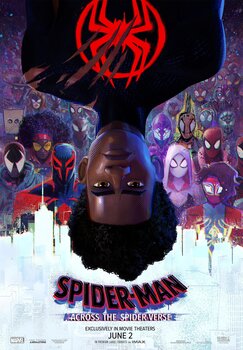
Spider-Man: Across the Spider Verse (dir. by Joachim Dos Santos, Kemp Powers and Justin K. Thompson)


I broke a few rules with Spider-Man: Across the Spider Verse last Thursday at my local theatre. It was near empty, so thankfully, I didn’t disrupt things too much. I became that guy down in front that needed to be shushed because he was either finger pointing at something or exclaimed “Oh crap!” a little too loud. 2023 has given us many great films so far, but right now, Spider-Man: Across the Spider Verse is the frontrunner for the any awards for animation. As the ending credits rolled, I took a deep breath & rose on shaky legs, an experience that only hits me when I’m up very high staring over a ledge or adrenaline kicks in. I lost myself in that movie.

Or perhaps I’m just growing old.

Either way, Across the Spider Verse takes everything great about the Academy Award Winner Into the Spider Verse and turns it up a notch. The best experience is to go in as blind as you can. There are no real spoilers here (or at least, only a few), though times are changing. Within 20 hours of the film’s release, we already had videos on YouTube to help understand the ending and tons of Tiktokers posting in-theatre video. There’s almost no real reason to ever have to watch a movie in the theatre or maybe even write about one, although the experience is worth it. I’m somewhat jaded, though writing about movies is still fun, at least. Across the Spider Verse and it’s message of doing one’s own thing is inspiring. This is less of a review and more of just my experience with the movie.

Across the Spider Verse continues the tale of Miles Morales (Shameik Moore, Dope), the Official Spider-Man for his universe. Where the first story helped to flesh out the notion that anyone can put on the mask and use their abilities, this film focuses on the weight of responsibility that comes with it. Miles is doing great for himself. He’s come into his own with his powers, and does good with the city. He’s okay with his grades, but his relationship with his parents Rio (Luna Lauren Velez, The First Purge) and Jefferson (Brian Tyree-Henry, Bullet Train) could use some help since he’s keeping his other identity a secret . When Miles is visited by Gwen (Hailee Steinfeld, Bumblebee) on a mission of her own, he finds himself thrust into an adventure he’s not quite ready for. I missed the main trailers for this, which does give away some major plot points. That could also be a factor in why I enjoyed it so much. Everything, or most of it was new to me.

Three new directors are taking on the mantle for this sequel. This time around we have Avatar: The Legend of Korra’s Joachim Dos Santos, Cloudy With a Chance of Meatballs Producer Justin K. Thompson (who also was a producer for Into the Spider Verse) and One Night In Miami’s Kemp Powers (who also wrote Disney/Pixar’s Academy Award Winner, Soul). The story still belongs to Christopher Miller and Phil Lord, who are best known for the 21 Jump Street , The Lego Movies and most recently, The Mitchells vs. The Machines. I still argue that Lord Miller’s version of Solo could have been magic, but that’s another story.

The story in Across the Spider Verse builds off of the original in a number of ways, and the cast helps to flesh things out. New additions include Oscar Isaac’s (Triple Frontier) Miguel O’Hara, a Spider Man charged with protecting the Spider Verse. We also have Issa Rae (HBO’s A Black Lady Sketch Show, Little) as the motorcycle riding Jessica Drew, Academy Award Winner Daniel Kaluuya (Judas and the Black Messiah) as a punk rock Spider-Man named Brodie. As everyone’s seen in the trailers, Jake Johnson (Tag) is back as Peter B. Parker with a new addition in his life. The film is peppered with other cast members and cameos – much like the party sequence in The Lego Batman Movie, but ultimately, it’s Moore and Steinfeld’s characters that carry the most weight. It felt great and nerve wracking to worry about the fates of these characters.

My cousin would be particularly happy to find that the film passes what she refers to as the “Supernatural” Test. From her point of view, when Bela Talbot was introduced to the series Supernatural, Sam and Dean Winchester were rendered stupid in her presence. It was almost as if they just discovered hunting monsters. Miles and Gwen make for a great pair while still managing to be amazing at what they do separately. This doesn’t mean there’s a lack of vulnerability and/or quirkiness between the two, but when it counts, they both manage to bring something to the table.

There’s love and creativity flowing through every frame of Across the Spider Verse. Much like the original, colors are vibrant, and you truly feel as if you’re moving through the pages of your favorite comic book (dots and all). There are tons of blink-and-you’ll-miss-them moments thoughout the movie that warrant a 2nd (or 3rd) viewing or at least a major scrub through when the film reaches streaming. The cities are full of life and the action sequences are wonderful to behold. I can’t begin to wonder how any of it looks on an IMAX screen.

Composer Daniel Pemberton (The Bad Guys) also deserves a lot of love, as well as as the additional side music. He builds on the original themes, while adding some new ones in the process. If anything, some of the music may have been too loud.

Overall, Spider-Man: Across the Spider Verse is a near perfect sequel that had me cheering on the heroes and biting my nails at the unfolding story.

It’s the little things that has Sony Pictures Animation and Spider-Man: Across the Spider Verse working some magic.

Annihilation, Movie Review with some spoilers


Annihilation-Movie

Annihilation, a movie adaptation from the novel of the same name, is a confusing story.  The book is part of a trilogy and has no relation to the film except that both are fairly convoluted.

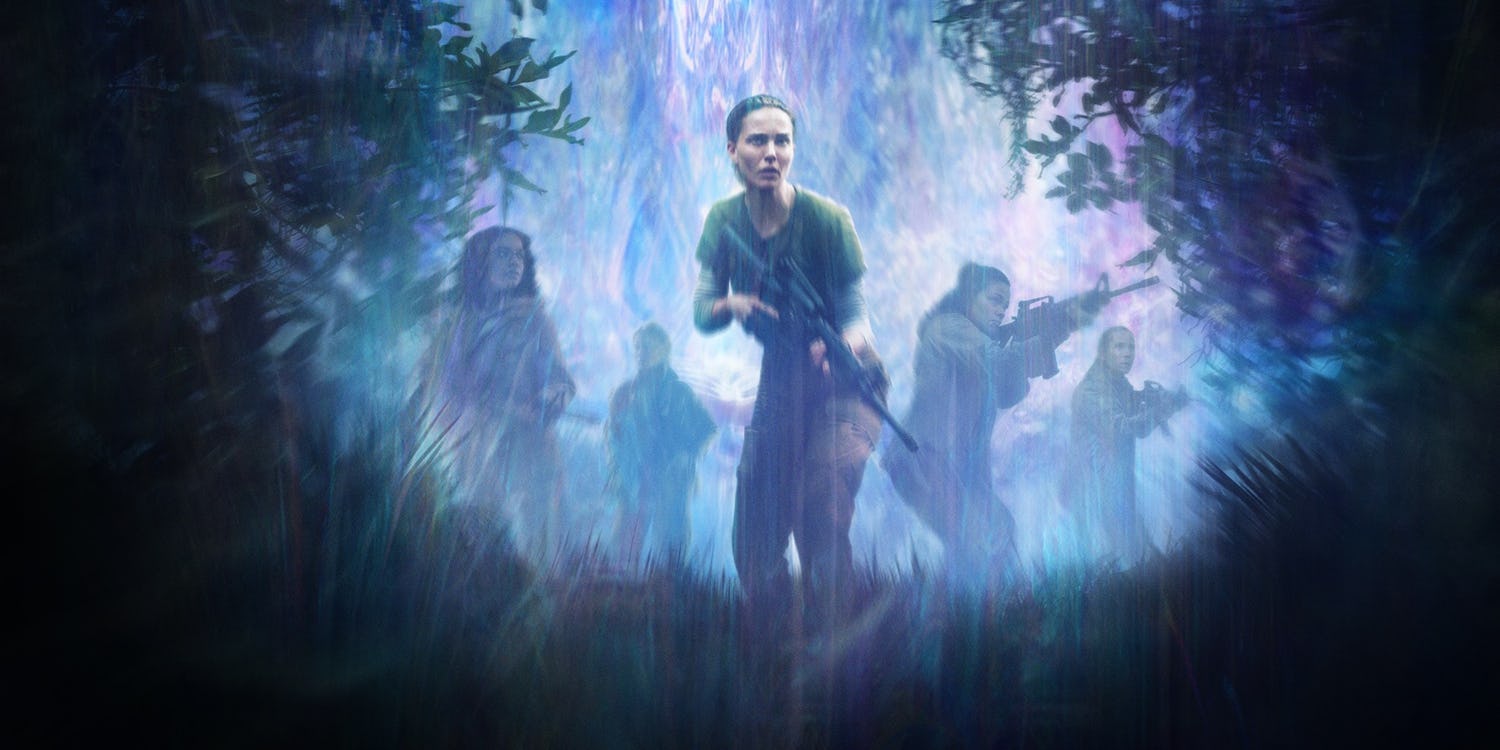
The movie has two storylines: a dying marriage that was based more on lust and youth than common interest and a comet that hits a lighthouse and forces mutations on everything around it.  The comet creates a “shimmer”, which may or may not be made of bubble mixture goop because that’s what it looks like and inside the shimmer a whole lot of mutations are goin’ on and scientists want to know why.

Lena (Natalie Portman) is having an affair so her husband decides to go into the shimmer because he’s self-destructive and Jimmy Fallon’s been kind of dull lately.  He’s gone for 12 months and returns ….. different.  The government, an organization run by a tranquilized Jennifer Jason Leigh, kinda wants Lena to go into the shimmer with her to investigate the entity further.  I write kinda because everyone in the film just meanders and moseys through their own story.

Lena and Jennifer don’t go in alone; they go into the bubble mixture goop with Jane the Virgin whose only special skill appears to be staring and whining, but to be fair she might be picking up on her malaise from being on a shitty CW show.  There’s also Explainer Woman who explains everything all….the….time and I mean Morgan Freeman voiceover levels of explaining.  There’s a lady who cuts herself (off camera) and whose special skill is to Explain Science with a voice that can only be described as sedated, interesting choice to prepare for every scene by eating a turkey sandwich and gravy.

They proceed to run into some weird predators and creepy deer; yep, creepy deer.  As they get closer to the origin of the comet impact, the mutations are more and more pronounced.  We are also treated to her husband via found video footage that the shimmer area is mutating him and his comrades that were all lost in the previous mission.  There does not appear to be a motive to the mutations or any form of a goal on the part of the invasive comet.  In many ways, the movie is a lot like the flora and fauna in the film; it is, it exists, and it will cost about 14.00 bucks to see it.

The movie did succeed in creating a mysterious vibe and playing up the unreliable narrator component.  It failed in pacing.  This movie is s l o w.  I mean it’s possible that I went back in time and re-watched it again.  I thought it was actually an hour longer than it was.  I have to really think as to whether I would recommend the film to a fellow human being.  If you go to see a Western because you like to watch people mosey, this is the film for you.


Quick Review: Drive (dir. by Nicolas Winding Refn)


Here at the Shattered Lens, we’ve been eagerly awaiting Nicolas Winding Refn’s Drive, which has picked up some major buzz over the last few months. So note that this will not be the only review you’ll see for the film. As the other reviews come in, I’ll update this paragraph to link to them.

Addendum: 

Leonth3duke has added his Drive Review, which examines the film from a lens closer to the director’s point of view and remains spoiler free. Definitely worth reading!

Arleigh has also added his Drive Review – which compares the film to both Michael Mann and David Cronenberg’s styles.

*  *   *   *  *

I was so excited by Drive that I treated my extended family to it (just in case the film went sour, it would be easy to apologize). This is going to be a quick review, because I’m going to ramble.

To quickly sum it up, Drive is a beautiful, artistic film that hits all the right buttons when it comes to the crimes it showcases. It occasionally explodes between quiet reflection and ultra violent action. Even the music was sweet. It’s just a shame though that all that coolness is wrapped up in dialogue and scenes where the pacing……moves……as……………slow…………..as………………this. Honestly, the book this was adapted from felt like it must have been about 50 pages, at best.

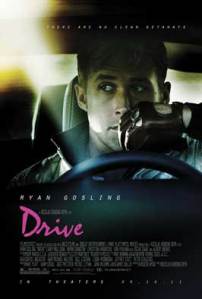
Drive is the tale of Driver (Ryan Gosling), a stuntman for the movies by day, and a Wheelman by night. His partner, Shannon (a nice performance by Breaking Bad’s Bryan Cranston) gets involved with a mobster (Albert Brooks) on a business venture. After getting caught up in a heist that goes awry, Driver has to try to protect himself along with the woman and child he’s recently befriended.

Drive has a fantastic sequence before we actually see the opening credits. Everything about that opening is downright sharp and creative. I haven’t seen that cool an opening to a film in quite a while. What a way to hook the audience in.

Overall, the film feels great and unique, but it suffers from one problem that I’ve only seen a few people actually mention. It feels like there’s this pause between every statement between Driver and Irene (Carey Mulligan). Imagine having one character say “Hello”, and then having someone pause the movie for a few minutes before picking it up from there. Drive ended up doing this quite a bit.  I can understand if Driver is a soft spoken, man of action,  but there were moments where I wanted to shake both Gosling and Mulligan to communicate more. I’m not saying they had to move in a particular direction, but they had a lot of patience waiting for replies from each other.  There were other scenes where I felt Refn should have considered adding just a few cuts to the film to increase the speed of the film. The slow pace keeps it from becoming The Transporter, but most of this movie felt like that 3rd act in Heat after the robbery (or the multiple endings in Return of the King) to me. The film felt more like it was in love with itself than anything.

I understand that Drive is an independent film, and with independent filmmaking, there’s a bit more freedom to do things artistically instead of having movie marketers breathe down your throat. While I may lack the film appreciation skills to effectively grasp the artistic impact of Drive on screen, I can say that as a dialog or story driven piece, the movie suffers that one hiccup. Others may see the movie differently than I did.

Pacing aside, Drive is easily worth seeing, and is in some ways similar to some of Michael Mann’s films like Thief and the aforementioned Heat. Ryan Gosling was cool, but knowing that you’re not going to get the kind of emotion from his character compared to maybe Blue Valentine helps to brace you. Working from Mann’s concept of movies, you could relate Driver to a Neil McCauley. In Heat, DeNiro’s McCauley took action when he needed to. If someone forced his hand, the response was harsh. Driver felt like he had something of the same approach, which I really did like.

Visually speaking, I loved it, but it just has areas where Refn appears to be in love with a shot so much that he lingers longer than he needs to. If you never told me who directed this, I might assume it was David Lynch.  The driving scenes themselves are done very well, and the action is also explosive, breaking the silence in the film a number of times. The silence is so strong that something as simple as a gunshot caused most of the audience to jump, which I found interesting.

The other performances in Drive are interesting, especially Albert Brooks and Oscar Issac, particularly. I didn’t even recognize him in this film, compared to his bad guy role in Sucker Punch. Christina Hendricks, though nice to see, didn’t really do too much here.

So with Drive, you can go see it. I may see it again myself. I’m not saying you shouldn’t, but if you yawn somewhere down the line, don’t say I didn’t warn you.

One other thing I had to add here. The Marketing for this film a few months ago (including the original trailer) is closer to the impact of the actual film than some of the marketing that’s being done now. Most of the recent posters and tv ads push Drive as something of an action piece. I would consider it more of a Drama with action occasionally spliced in.