If there’s one thing that will draw me back out of obscurity no matter how much work I’m bogged down with, it’s Horror season here on Shattered Lens. As a de facto film blog’s one author who pretty much never watches movies, I like to do my part by digging out a mix of tunes appropriate for the season.
This is always the time of year when I stop focusing on new releases and revisit a lot of my metal and folk favorites of old. From b-side Satanic cheese to authentic pagan anthems to the truly deranged, all the music I love most seems to find a home when that oppressive summer sun gives way to pleasant temperatures and dimming lights. It’s my favorite time of year, and my music collection rises to the occasion.
Opeth is pretty common fair in the textbooks of heavy metal these days, but Mikael Akerfeldt’s finest works came before the fame, in my opinion. Their 1995 debut, Orchid, ranks highest for me. While Akerfeldt’s trademark progressive rock experimentation was present from the get-go, those early albums had a sort of hollow, natural tone to them that lent the band a distinctly folk vibe. Orchid (and Morningrise) seem to drift through the crisp, foggy air surrounding a lake on the edge of a forest, the sun just beginning to rise over the horizon. I don’t wake up early when I can help it, but if a morning commute is necessary, Opeth always sees a spike in my play count. The vision that songs like “The Twilight is My Robe” paint is stunningly vivid, and surprisingly peaceful in contrast to Akerfeldt’s harsh vocals.
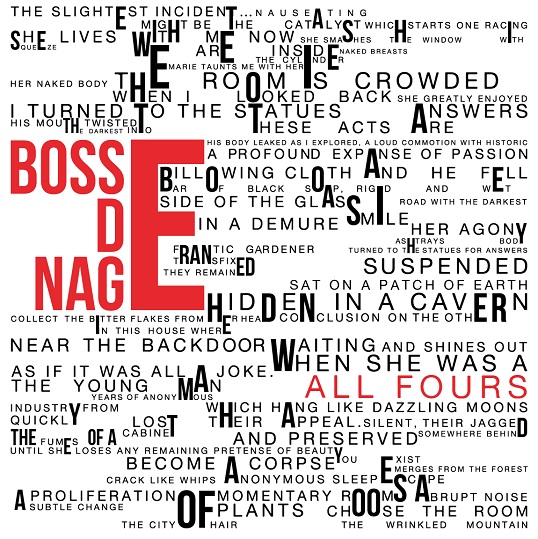
Bosse-de-Nage (pronounced something like “Boss De Nazh”) are a four-piece band from San Francisco. They pumped out their first three albums in a span of three years, between 2010 and 2012, and then took their time getting this one together while cultivating a friendship with Deafheaven that lead to a split 12″ and some enhanced name recognition. All Fours was just released via Profound Lore Records last week, and any serious student of extreme music owes it to themselves to check it out. Just when I thought nothing in 2015 could be more stylistically unorthodox than Liturgy’s The Ark Work (ok, that claim probably still stands), Bosse-de-Nage turn up with an album that’s going to leave me scratching my head for a long time to come. What’s so interesting about All Fours is that you can walk away with a totally different impression of what the band is doing depending on your personal musical background.
Track: At Night
The album kicks off in post-metal mode, ebbing and flowing through a brooding, pessimistic mire beneath Bryan Manning’s desperate screams. Two minutes and change in, the song transitions to the sort of pounding fuzz that might call to mind Converge’s “Jane Doe”. As things continue to change, you get the feeling that it’s progressing towards an ever more desperate state. Black metal seems to play a major role in that intensification, with earlier passages reappearing in a more tightly packed onslaught of notes. The ending, for instance, revisits that Jane Doe sound, but the once cymbal-centric drumming is now competing with blast beats. “At Night” is a song in constant flux, and it could have been an erratic mess, but instead it’s strikingly fluid. Bosse-de-Nage manage to keep a thread of accelerating emotions taut throughout the long chain of ideas and influences that comprise it.
The next song, “The Industry of Distance”, sends a similar message. A simple, clean guitar lick repeats over bassy feedback for the better part of two minutes. Drums sneak up into a slow roll to cue distorted drawling guitar chords, and soon the song explodes in one of those beautiful melancholy post-black metal anthems we’ve been growing accustomed to. Instead of lightning quick tremolo and blast beats though, the drum and guitar initially seem to execute at half the frequency while Manning screams in his uniquely heartbroken style. It creates a sort of oscillating effect for an ear expecting black metal, every other note appearing to be missing. This eventually fills out into full speed tremolo and blast beats to complete another build-up through higher stages of emotional breakdown.
That’s my general metal take on All Fours. While a lot of what we’re calling post-black metal today diverges melodically from the genre’s origin, Bosse-de-Nage go further in exploring the techniques that characterize it. The drumming especially diversifies the package. Tremolo guitar and blast beats signify climaxes in a post-metal progression rather than perpetual constants, and a lot of care is given to make the development taking us there feel natural and captivating. Instead of the instant gratification of say, Liturgy or Krallice, Bosse-de-Nage effectively tap that post-rock tradition of “building up” to it.
Track: Washerwoman
That is probably a more accurate approach to understanding this album, because the band is firmly rooted in black metal. Manning at least has stated that he’s never heard of a lot of the other bands Bosse-de-Nage has been compared to lately. But the more this band diverges in technique from black metal, the more they find themselves labeled screamo and post-hardcore. If you’re familiar with that world of music, it’s a pretty fascinating truth. When bands play with the framework of a classic style, the boundaries of genre dissolve. Yes, “Washerwoman” could easily pass as a post-metal/black metal hybrid. Around the two minute mark it begins to sound strikingly similar to Isis. When the song breaks at four, they could be toying with black metal guitar by letting some of the notes ring out–a precursor to the proper bm onslaught that comes at five. But is that what you hear? Or do you hear a song straight off A Dead Sinking Story by Envy, peppered with spoken lines a la Indian Summer? It depends on where you’re coming from.
Envy-worship is actually how my brain interpreted “Washerwoman” on first listen, and I made immediate associations with other screamo acts throughout the album. I am not alone here. In the early reviews I’ve found so far, this album has been compared to Orchid, City of Caterpillar, Heroin, Moss Icon… Almost every track on All Fours feels extremely influenced by screamo. But it is not. It’s the same sort of thing that happened with Neige on Le Secret and Souvenirs d’un autre monde, when the pioneer of “shoegaze black metal” came out that he didn’t have a damn clue what “shoegaze” was.
I first mentioned screamo and black metal in the same sentence when Drudkh released Microcosmos (2009). “Ars Poetica”‘s climax screamed Orchid and The Kodan Armada and a half dozen other names to me as it slid up and down the neck with drum accents to punch it home, introduced by that classic clean guitar over tense, snare-centric drumming. Deafheaven’s Roads to Judah (2011) resurrected the idea, and Portals to a Better, Dead World (2013) by Cara Neir ultimately sealed it, making black metal screamo crossovers a certain reality. But was there any actual direct influence in any of these cases?
I used to think there was, and I know that Liturgy at least has a post-hardcore background, but any of these bands might have landed on their sounds totally independently. All Fours really sends that message home to me. It’s a window into natural affinities between genres. When Bosse-de-Nage break down the components of black metal into longer, more ringing tones while maintaining that post-bm sense of desperation, they are essentially playing screamo, and the way they seamlessly fuse it back into black metal instrumentation uniquely highlights the similarity. They’re playing post-black metal by definition, but in their approach the two styles are totally indistinguishable save through the cultures surrounding them. When a band can give me a new perspective on an entire genre of music, hey, that’s pretty cool.
Track: The Most Modern Staircase
Of All Four‘s seven proper songs, I am sold on all but “In a Yard Somewhere”. Each builds its way through catchy melodies and interesting stylistic digressions to a convincing emotional climax, and they do it differently from what I have heard before. That it is unique is obvious by the fact that so many people are tossing around band names from way outside of the box in an effort to define it. But there is one other hidden gem in Bosse-de-Nage that stands them apart from the crowd: the lyrics. Bryan Manning has an impeccable flare for the grotesque. From facepalm punchlines about poop and hookers, to really disturbing tales of insanity, to poems that make no discernible sense whatsoever yet pretend to hide some esoteric truth, nearly everything he writes is a ride in itself, independent from the music. Their previous album, III, defies any attempt I could make to describe it, and you should really just go read it all right now. Whether he’s meditatively contemplating a contortionist entering a box or explaining why turning yourself into a human tree was a bad idea, the wording is totally surreal.
The lyrics on All Fours are a little more difficult to decipher, because the stylized sleeve included with the album, for all its artistic appeal, is kind of hard to read. You lose focus trying to dig through it. But The Most Modern Staircase struck me most when I first skimmed over them, and knowing what he’s screaming (not the sort of emo laments his tone of voice might suggest) really enhances the music for me:
I traveled to the province of staircases. The great variety of balusters, railings, finials, and steps filled me with awe. Many looked welcoming, while others were intentionally obscured or blocked up, and some were decorated with vibrant warnings to anyone who might ascend. I found the most modern-looking staircase and climbed. After a while, I stopped on a landing to rest. This extraordinary landing was home to dozens of living statues–obsequious stone gods begging for spare hands. As I explored, a loud commotion with historic consequences occurred somewhere behind me. When I looked back, there was a curtain drawn around the event. I turned to the statues for answers, but they remained inert and silent, their jagged stumps eager for relief.
All Fours: another formidable stalwart in a year that’s been crammed with way more stellar releases than normal. Pick up a copy on Profound Lore Records.
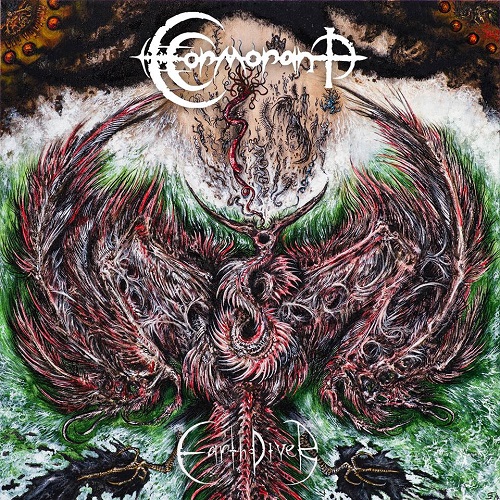
Cormorant are a 4-piece San Francisco Bay band formed in 2007. They released their third studio album, Earth Diver, back in April of this year. Lacking major ties to any other band I have heard of, it’s probably no surprise that they stayed off my radar until now, but this is a band that definitely deserves some attention. Their well-crafted mix of folk, progressive rock, post-rock, and black metal sets a high standard at the cutting edge of metal today. While Earth Diver may possess a fatal flaw, it offers a world of potential that few bands can hope to realize.
Cormorant – Daughter of Void, from Earth Diver
Earth Diver opens with “Eris”, a two and a half minute instrumental folk guitar track with a bit of a Spanish flare. As nice as the song sounds in and of itself, I am not convinced that it was the ideal choice for their opener. The second track, “Daughter of Void”, kicks off acoustic as well, and with the two tracks combined, the intro just seems a bit overdrawn. Don’t worry though; that’s the last time I’ll be complaining about the album’s structure. The acoustic portion of “Daughter of Void” sets the stage nicely and gets us straight to the point without much delay, kicking the metal side of the song off theatrically. We start with a nice metal groove lacking any of the repetitiveness you might expect from a band with the “black” tag, and at two minutes their prog tendencies start to show. Black metal vocals give way to something reminiscent of Opeth or Mastodon, and the song shifts through a variety of genre norms without really breaking from the overall feel. The song hits a peak at 4:05 with an Amorphis-esque vocal melody and a really catchy rhythmic hook. The bending tremolo behind the vocals starting at 5:35 is sick, and they build on it further at 6:25. The song is just packed with little standout moments that never last long enough to seem like overkill. (The youtube video ends early, but you’re only missing eight seconds.)
This is the sort of track you could easily remember from start to finish, if you could get in to it enough to care. If. The down side to “Daughter of Void” is a fairly mediocre production job that fails to really pull me in. I can hear everything clearly enough, but I can’t really feel it. They are going for classic low-key grit over big, booming sounds, and I get that, but it feels pretty washed out. The sort of sound Agalloch accomplished with Ronn Chick on Pale Folklore could have pushed this song from above average to outstanding.
Funny fact I didn’t realize until I wrote this: Cormorant actually do share some production history with Agalloch. They work with Justin Weis, who did a notoriously shitty job on Marrow of the Spirit. Go figure.
Cormorant – Sold as a Crow, from Earth Diver
“Sold as a Crow” has a very different feel about it. We kick off with some delicious post-black metal. A pretty tremolo melody warps into a desperate cry as the distortion and blast beats kick into gear. The snare does not always feel quite on point with the guitar, but Lev Weinstein might just have me spoiled in that department. This is the kind of black metal I live for. I love the single-beat stop at 1:46 and 2:00. I love the harmony at 1:50 and 2:05. I love the octave shift at 1:52. I love the three seconds of guitar flare at 1:55. This constant barrage of subtle nuances tends to distinguish post-black metal from its ancestor, and it’s the reason I can recall every note of a 15-minute Krallice composition while an Immortal track might fade into the back of my mind in seconds.
At 2:36 the main melody returns with a sort of flowing, jazzy feel, and then the majority of the song repeats. We get some new variation at 4:03 as build-up to a minute of soloing to close out the track. Maybe because the ending doesn’t appeal to me quite as readily, the production of the album starts to eat at me again. It still feels a bit of a wash, lacking depth or crispness without a good reason. I can appreciate “Sold as a Crow”. I can love listening attentively to every note from every instrument, especially in the first two and a half minutes. But I’m left without that desire to hear it again, right goddamn now. I can never listen to a whole Krallice album at once, because I always get stuck on a track and set it to repeat ad nauseam. “Sold as a Crow” could have been a song like that, but its beautiful structure is not matched by compelling tonal quality.
Cormorant – Broken Circle, from Earth Diver
What you’re not going to hear on Earth Diver is more of the same. This isn’t the sort of album where I can describe two or three tracks and feel like I’ve summed the collective up well. Every song is a masterfully complex beast unto its own. With Opeth always on the tip of my tongue, peppered by Amorphis, Agalloch, and Krallice, Cormorant manage to remind me of a lot of the most unique bands in metal without ever paralleling any of them for long or losing its own unique flavor. “Broken Circle” has jazzy acoustic guitar a la My Arms Your Hearse Opeth, straight-up in-your-face black metal, a break to a distinct Orchid-era Opeth sound at 3:29, brief allusions to math rock, and a world in between. When the singer isn’t barking in classic black metal fashion, he might be pulling off his best Pasi Koskinen or Mikael Åkerfeldt impression, letting out a bellowing roar, or even shouting at the top of his lungs (2:04). You can often catch the bass running wild, sounding especially like Johan De Farfalla during the Orchid moment (why oh why did Mikael fire that man?). But as many band references as I can throw out there, the majority of “Broken Circle” sounds like Cormorant’s own unique creation.
And yet. And yet I can’t pull this album in and hold it close for long. What struck me as mediocre production from the start begins to feel like a travesty in the face of such absolutely brilliant compositions. This album was robbed of its well-deserved glory by a quality of sound that totally ostracizes me. I keep cranking the volume up louder and louder, hoping that I am just not experiencing it immersively enough to feel the pull. But it’s never there. Oh, it doesn’t sound half as bad as the transcoded garbage you’re hearing in these youtube samples. It would be fine for an average, run-of-the-mill album. But Earth Diver is not that. It deserved above-average attentiveness–something carefully crafted to showcase their sound in all of its uniqueness. I can’t help but think that if Colin Marston had gotten his hands on this raw potential it would have been molded into the best album of 2014.
Decade of last.fm scrobbling countdown:
48. Opeth (640 plays)
Top track (26 plays): The Devil’s Orchard, from Heritage (2011)
When I saw Opeth was coming up next, I got pretty excited about what the top track would be. Would my really oldschool Opeth credentials shine with a song like The Twilight is My Robe or Advent topping the charts, or could nothing hope to match Demon of the Fall? A Heritage track was the last thing I ever expected. It’s easy to forget, in the onslaught of relatively poor reviews, how much I actually enjoyed that album when it came out. Oh, it wasn’t love at first listen, but for me it was a breath of fresh air after years of diminishing faith in Akerfeldt’s song-writing ability. Opeth was one of the first metal bands I ever listened to, and, nostalgia aside, I really do think their first three albums were by far their best. A void, beginning subtly with Still Life and expanding more drastically after Blackwater Park, had grown between my personal tastes and the direction Akerfeldt was steering the band. This coupled with what I perceived as an overinflated ego to completely erode my interest in the band for a long time. Ghost Reveries and Watershed only managed four and three listens respectively before I yawned and moved on.
I am not much of a progressive rock fan, but with Heritage I did start to feel like Akerfeldt was coming back to earth and keeping it real again. I don’t know about his whole “I’m done with metal” mentality; it seems to me like he’s exactly where he needs to be to start composing the sort of metal I can enjoy again. But even if prog rock is all that’s going to appear under the Opeth moniker for a long time to come, his decision to tone things down has successfully resurrected my interest. The Devil’s Orchard is my most played Opeth song because these charts do not begin until 2003; a few years earlier and the statistics would reflect something quite different. But suffice to say I do think this is the best Opeth album since Blackwater Park.
I’ll leave you with a classic Opeth track of the sort that made these guys, for a pre-last.fm period of four years or so, my favorite band in the world:
Decade of last.fm scrobbling countdown:
50. Orchid (601 plays)
Top track (91 plays): Le Desordre C’est Moi, from Chaos Is Me (1999)
I always thought the first two tracks to Orchid’s debut album would make amazing final boss battle music for a video game. Maybe that’s a bit of a stretch, but I did first take an interest in screamo and related genres on a defunct video game forum that had awkwardly evolved into an informal music-sharing site. (The same one I met Arleigh and and pantsukudasai56 on.) A friend of mine there who would go on to become the vocalist for Mesa Verde was really getting into the genre around the same time that I was first exploring black metal, and we traded a lot of recommendations. It’s made the recent surge of screamo-black metal cross-over bands like Liturgy and Deafheaven peculiarly nostalgic for me.
Orchid was a short-lived but especially influential band in the scene, lasting from 1998 until 2002. Most of its members went on to form the really solid and entirely out of character rock band Panthers afterwards. I will be eternally amused that Jayson Green noticed my Orchid shirt at one of their gigs.
October has always been my favorite month. It marks the beginning of a seasonal reclamation of man by the world, in which civilization’s mask of sensibility begins to slip away. Tasteless architectural symbols of control over nature digress to their more appropriate forms, as frail refuge against forces beyond our control or comprehension. It is, to misappropriate Agalloch, “a celebration for the death of man… …and the great cold death of the Earth.”
Last year I posted a six part series on some of my favorite black metal, folk metal, and related genres for the season. I had intended to do something similar this year, but time just did not allow for it. I never got around to coming up with a central concept on which to focus. Perhaps it is no coincidence that the two bands I have listened to the most this month, Opeth and Summoning, both defy all standards of classification.
I would like to showcase both, but I can’t imagine doing so properly without embarking on a project way beyond the scope of my time and desire to write at the moment. So I will keep this short and sweet, featuring only Opeth’s Orchid (1995) and Summoning’s Let Mortal Heroes Sing Your Fame (2001), and perhaps in the process still introduce you to some amazing music you had not heard before.
Opeth – The Apostle in Triumph
Everyone has heard Opeth, right? Their fame is fairly unprecedented among metal bands that are actually worth a damn. Yet, out of touch with what is and is not popular today as I am, I still get the impression that what I think of as Opeth is just as relatively obscure as it had been when I first heard them well over a decade ago.
Opeth as a popular band, in fact, is entirely foreign to me. Their first album to make the US charts, Damnation, came out right around the time I stopped listening to them altogether, and long after my interest had begun to wane. I was introduced to Opeth, like everyone around the turn of the century, via Demon of the Fall. My Arms Your Hearse was one of the most emotionally charged and breathtaking albums I’d ever heard. At the time, if you wanted to hear more, you had to look backwards, to Orchid and Morningrise, both of which were very different beasts. With them, if no one reminded you of the distortion and growled vocals, you might forget, amidst Akerfeldt’s soft, subtle lamentations, that you were listening to metal at all.
It took both a long time to grow on me. It’s not that they were inaccessible, but that peculiar teenage ability to focus in on a single masterpiece with no appreciation whatsoever for its surroundings had hold of me. There I was covering My Arms Your Hearse from start to finish on my new guitar (sure wish I could still do so now), and I’d listened to Morningrise maybe five times. Orchid never broke through the cellophane. I finally turned to them just barely in time to soak them up before history left them in the dust, a last minute love affair I was conscious of at the time. They ended up becoming my two favorite Opeth albums, and still are.
Even though My Arms Your Hearse was, alongside Blind Guardian’s Nightfall in Middle-Earth, easily the most influential album in my life, Orchid and Morningrise are the two I look back on most nostalgically, and their melancholy beauty always reverberates the sensation.
Opeth – The Twilight is My Robe
So maybe Orchid isn’t really Opeth’s best album. Perhaps I am biased beyond reconciliation. But at any rate, my obsession with it certainly isn’t some subconscious desire to show I am an “old school” fan–the sort of accusation I tend to see on those rare occasions that the album is mentioned at all. Whether you find my placement of it at the top of Akerfeldt’s discography unjust or not, I encourage you to give The Apostle in Triumph and The Twilight is My Robe long hard listens. Agalloch being a decidedly winter-oriented band, I have experienced no music which captures the melancholy side of the autumnal season better than this.
Summoning – A New Power is Rising
I obsessed over The Hobbit as a child, the Lord of the Rings as a teen, and The Silmarillion in my earliest adult years. J.R.R. Tolkien pretty well haunted most of the formative years of my life, and I am forever indebted to him. A few months ago I picked up one of his books for the first time in perhaps a decade, committed to reading them all, but time simply did not allow for it. As with all undertakings though, it influenced my taste in music for the time at hand. I spent much of the summer re-exploring Summoning–a band I’d never actually encountered until Oath Bound in 2006. Thus they were readily at hand at the start of October, and since then they’ve comprised over half of everything I have listened to.
I dare say no single author has had more impact on music than Tolkien, and while I will always regard Nightfall in Middle-Earth as the greatest relevant triumph, Summoning’s discography is a close second. The one band I know of which has taken Tolkien as their lyrical and musical muse pretty much exclusively, they have forged an entirely new style of music over the years that captures that feeling I always got reading him to perfection.
Summoning – South Away
Summoning emerged from black metal, but from the very beginning they stood apart. By Let Mortal Heroes Sing Your Fame in 2001, my favorite album of theirs, this connection had dwindled to little more than the vocals and some tremolo guitar. The constant use of keyboards (often set to replicate brass) and the heavily reverberated, slow drumming are what characterize them best, along with frequent spoken vocal loops.
Perhaps they intend to sound fairly sinister, with lyrics focused more often than not on the darker forces of Tolkien’s tales, but the effect for me is nothing of the sort. The drums paint a vast, diverse landscape of mountains, forests, rivers and plains that are entirely neutral–dangerous to be certain, but more enticing than aversive. They beckon you out to explore the unknown, steeped in mystery–a fantasy world which is here Middle-Earth, but could just as soon be your own back yard on an autumn day, when the changes at hand call on you to leave humanity behind and wander off into the amoral wilderness.
Summoning – Runes of Power
I love black metal, horror, and everything of the sort, but I think the word “neutral” best describes what I have been tapping into this Halloween season. No real glorification of evil for its own sake, nor any embrace of bygone cultures and values here. Orchid and Let Mortal Heroes Sing Your Fame both tap into the individual’s relation to the world absent civilization’s presumptions and impositions–to the mystery of nature and the manifold possibilities within it which mundane daily life denies–be the experience melancholy or thrilling.
 Through the Shattered Lens