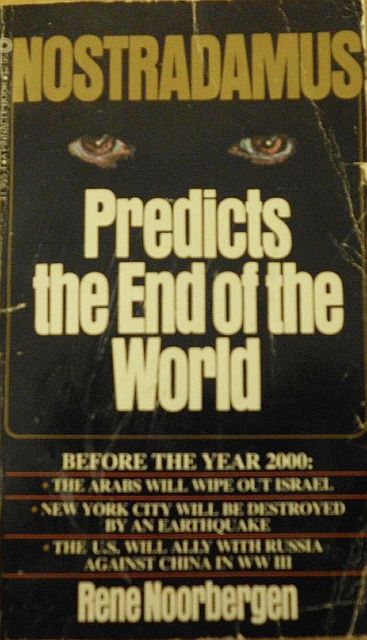
In the year 2010, I was at Half-Price Books when I came across an old paperback called Nostradamus Predicts The End Of The World. The book was full of the cryptic prophecies of the French astrologer Nostradamus, along with interpretations of that what those predictions actually meant. The book argued that, by using those interpretation, once could come up with a chronological narrative of the next great world war. The book predicted that World War III was going to break out in the 90s, that New York was going to be destroyed in 1999, and that the world, as we knew it, would be over with around the year 2000. Once I saw that the world has apparently ended ten years ago, my sense of humor demanded that I buy the book.
Since that time, a few people have told me that I shouldn’t laugh at stuff like this and that, just because the dates were wrong, that doesn’t mean that it’s not going to happen. Some have pointed out that the passage in which Nostradamus predicted a nuclear bomb hitting New York in 1999 could have just as easily been a prediction of 9/11 and that perhaps Nostradamus either misinterpreted the date or maybe it was originally meant to happen in 1999 but got pushed back a few years or …. well, there’s always a reason, isn’t there? My argument, of course, is that the only time that Nostradamus gives a date for any of his predictions, he was wrong. It’s probably not coincidental that Nostradamus picked a date that was so far in the future, he wouldn’t have to worry having to explain himself.
The thing with Nostradamus though is that his “prophecies” were so vaguely written that they could pretty much be interpreted to mean anything. Indeed, it seems like a compelling argument could be made that his prophecies were actually meant to keep him in favor with the wealthy and royal patrons who subsidized his life. Much of what he wrote works as Rorschach test. Readers are going to find what they’re looking for.
For instance, the author of Nostradamus Predicts The End of the World was apparently looking for a battle-by-battle history of the Third World War. For the author, that was found in Nostradamus’s prophecies. The book argues that conflict in the Middle East would lead to a World War between the U.S., Russia, and China and that apparently only Australia would be spared. Towards the end of the book, the author fixates on a red-haired general who apparently referred to in several of Nostradamus’s prophecies. One wonders why Nostradamus would specifically tell us the year that New York was going to be destroyed and why Nostradamus would, as some have claimed, warn about an evil German leader named “Hister” but while leaving vague the identity of the general who is going to be the key to saving the world. Indeed, what even is the point of being able to see into the future if you’re going to be so deliberately vague in your reporting that no one is going to know what you’re talking about?
Interestingly enough, even though it’s been over 22 years since the date that Nostradamus the world would end, there are still people posting his prophecies online and saying that he predicted everything from Trump to COVID to AOC. Never stop believing, I guess.
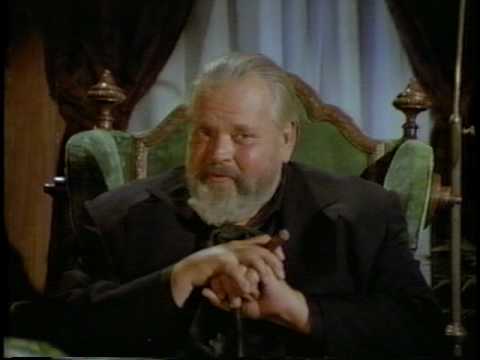
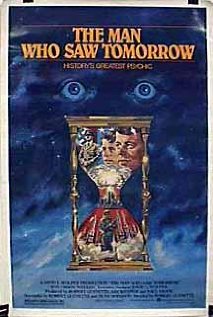 If you have ever wanted to witness the sad fate that awaits most geniuses who challenge the system, you could not do any worse than to watch The Man Who Saw Tomorrow.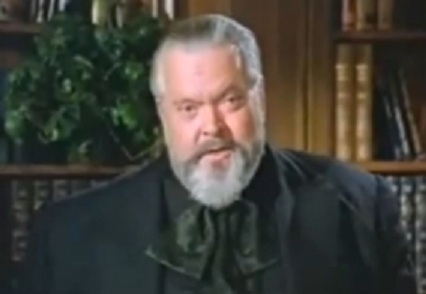
 Through the Shattered Lens