4 Shots From 4 Films is just what it says it is, 4 shots from 4 of our favorite films. As opposed to the reviews and recaps that we usually post, 4 Shots From 4 Films lets the visuals do the talking!
Today, on what would have been his 94th birthday, TSL pays tribute to the great Francois Truffaut. No one captured the act of falling in love in life, people, and cinema with the skill, sensitivity, and humor of Francois Truffaut. It’s time for….
4 Shots From 4 Francois Truffaut Films
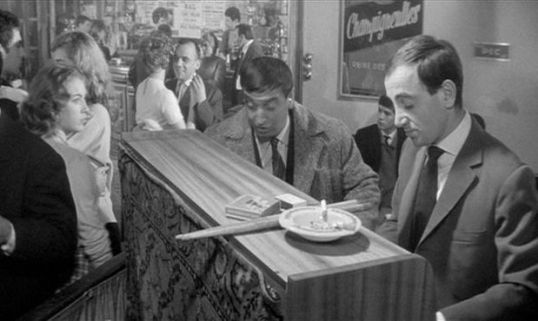
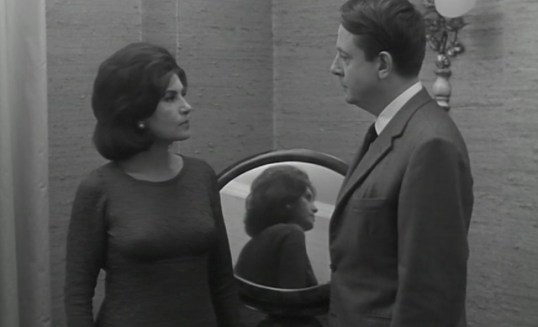
Shoot the Piano Player (1960, dir by Francois Truffaut, DP: Raoul Coutard)
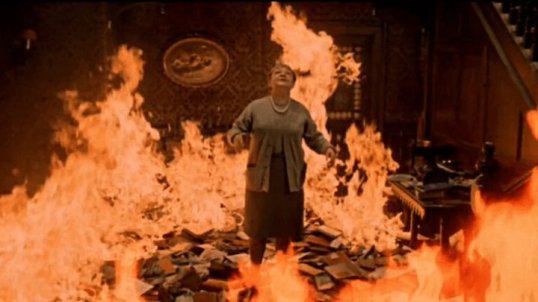
Fahrenheit 451 (1966, dir by François Truffaut, DP: Nicolas Roeg)
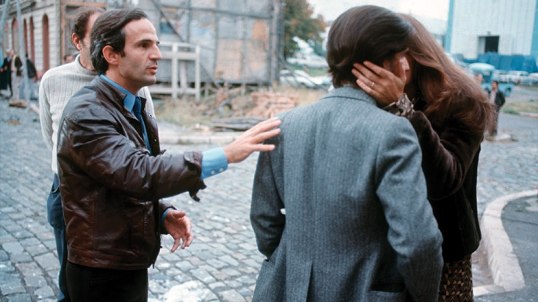
Day For Night (1973, dir by François Truffaut, DP: Pierre-William Glenn)
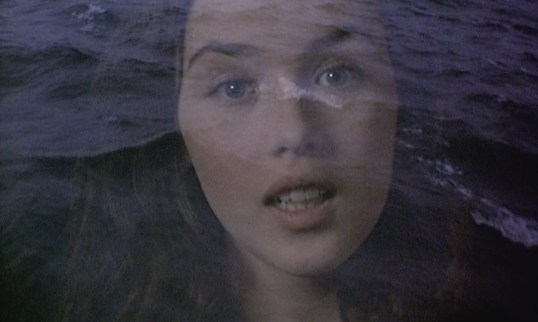
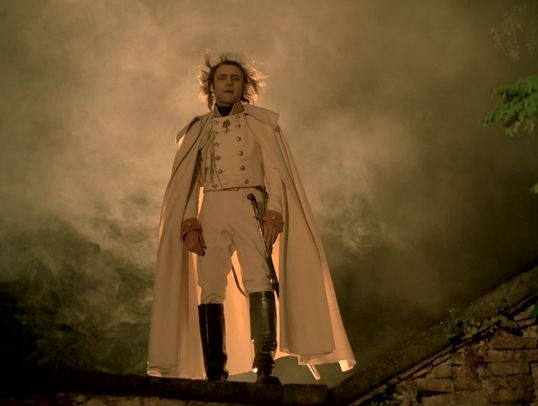
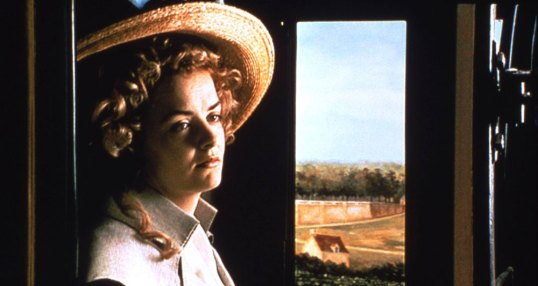
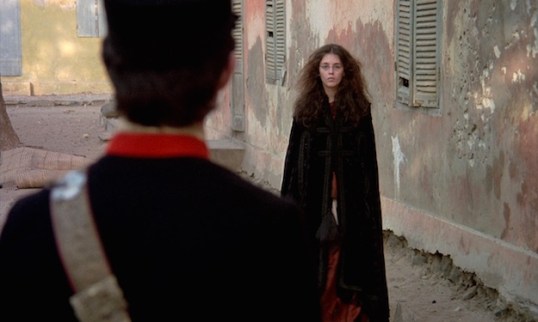
The Story of Adele H. (1975, dir by Francois Truffaut, DP: Nestor Almendros)
4 Or More Shots From 4 Or More Films is just what it says it is, 4 shots from 4 of our favorite films. As opposed to the reviews and recaps that we usually post, 4 Shots From 4 Films lets the visuals do the talking!
96 years ago today, the great director Monte Hellman was born in New York City. Though Hollywood never quite understood Hellman or his idiosyncratic vision, he and his films have inspired a countless number of independent filmmakers. Hellman started his career with Roger Corman and was one of the first directors to recognize the talent of actors like Jack Nicholson and Warren Oates. When Monte Hellman passed away in 2021, he was eulogized as one of the key figures of the Hollywood counterculture. Today, we celebrate Hellman and his films with….
4 Shots From 4 Monte Hellman Films
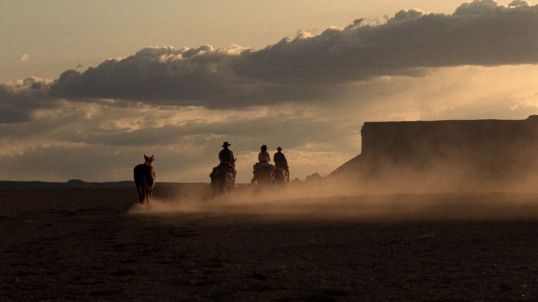
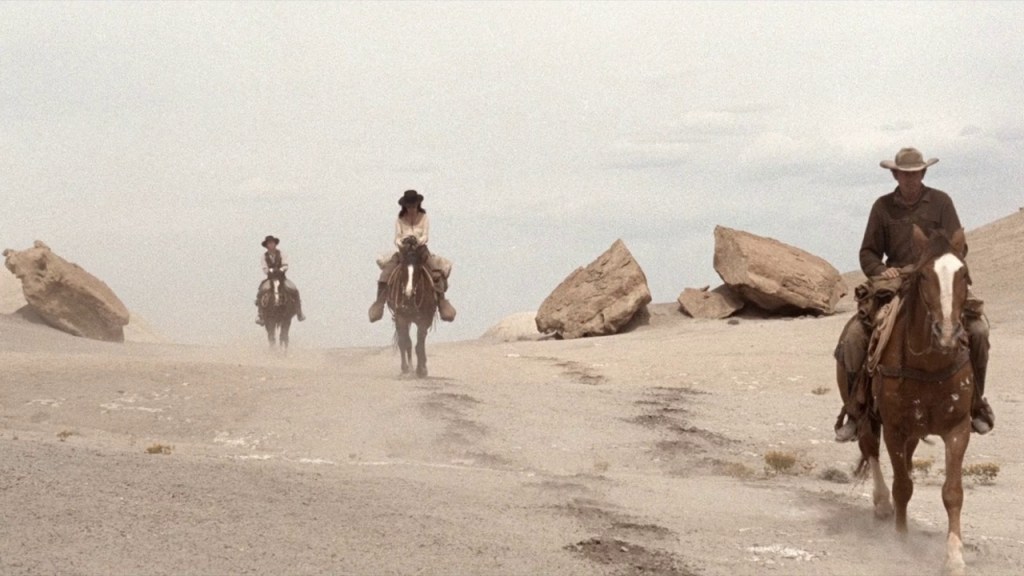
The Shooting (1966, dir by Monte Hellman, DP: Gregory Sandor)
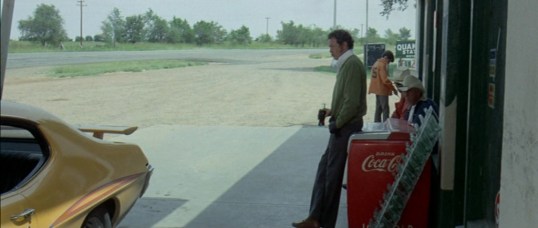
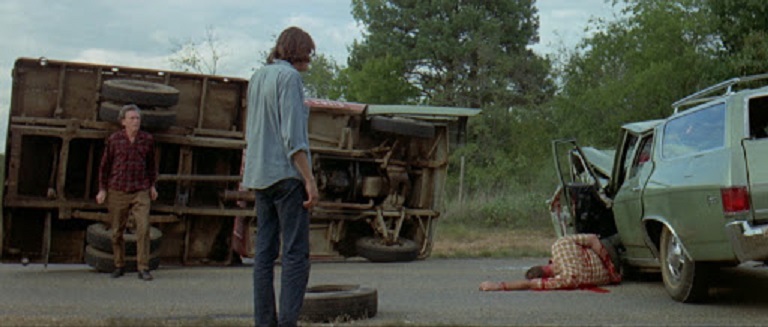
Two-Lane Blacktop (1971, dir by Monte Hellman, DP: Jack Deerson)
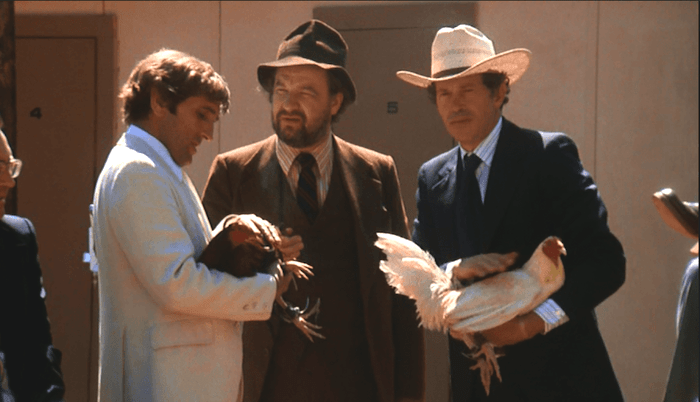
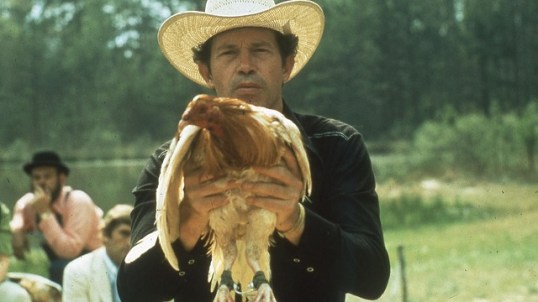
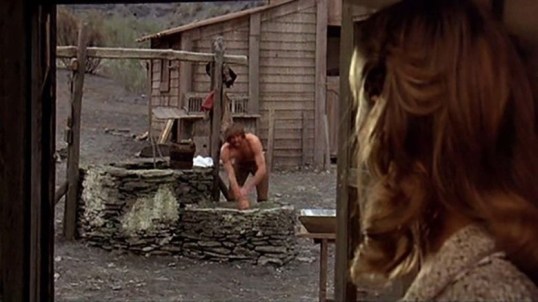
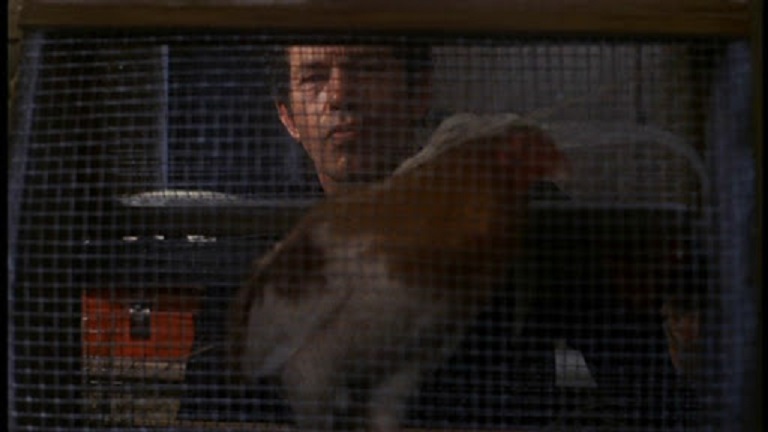
Cockfighter (1974, dir by Monte Hellman, DP: Nestor Almendros)
China 9, Liberty 38 (1978, dir by Monte Hellman, DP: Guiseppe Rotunno)
I read about the movie COCKFIGHTER many years ago, and I remember the review being very positive. I had never watched the film before, but with today being Warren Oates’ birthday and it being available on Amazon Prime, I decided I’d finally watch it.
Directed by Monte Hellman and based on Charles Willeford’s 1962 novel, COCKFIGHTER introduces us to Frank Mansfield (Warren Oates), a man completely obsessed with the southern “sport” of cockfighting. As we meet him, he’s in the process of losing a bet and a cockfight with Jack Burke (Harry Dean Stanton). The loss isn’t just a setback, it costs him all of his cash, his truck, his trailer, and his current girlfriend Dody White (Laurie Bird). We also notice in these early scenes that Frank only communicates through sign language and writing notes. It seems that he’s been living under a self-imposed vow of silence. Two years earlier, on the eve of the big, season-ending cockfighting grand finale, Frank’s big-mouthed braggadocio caused him to lose his prized cock, and the prestigious “Cockfighter of the Year” medal in a meaningless hotel bet, also against Jack Burke. Frank vows not to speak again until he wins that medal. Coming up with cash in the only way he can by selling his family’s home, Frank buys a new cock named White Lightning from Ed Middleton, played here by the film’s writer Charles Willeford. Armed with new fowl and a new, capital rich partner named Omar Baradansky (Richard B. Shull), Frank will not let anything stop him, including the love of his life Mary Elizabeth (Patricia Pearcy) or an axe wielding competitor (Ed Begley, Jr.), from being named “Cockfighter of the Year” and finally regaining his voice and the respect he desires!
COCKFIGHTER definitely has some things going for it. First and foremost, Warren Oates is so good in the lead role as the obsessed man who puts success in cockfighting above anything else in his life, including every other person. He literally sells the family home out from under his alcoholic brother Randall (Troy Donahue) in order to fund his next cock purchase after he’s gone bust. This sets up quite the sight gag for such a gritty and realistic film as a large truck and trailer drives away the family home taking up the entire state highway. When his long time fiancé asks him to give up cockfighting, he just gets up, leaves her shirtless and heads back out on the circuit. He writes her a letter from the road and tells her he loves her, but he also makes it clear that life without cockfighting is a life that he’s unwilling to live. Oates’ Frank Mansfield is not the kind of person you’d ever want to depend on in life, but he’s also an uncompromising individual who is determined to live life wholly on his own terms, accepting of the successes and failures that come with it. I watched the film because it features Warren Oates, and after having done so, I can say that his performance is truly special.
COCKFIGHTER is one of those movies that makes us feel like we’re watching real people, and that’s kind of fascinating even if they reside in a world that we don’t really want to live in. The primary credit for that has to go to director Monte Hellman and Oscar winning cinematographer Nestor Almendros (DAYS OF HEAVEN). The restraint that is shown in the storytelling, as well as the sweaty, ramshackle authenticity of the Georgia locations, brings the story to life. The supporting cast also does its part to create the world of COCKFIGHTER. Harry Dean Stanton as Jack Burke, Frank’s primary rival in the cockfighting game, is excellent as you might expect, and he seems a lot like a regular guy. I really like Richard B. Schull, who plays Frank’s outgoing and talkative partner Omar. His friendly and gregarious personality seems a little untrustworthy at first, but he turns out to be the most likable person in the film. And finally, I want to shoutout Charles Willeford. Not only did he write the source novel and screenplay for COCKFIGHTER, he also gives a solid performance as Ed Middleton, an old-timer in the game who treats Frank with honesty and decency when he’s hit rock bottom.
With all the positive things I’ve said above, I have to address the graphic depiction of cockfighting in COCKFIGHTER. This was the 70’s, and the scenes shown here are real and were very difficult for me to watch. It’s not fun to see animals fight and kill each other, and this is coming from a person who loves fried chicken and is not particularly an animal lover. The scenes are presented as matter of fact and in service of the story, but that still doesn’t make them easy to watch. Director Monte Hellman has gone on record to express his personal disgust at even filming these scenes. While a movie made in the 1970’s probably couldn’t have been made without these sequences, I just wanted to make it clear that this film is probably unwatchable for a lot of people.
Overall, COCKFIGHTER is a relic of the 1970’s. It’s a gritty and realistic film, featuring a great central performance from Warren Oates. It’s also an ethically troubling film that features real animal on animal violence. Based on that I don’t necessarily recommend the film. Rather, I just want to share my own thoughts, and you can determine if you want to watch it or not. That’s what I’ve tried to do above.
4 Shots From 4 Films is just what it says it is, 4 shots from 4 of our favorite films. As opposed to the reviews and recaps that we usually post, 4 Shots From 4 Films lets the visuals do the talking!
Today, on what would have been his 93rd birthday, TSL pays tribute to the great Francois Truffaut. No one captured the act of falling in love in life, people, and cinema with the skill, sensitivity, and humor of Francois Truffaut. It’s time for….
4 Shots From 4 Francois Truffaut Films
The 400 Blows (1959, dir by François Truffaut, DP: Henri Decae)
Shoot the Piano Player (1960, dir by François Truffaut, DP: Raoul Coutard)
The Story of Adele H. (1975, dir by Francois Truffaut, DP: Nestor Almendros)
The Last Metro (1980, dir by François Truffaut, DP: Nestor Alemndros)
4 Or More Shots From 4 Or More Films is just what it says it is, 4 shots from 4 of our favorite films. As opposed to the reviews and recaps that we usually post, 4 Shots From 4 Films lets the visuals do the talking!
94 years ago today, the great director Monte Hellman was born in New York City. Though Hollywood never quite understood Hellman or his idiosyncratic vision, he and his films have inspired a countless number of independent filmmakers. Hellman started his career with Roger Corman and was one of the first directors to recognize the talent of actors like Jack Nicholson and Warren Oates. When Monte Hellman passed away in 2021, he was eulogized as one of the key figures of the Hollywood counterculture. Today, we celebrate Hellman and his films with….
4 Shots From 4 Monte Hellman Films
The Shooting (1966, dir by Monte Hellman, DP: Gregory Sandor)
Two-Lane Blacktop (1971, dir by Monte Hellman, DP: Jack Deerson)
Cockfighter (1974, dir by Monte Hellman, DP: Nestor Almendros)
China 9, Liberty 38 (1978, dir by Monte Hellman, DP: Guiseppe Rotunno)
4 Shots From 4 Films is just what it says it is, 4 shots from 4 of our favorite films. As opposed to the reviews and recaps that we usually post, 4 Shots From 4 Films lets the visuals do the talking!
Today, on what would have been his 91st birthday, TSL pays tribute to the great Francois Truffaut. No one captured the act of falling in love in life, people, and cinema with the skill, sensitivity, and humor of Francois Truffaut. It’s time for….
4 Shots From 4 Francois Truffaut Films
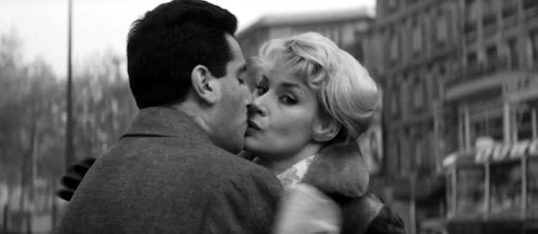
The Soft Skin (1964, dir by Francois Truffaut, DP: Raoul Coutard)
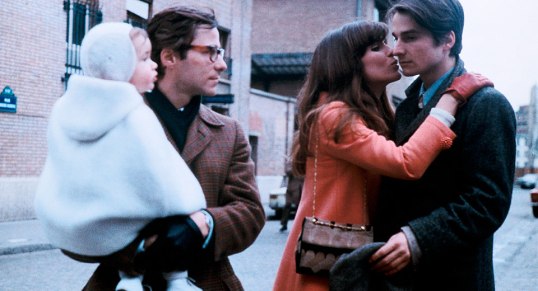
Stolen Kisses (1968, dir by Francois Truffaut, DP: Denys Clerval)
Day For Night (1973, dir by Francois Truffaut, DP: Pierre-William Glenn)
The Story of Adele H. (1975, dir by Francois Truffaut, DP: Nestor Almendros)
4 (or more) Shots From 4 (or more) Films is just what it says it is, 4 (or more) shots from 4 (or more) of our favorite films. As opposed to the reviews and recaps that we usually post, 4 (or more) Shots From 4 (or more) Films lets the visuals do the talking.
I just saw that Monte Hellman, one of the most interesting American directors of all time, passed away today. He was 88 years old. Hellman didn’t direct a lot of films but the ones that he did direct were some of the most unique American films of their time. The Shooting is perhaps the strangest western ever made. Two Lane Blacktop is one of the greatest road films. Cockfighter and China 9 Liberty 37 both suffered from distribution problems but they have since been rediscovered by audiences and critics. Even Silent Night Deadly Night 3 has its moments of uniquely deranged mayhem, though Hellman himself often said that he did the film strictly for the money.
In honor of Monte Hellman’s legacy, here are….
4 Shots From 4 Monte Hellman Films
The Shooting (1966, dir by Monte Hellman, DP: Gregory Sandor)Two-Lane Blacktop (1971, dir by Monte Hellman, DP: Jack Deerson)Cockfighter (1974, dir by Monte Hellman, DP: Nestor Almendros)Road to Nowhere (2010, dir by Monte Hellman, DP: Josep M. Civit)
4 (or more) Shots From 4 (or more) Films is just what it says it is, 4 (or more) shots from 4 (or more) of our favorite films. As opposed to the reviews and recaps that we usually post, 4 (or more) Shots From 4 (or more) Films lets the visuals do the talking.
101 years ago today, Eric Rohmer was born in Tulle, France. He would go on to become one of the most popular and prolific directors of the French New Wave, continuing to make successful films even after many of his colleagues either retired or, like Godard, rejected the idea of traditional cinema.
In honor of Eric Rohmer’s legacy, here are….
4 Shots From 4 Eric Rohmer Films
The Collector (1967, dir by Eric Rohmer, DP: Nestor Almedros)
The Marquise of O (1976, dir by Eric Rohmer, DP: Nestor Almendros)
A Tale of Winter (1992, dir by Eric Rohmer, DP: Luc Pages)
The Lady and the Duke (2001, dir by Eric Rohmer, DP: Diane Baratier)
4 (or more) Shots From 4 (or more) Films is just what it says it is, 4 (or more) shots from 4 (or more) of our favorite films. As opposed to the reviews and recaps that we usually post, 4 (or more) Shots From 4 (or more) Films lets the visuals do the talking.
The great François Truffaut was born 89 years ago today, in Paris, France. This French director would go on to prove that cinema is a universal language and it’s hard not to think about what type of films Truffaut would have gone on to make, if not for his tragically early death at the age of 52. As far as I am concerned, today is a holiday dedicated to one of the most important cinematic voices of all time.
In honor of the life and legacy of François Truffaut, here are:
6 Shots From 6 François Truffaut Films
The 400 Blows (1959, dir by François Truffaut, DP: Henri Decae)
Shoot the Piano Player (1960, dir by François Truffaut, DP: Raoul Coutard)
Fahrenheit 451 (1966, dir by François Truffaut, DP: Nicolas Roeg)
Day For Night (1973, dir by François Truffaut, DP: Pierre-William Glenn)
The Story of Adele H. (1975, dir by François Truffaut, DP: Nestor Almendros)
The Last Metro (1980, dir by François Truffaut, DP: Nestor Alemndros)
More is such a film of the 60s that you can almost get a contact high from watching it.
It’s not just that the film was released in 1969. After all, there were a lot of films released in 1969 that don’t, in any way, feel like they belong in the 60s. (Just consider two of 1969’s Best Picture nominees, Anne of the Thousand Days and Hello, Dolly.) However, More is a film that seems to include every single thing that we think of when we think about the late 60s.
Drugs? Check.
Hitchhiking? Check.
Petty crime? Check.
Ennui? Check.
Weirdly out-of-place political bullshit? Check.
A fatalistic ending that suggests that nothing really matters? Check and double check.
More tells the story of a young German named Stefan (Klaus Grunberg). Stefan has just wrapped up his mathematics studies and now, he’s intent on exploring Europe and experiencing life! The first time we see Stefan, he’s hitchhiking and not having much luck. No one really wants to pick up Stefan and I really can’t blame them. Stefan is an incredibly boring character and Grunberg gives a remarkably dull performance in the lead role. Unfortunately, Stefan also narrates his story. I usually don’t like narrators in general but they especially get on my nerves whenever they appear in a movie that was made between 1966 and 1970.
Anyway, Stefan finally finds himself in Paris. He befriends Charlie (Michel Chanderil), who is a petty thief and who takes the naive Stefan under his wing. The movie picks up a bit whenever Charlie is on screen, largely because Chanderil has more screen presence than Grunberg. As I watched Charlie teach Stefan how to steal, I found myself wishing that the whole film could have been about Charlie.
But no. We’re stuck with boring old Stefan. Stefan eventually meets an American girl named Estelle (Mismy Farmer). Now, if Stefan was a fan of Godard, he would undoubtedly have seen Breathless and he would know better than to run off with an American girl. But, because Stefan is a dullard, he instead decides that he loves Estelle. When Estelle heads off for Ibiza, Stefan follows.
In Ibiza, Estelle is living with an enigmatic German named Dr. Wolf (Heinz Engelmann). Dr. Wolf is a former (and, it’s implied, current) Nazi. Stefan wins her away from Dr. Wolf. Stefan thinks that he’s rescuing her but Estelle really doesn’t seem to care one way or the other. Estelle introduces Stefan to the world of drugs and Stefan is soon hooked on heroin.
And it just goes on from there.
More probably could have probably been a really good film if Stefan wasn’t such a dull protagonist or if Grunberg had been in the least bit compelling in the lead role. From the minute I first saw him hitchhiking, my reaction was, “I do not care about this person” and that was pretty much the way I felt throughout the entire film.
The film does have its good points. The cinematographer was Nestor Almendros so Ibiza looks amazing and Pink Floyd provides an appropriately moody score. Mimsy Farmer, an American actress who later appeared in some of the best gialli to come out of Italy, is perfectly cast as the self-centered and casually destructive Estelle. But all the good points can’t make up for the film’s slow pace and Grunberg’s charisma-free performance.
More is probably best viewed as a cultural artifact. I’m a history nerd and I’m always fascinated by films like More that, regardless of their overall quality, are such obvious works of their time. More may reek of stale weed but watching it is definitely a chance to experience the 60s.








 Through the Shattered Lens