If there’s one criticism that’s been leveled at Grant Morrison — and British comics writers in general — over the years, it’s that their work, while admittedly literate and intelligent, is often too “dark” or “cynical.” I guess sometimes it does apply — I mean, The Invisibles and The Filth , to name just a couple of standout Morrison projects, weren’t exactly light-hearted, happy-go-lucky affairs, were they?
And yet — even those two comics, bleak and nihilistic as they could often be, ultimately had optimistic endings, didn’t they? And books like Animal Man and All-Star Superman were flat-out celebrations of the type of comic book storytelling that the “British invasion” of the 1980s supposedly put an end to (as a side note, Alan Moore gets called out onto the carpet for the “darkness” of his work a lot, as well, yet the same guy who gave us From Hell also gave us the most majestic tribute to the Superman of old ever conceived with his downright mythic run on Supreme and years earlier gave us arguably the single-greatest Superman story of all, “Whatever Happened To The Man Of Tomorrow? ” — hell, even Watchmen had a more optimistic conclusion than most folks give it credit for). All in all, then, when it comes to Morrison’s career arc, it’s probably more fair to say that even when things do get “dark” and/or “dystopian” (anybody reading Annihilator right now? You really should be), it’s usually only a matter of time until we get to the light.
That’s why I was a bit confused over some of the hand-wringing that was going on prior to his much-anticipated Captain Marvel (or Shazam!, if you must) story for The Multiversity. People were openly questioning whether or not his “style” would be the right fit for the character. Whether or not he could “do it justice.” Whether or not he could “bring back that 1950s-style magic and innocence.”
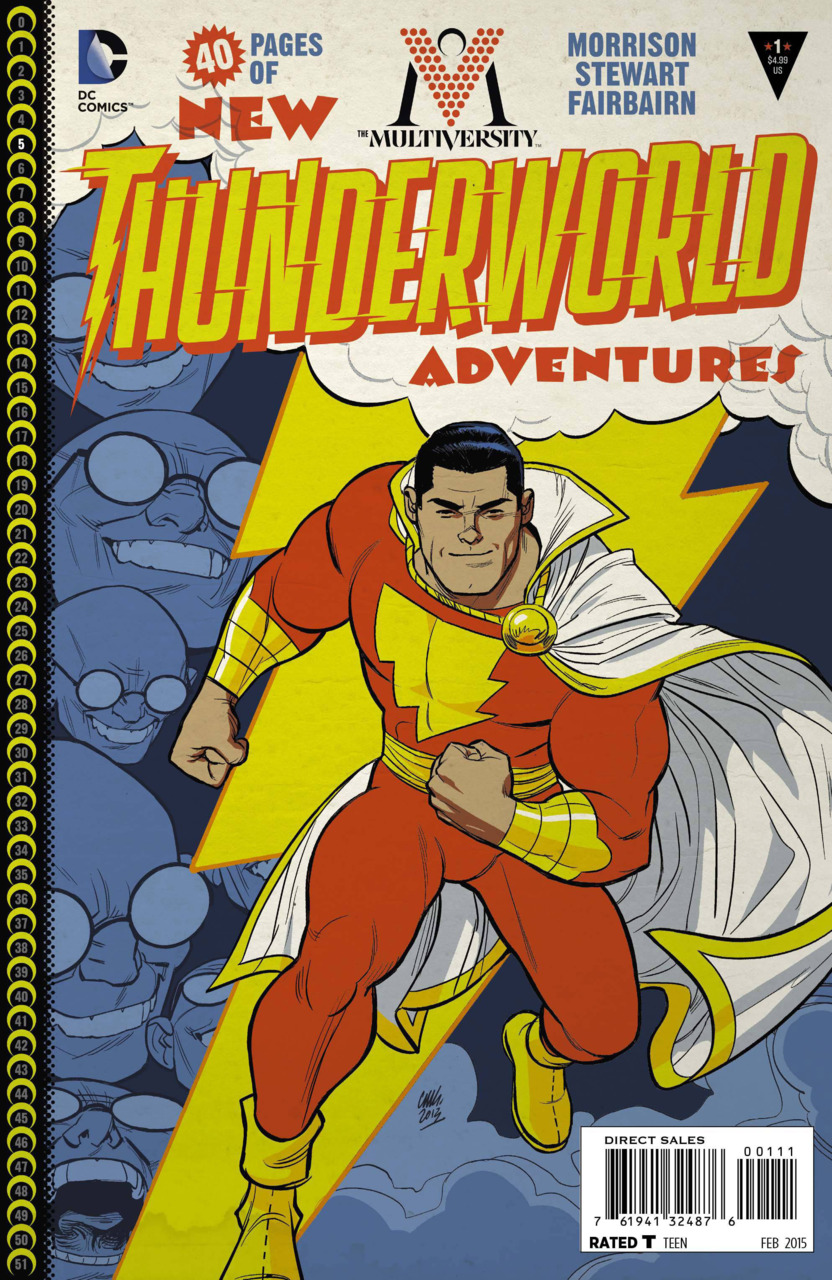
Well, The Multiversity : Thunderworld Adventures #1 came out last Wednesday, and it’s fair to say that all those concerns have been silenced in the days since, because this is probably the most heartfelt, endearing, spot-on adventure for The Big Red Cheese since C.C. Beck chronicled his exploits for Fawcett publications. No hyperbole, no bullshit — everything you were hoping this issue would be, it is.
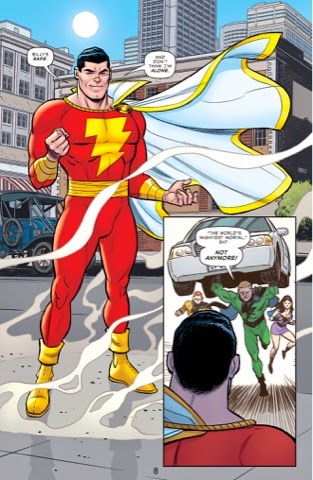
Off we go, then, to Earth-5, which is apparently where Captain Marvel (and I bet we don’t see him referred to by that name anytime again too soon) as he ought to be — instead of the angst-ridden, more “realistic” version of him we’ve been subjected to in the “New 52” universe — still exists, along with the rest of the Marvel family, and still does battle with the likes of Black Adam, Mr. Mind, The Monster Society Of Evil, and the villain of this story, Dr. Sivana, who has created a doppleganger “Sivana Family” and added an eighth day to the week, thanks to time and power siphoned away from other realities in the Multiverse.
That “cynicism” people were fretting about? It’s nowhere to be found here, as this is pure Beck-style storytelling all the way : imaginative, character-driven, idealistic, and action-packed. Heck, Morrison even gets the little touches right, such as when he gives us the first appearance in forever and a day of the non-super-powered Uncle Marvel, and continues the tradition of him pretending to have powers and everybody else knowing he doesn’t but humoring him anyway. There’s not a note missed, not a beat skipped. This is a majestic old-school comic book adventure that doesn’t even feel so much like an homage as it does a direct continuation of a story abandoned over 50 years ago (you know, when DC sued Fawcett right out of business for their flagship character’s “similarity” to Superman — then bought up his rights for a pittance).
It may flirt with overkill sometimes, I suppose, but even after two readings I remain more than happy to put that tiny concern aside, simply because there’s nothing in the least bit “post-ironic” — much less ironic — about what Morrison is doing here. Every page, every panel, every word bubble — it’s all coming from the heart, without any sort of “knowing wink at the audience” to be had. Much as I liked All-Star Superman, it still had elements of a 12-part funeral dirge to it, a “last story of this type that’s ever going to be told” vibe. There’s none of that on display here, even if we probably won’t see a comic quite like this one — at least from DC — again in our lifetimes.
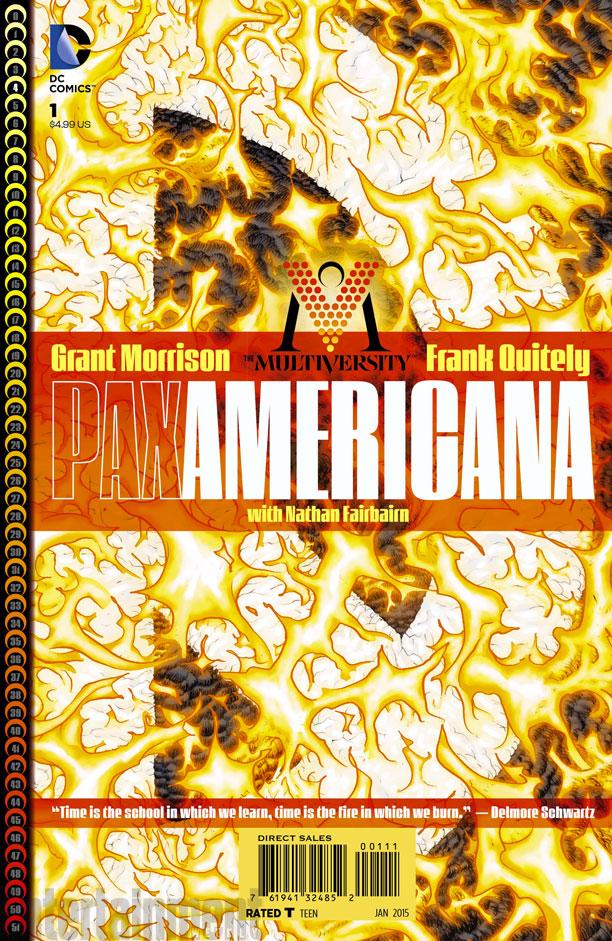
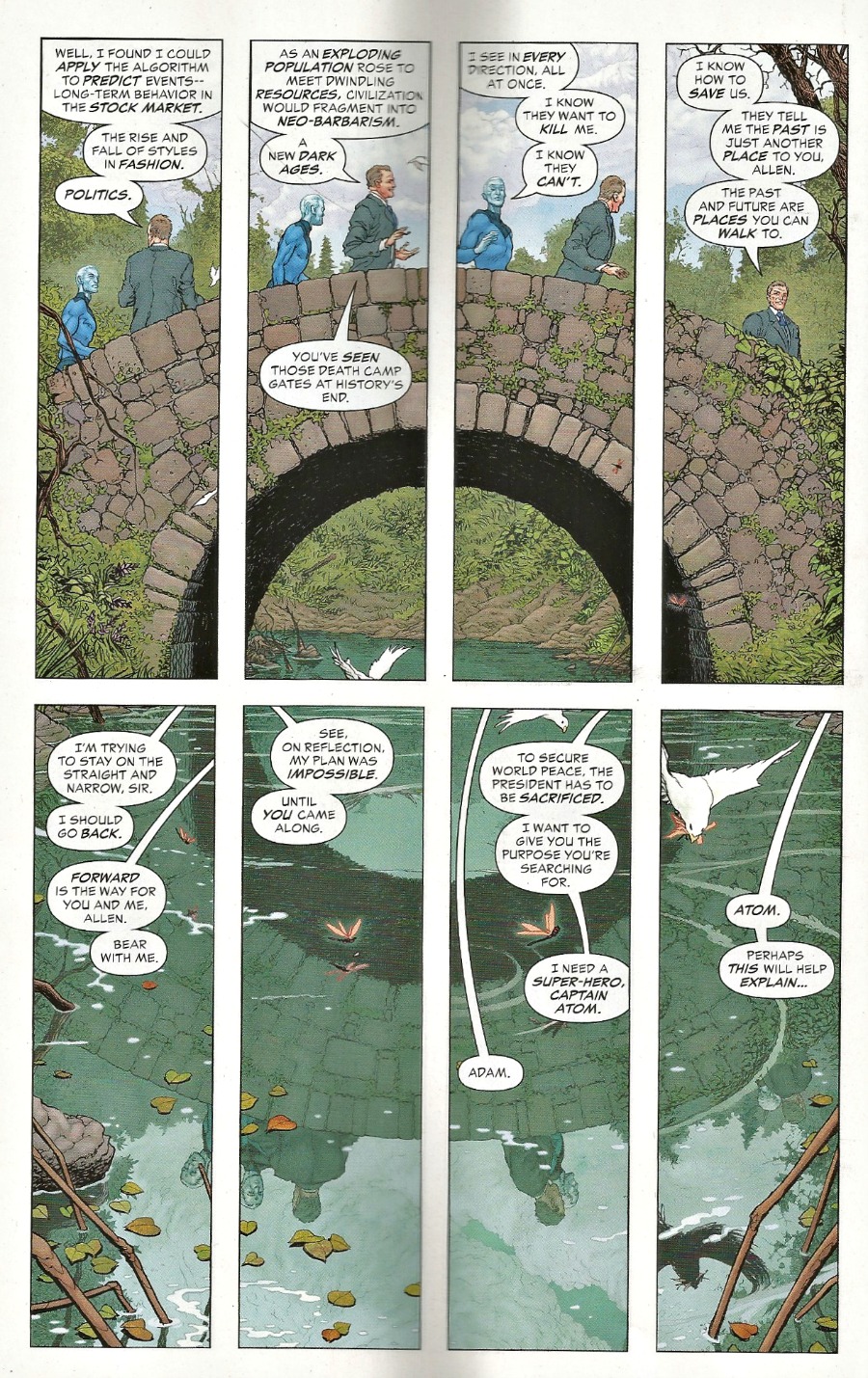
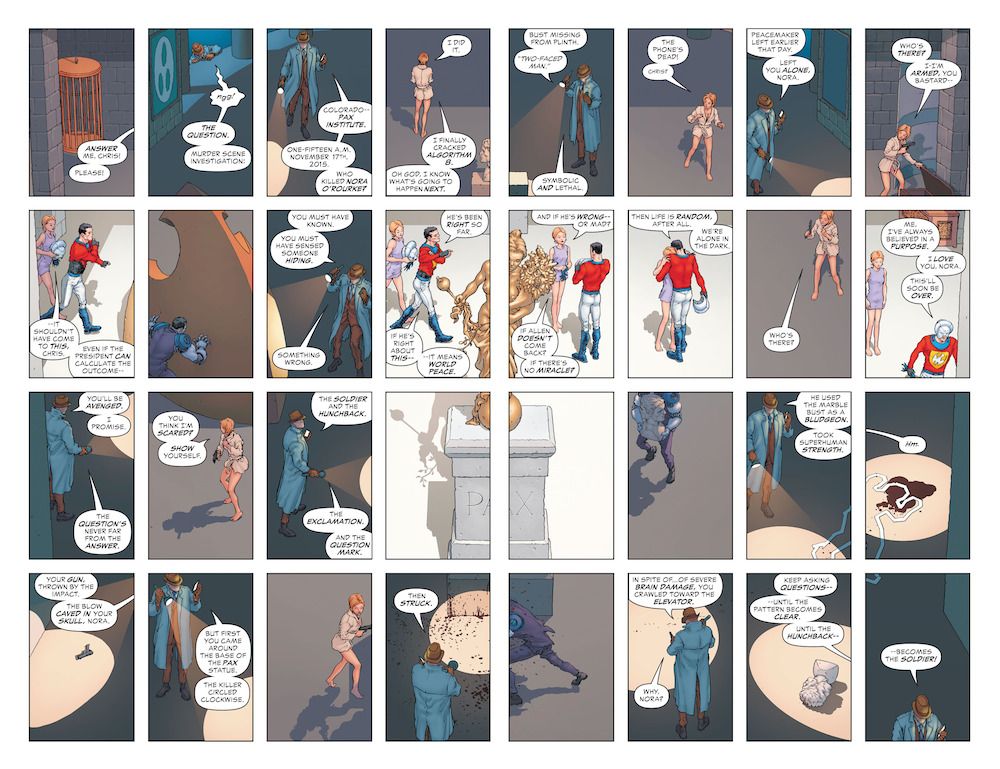
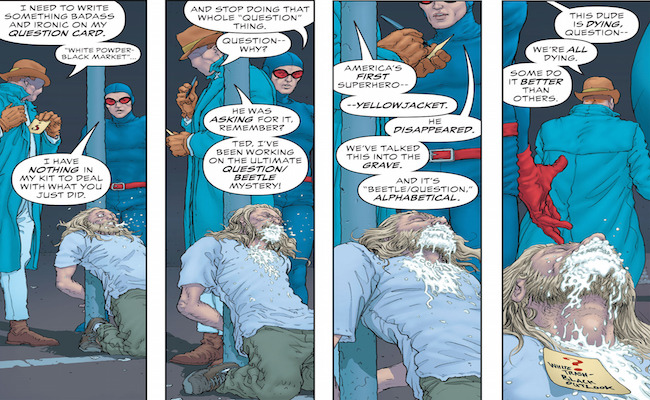
It also represents a 180-degree turn from the more nihilistic — but every bit as well-executed — tone taken with this series’ last “one-shot” issue, the magnificently rich and complex Pax Americana, yet while the two stories couldn’t be further apart in terms of style, this one is just as compelling that modern masterwork despite being infinitely “simpler” and more straightforward. The two issues coming out back-to-back as they have certainly highlights the diversity of Morrison’s writing ability, of course, but also the diversity inherent in The Multiversity project itself — a series where, truly, any story can be told in any given month. We hear that said — usually in hype generated by the publishers — about lots of comics, I suppose, but in this case, it’s proving to be absolutely true, and while Thunderworld Adventures does, in fact, make a few more concessions to the overall narrative connecting all of these disparate books than Pax Americana did, rest assured that it can still be read as a “stand-alone” story just fine.
About the only concession made here to the kind of “mind-fuckery” our guy Grant likes to engage in is a trippy double-page splash (one that’s so awesome to behold that I can’t bring myself to “spoil” it by including a preview image here, sorry) that doesn’t make much rational “sense” but certainly fits in with the overall tone of the proceedings very nicely indeed. Apart from that, though, all else in the world of Billy Batson and his magically-powered alter ego is more or less exactly as you remembered — maybe even better,
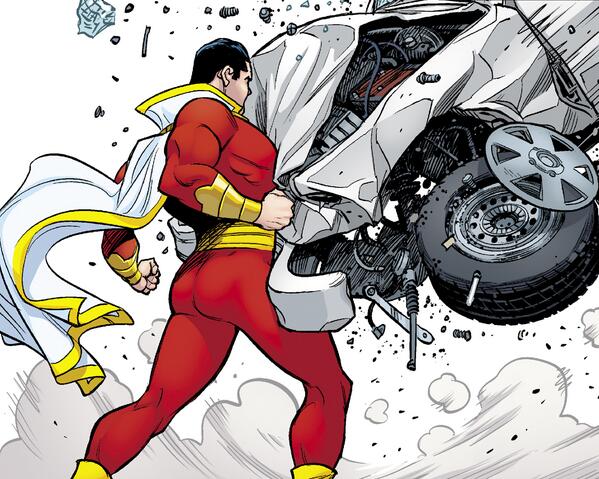
Speaking of the art — Cameron Stewart, who provides both pencils and inks for this issue, is a guy I’ve never considered to be anything other than a competent journeyman artist, providing good, but hardly memorable, work for a number of titles over the years, including several projects with Morrison like Seaguy and Batman And Robin (he’s currently the regular penciler on DC’s recently-revamped Batgirl monthly series), but damn if this isn’t the comic he was born to draw. Just look at that panel reproduced above showing a car smashing into Captain Marvel for a prime example of the dynamic and impactful sensibility he brings to the table here. I get the feeling that he spent several months working on this book, and if he didn’t — well, shit, then I guess I’m even more impressed, because none of the trademarks of a “rush job” are apparent here in any way. This is bold, breathtaking stuff that has me reconsidering his entire body of work in a whole new light. You might even say that he’s unleashed his inner super-hero here.
And the colors — man oh man, the colors! It’s hard to believe this is the same Nathan Fairbairn who gave us the more muted tones of Pax Americana as everything here is bright, vibrant, eye-catching, and just plain sunny. Earth-5 literally looks like a place where it never rains. Just have a look at the triumphant panel the story ends on here and you’ll see exactly what I mean —
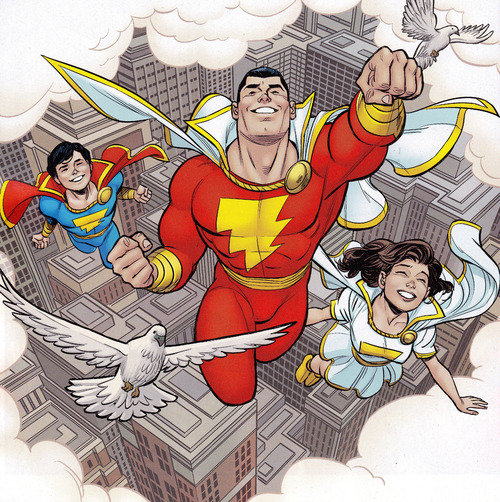
That, right there, is why most of us who fell in love with the comics medium as kids did so, isn’t it? Even if these characters were a bit “before our time” for most of us, it was the spirit of idealistic adventure that drew us in and that we all wish we’d see more of these days. In my headline for this review I called Thunderworld Adventures Morrison’s “love letter to C.C. Beck” (it’s worth noting that Alan Moore has pointed to Beck as being his primary storytelling influence on Supreme, as well), and while that’s undoubtedly true, there’s actually more to it than that — it’s a love letter to youth, optimism, idealism, and a kind of non-ironic goodness that’s in far too short a supply both in modern comics and , crucially, modern life. It’s a celebration of all that we can be, and sometimes are — when we’re willing to be the heroes of our own adventures.
 Through the Shattered Lens