4 Shots From 4 Films is just what it says it is, 4 shots from 4 of our favorite films. As opposed to the reviews and recaps that we usually post, 4 Shots From 4 Films lets the visuals do the talking!
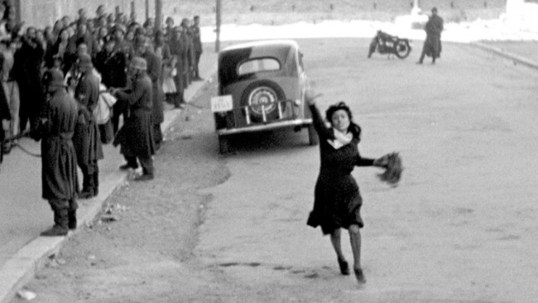
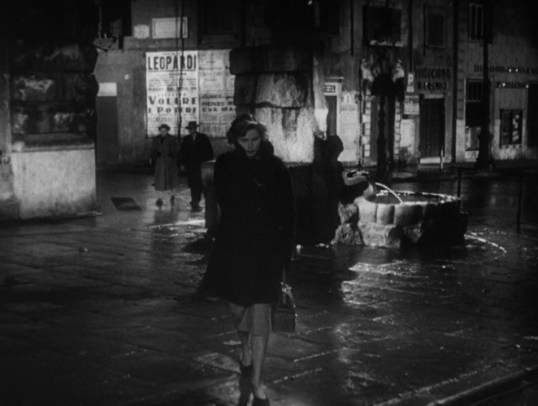
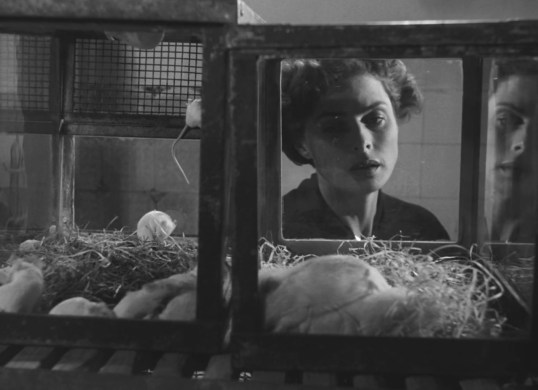
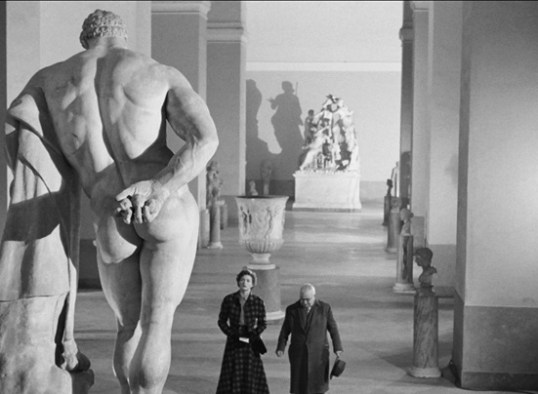
118 years ago, on this date, the great Italian neorealist director (and husband of Ingrid Bergman and father of Isabella Rossellini), Roberto Rossellini was born in Rome. It’s time for….
4 Shots From 4 Roberto Rossellini Films
Rome, Open City (1945, dir by Roberto Rossellini, DP: Ubaldo Arata)
Europe ’51 (1952, dir by Roberto Rossellini, DP: Aldo Tonti)
Fear (1954, dir by Roberto Rossellini, DP: Carlo Carlini, DP: Heinz Schnackertz)
Journey to Italy, (1954, dir by Roberto Rossellini, DP: Enzo Serafin)
Duffy (Frank Grillo) is haunted by the past. When he was serving in the U.S. military, he watched as his friends and fellow soldiers were killed in battle. Now that he’s back in America, he’s haunted by the memories and the trauma has left him incapable of finding peace. He’s angry and paranoid and restless. He drifts around the country, making whatever money that he can as a gambler. But when a poker game at a Los Angeles roadhouse leads to a physical confrontation, Duffy is offered a new opportunity.
Max (Mekhi Phifer) watches as Duffy defends himself and is impressed with what he sees. Max is a ex-con who works as a recruiter for underground fight clubs. Max recognizes the source of Duffy’s anger because Max’s brother was also a veteran who returned to America carrying the mental and physical scars of war. Max feels that he failed his brother but maybe he can make up for it by saving Duffy’s life. Max recruits Duffy as a fighter and gives him a place to live. Duffy and Max soon find themselves in conflict with an evil gym owner (Dermot Mulroney, making the most of a rare villainous role) and a corrupt cop (Jaime King) who is secretly in charge of the town’s underground fight scene.
Lights Out is a fast-paced and occasionally self-aware B-movie. I always find movies like this fascinating because they present a world where there’s an underground fight club located in every backroom and lumber yard. Don’t get me wrong. I’m not saying that there aren’t underground fight clubs. I’m sure they’re out there and I’m sure that there are some dangerous people involved in promoting them. I’m just saying that I kind of suspect that there might not be as many of them as there tends to be in the movies. I always find it interesting that so many underground fight clubs seem to have a “fight until the death” rule. I mean, it seems to me that would cause you to quickly run out of fighters. I also wonder what people do when they want to start an underground fight club but they don’t have access to an abandoned warehouse or any acquaintances in the Russian Mafia. I guess those people are just screwed.
While Mulroney and King definitely make an impression as the two over-the-top villains, Lights Out is dominated by Frank Grillo. Grillo has been lucky enough to be blessed with a down-to-Earth screen presence that allows him to be likable while also leaving little doubt that he is someone who can handle himself in a fight. He has the weathered good looks of some one who has seen some things but who hasn’t yet surrendered his humanity. He’s like the modern day version of one of those wonderful character actors who used to populate the gangster movies of the 1930s. Grillo’s tough sincerity and streetwise persona is well-used here. John Garfield had his Body and Soul. Frank Grillo has his Lights Out.
The 2017 film Locked Up tells the story of Mallory (Kelly McCart).
Mallory is not having a great life. Her wealthy father has relocated to an unnamed county in Southern Asia. (The film was shot in Thailand but the uniforms that we see various officials wearing seem more appropriate for North Korea.) Mallory lives with her Uncle Tommy (Jared Cohen), who is Mallory’s legal guardian while her father is off doing whatever it is that he does. Mallory goes to a school where she is the only American and certainly the only redhead. She is bullied to such an extent that she finally snaps and punches another student. Mallory is promptly arrested and sentenced to the country’s version of reform school.
When Tommy and Mallory first arrive at the facility, it seems to be clean and welcoming. The Warden (Maythavee Burapasing) appears to be friendly and compassionate. It seems like the type of place that all of us bleeding hearts are always insisting that we need here in America. It’s only after Tommy leaves that the truth is revealed. The reform school is actually a prison and the Warden is a sadistic tyrant. Mallory is tossed into a filthy cell with several other girls and ordered to strip while everyone watches. One of Mallory’s cellmates, Kat (Katrina Grey), orders Mallory not to cry because Kat doesn’t want the sound of her tears keeping her awake at night.
After manipulating Mallory into signing a document that says she doesn’t want her uncle to visit her in prison, The Warden reveals that she enjoys watching the prisoners fight. She informs Mallory that she has two weeks to prepare for her first fight and that, if Mallory doesn’t fight, she will be gang raped twice a week for as long as she remains in the prison. Mallory, having no experience with fighting (despite having hit that one student hard enough to get sentenced to confinement), begs Kat to train her. At first reluctant, Kat eventually agrees. But can even Kat’s training prepare Mallory for a fight against the fearsome Riza (Anastasia Maslova)?
If this all sounds rather exploitive, that’s because it is. The film hit every sordid women-in-prison cliche with the efficiency of well-wound clock. In fact, it’s so dedicated to hitting all of the expected beats that it actually becomes a bit comical at times. Less than a minute after she enters her cell, Mallory has another inmate talking about how cute she is and sniffing her neck. Mallory and Kat’s fight training inevitably leads to a shower room sex scene and Kat talking about how she’s in prison because her boyfriend convinced her to be a drug smuggler. Meanwhile, because she is determined to turn Riza into a killing machine, The Warden personally injects steroids into Riza’s neck. It’s all so shameless that you can’t help but appreciate the film’s audacity, even if there are several scenes (most of which involve the Warden’s threat to have the guards rape Mallory) that cross the line from being merely tasteless to being actually offensive.
Locked Up is an Asylum Production. Like most Asylum films, it makes no excuses or apologies for being what it is. (Regardless of how you feel about their films, it’s hard not to appreciate The Asylum’s honesty.) In most ways, Locked Up is a pretty dumb movie but director Jared Cohen keeps the action moving quickly and The Warden is a properly hissable villain. The Warden tells Mallory that her problem is that Americans have allowed themselves to become weak and, even if the film’s portrayal of Asia makes Midnight Express‘s portrayal of Turkey seem fair and balanced, it’s hard not to feel that the Warden has a point. Get out there and fight, America!
Today, the Shattered Lens wishes a happy birthday to director Amy Heckerling!
Today’s scene that I love comes from Amy Heckerling’s feature debut, 1982’s Fast Times At Ridgemont High. In just two minutes, Heckerling introduces us to almost all of the major characters, establishes the mall as the center of Ridgemont High culture, and leaves us with little doubt that we’ve entered a time machine and found ourselves in the 80s. Judge Reinhold looks like he’s on top of the world. Jennifer Jason Leigh bravely faces the pizza oven. Sean Penn makes us wish he had never lost his laid back stoner vibe. And the underrated Robert Romanus struts through the mall like a king overlooking his kingdom. With this scene, Heckerling announces that she has made the ultimate 80s high school film.
(And just a decade later, she would make the ultimate 90s high school film with Clueless.)
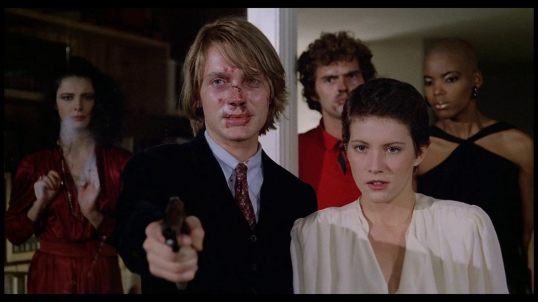
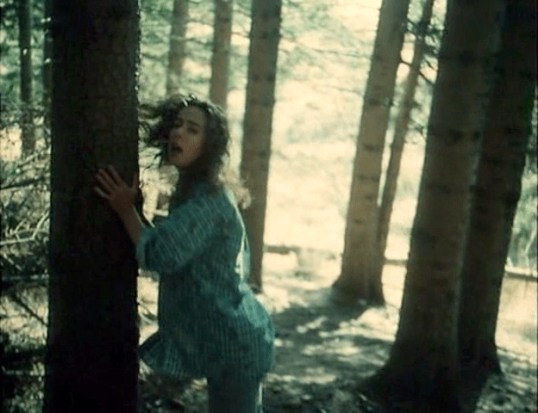
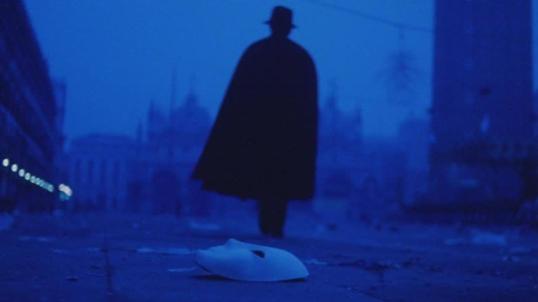
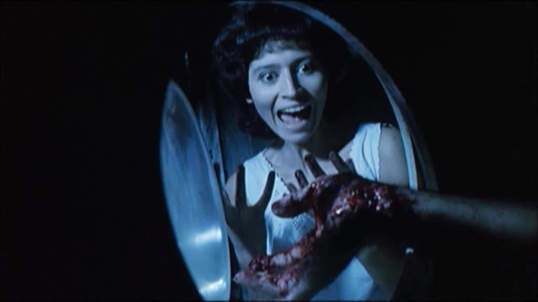
4 Shots From 4 Films is just what it says it is, 4 shots from 4 of our favorite films. As opposed to the reviews and recaps that we usually post, 4 Shots From 4 Films lets the visuals do the talking!
Today would have been the 85th birthday of the great Italian director, Ruggero Deodato! And that, of course, means that it’s time for….
4 Shots From 4 Films
The House on The Edge of The Park (1980, dir by Ruggero Deodato, DP: Sergio D’Offizi)
Body Count (1986, dir by Ruggero Deodato, DP: Emilio Loffredo)
Phantom of Death (1988, dir by Ruggero Deodato, DP: Giorgio Di Battista)
The Washing Machine (1993, dir by Ruggero Deodato, DP: Sergop D’Offizi)
Late Night With The Devil is a truly frightening film.
Jack Deloy (David Dastmalchian) is the host of Night Owls, a late-night talk show. Deloy has spent his entire television career competing against The Tonight Show With Johnny Carson. Deloy has a loyal audience. He has several Emmy awards. But he has never been able to beat The Tonight Show in the ratings. Even when he interviewed his dying wife (Georgina Haig) and got the biggest ratings of his career, he still finished second to Johnny Carson. After his wife died, Deloy went into seclusion before eventually returning to his show.
It’s Halloween night in 1977 and Deloy is hosting a live broadcast of Night Owls. He and his producer (John Quong Tart) are convinced that they’re finally going to achieve their goal of winning the ratings race. On the show, they have the medium Christou (Faysal Bazzi). They have Carmichael Haig (Ian Bliss), a pompous former magician who now makes his living by exposing charlatans. They have parapsychologist June Ross-Mitchell (Laura Gordon) and Lilly (Ingrid Torelli), a young woman who claims to be possessed by a demon that she calls Mr. Wiggles. Deloy’s sidekick Gus McConnell (Rhys Auteri) fears that it’s not a good idea to mess with the occult on Halloween night but Deloy is determined to get those ratings. In fact, Deloy is willing to do just about anything for the ratings.
Opening with narration from Michael Ironside and introduced as being a documentary about what happened that mysterious night, Late Night With The Devil is a found footage horror film but, unlike a lot of films of the genre, it doesn’t get bogged down with people saying stuff like, “Are we recording?” or “Are you getting this?” Instead, the film’s directors actually make good use of the format, suggesting that there might still be a spark of inspiration to be found in the found footage genre. The contrast between the grainy color of the show and the stark black-and-white footage of what went on whenever the show went to commercial is one of the things that makes Late Night With The Devil so memorable. It keeps the audience from getting too comfortable with what they’re watching and it’s a reminder that what one sees in a controlled environment (like a talk show) is often meant to hide the chaos lurking under the surface. Towards the end of the episode, when the color footage goes from being grainy to suddenly being very bright and vivid, it’s truly unsettling. (The film does such a good job of keeping the audience off-balance that the directors can even get away with abandoning the found footage format at a key moment.) Late Night With The Devil does a wonderful job recreating the look and feel of an old late night talk show. One look at the Night Owls set and you can literally smell the combination of stale cigarettes and outright desperation. Looking at the ugly set and the tacky clothes, it’s easy to buy that we actually are watching some long-buried archival footage from 1977. One reason why the film is frightening is because it feels authentic.
(And yes, it feels authentic despite the inclusion of some AI-images. AI was used to create the intertitles that appear whenever Night Owls goes to commercial. They appear for less than a minute and, if not for the online controversy, I never would have noticed them.)
David Dastmalchian plays Jack Deloy as being a showman who is an expert at manipulating the audience and who will do anything to get people to watch. Still, even the most jaded horror fan will be shocked to see how far Jack Deloy is willing to go to win the ratings race. (For all the supernatural elements of the film, nothing is more disturbing than its portrayal of human avarice.) A major subplot deals with Jack’s membership in the Grove, a society of the wealthy and powerful that is based on the very real Bohemian Grove. Bohemian Grove is, of course, a favorite of conspiracy theorists who assume that the rich and famous are up to all sorts of nefarious deeds whenever they gather for their annual meeting. Those conspiracy theorists will find much to appreciate about Late Night With The Devil and Dastmalchian’s performance. (Of course, one can also read Jon Ronson’s Them, which features an entire chapter about Ronson traveling to Bohemian Grove and discovering that what was advertised as being a day of dorky fun for the rich and powerful actually was just that.)
Obviously, many films did influence Late Night With The Devil. The end credits begin with a land acknowledgment but it could have just as easily contained a film acknowledgment. “The filmmakers acknowledge the influence of The Exorcist, Cannibal Holocaust, The Last Exorcism, the careers of James Randi, Uri Geller, and Sylvia Browne, Michelle Remembers, The Conjuring franchise, The Larry Sanders Show, the films of David Cronenberg, and Ghostwatch.” It’s a testament to the skill of the directors and the cast that, despite all the obvious influence, Late Night With The Devil stands as an original and genuinely unsettling work of art.
As some of our regular readers undoubtedly know, I am involved in hosting a few weekly live tweets on twitter and occasion ally Mastodon. I host #FridayNightFlix every Friday, I co-host #ScarySocial on Saturday, and I am one of the five hosts of Mastodon’s #MondayActionMovie! Every week, we get together. We watch a movie. We snark our way through it.
It should make for a night of fun viewing and I invite all of you to join in. If you want to join the live tweets, just hop onto Mastodon, pull up Mission of Justice on YouTube, start the movie at 8 pm et, and use the #MondayActionMovie hashtag! Then switch over to twitter, pull King of New York up on Prime, and use the #MondayMuggers hashtag!
As some of our regular readers undoubtedly know, I am involved in hosting a few weekly live tweets on twitter and occasionally Mastodon. I host #FridayNightFlix every Friday, I co-host #ScarySocial on Saturday, and I am one of the five hosts of Mastodon’s #MondayActionMovie! Every week, we get together. We watch a movie. We snark our way through it.
Tonight, for #MondayActionMovie, the film will be 1992’s Mission of Justice, selected and hosted by Sweet Emmy Cat!
It should make for a night of fun viewing and I invite all of you to join in. If you want to join the live tweets, just hop onto Mastodon, pull up Mission of Justice on YouTube, start the movie at 8 pm et, and use the #MondayActionMovie hashtag! The live tweet community is a friendly group and welcoming of newcomers so don’t be shy.
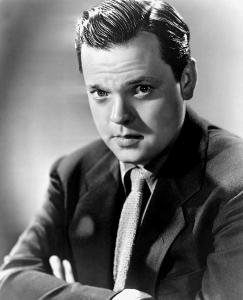
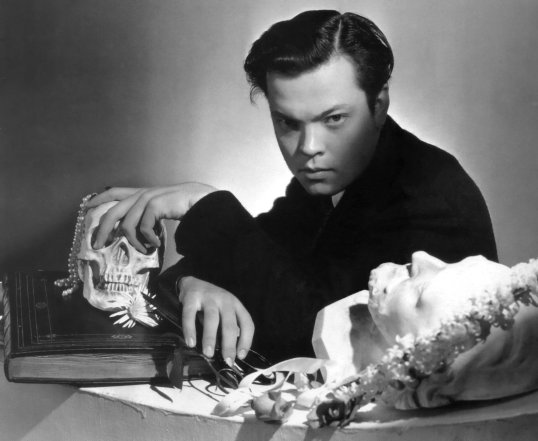
Orson Welles was fond of telling the story of how Franklin D. Roosevelt, shortly before his death, encouraged Welles to enter politics and run for Wisconsin’s U.S. Senate seat in 1946. Welles gave it some consideration but ultimately, he decided not to run. He was, after all, a movie star and, in the mid-40s, he had yet to be exiled from Hollywood.
Welles later said that a part of him regretted not running because, if he had, his opponent would have been Joseph McCarthy. Welles assumed that he would have easily beaten McCarthy and therefore, the McCarthy era never would have happened. Of course, the truth of the matter is that there’s no guarantee that Welles, as someone who had spent most of his life in New York and California, would have even won the Democratic primary, that Welles would have defeated McCarthy in the general, or that some other Senator wouldn’t have launched an anti-communist crusade in McCarthy’s place. But Orson Welles was never one for false modesty. That’s one thing that made him such an important and exciting filmmaker.
Welles also said that, despite his regrets, he was ultimately happy that he didn’t run because he would have felt the need to then run for President. President Welles! Imagine that. (Actually, it probably would have been a disaster but still …. President Orson Welles! If nothing else, a Welles presidential campaign would have spared America from having to look at Adlai Stevenson for two straight elections.)
Today’s scene that I love provides a glimpse of what an Orson Welles political campaign might have been like. In this scene, from 1941’s Citizen Kane, Charles Foster Kane runs for governor and gives the political speech of his life. Sadly, as we all know, Kane would never be governor and he would never again be as beloved by the masses as he was in this scene. Instead, he would die isolated, alone, and wishing for his childhood.
4 Or More Shots From 4 Or More Films is just what it says it is, 4 shots from 4 of our favorite films. As opposed to the reviews and recaps that we usually post, 4 Shots From 4 Films lets the visuals do the talking!
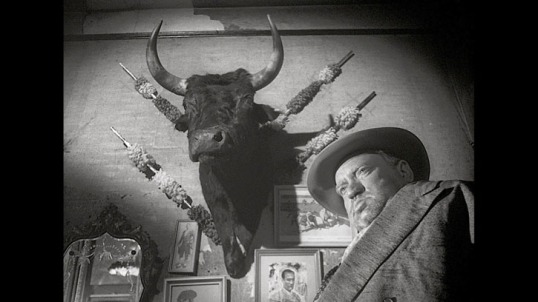
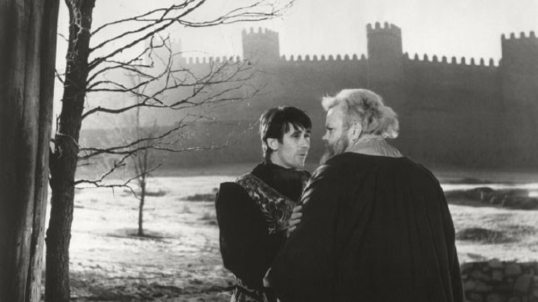
Today we celebrate what would have been the 109th birthday of the great Orson Welles! It’s time for….
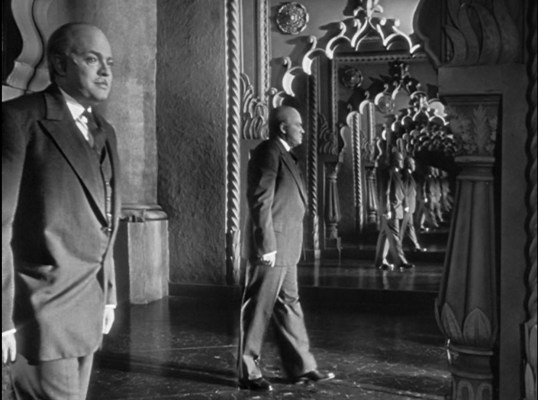
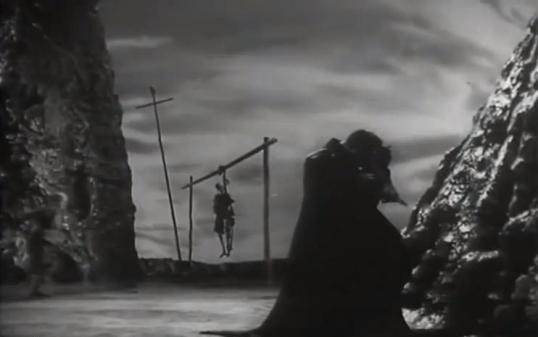
4 Shots from 4 Orson Welles Films
Citizen Kane (1941, dir by Orson Welles, DP: Gregg Toland)
MacBeth (1948, dir by Orson Welles, DP: John L. Russell)
Touch of Evil (1958, dir by Orson Welles, DP: Russell Metty)
Chimes at Midnight (1965, dir by Orson Welles, DP: Edmond Richard)
 Through the Shattered Lens