Two Americans meet up in Turkey in 1922. Josh Corey (Charles Bronson) is a cynical soldier-of-fortune who, along with his mercenary crew, is hoping to make money out of the ruins of the Ottoman Empire. Adam Dyer (Tony Curtis) is the heir to a shipping company and is hoping to get his last remaining boat out of the Turkish dock where it’s been interned since World War I. Osman Bey (Gregorie Aslan), one of the local powerbrokers who has risen to power since the Turkish Revolution, hires Josh and Adam to escort his daughters and their protector, Alia (Michele Mercier), to Mecca. Actually, the plan is for them to instead go to Cairo to recover a priceless treasure. The journey to Cairo is filled with action and betrayal as Josh and Adam try to navigate the upheaval of the post-war Middle East.
You Can’t Win ‘Em All is a mix of action and comedy, an adventure that owes more than a little to the other big budget heist films of the 60s and 70s. (Director Peter Collinson was hired due to his work on The Italian Job.) The film’s humor comes from the partnership of the stoic Bronson with the talkative Tony Curtis. In fact, the film’s main flaw is that Tony Curtis talks too much. Curtis simply will not shut up. After about fifteen minutes, I was tired of listening to him. Curtis’s acting limitations really come through the more that he talks and, as a result, Bronson walks away with the entire movie by saying next to nothing. Bronson keeps largely quiet because he doesn’t have to speak to make an impression. His stare says everything that needs to be said.
You Can’t Win ‘Em All is uneven but it has a few good action sequences and Bronson doing what Bronson did best. Watching this movie made me appreciate Charles Bronson all the more. Even when working with a less-than-great script and a miscast co-star, Bronson still had the undefinable quality that made him a star.
For my latest horror review, I will be reviewing another classic film from one of my favorite directors, Mario Bava. Following the suggestion of my twitter friend Tom, I spent last night watching Bava’s 1963 classic Black Sabbath.
Starring Boris Karloff, Black Sabbath is a compilation film that’s made up of three different horror-themed stories. Originally entitled Three Faces of Fear, Black Sabbath has been released in many different versions over the years. Depending on which version you seen, the stories may be in a different order than in the order that Bava intended. The version I watched was the original, uncut, Italian-language version that was released by Anchor Bay. For those of you who want to truly experience the genius of Mario Bava, this is the version to see.
Black Sabbath begins with Boris Karloff playing himself, giving a deliberately over-the-top introduction and informing us that there could very well be vampires and werewolves sitting next to us in the theater. Yes, it’s silly and yes, it’s campy but it’s also a lot of fun. A lot of this is because these words are delivered by Karloff, an actor who could make even the silliest of dialogue sound important. The other part is that, as silly as the introduction may be, it’s beautiful to look at. Instead of going for the standard spooky narrator in a cobweb-filled library approach, Bava frames Karloff standing against a brilliant dark blue backdrop that establishes that this isn’t just your typical horror host … this is BORIS FREAKIN’ KARLOFF!
After Karloff’s introduction, we move on to the first of Black Sabbath’s three separate stories, The Telephone.
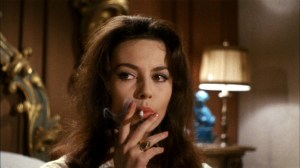
In The Telephone, Michele Mercier plays a Parisian prostitute who returns to her apartment after an evening out. As she tries to change for bed, her bright red telephone rings. Every time Mercier opens the phone, she hears a man’s voice taunting and threatening her. Finally, the caller claims to be Frank, Mercier’s former pimp who has just escaped from prison. The terrified Mercier calls her estranged lesbian lover (Lydia Alfonsi). Alfonsi comes over to the basement to comfort Mercier. However, what Mercier doesn’t realize is that it wasn’t Frank calling her. It was Alfonsi, pretending to be Frank. However, needless to say, there’s more twists to come before the night’s over.
Of the three segments, The Telephone is probably the least succesful if just because it has the most pedestrian plot. At the same time, this segment also show just how good Bava was at creating tension even with so-so material. Speaking as someone who has been stalked in the past, I can say that both Mercier and Bava perfectly captures the way that one seemingly simple intrusion on your privacy can leave you suddenly feeling very isolated and very alone. Finally, even after the segment’s over, it’s impossible to forget the sight of that vibrantly red phone sitting like a lurking monster in that artfully drab apartment.
The Telephone is followed by probably the film’s most famous segment, The Wurdalak.
Based on a short story by Tolstoy, The Wurdalak opens with a Russian nobleman (played Italian exploitation mainstay Mark Damon) on a long trip through the Russian wilderness. He comes across a headless corpse with a dagger plunged into its heart. Damon takes the dagger as a morbid souvenir of his trip.
As night falls, Damon comes across a small cottage and asks the family inside for shelter. Inside the cottage, Damon discovers a wall that is covered with daggers similar to the one he found earlier. His hosts explain that the daggers belong to the family patriarch, Gorcha (Boris Karloff). Gorcha left five days earlier to kill a wurdolak (or vampire, by any other name). As the family waits for Gorcha to return, not knowing whether or not he himself is now a vampire, Damon finds himself falling in love with Gorcha’s daughter. When Gorcha finally does return, it’s obvious that he’s not the same man he was when he originally left.
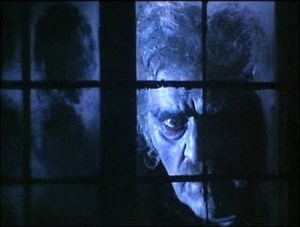
Of the three segments, The Wurdolak is probably the most obviously Bavaesque and a whole lot of the same images and themes would later turn up in Bava’s masterwork, Kill, Baby, Kill. Everything, from the constantly howling wind to the sense of isolation to the well-meaning but ultimately impotent upper-class hero, is classic Bava. Special mention should also be made of Boris Karloff’s performance here. Because Karloff was best known for appearing in “monster” movies, he never gets enough recognition for being a pretty good actor. His performance here, which is full of malice and threat, is just as menacing as his earlier appearance in the introduction was fun and campy.
The final segment of the film is entitled The Drop of Water.
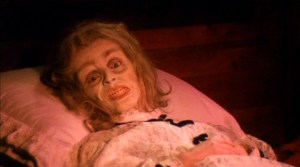
In many ways, The Drop of Water is the simplest segment of the film but for me, personally, it’s also the scariest. In London, a nurse (Jacqueline Pierreux) is called to a large house to prepare a medium for burial. While doing this. the nurse notices a large (and, quite frankly, kinda gaudy) ring on the medium’s finger. The nurse steals the ring and returns to her own apartment. As soon as she goes to her apartment, she finds herself haunted by increasingly ominous events: a buzzing fly refuses to leave her alone, the sound of water dripping echoes through the apartment, the lights go on and off, and — naturally — a mysterious figure suddenly appears in her bedroom.
Mixing the sense of growing paranoia that characterized The Telephone with Wurdolak’s sense of predestined, metaphysical doom, The Drop of Water is the perfect concluding chapter of Black Sabbath. It also happened to scare the Hell out of me. Along with Bava’s usual superb direction, this film was distinguished by some wonderfully creepy make-up work. Seriously, once that mysterious figure reveals itself, you’ll wish it hadn’t.
I usually don’t enjoy compilation films because, too often, it seems that you’re lucky if you get just one above average story surrounded by a bunch of forgettable filler. Far too often, the stories themselves don’t seem to go together. Instead, they just appear to have been tossed together randomly with the weakest of possible connection. Black Sabbath is an exception and that’s largely because of Mario Bava’s iconic direction. The stories aren’t linked together by plot as much as their linked together by motif and theme. Each story — from the emphasis on isolation to the creative use of color to suggest mood and menace — is linked by Bava’s style. Boris Karloff may have been the name emphasized in the credits but the true star of Black Sabbath is Mario Bava.
The genius of Bava wasn’t in the originality of the stories he told but instead, in the new ways that he found to tell familiar stories. Usually, I hate it when directors describe themselves as being about “style” as opposed to “substance.” Too often, it seems like that’s just an excuse to not come up with an interesting story. However, Bava is one of the few directors about whom the term “style over substance” can be used as a compliment. Bava knew how to make style into art and he certainly did that in Black Sabbath.
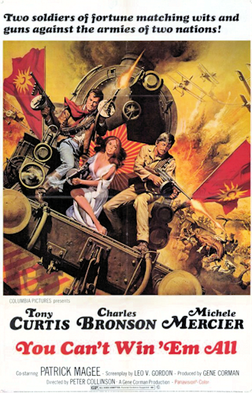 Two Americans meet up in Turkey in 1922. Josh Corey (Charles Bronson) is a cynical soldier-of-fortune who, along with his mercenary crew, is hoping to make money out of the ruins of the Ottoman Empire. Adam Dyer (Tony Curtis) is the heir to a shipping company and is hoping to get his last remaining boat out of the Turkish dock where it’s been interned since World War I. Osman Bey (Gregorie Aslan), one of the local powerbrokers who has risen to power since the Turkish Revolution, hires Josh and Adam to escort his daughters and their protector, Alia (Michele Mercier), to Mecca. Actually, the plan is for them to instead go to Cairo to recover a priceless treasure. The journey to Cairo is filled with action and betrayal as Josh and Adam try to navigate the upheaval of the post-war Middle East.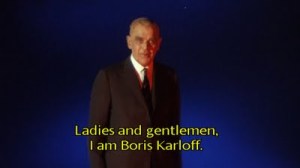
 Through the Shattered Lens