
(Spoilers)
Recently, I saw a 1999 film called Body Shots on the Fox Movie Channel. If you look at the poster at the top of this review, you’ll see that Body Shots was apparently advertised with the boast: “There are movies that define every decade…” That’s true. It’s also true that, every decade, there are movies that define self-importance and pretension. Can you guess what Body Shots defines?
Since Body Shots claims to be a film that exposes what secretly goes on in American society, I figured I would start this review by sharing a secret of my own.
Ready?
I love over-the-top morality tales. I love movies that attempt to expose 20something for being the shallow, terrible people that older people believe us to be. Every decade sees at least a handful of these films. Typically, they are made by male filmmakers in their 50s and they attempt to paint an accusing portrait of the foibles of youth. These films assure the older generation that their children have all grown up to be a bunch of drug-abusing, heavy-drinking, over-sexed degenerates. It’s a proud of tradition of American cinema and television, one that includes everything from the crazed pot smokers of Reefer Madness to The Newsroom’s Jeff Daniels announcing that my generation is the “WORST. GENERATION. EVER.”
Typically, dreadfully earnest filmmakers who think that they are making an important statement about the future of human society are responsible for these films. That the filmmakers often turn out to be so totally out-of-touch and histrionic just adds to the campy charm.
Body Shots is a part of this tradition. According to the imdb, director Michael Cristofer (who is currently appearing on Smash) was 54 years-old when he made this film about 8 decadent 20-somethings who spend a decadent night at a Los Angeles nightclub and then have to deal with the consequences in the morning.
For the first part of Body Shots, we’re introduced to the 8 main characters (4 men and 4 women, which works out nicely as far as pairing off is concerned). While they’re all generically attractive (and, at times, interchangeable), they are also each meant to represent a different take on sexuality and relationships.
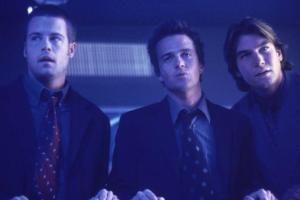
The men:
Rick (played by Sean Patrick Flannery) is a lawyer. He doesn’t have much of a personality but he’s in the most scenes so I guess he’s supposed to be the protagonist. Flannery is required to awkwardly deliver the line, “Hey, Penorisi, have another cocktail, why don’t you?” not once but three time.
Mike Penorisi (played by Jerry O’Connell) is a professional football player who drives a Mercedes and who spends almost the entire movie struggling to keep his hair out of his eyes. We know he’s a jerk because Jerry O’Connell plays him and he does things like shout, “If pussy’s on the menu, I’m there!” (Seriously, Body Shots?)
Shawn (played by Brad Rowe) is a friend of Rick’s. He’s a nice guy and he says things like, “Sex without love equals violence.” (And, again, seriously? Agck! If a guy ever said that to me, I would be out the door so quick…)
Trent (played by Ron Livingston) is Shawn’s roommate. We’re continually told that Trent is a loser but, since he’s played by Ron Livingston, he’s also one of the only likable people in the entire film. Trent is crude and obsessed with sex but, as opposed to everyone else in the film, he’s at least honest about it. Unlike the rest of the cast, Livingston is intentionally funny.

The women:
Jane (played by Amanda Peet) is kind of Rick’s girlfriend. Like Rick, she really doesn’t have much of a personality and she’s mostly distinguished by being an absolutely terrible dancer. (Unfortunately, the filmmakers don’t seem to realize just how awkward Peet looks out on the dance floor.)
Sara (played by Tara Reid) is Jane’s best friend. She’s blonde, drinks to excess, and is open about her sex life. So, naturally, the filmmakers go out of their way to punish her during the film’s second half.
Whitney (played by Emily Proctor, from CSI: Miami) is another blonde who drinks to excess and is open about her sex life. In order to keep us from confusing her with Sara, the filmmakers have Whitney sodomize one of the men with a dildo.
Emma (played by Sybil Temchen) is depressed and worries that people can tell that she “hasn’t gotten laid in months” just by looking at her.

Anyway, these eight characters spend the first part of the movie getting ready to go out, going out, meeting up, hooking up, and occasionally telling us their thoughts on sex and relationships. And by telling us, I mean that, in a technique beloved by first-time playwrights who have yet to learn anything about being subtle or allowing characters to reveal themselves organically, they literally look straight at the camera and deliver monologues about what they’re looking for in life. I suppose this is all supposed to make us feel as if we’re getting an intimate look into the inner angst and secret loneliness of these characters but the monologues are all so awkwardly written that they just make the characters seem even more shallow than before. Trust me, I could have happily lived my entire life without having Jerry O’Connell staring straight at me while discussing oral sex. (“No teeth!” Jerry grins. BLEH!)
And yet, I still enjoyed the first part of Body Shots, precisely because the characters were so shallow and the movie was so unintentionally over-the-top in its efforts to paint the Los Angeles nightlife as the equivalent of Sodom and Gomorrah. The scenes where the women were getting ready to go out for the night all had a ring of truth of them and Ron Livingston (who appeared to be the only member of the cast to understand just how silly a film Body Shots would ultimately turn out to be) was a lot of fun.
Even better, once everyone gets to the club, Michael Cristofer decides to earn his auteur credentials by tossing in every trick he can think of. Scenes where the action is needlessly sped up follow scenes that play out in slow motion. The camera glides through the club, focusing on all the neon while a generic beat blasts in the background. The walls are covered with graffiti that reads, “Swim At Your Own Risk” and “No Diving” and you better believe that the camera lingers over every letter. Meanwhile, Amanda Peet dances awkwardly while trying to give Sean Patrick Flannery a come hither look while Emily Proctor passes out shots and Jerry O’Connell keeps tossing back his hair. And then Ron Livingston shows up, straight from a golf course and – you’ve got it! – still dressed for his game.
Seriously, it’s all so stupid and silly and over-the-top unbelievable. And, of course, while all this going on, the characters still find the time to stare straight at the camera and tell us their feelings about bondage and whether or not true love actually exists. Cristofer is trying so hard to say something profound and he fails so completely that it’s actually a lot of fun to watch.

Unfortunately, during the second part of the film, Body Shots falls apart. The next morning, Sara shows up at Jane’s apartment and says that Penorisi raped her. Penorisi is arrested and claims that the sex was consensual and that Sara was just upset because he accidentally called her “Whitney.” We get flashbacks to both Mike and Sara’s version of the events. While they each tell a different story, Cristofer seems to be implying that, regardless of who is telling the truth, it wouldn’t have happened if Sara had not been out drinking and flirting.
To be honest, it’s pretty fucking offensive.
If the first part of Body Shots appeared to have been made by an out-of-touch guy with good intentions, the second part is the work of a moralistic hypocrite. What makes it even worse is that the film ends without resolving the case. I’m sure that Cristofer would argue that the open ending was meant to make the audience think about what they had just seen but, ultimately, it feels like a cop out. It’s almost as if Cristofer reached a point where he said, “Okay, I’m tired of making this movie. Let’s just quit.”
And considering how the second half of the movie plays out, you can’t really blame him. Still, the first part of Body Shots is unintentionally hilarious and a lot of fun. Just don’t watch past the 45-minute mark.


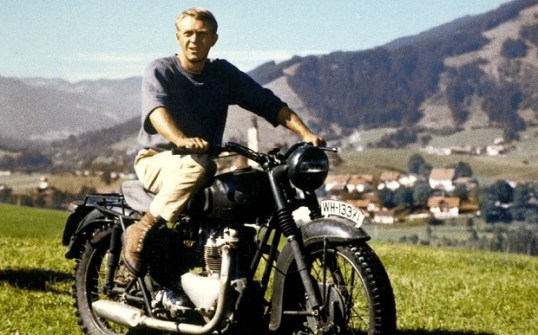

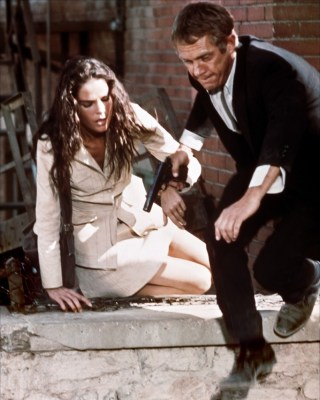
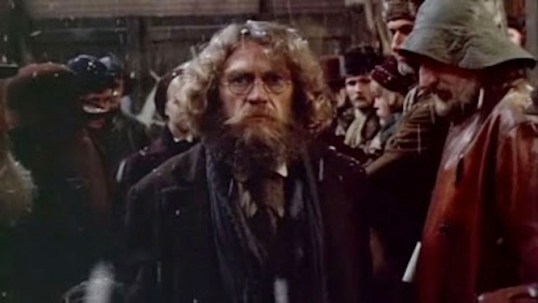
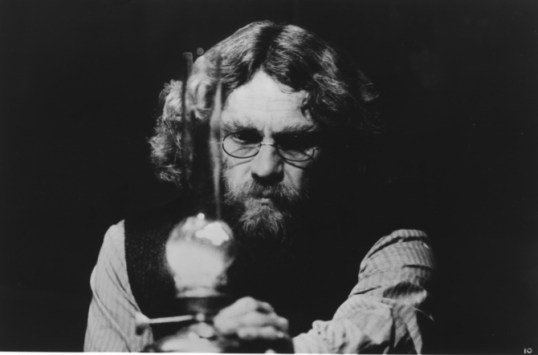
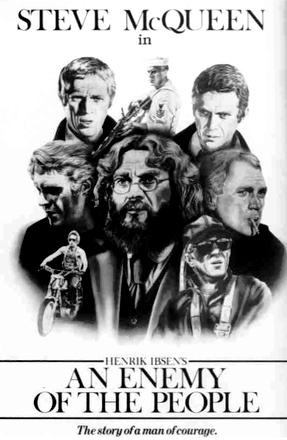 Instead, after a four years absence, McQueen returned to the screen in one of the least expected films of his career. Based on Arthur Miller’s adaptation of Henrik Ibsen’s original play, An Enemy of the People featured McQueen playing Dr. Thomas Stockmann, a scientist who discovers that his town’s local spring has been polluted by a tannery. When Stockmann reveals his findings, the town turns against him and his family. Stockmann has to decide whether to give into pressure from the town or to stay true to his principles.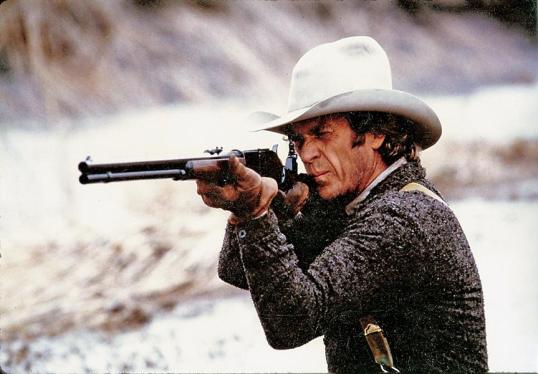
 Through the Shattered Lens