Retro Television Review: Decoy 1.8 “Escape Into Danger”


Welcome to Retro Television Reviews, a feature where we review some of our favorite and least favorite shows of the past!  On Thursdays, I will be reviewing Decoy, which aired in Syndication in 1957 and 1958.  The show can be viewed on Tubi!
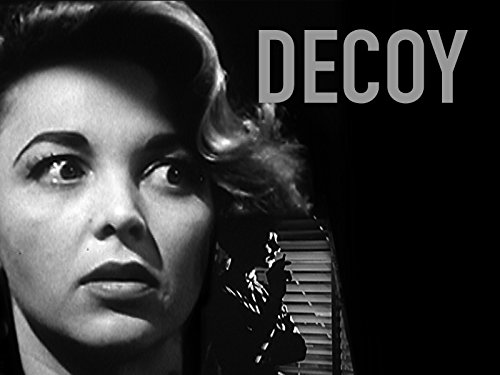
This week, Casey pursues her neighbor and nearly dies.

Episode 1.8 “Escape Into Danger”

(Dir by Teddy Sills, originally aired on December 2nd, 1957)

Casey Jones (Beverly Garland) returns home from a night shift, hoping to get some rest so that she can get over a bad cold.  (I’ve had enough bad colds that I’m fairly confident that Garland herself was suffering from a cold when she filmed this episode and it was written into the script.)  She discovers that her neighbor, Mary (Madeline Sherwood), has hit her abusive and drunken husband across the back of his head.  Mary is convinced that she’s killed her husband and is terrified that she’ll go to jail.  When Casey informs her that her husband is just knocked out and that everything is going to be okay, Mary doesn’t believe her because Casey is a cop and a cop will say anything to make an arrest.  While Casey is in her apartment calling for an ambulance, Mary flees the scene.

Mary’s husband does die but he dies of acute alcohol poisoning so Mary’s off the hook.  (Apparently, this episode take place in a world where assault isn’t a crime.)  Despite her cold, Casey takes to the streets and searches for Mary.  Knowing that Mary is masseuse, Casey checks out all the massage parlors.  In a move that kind of makes me wonder if Casey is really that good at her job, she decides that she might as well get a massage as well.

The woman who gives Casey the massage is Katy Olin (Virginia Kaye), who is Mary’s sister and a bitter ex-con who hates all cops.  While Katy massages Casey, Mary hides in the changing room.  When Casey says that she’s looking for Mary, Katy has Mary sneak out of the dressing room and choke Casey into unconsciousness.  Mary steals Casey’s gun and then makes her escape.

A few thoughts:

First off, after years of being spoiled by shows like Law & Order, I have to say that I was initially surprised that Casey didn’t know that Mary had a sister or that the sister was an ex-con.  But then I remembered that this episode was filmed in 1957, back before all of that information was available at just the touch of a key.

That said, what type of police officer is going to get a massage while on duty?  Even if Casey had looked up from the massage table and seen Mary trying to escape the room, what was Casey going to do?  Chase her through the streets of New York while wearing a towel?  Also, Casey often seems to just drop her purse anywhere, despite the fact that her purse contains a loaded gun.

Third, Katy mentions to Mary that there’s no way for her to leave the room without walking right past Casey.  So, how did Mary get into the room in the first place and how come Casey didn’t notice her when she first arrived?

Fourth, once Casey wakes up, she takes Katy down to the police station.  Katy’s interrogated and refuses to answer any questions.  She asks if she’s being charged with anything and, because she’s not, she’s allowed to go.  Is she not an accessory for hiding Mary and then just standing by while Mary attempted to murder a police officer?

Katy decides that the best thing for Mary to do would be to hide out in her old apartment, the one that is next door to the police officer who Mary just tried to strangle.  (Neither Katy nor Mary appear to be that smart.)  Casey, of course, discovers that two of them hiding there.  She and the neighborhood priest (John McLiam) talk Mary into putting down the gun.  They assure her that she did not kill her husband.  Mary finally believes that Casey is telling the truth….

….which is all good and well except Mary ASSUALTED A POLICE OFFICER!  Indeed, one could argue that what Mary did to Casey counts as attempted murder.  So, really, it seems like Mary should be going to jail regardless.  Unfortunately, we never learn about what happened to Mary after she stop pointing the gun as Casey.  If I was Casey, I would prefer a neighbor who hasn’t tried to kill me.

This episode didn’t really make sense but I’m glad that Casey got over her cold by the end of it.

Lisa Reviews An Oscar Nominee: Cat On A Hot Tin Roof (dir by Richard Brooks)


The 1958 best picture nominee, Cat On A Hot Tin Roof, opens with a 30-something Paul Newman doing something stupid.

It’s a testament to just how incredibly handsome Paul Newman was in the 1950s that he can still be sexy even while he’s stumbling around in a drunken haze and attempting to jump over hurdles on a high school football field.  Newman is playing Brick Pollitt, youngest son of the wealthy cotton farmer Big Daddy Pollitt (Burl Ives).  Brick was a star athlete in high school but now, he’s a drunk with an unhappy marriage and a lot of bitter feelings.  When Brick attempts to jump over the hurdles, he breaks his ankle.  The only thing that keeps Brick from being as big a loser as Biff Loman is the fact that he looks like Paul Newman.

Brick is married to Maggie (Elizabeth Taylor), a beautiful woman who may have grown up on the wrong side of the tracks but who has married into money.  The only problem is that it doesn’t seem like Brick is ever going to get that money.  With Big Daddy getting older, everyone in Mississippi is wondering which Pollitt son will inherit his fortune.  Will it be drunken, self-pitying Brick or will it be Goober (Jack Carson) and his wife (Madeleine Sherwood)?  One point in Goober’s favor is that he and his wife already have five rambunctious children while Brick and Maggie have none.  In fact, gossip has it that Brick and Maggie aren’t even sleeping in the same bed!  (While Maggie begs Brick to make love to her, Brick defiantly sleeps on the couch.)  The other problem is that, for whatever reason, Brick harbors unending resentment towards … well, everything.  Perhaps it has something to do with the mysterious death of Brick’s best friend and former teammate, Skipper…

Brick, Maggie, Goober, and the whole clan are in Mississippi to celebrate Big Daddy’s 65th birthday.  Big Daddy is happy because he’s just been told that, despite a recent scare, he does not have cancer.  What Big Daddy doesn’t know is that his doctor (Larry Gates) lied to him.  Big Daddy does have cancer.  In fact, Big Daddy only has a year to live.

Whenever I watch Cat On A Hot Tin Roof, I find it’s helpful to try to imagine what it would have been like to watch the movie in the 1950s.  Imagine how audiences, at a time when married couples were still regularly portrayed as sleeping in separate beds and when men were naturally assumed to be the kings of their household, reacted to seeing a film where Elizabeth Taylor was literally reduced to begging Paul Newman to make love to her while Newman hopped around on a crutch and continually found himself getting stuck in embarrassing situations.  Though it may seem tame by today’s standards, the film was undeniably daring for 1958 and watching it is like stepping into a time machine and discovering that, yes, there was a time when Elizabeth Taylor wearing a modest slip was considered to be the height of raciness.

Of course, the film itself is quite toned down from the Tennessee Williams’s play on which it was based.  Williams reportedly hated the changes that were made in the screenplay.  In the play, Skipper committed suicide after confessing that he had romantic feelings for Brick, feelings that Brick claims he did not reciprocate.  That was glossed voter in the film, as was the story of Skipper’s unsuccessful attempt to prove his heterosexuality by having sex with Maggie.  By removing any direct reference to the romantic undercurrent of Brick and Skipper’s relationship, the film also removes most of Brick’s motivation.  (It’s still there in the subtext, of course, but it’s probable that the hints that Newman and Taylor provided in their performances went straight over the heads of most audience members.)  In the play, Brick is tortured by self-doubt and questions about his own sexuality.  In the film, he just comes across as being rather petulant.

And again, it’s fortunate that, in the film, Brick was played by Paul Newman.  It doesn’t matter how bitter Brick becomes or how much he whines about not wanting to be around his family.  One look at Newman’s blue eyes and you understand why Maggie is willing to put up with him.  In the role of Maggie, Elizabeth Taylor gives a performance that manages to be both ferocious and delicate at the same time.  Maggie knows how to play the genteel games of the upper class South but she’s definitely not going to let anyone push her around.  It’s easy to see why Big Daddy prefers the company of Maggie to his own blood relations.  It’s not just that Maggie’s beautiful, though the implication that Big Daddy is attracted to her is certainly present in the film.  It’s also the she’s the only person around who is as strong and determined as him.

Indeed, seen today, Cat On A Hot Tin Roof‘s main strength is that it’s a masterclass in good acting.  Williams’s dialogue is so stylized and his plot is so melodramatic that one bad performance would have caused the entire film to implode.  Fortunately, Newman and Taylor make even the archest of lines sound totally natural while Burl Ives and Judith Anderson are both the epitome of flamboyant charisma as Big Daddy and Big Mama.  It takes a lot of personality to earn a nickname like Big Daddy but Ives pulls it off.

Along with being a huge box office success, Cat On A Hot Tin Roof was nominated for best picture of 1958.  However, it lost to Gigi.