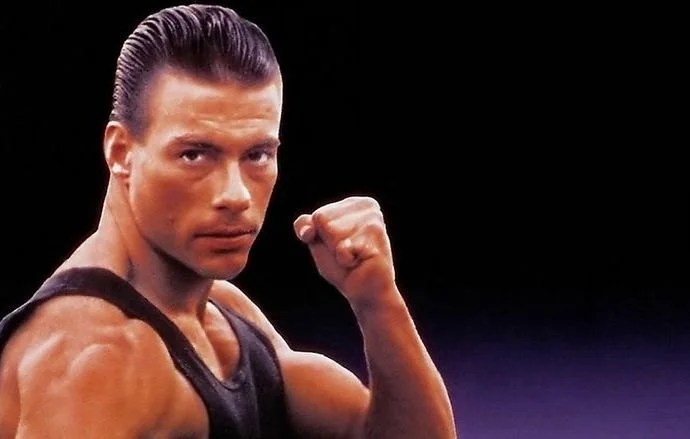
Brad reviews LIONHEART (1990), starring Jean-Claude Van Damme!


As a teenager of the late 80’s, I became a huge fan of Jean-Claude Van Damme when I watched movies like BLOODSPORT (1988), CYBORG (1989), KICKBOXER (1989), and DEATH WARRANT (1990). He really seemed to be going big-time with movies like UNIVERSAL SOLDIER (1992), HARD TARGET (1993) and especially TIMECOP (1994). Unfortunately, through a variety of problems, including a reportedly uncontrollable ego, a seemingly never ending supply of gratuitous butt shots for the ladies, and potential drug issues, his star would begin to wane in the mid-1990’s and he’d soon find his career heading the wrong direction. Through it all though, I’ve always loved Van Damme, and I still like to watch his movies (both new and old) to this day. One of the films that he made in his prime was LIONHEART (1990). I remember renting the movie as soon as it became available at our local video store, and even though I don’t hear it spoken of often these days, it’s always been one of my favorite films of the so-called “Muscles from Brussels!”

LIONHEART stars Van Damme as Lyon Gaultier, a French Foreign Legionnaire who deserts his post in North Africa after finding out that his drug addict brother, who lives in Los Angeles, has been set on fire and is barely clinging to life. Determined to help his brother’s family, Lyon goes AWOL and hops a boat to the United States of America. Unfortunately, Lyon finds himself stranded in New York with no money, until he stumbles across an underground street fight. With the connections of a hustler named Joshua (Harrison Page) and a sexy fight organizer named Cynthia (Deborah Rennard), Lyon’s talent in the ring allows him to make the money he needs to go to L.A. When he finally makes it to the west coast, his brother has passed away, leaving huge medical bills for his wife Helene (Lisa Pelikan) and young daughter, Nicole (Ashley Johnson). Continuing to fight in the underground market in L.A. to provide funds for his sister-in-law, Lyon takes on increasingly dangerous opponents, including the savage Attila (Abdel Qissi) in a high-stakes fight that could settle his family’s financial problems for good… if it doesn’t kill him. 

I mentioned earlier that I’m a big fan of LIONHEART. With that said, I can certainly see some flaws in the film. The performances aren’t all great. For example, Deborah Rennard is somewhat ridiculous as the sexy, duplicitous Cynthia. Her character is as cliched as it gets, even if she does look good in her see-through stockings. It’s also too long. Clocking in at almost an hour and fifty minutes, the film is at least twenty minutes too long. There are definitely scenes that could have been trimmed down to make for a more efficient movie. Flaws acknowledged, I watched it again today, and I still love the movie. Directed by Sheldon Lettich (DOUBLE IMPACT), LIONHEART delivers the goods as a badass, fight film with a heart. The action sequences drew me in with Van Damme’s athletic spins and kicks, but it also reminded me of my favorite film of all time, HARD TIMES (1975) starring Charles Bronson. In HARD TIMES, Bronson takes out a cocky bastard with one punch to the face. In LIONHEART, Van Damme takes out a cocky bastard with one punch to the nuts. Both films deliver final showdowns against awesome opponents that deliver brutal and satisfying climaxes to the action. And both films go for real emotion. In HARD TIMES, those relationships are limited to the men in Bronson’s life, but in LIONHEART, Lyon’s relationships with his friend Joshua, as well as his love for his niece and widowed sister-in-law really set the film apart. Van Damme isn’t a great actor at this point in his career, but there’s just something really appealing about his unconditional love for his family. He won me over with his earnest performance, and I was all in when everything comes to a head at the end. It was also fun seeing producer Lawrence Bender (PULP FICTION, ANNA AND THE KING, KILL BILL) cameo in an early fight scene as a doofus with a pony tail who gets his ass handed to him by Van Damme. That’s just fun movie stuff. 

Playing on Amazon Prime as I type, I easily recommend LIONHEART to any person who likes Van Damme or action films of the 80’s and 90’s. It may be as cheesy as hell, but in my opinion, it’s one of the star’s best films. 
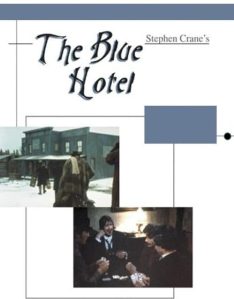
Retro Television Review: The American Short Story Episode 8 “The Blue Hotel”


Welcome to Retro Television Reviews, a feature where we review some of our favorite and least favorite shows of the past!  On Saturdays, I will be reviewing The American Short Story, which ran semi-regularly on PBS in 1974 to 1981.  The entire show can be purchased on Prime and found on YouTube and Tubi.

This week, we have an adaptation of a Stephen Crane short story.

Episode 1.8 “The Blue Hotel”

(Dir by Jan Kadar, originally aired in 1977)

In the dying days of the Old West, a train pulls into a station in a small frontier town.  Getting off the train, a Cowboy (John Bottoms), an Easterner (Geddeth Smith), and a Swede (David Warner) head to the town’s only hotel.  A blizzard is coming and the three men are seeking shelter for the night.  The owner of the hotel, Scully (Rex Everhart), is happy to provide it.  As the men wait for dinner to be served, they play a card game with Scully’s son, Johnnie (James Keach).

At first, the game plays out without incident.  The men are all friendly, with the exception of the Swede.  The Swede remains quiet and seems distrustful.  After a few hands of the game, the Swede accuses Johnnie of cheating.  Over the next few hours, as the wind howls outside, the Swede rants and raves.  Convinced that the wild west is truly full of outlaws and that it’s all exactly like the dime-store novels that he read before boarding the train, he cannot bring himself to accept that the men mean him no harm.  It all leads to violence and tragedy.

This episode made excellent use of the shadowy Blue Hotel and the desolate wind blowing outside.  Over the course of an hour, the hotel went from being a friendly shelter to an ominous location that seemed to pulse with paranoia.  David Warner gave a strong performance as the unstable Swede and the final act of violence (which was changed slightly from the short story’s original conclusion) comes as a genuine shock as does the final twist in the tale.  The Blue Hotel becomes a look at how people unknowingly shape their own destiny, for better or worse.

Film Review: Swing Shift (dir by Jonathan Demme)


1984’s Swing Shift begins in 1941.  Kay (Goldie Hawn) and Jack Walsh (Ed Harris) are a young married couple in California.  At first glance, they seem to have the perfect life.  Jack works all day and comes home and has a beer and tells his wife how much he loves her.  Kay spends her day cleaning up around the house and when her husband comes home, she sits down next to him and tells him how much she loves him.  Whenever their neighbor, Hazel (Christine Lahti), walks by their bungalow, Jack mutters that she’s a tramp.  Hazel sings in a sleazy nightclub and dates a shady fellow named Biscuit (Fred Ward) and that’s just not what respectable people do!

When the Japanese bomb Pearl Harbor, Jack enlists in the Navy.  Kay suggests that she could get a job while he’s gone but Jack is firm.  He doesn’t want his wife working.  However, after Jack leaves, Kay is motivated by both boredom and her patriotic duty to apply for a job in an armaments factory.  With all of the men overseas fighting, their wives have been implored to do their part for the war effort.

Kay works the swing shift, along with Hazel and a trumpet player named Lucky (Kurt Russell).  (Lucky sweetly declines to explain why he’s called Lucky.)  Despite some early antagonism, Hazel and Kay becomes friends.  Kay starts to come out of her shell, especially where Lucky is concerned.  How will Jack react when he returns home?

The late director Jonathan Demme described directing Swing Shift as being one of the worst experiences of his career.  Demme’s original cut of the film was an ensemble piece that was a drama with comedic moments.  Star Goldie Hawn was reportedly not happy with Demme’s original cut and the film was essentially taken away from the director.  Screenwriter Robert Towne was brought in to write some additional scenes.  (Even before Towne was brought in, at least four writers had written a draft of the script and the screenplay itself was finally credited to a non-existent “Rob Morton.”)  Some scenes were reshot.  The film itself was reedited.  The end result was a film that focused primarily on Kay and made her relationships with Hazel, Jack, and Lucky far less complex.  Jonathan Demme walked away from the film, retaining his directorial credit but pointedly requesting that the film not be advertised as a “Jonathan Demme film.”  Later in life, Demme declined to discuss either Swing Shift or the experience of working with Goldie Hawn.

Watching the studio cut of Swing Shift on Prime, I could understand many of Demme’s objections.  It’s a film that’s full of good performances and some stylish visuals but it really doesn’t have much narrative momentum and, especially when it comes to Kay’s friendship with Hazel, it does feel like certain scenes are missing.  Hazel is remarkably quick to forgive someone who she believes has spent years calling her a tramp.  As well, there’s a lot of interesting characters in the background, many of whom are played by regular members of the Jonathan Demme stock company.  (Charles Napier, Susan Peretz, Holly Hunter, Roger Corman, Lisa Peilkan, Sudie Bond, and Stephen Tobolowsky all have small roles.)  Watching the film, one gets the feeling that they all probably had more to do in Demme’s original cut.

That said, I have to admit that I still enjoyed the studio cut of Swing Shift, flaws and all.  A lot of that is due to the performances of Hawn and Russell.  (Christine Lahti received a Supporting Actress Oscar nomination for her performance in this film.  She’s okay, though I don’t really think she deserved a nomination over someone like Elizabeth Berridge in Amadeus or Tuesday Weld in Once Upon A Time In America.)  Hawn does a wonderful job portraying Kay’s transformation from being a rather meek housewife to someone who can put a plane together without a moment’s hesitation.  Hawn and Russell began their legendary romance on the set of Swing Shift and their chemistry is strong enough to carry the film over plenty of rough spots.  At its best, Swing Shift inspired me to wonder what I would have done if I had been alive in the 1940s.  Would I have ended up cutting my hair and working in a factory?  Would I have waited at home from my ‘husband or sweetheart” (as the film refers to them) to come home?  Or would I have run off with Lucky and followed him from town to town?  Swing Shift is a good film that could have been great and, by many accounts, actually was great before it was recut.  (Even with the reediting, enough of Demme’s trademark humanity comes through to make the scenes in the factory memorable.)  In the end, Swing Shift isn’t perfect but I still enjoyed it.

True Grit: A Further Adventure (1978, directed by Richard T. Heffron)


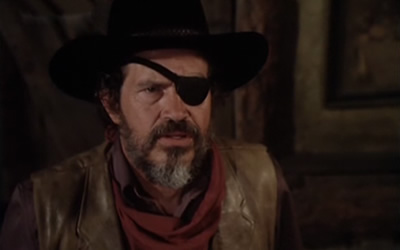
Warren Oates as the legendary, one-eyed old west lawman Rooster Cogburn?

That was the idea behind True Grit: A Further Adventure, a made-for-TV movie that was meant to serve as a pilot for a potential television series.  The film is a direct sequel to 1969’s True Grit and it features Warren Oates stepping into the role of Rooster Cogburn, the character that John Wayne famously played in the original film and who Jeff Bridges later played in the 2010 remake.  In A Further Adventure, Cogburn is once again hired to escort teenager Mattie Ross (Lisa Pelikan) across the country.  Along the way, Rooster gambles away all their money, meets an attractive widow (Lee Meriwether), and gets a job in a mining town.  With the help of Mattie, he also gets a job as a bounty hunter and the two of them go after a group of wanted outlaws.  Mattie tries to reform Rooster and make him act like more of a traditional western hero while Rooster drinks and gambles and complains.

I am a huge Warren Oates fan but even I have to admit that he’s miscast of Rooster Cogburn.  In both Charles Portis’s original novel and the two films that were adapted from it, Rooster was overweight and physically imposing,  He wasn’t book-smart but he was wise in the ways of the frontier.  Physically, Warren Oates is too slightly built and his trademark nervous energy feels out of place in the role of Rooster.  Wayne and Bridges were both believable as men who would draw first and ask questions later but Oates was a natural-born talker.  That’s one of the things that made him one of the best actors of the 70s but it doesn’t serve him well in the role of Rooster Cogburn.

On the plus side, Lisa Pelikan is a considerable improvement on Kim Darby in the role of Mattie, though she’s nowhere near as good as Hailee Steinfeld would later be in the 2010 film.  Lee Meriwether and Warren Oates shares some good scenes together but the film’s made-for-TV origins makes Meriwether’s overall performance feel like a special guest star diversion.  True Grit: A Further Adventure is a throw-back to the type of formulaic western television programs that were popular in the late 60s.  It’s easy to see why the pilot didn’t get picked up.  It was miscast and it was too late.  If it had aired a few years earlier, it’s possible to imagine Oates and Pelikan traveling to a different town and getting involved in a different story on a weekly basis and perhaps the role would have been changed to better suit Oates’s style of acting.  But, by 1978, television was heading in the direction of Hill Street Blues and the days of the western were over.

Unfortunately. Warren Oates would die just four years after this film aired, a tragically early passing that robbed the world of a unique actor who was in his prime.  Though Oates may not have been right for Rooster Cogburn, he will always be remembered for films like Badlands, Bring Me The Head of Alfredo Garcia, Stripes, Dillinger, and Two-Lane Blacktop.  He was truly a one of a kind talent.