It was practically unavoidable to do at least one, if not more Russell Mulcahy videos on here during this run of surreal/weird music videos. I could probably fill all 30 days by just doing Russell Mulcahy, Anton Corbijn, Steve Barron, and Richard Casey videos.
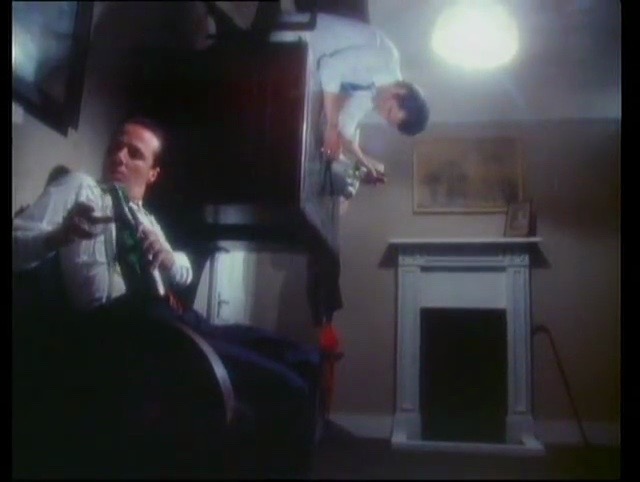
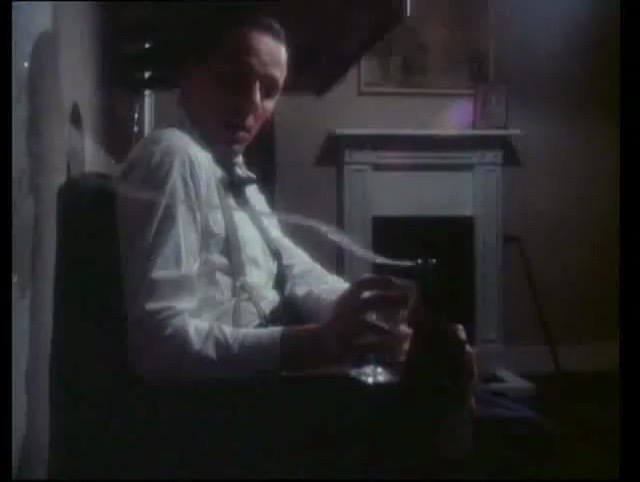
I have no idea what to say about this one. I knew the name Ultravox, but this is probably my first song of there’s that I’ve listened to. This video seems to have just about everything Mulcahy could of thrown into it.
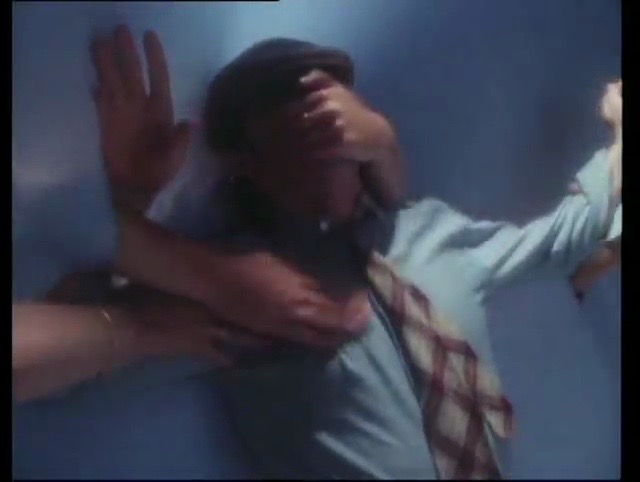
Hands reaching out to grab you through the walls.
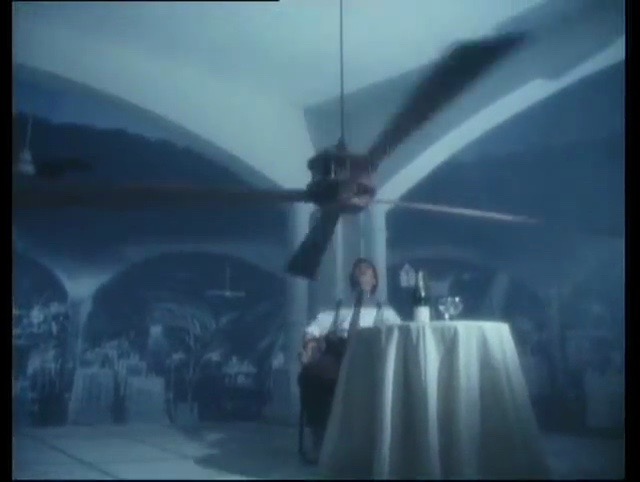
A giant fan.
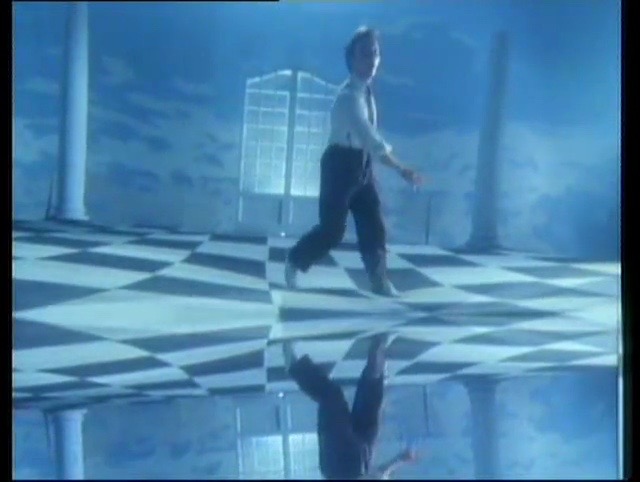
A disorienting floor.
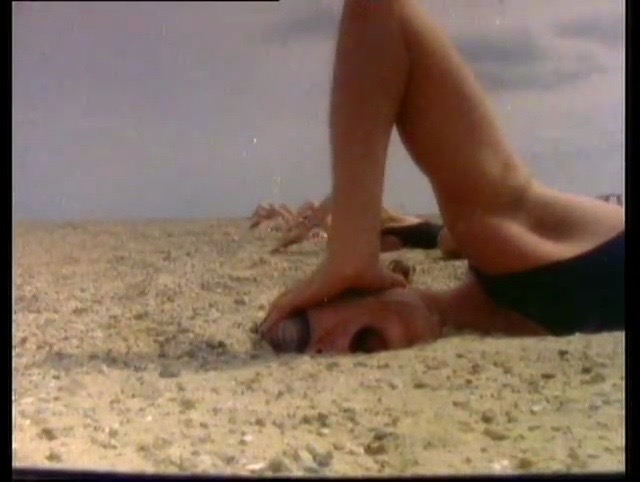
Frightened bisected swimmers in sand.
Playing with gravity.
Seeing as it is Russell Mulcahy, there’s liquids.
Lots of liquid.
Just watch it. There’s other stuff in it as well.
Lexi Godfrey produced the video. Godfrey seems to have only produced about 15 videos. The ones we’ve done so far are pretty good. She also produced A View To A Kill by Duran Duran, Rockit by Herbie Hancock, this one, Video Killed The Radio Star by The Buggles, and one of the versions of Bohemian Rhapsody.
That turned out to be longer and more of a rollercoaster for my mind and body than I expected. After all the side effects of the meds and the subsequent withdrawals, it didn’t help the chronic cough. On the plus side, I now own a second dog named Elke. Whether she’s named after Elke Sommer or not, we don’t know. Regardless, since Lisa was kind enough to cover for me, it means I need to watch Lisa And The Devil (1973) with Elke Sommer. On the downside, I watched 70 films since my last post, which means I will have more stuff to sift through at the end of the year. Oh, well.
Rest in peace, Roger Moore.
To my knowledge this is the only music video that has Roger Moore in it–even if it is only in footage from the film. Speaking of which, you will notice two things immediately when you start up this music video:
It is silent for a little over a minute.
The video quality isn’t very good.
At first I thought my iPhone was glitching on me. It’s not like the iOS YouTube app is perfect or anything. I scrubbed forward, and the song kicked in. I didn’t notice the video quality was low until now. I have a theory about why it is silent during the opening film footage and is of low quality throughout.
This isn’t like Romancing The Stone by Eddy Grant. Yes, they tried to integrate him into the footage from the movie, but it’s easy to edit that out, and they did just that for a separate version of it. This video heavily integrates the film footage into the music video. You really can’t separate them, and expect to be able to put this up. My best guess, is that behind-the-scenes, a deal was struck that so long as they muted the opening part and reduced the quality, then whoever currently holds the license to the film would let them post it. Also, seeing as directors Godley & Creme integrated Duran Duran into the movie footage, you also couldn’t treat them differently. Thus, the whole thing is the way it is. That’s my theory.
If you pay attention to the music video, then you might notice a little Easter Egg in it. That of course being the female model having pictures taken of her. You guessed it. Godley & Creme directed the music video for Girls On Film.
In addition, you can say that the use of iris shots is a nod to Rio, and visually makes Duran Duran perfect to have made a Bond theme song. Finally, the name Simon Le Bon not only lends itself to being a stand-in for the famous “Bond, James Bond” line, but Roger Moore played Simon Templar on The Saint before becoming James Bond.
Wikipedia has an interesting backstory on how the band and John Barry worked together to write the song. I suggest going over there and reading it.
Lexi Godfrey produced the video.
I’m sorry it took till your death, Roger. But I need to go see how you managed to be in a movie called Gold (1974), the same year as you were in The Man With The Golden Gun (1974)–if for no other reason, than it being my favorite Bond film
…
Wait a second, you also played both Sherlock Holmes in 1976 and Inspector Clouseau in 1983. You sneaky devil. I’ll miss you.
I don’t have much to say about this music video that I assume everyone has seen at this point. MTV & VH1 used to bring it up all the time whenever they would look at their early history and for good reason. Not only is it amazing, but it also won five VMAs at the first Video Music Awards in 1984. That’s particularly notable since it was the year people generally agree is when the color barrier at MTV basically disappeared.
In the time since I wrote about Rapture by Blondie, I went and read the article on Wikipedia about the color barrier at MTV. There seems to be only three things that people agree on.
MTV started off deciding to go with the radio format known as Album-oriented Rock, or AOR for short, before moving to a Top 40 model in 1984.
They had really bad research about their audience that they ran with to one degree or another.
Billie Jean broke the color barrier.
Even that third one is in dispute and isn’t entirely accurate. Some people believe that Pass The Dutchie by Musical Youth broke the color barrier. Also, while Billie Jean certainly put a big crack in the barrier, it really didn’t fully come down till the summer of 1983 with other music videos by black artists, which I imagine included this one.
The fact that there was even a barrier in the sense that people think of when they hear the word “barrier” is disputable. Rapture by Blondie aired as the 48th music video on the very first day of MTV, and it is basically Debbie Harry advertising rap music along with numerous black artists featured in the music video and some names included in the song. It seems like there was an almost day to day set of decisions about which videos would fly with their audience. I really would love to know the details about when Eddy Grant’s music video Electric Avenue aired. It must have been a confusing time for all the parties involved at MTV, the record companies, and the artists because they all had to know they were leaving a bunch of money on the table.
I put up that this music video came out in 1983 because while IMVDb says 1984, both mvdbase and the music video itself say 1983. I would love to know for sure if we got such an experimental music video with minimal insertions of Hancock because of the color barrier. An article on How We Get To Next seems to indicate so with a link to the book I Want My MTV (the pages were locked so I couldn’t view them). The other thing that hints that he was relegated to the TV is because it is smashed at the end. Regardless, I love that Hancock only shows up on short shots of the TV. It’s as if he isn’t just performing the song, but is a person behind the scenes controlling both the robots and the video itself through his song. In the process, it also places a heavy emphasis on the music and its visual representation.
It is a great example of an early MTV music video that really showcased the potential for the medium. The song itself helped to popularize scratching and turntablism, which was done by Grand Mixer DXT.
Roo Aiken was the Editor.
Jim Whiting and Roger Deacon were art directors.
Lexi Godfrey and John Gayden/Gaydon were producers.
Hancock still gets around today. He is slated to appear in an upcoming Luc Besson sci-fi movie and even made a cameo appearance on Girl Meets World.

 Through the Shattered Lens